Lau Pa Sat: Inside Singapore's Most Iconic Hawker Centre
Lau Pa Sat (老巴刹, meaning 'Old Market') is a 130-year-old cast-iron Victorian market hall in Singapore's financial district, operating around the clock as a hawker centre with over 80 food stalls. Its ornate ironwork and open-air Boon Tat Street satay strip make it one of the most atmospheric places to eat in the city.
Quick Facts
- Location
- 18 Raffles Quay, Singapore 048582 (CBD / Raffles Place area)
- Getting There
- Raffles Place MRT (Exit I) — follow signs through the underground tunnel to Raffles Quay
- Time Needed
- 45–90 minutes for a meal; longer if you explore the architecture
- Cost
- Free entry; hawker meals typically S$4–S$12 per dish
- Best for
- Food lovers, architecture enthusiasts, late-night dining, first-time visitors to Singapore
- Official website
- www.laupasat.sg
What Lau Pa Sat Actually Is
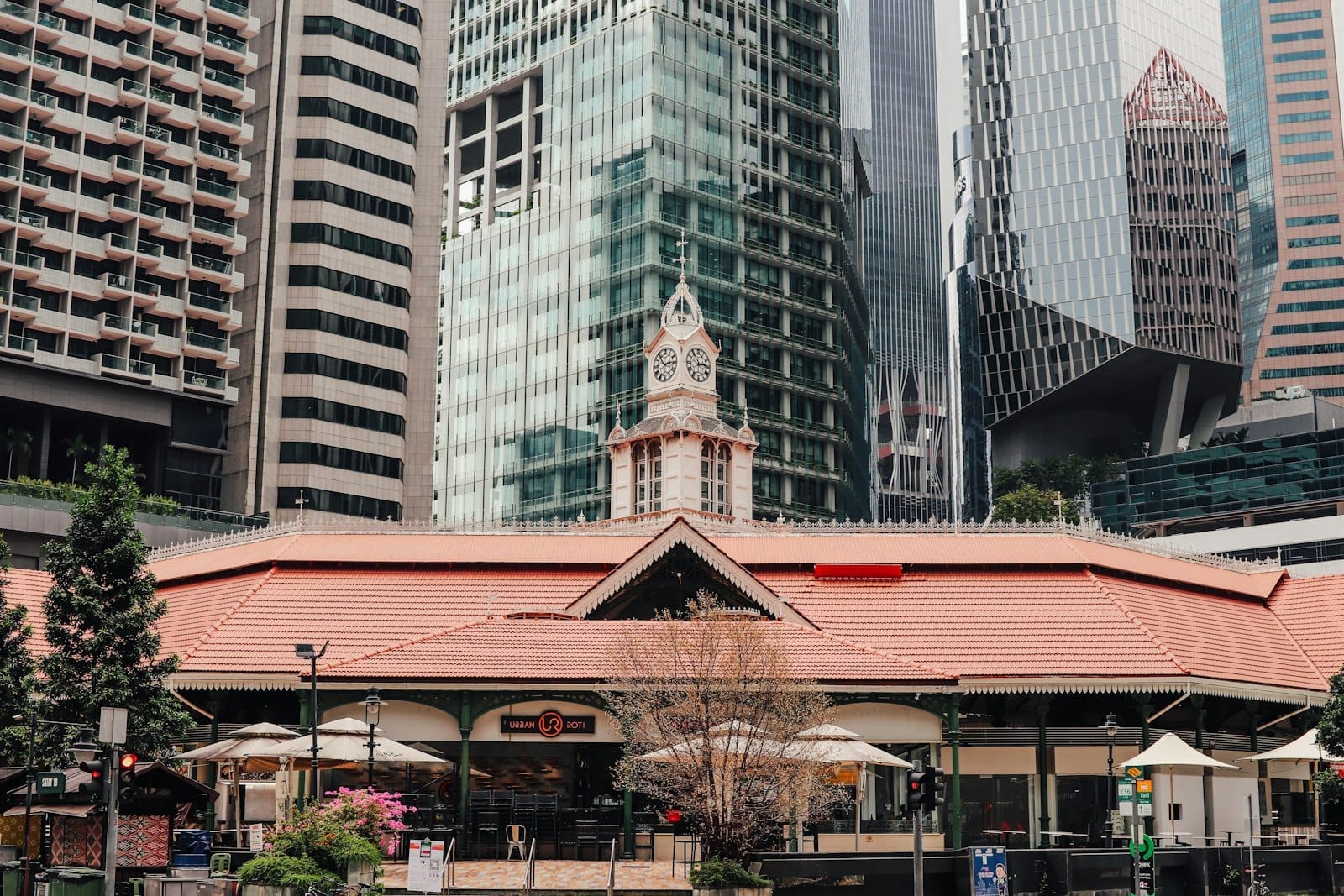
Lau Pa Sat, officially named the Former Telok Ayer Market, is a gazetted national monument and 24-hour hawker centre occupying a 52,000-square-foot octagonal cast-iron structure in the heart of Singapore's central business district. Completed in 1894, it remains one of the finest surviving examples of Victorian cast-iron architecture in Southeast Asia. The columns, arches, and ornamental ironwork were prefabricated in Glasgow and shipped to Singapore, a common construction method for British colonial infrastructure at the time.
The name 'Lau Pa Sat' is Hokkien for 'Old Market', a nod to its original function as a fresh produce and wet market serving Telok Ayer Bay. Today that function is long gone, replaced by dozens of hawker stalls selling everything from Hainanese chicken rice and laksa to oyster omelettes and fresh fruit juice. The market was gazetted as a national monument on 28 June 1973, and while it has been restored and repurposed, the iron skeleton that defines its visual identity is intact and protected.
💡 Local tip
Raffles Place MRT (Exit I) has a sheltered underground linkway that brings you directly to the market on Raffles Quay — useful during Singapore's frequent afternoon downpours.
The Architecture: What to Look For
Before you order anything, take a few minutes to walk the perimeter and look up. The structure sits on an octagonal plan with a central ventilation lantern at the roof's apex, designed to draw heat upward — a pre-air-conditioning solution that still works. The cast-iron columns are decorated with fluted detailing, and the arched gables around the perimeter feature ornamental ironwork that catches the light differently depending on the time of day.
At midday, when sunlight angles in through the open sides, the iron frame casts long geometric shadows across the floor tiles. At night, the structure is lit from within, and the glowing arches are visible from Robinson Road, making the building look more like a lantern than a market hall. If you are visiting specifically for photography, the golden-hour window between around 6:30 and 7:30 PM gives the warmest light on the ironwork before the satay stalls fully set up on Boon Tat Street.
For broader context on Singapore's architectural and cultural heritage, the National Museum of Singapore has permanent galleries covering the city-state's colonial-era infrastructure and the communities that shaped it.
Tickets & tours
Hand-picked options from our booking partner. Prices are indicative; availability and final rates are confirmed when you complete your booking.
Asian Civilisations Museum entrance ticket
From 10 €Instant confirmationAdventure Cove Waterpark™ e-ticket
From 27 €Instant confirmationWild Wild Wet Waterpark Entrance Ticket
From 15 €Instant confirmationLion City bike tour in Singapore
From 55 €Instant confirmationFree cancellation
How the Atmosphere Changes Through the Day
Lau Pa Sat operates 24 hours, but the experience shifts dramatically depending on when you arrive. Between roughly 7 AM and 9 AM, it functions as a quiet breakfast spot for nearby office workers: kaya toast, soft-boiled eggs, and kopi (local coffee) ordered from half-awake stallholders. The ambient noise is low, and you can actually hear the ceiling fans. This is the easiest time to find a seat and study the building itself without a crowd.
The lunchtime surge, from around noon to 2 PM on weekdays, is intense. The surrounding financial district empties into the hawker centre, and most stalls develop queues within minutes. Noise levels rise to a consistent hum of conversations, sizzling woks, and the clatter of metal trays. Tables turn over fast, so hovering politely near a finishing group is common practice and entirely accepted.
Evenings bring the most theatrical version of Lau Pa Sat. From around 7 PM, the adjacent section of Boon Tat Street is closed to traffic, and rows of satay stalls set up their charcoal grills directly on the road. The smell of marinated meat over live coals reaches you half a block away. The combination of the lit iron structure, the smoke drifting across the street, and the mix of local workers, tourists, and expats gives this time slot a genuinely different energy from anything happening inside the main hall.
ℹ️ Good to know
The Boon Tat Street satay strip typically opens in the evening and runs late into the night. It is an extension of Lau Pa Sat's operation but technically occupies the street itself, so timing can vary slightly depending on the day.
What to Eat and How to Navigate the Stalls
With over 80 stalls inside the main hall, first-time visitors often freeze at the entrance trying to take in all the options at once. The layout is circular, and stalls are numbered, which helps if you are working from a recommendation. A practical approach is to walk the full inner ring once before committing to anything: prices are displayed, and stall staff will often call out their specials as you pass.
Satay on Boon Tat Street is the obvious draw in the evenings and worth the wait. Inside the hall, the oyster omelette (orh luak) and char kway teow are consistently popular. For something lighter, the fresh fruit juice stalls near the outer ring offer cold drinks that cut through Singapore's humidity. Beverages from dedicated drink stalls are typically cheaper than ordering at a food stall.
If Lau Pa Sat sharpens your interest in Singapore's hawker culture more broadly, the Singapore hawker centres guide covers the city's best food halls across different neighbourhoods, from Maxwell Road to Tekka Centre.
For another well-regarded hawker option within walking distance, Maxwell Food Centre in Chinatown is around 15 minutes away on foot and draws long queues for its Tian Tian Hainanese chicken rice.
Practical Walkthrough: Getting There and Getting Settled
The most straightforward route is Raffles Place MRT (Exit I), from which a sheltered walkway leads through an underground passage and deposits you at Raffles Quay, right at the market entrance. If you are coming from the Marina Bay area, the walk along Raffles Quay takes about 10 minutes and is flat the entire way.
Seating inside follows Singapore's hawker convention: you 'chope' (reserve) a seat by leaving a tissue packet or an umbrella on the chair, then queue for food. This is universally understood and respected. During peak lunch hours, finding a free table can take five minutes of circling; during off-peak times, the hall is rarely more than half full and seating is immediate.
Payment varies by stall. Many now accept PayNow QR codes, some accept cards, and others remain cash-only. Carrying a small amount of Singapore dollars (S$10–S$20) is sensible. The hall is fully open-air with ceiling fans, so expect ambient humidity and heat, especially at lunch in Singapore's year-round tropical climate. Lightweight, breathable clothing is appropriate.
⚠️ What to skip
Weekday lunch hours (12 PM – 2 PM) are genuinely packed with CBD office workers. If you have limited time and want a relaxed meal, aim for a weekday mid-morning or a weekend visit, when the office crowd is absent.
Honest Assessment: Is It Worth Your Time?
Lau Pa Sat earns its reputation not because of exceptional food alone — you will find equivalent or better cooking at smaller neighbourhood hawker centres — but because of the architectural setting and the symbolic weight it carries in Singapore's food culture. The combination of a 130-year-old iron market hall, a functioning 24-hour food operation, and the evening street satay strip is genuinely unusual. Few cities have preserved something this old and put it to such continuous everyday use.
That said, the tourist-area pricing at some stalls is slightly higher than what you would pay at more local-facing hawker centres, and the lunch rush can make the experience feel more transactional than relaxed. Visitors looking for the cheapest possible hawker meal should explore the city's residential estates. But for a single visit that combines history, architecture, and a decent meal in a central location, Lau Pa Sat delivers on all three counts.
If you are planning a broader itinerary around the CBD and Marina Bay area, the Marina Bay Waterfront Promenade is a 10–15 minute walk away and makes for a natural pairing: eat at Lau Pa Sat first, then walk the waterfront as the city lights come on.
Travellers who prefer a quieter, more local hawker experience away from the CBD should consider Chinatown Complex Food Centre, Singapore's largest hawker centre and home to the only Michelin-starred hawker stall in the world.
Insider Tips
- Visit on a weekday morning between 8 and 10 AM for the most peaceful experience of the building. The architectural details are much easier to appreciate when the lunchtime crowd isn't there.
- The satay stalls on Boon Tat Street use charcoal grills — the smoke is part of the atmosphere but can leave your clothes smelling. If you have evening plans elsewhere, sit on the inside edge rather than directly at the street stalls.
- Stall numbers are posted above each counter. If you read a recommendation online, note the stall number before you arrive — navigating by description alone in the octagonal hall takes longer than expected.
- For drinks, the dedicated juice and beverage stalls along the outer ring are notably cheaper than ordering drinks at individual food stalls. A fresh coconut or sugar cane juice here runs around S$2–S$3.
- Lau Pa Sat is fully open at 2 AM and beyond. If you are out late in the CBD or Marina Bay area, it is one of the few places in the neighbourhood where you can get a proper hot meal without going to a hotel.
Who Is Lau Pa Sat For?
- First-time visitors to Singapore wanting a central, accessible hawker centre experience
- Architecture and heritage enthusiasts interested in Victorian cast-iron colonial buildings
- Late-night diners needing a full meal option in the CBD after 10 PM
- Travellers combining a food stop with a Marina Bay or Raffles Place walking itinerary
- Families looking for a low-cost, variety-filled meal in a covered, walkable space
Nearby Attractions
Combine your visit with:
- Boat Quay
Boat Quay stretches along the south bank of the Singapore River, its two- and three-storey shophouses packed with restaurants, bars, and cafes. Once the beating commercial heart of colonial Singapore, the strip today offers one of the city's most atmospheric settings for an evening meal or a morning walk with history underfoot.
- Clarke Quay
Clarke Quay lines the Singapore River with five blocks of conserved warehouses and shophouses, now packed with restaurants, rooftop bars, and clubs. Free to enter and active from dusk until well past midnight, it rewards visitors who arrive after dark when the neon reflects off the water and the crowds find their rhythm.
- Fort Canning Park
Standing 48 metres above the city centre, Fort Canning Park packs more history per square metre than almost anywhere else in Singapore. From ancient Malay royalty to British colonial command, the hill has shaped this island for over seven centuries — and today offers a genuinely peaceful escape just minutes from Orchard Road.
- Henderson Waves
Henderson Waves is Singapore's tallest pedestrian bridge at 36 metres above Henderson Road, connecting Mount Faber Park and Telok Blangah Hill Park along the Southern Ridges trail. Free to access at any hour, the 274-metre-long structure is equally rewarding at dawn, midday, and after dark.