Singapore Hawker Centres: The Complete Guide
Singapore's hawker centres are where the city's food culture lives. With over 110 centres and 6,000 stalls serving Chinese, Malay, Indian, and fusion dishes for under $10 SGD, this guide covers everything from the best centres to visit, to unwritten rules locals actually follow.
Plan and book this trip
Tools from our partner Travelpayouts help you compare flights and hotels. If you book through them, we may earn a commission at no extra cost to you.
Flights
Hotels map
TL;DR
- Singapore has over 110 hawker centres with 6,000+ stalls. Most dishes cost $3–$8 SGD.
- Top picks: Maxwell Food Centre for Hainanese chicken rice, Chinatown Complex for sheer variety, and Lau Pa Sat for atmosphere.
- Avoid Newton Food Centre if you're on a budget — prices run 2–3x higher than elsewhere.
- Hygiene grades (A, B, C) are posted at every stall. Stick to A and B-rated stalls.
- Learn one rule: place a packet of tissues on a table to reserve your seat ('chope'). It's universally understood.
What Is a Hawker Centre (And What It Isn't)
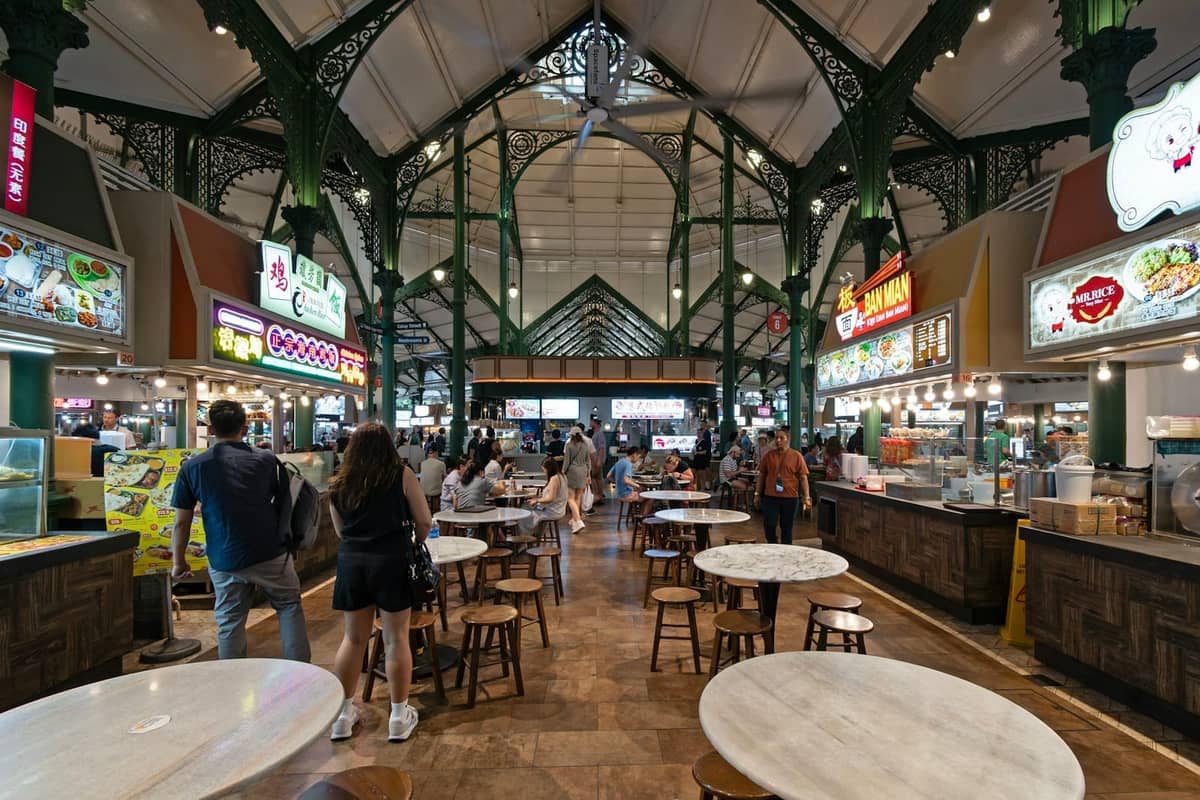
Singapore's hawker centres are open-air or semi-open complexes that house dozens to hundreds of individual food stalls under one roof. Each stall is operated by a single vendor, usually a family, specialising in one or two dishes. You order at the stall, pay there, and find your own seat at shared tables. There are ceiling fans but no air conditioning. This is not a food court.
The distinction matters for practical reasons. Air-conditioned food courts are found inside shopping malls, managed by corporations, and generally charge more. Hawker centres are managed by the National Environment Agency (NEA) and are subject to regular hygiene inspections. The food is cheaper, the atmosphere is louder, and the cooking is almost always better.
The origins trace back to the 1960s and 1970s, when Singapore's government systematically relocated itinerant street food vendors into fixed, inspected locations. What began as a public health initiative became one of the world's most celebrated food cultures. UNESCO inscribed Singapore's hawker culture as an Intangible Cultural Heritage of Humanity in 2020. If you're planning your meals around Singapore's food scene, the Singapore food guide is a useful companion to this one.
ℹ️ Good to know
NEA posts hygiene grades (A, B, or C) at every licensed hawker stall. These are updated regularly after inspections. A-grade stalls meet the highest cleanliness standards. Most locals eat comfortably at A and B-rated stalls without a second thought.
The Best Hawker Centres in Singapore
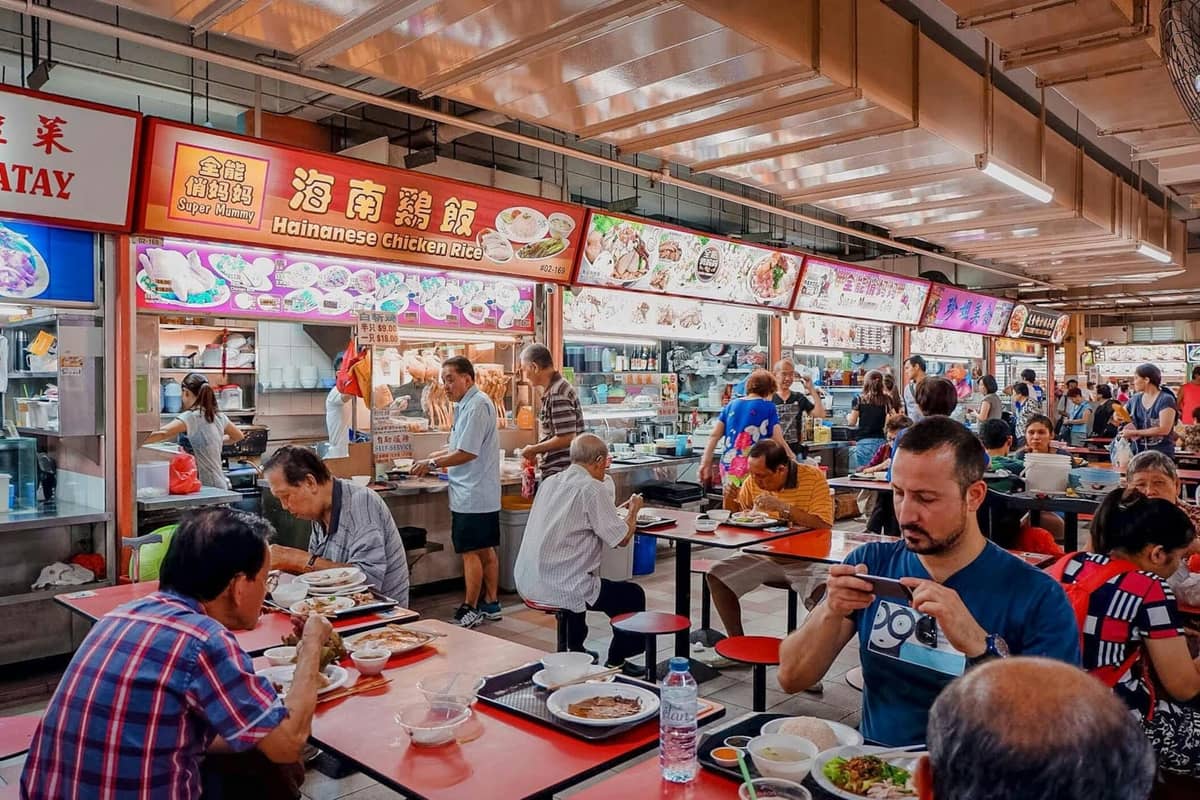
Not all hawker centres are equal. Some are worth going out of your way for. Others are convenient but not destination-worthy. Here's an honest breakdown of the ones that matter most for visitors.
- Maxwell Food Centre (Chinatown) Home to Tian Tian Hainanese Chicken Rice, which holds a Michelin Bib Gourmand. Expect a queue of 20–40 minutes at peak hours. Also worth trying: Maxwell Fuzhou Oyster Cake, and the popiah stalls. Opens around 8am, best visited before 12pm or after 2pm to avoid the worst crowds.
- Chinatown Complex Food Centre The largest hawker centre in Singapore with around 260 stalls. Also home to Hawker Chan (Hong Kong Soya Sauce Chicken), the world's cheapest Michelin-starred meal. The centre runs across two floors and can feel overwhelming — head to the upper level to find shorter queues.
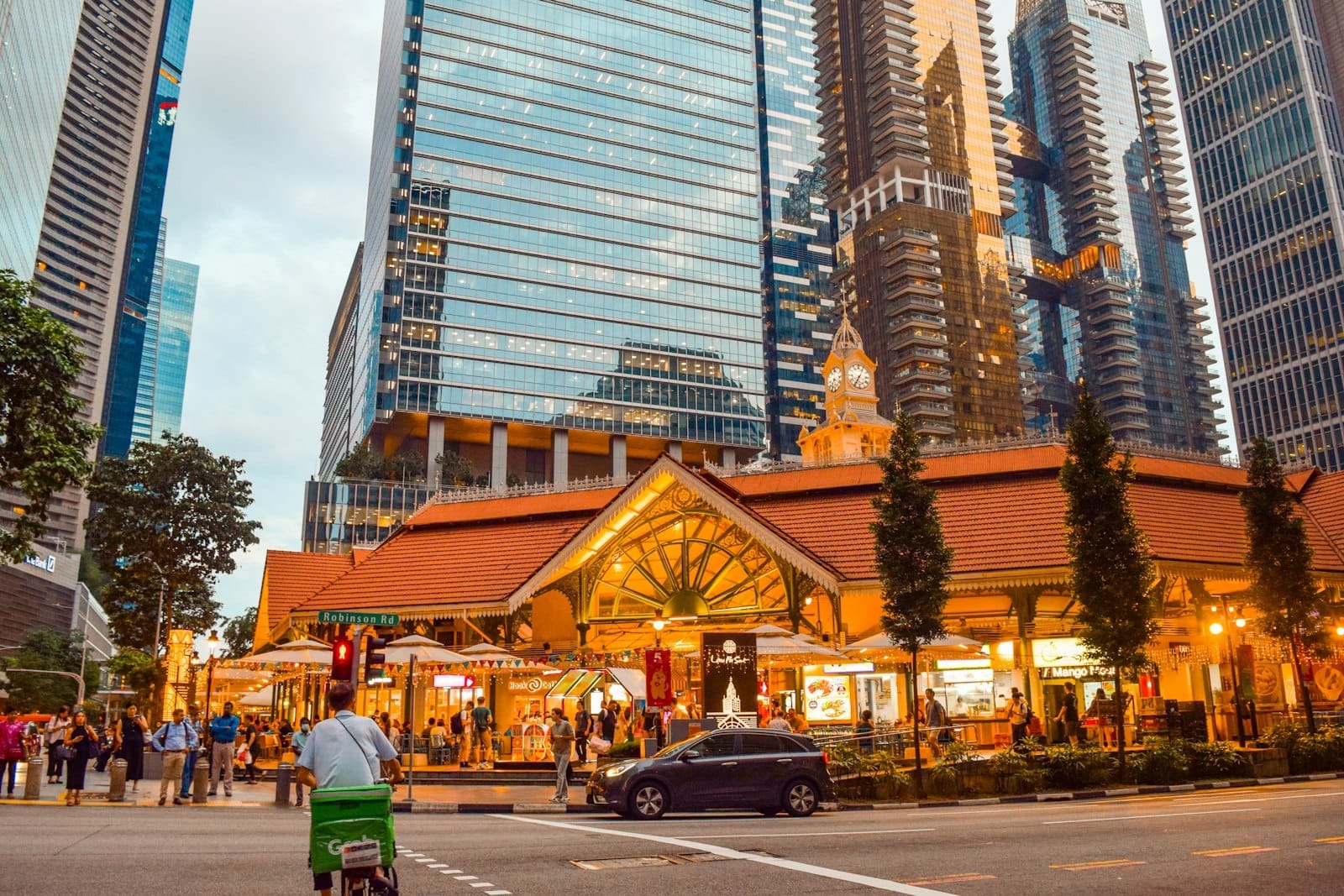
- Lau Pa Sat (Telok Ayer) Set inside a Victorian cast-iron market from 1894, this is the most architecturally significant hawker centre in Singapore. Busy with the CBD lunchtime crowd on weekdays, but notably quiet on weekends. After 7pm, the street out front closes to traffic and becomes the famous Satay Street.
- Old Airport Road Food Centre Consistently rated by locals as one of the best all-round centres. Less touristed than Maxwell or Chinatown Complex, but the depth of quality here is exceptional. Try the rojak, lor mee, and chendol. Located in Geylang, accessible by MRT (Aljunied station).
- Tiong Bahru Market and Food Centre Split across two levels: wet market below, food centre above. Recently renovated, clean, and very popular with the neighbourhood crowd. Excellent for breakfast — the soon kueh and chwee kueh stalls open early and sell out fast. Closes earlier than most centres.
- East Coast Lagoon Food Village The one to visit if you want satay and seafood by the water. Open-air with sea breeze, relaxed atmosphere, and great BBQ stingray. Best in the evening. Pairs well with a walk or cycle through East Coast Park.
If you're staying near Marina Bay, Lau Pa Sat is the most convenient option and genuinely worth a visit. For the full neighbourhood hawker experience with fewer tourists, Old Airport Road Food Centre is the top recommendation.
What to Order: Dishes You Shouldn't Miss
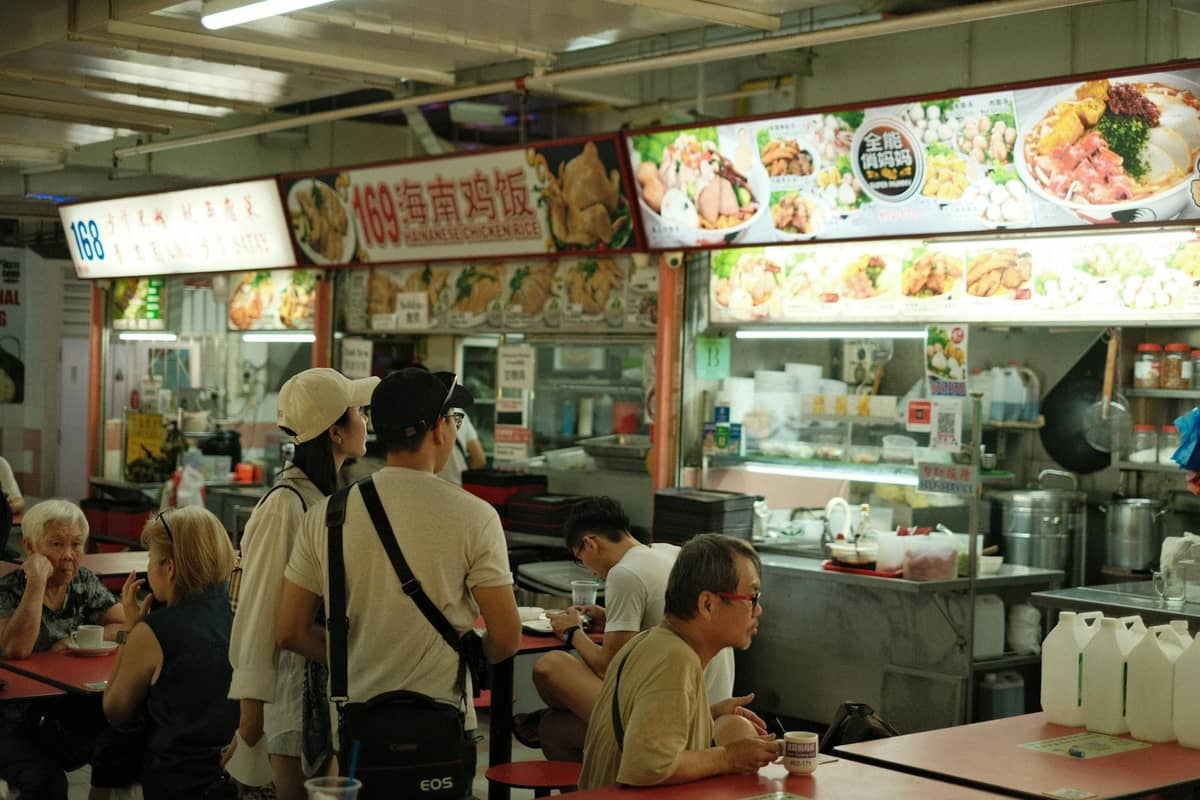
Singapore's hawker culture spans four culinary traditions: Chinese (Hokkien, Teochew, Cantonese, Hainanese), Malay, Indian, and Peranakan. Each has flagship dishes that appear across most centres.
- Hainanese Chicken Rice: Poached or roasted chicken over fragrant rice, served with three sauces. The benchmark dish for judging any hawker centre's quality.
- Char Kway Teow: Flat rice noodles stir-fried at high heat with egg, cockles, Chinese sausage, and bean sprouts. Smoke from a well-seasoned wok ('wok hei') is the mark of a skilled cook.
- Laksa: Spicy coconut milk noodle soup with prawns or cockles. The Katong-style version uses short, thick noodles you eat with just a spoon.
- Hokkien Mee: Braised yellow and rice noodles with prawns, squid, and pork lard. Served with sambal chilli and lime.
- Roti Prata: Indian flatbread cooked on a griddle, served with curry for dipping. Available plain, with egg, or with cheese. Best at breakfast.
- Nasi Lemak: Coconut rice with fried chicken, sambal, ikan bilis (anchovies), and a hard-boiled egg. Singapore's version is richer and spicier than the Malaysian original.
- Chendol: Shaved ice dessert with pandan jelly, red bean, and palm sugar syrup. The ideal finish in the heat.
✨ Pro tip
When you arrive at a busy centre, walk the full perimeter before ordering. Check which stalls have queues (queues signal quality, not just popularity) and look at what people around you are eating. Order from two or three stalls — there's no rule that says everything has to come from one place.
Hawker Centre Etiquette: Unwritten Rules That Locals Follow
Hawker centres have a specific social grammar. Getting it wrong won't get you in serious trouble, but understanding it makes the experience smoother and earns you quiet respect from regulars.
The most important custom is 'chope-ing' a seat. Singaporeans place a packet of tissues, an umbrella, or a name card on a chair or table to claim it while they order. This is universally understood and respected. If you sit at a table with tissues on it, you're taking someone's reserved seat. If tissues are on just one chair at a four-seat table, the rest are fair game.
- Order and pay at the stall, then return to your table to wait. For dishes like economy rice or noodle soup, the vendor will often call out or signal when it's ready.
- Return your tray and utensils to the designated return points after eating. This is not optional — it's a civic norm and NEA has signage everywhere reminding you.
- Don't tip at individual stalls. It's not expected and can cause confusion.
- If a stall is closed, don't assume the centre is closed. Vendors take days off independently of each other.
- For popular stalls, queue properly and don't cut. Singaporeans queue with considerable seriousness.
- Bring small bills. While many stalls now accept PayNow, NETS, or GrabPay, older family-run stalls frequently prefer cash.
⚠️ What to skip
Newton Food Centre (featured in the film Crazy Rich Asians) has a reputation for aggressive touting — vendors calling out to passers-by and sometimes overcharging tourists. Prices here run significantly higher than comparable food elsewhere. It's not without decent food, but go in with realistic expectations and confirm prices before ordering.
Practical Information: Hours, Prices, and Getting There
Most hawker centres operate from around 8am to 10pm, but individual stall hours vary widely. Breakfast stalls often open at 7am and sell out by 10am. Some stalls close on weekdays and are only open on weekends. There is no centralized schedule, so if you're making a trip specifically for one dish, it's worth checking whether the stall is open before you go.
Price-wise, expect to pay $3–$5 SGD for most noodle and rice dishes, $4–$8 for meat dishes, and $1.50–$3 for drinks. A full meal with a drink rarely exceeds $10 SGD at a non-tourist centre. Tourist-adjacent centres like Newton Food Centre and the hawker section of Lau Pa Sat in the evening can push into the $15–$25 range per person.
Singapore's MRT network puts most hawker centres within a short walk of a station. Maxwell Food Centre is a 5-minute walk from Chinatown MRT (NE/DT lines). Chinatown Complex Food Centre is adjacent to the same station. Lau Pa Sat is a 3-minute walk from Telok Ayer MRT (DT line). For a full overview of getting around the city, see the guide to getting around Singapore.
Hawker Centres by Neighbourhood: Which to Choose
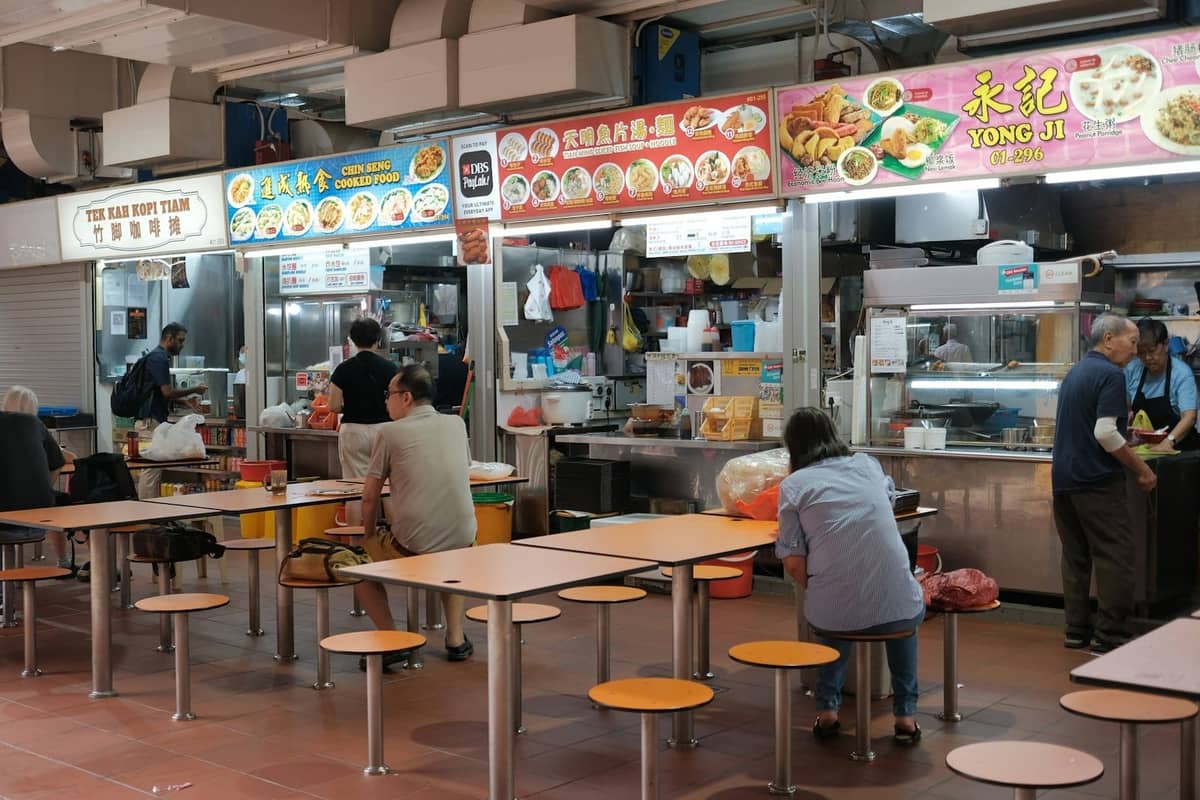
If your itinerary is built around specific neighbourhoods, here's where to eat when you're already in the area. In Chinatown, Maxwell Food Centre and Chinatown Complex are both strong choices within a few minutes of each other. The Maxwell Food Centre skews more tourist-friendly while Chinatown Complex has better depth across cuisines.
In Little India, the Tekka Centre is the anchor. The wet market below is worth exploring in the morning, and the food centre above is particularly strong for Indian Muslim food: biryani, murtabak, and fish head curry. It's less visited by tourists than the Chinatown options, which means shorter queues and a more authentic neighbourhood feel.
For those visiting East Coast, East Coast Lagoon Food Village is the standout, particularly for evening satay and seafood. If you're spending a day at East Coast Park, plan dinner here before heading back.
💡 Local tip
The NEA website (nea.gov.sg) maintains an updated directory of all licensed hawker centres with hygiene grade records searchable by stall. If you're serious about food safety or want to research a specific stall before visiting, it's the authoritative source.
Hawker centres also fit naturally into a broader Singapore itinerary. Scheduling meals at hawker centres rather than restaurants is the best way to eat well without spending significantly. Three hawker meals a day costs less than a single mid-range restaurant dinner, and the food is frequently better.
FAQ
Are Singapore hawker centres safe to eat at?
Yes. Hawker centres are regulated by the National Environment Agency (NEA), which inspects and grades every stall on hygiene. A-grade stalls meet the highest standards. The system is rigorous and consistent. Eating at hawker centres is standard practice for the entire population, including families and elderly residents.
Do Singapore hawker centres accept credit cards?
It varies by stall. Many now accept PayNow (QR-code payment), NETS, and some accept GrabPay. However, older family-run stalls often prefer cash only. Carry some small-denomination Singapore dollars (S$2, S$5, S$10 notes) to be safe, especially at less central hawker centres.
What is the cheapest hawker centre in Singapore?
Prices are broadly similar across non-tourist hawker centres, with most dishes costing $3–$5 SGD. Old Airport Road Food Centre, Tekka Centre, and Tiong Bahru Market tend to be slightly less expensive than tourist-adjacent centres. Newton Food Centre and the evening satay street at Lau Pa Sat are the most expensive options.
What time do hawker centres open and close?
Most centres are open roughly 8am to 10pm, but individual stall hours vary considerably. Breakfast stalls often start at 7am and close by mid-morning. Some vendors take specific weekdays off with no prior notice. If you're making a dedicated trip for a famous stall, check recent visitor reviews to confirm it's currently operating.
What does 'chope' mean at a hawker centre?
'Chope' is Singaporean English for reserving a seat by placing an object on it, typically a packet of tissues. This is the standard practice at all hawker centres. Place your tissues on a chair before you order, and your spot is socially reserved. It's a universally understood and respected custom.