Tekka Centre: Little India's Living Market and the Real Singapore on a Plate
Tekka Centre at 665 Buffalo Road is one of Singapore's oldest and most atmospheric public markets, blending a working wet market, a packed hawker food centre, and floors of textile and spice traders. Free to enter and open daily from 6:30am to 9pm, it offers a concentrated dose of Indian-Singaporean daily life that no curated attraction can replicate.
Quick Facts
- Location
- 665 Buffalo Road, Little India, Singapore 210665
- Getting There
- Little India MRT (NE7, Downtown Line DT12), exit A or C; buses on Serangoon Road
- Time Needed
- 1 to 2 hours for a thorough visit; 30 minutes if just eating
- Cost
- Free entry; hawker meals typically S$3–S$6
- Best for
- Food lovers, market explorers, photographers, early risers
What Tekka Centre Actually Is
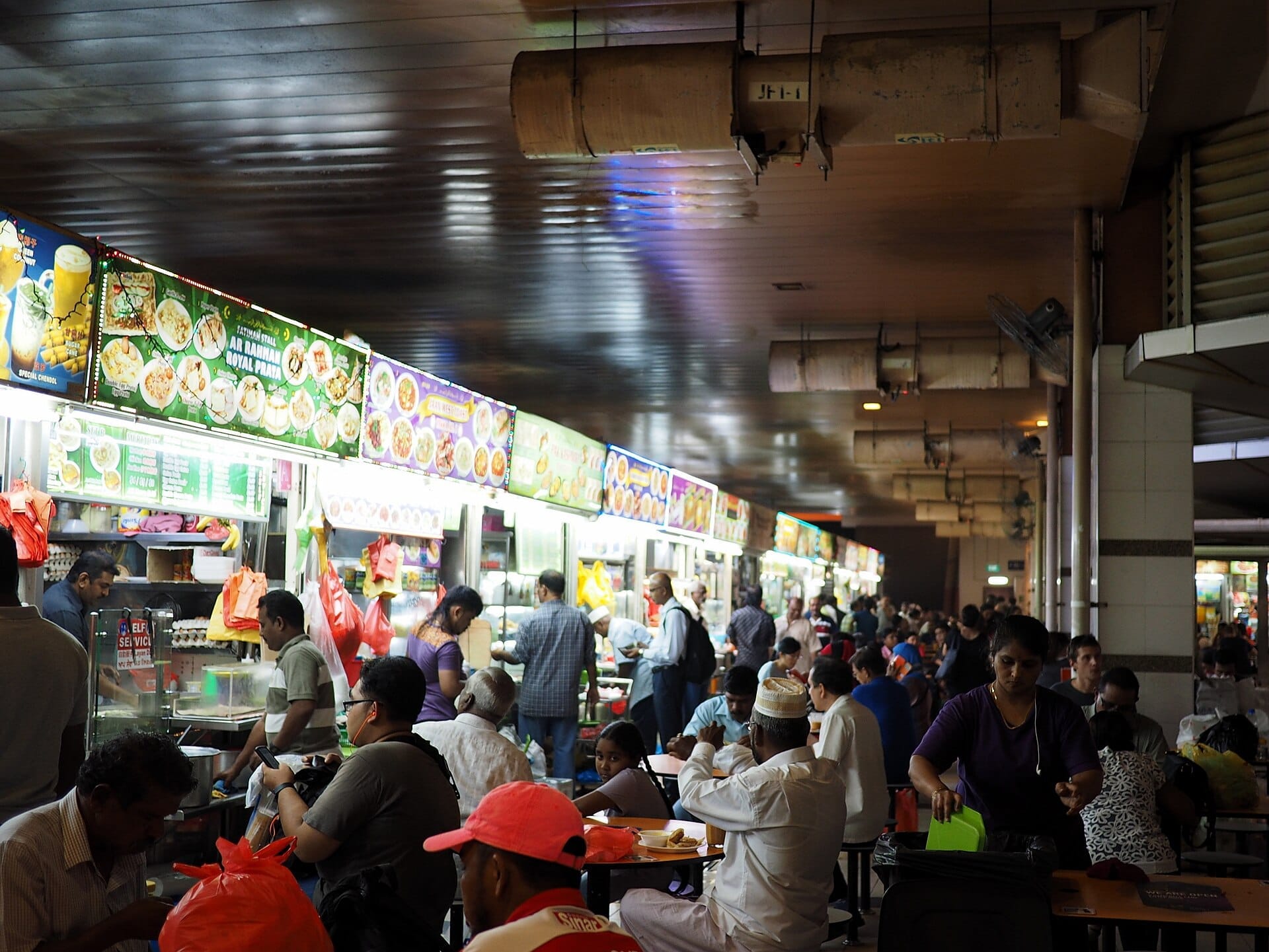
Tekka Centre is a three-storey public market complex anchoring the southern end of Little India, operating on a site that has served Singapore's Indian community since 1915. The ground floor splits into two distinct worlds: a wet market occupying the eastern half, where fishmongers, butchers, and vegetable sellers operate from before dawn, and a hawker food centre on the western side, where the breakfast crowd starts arriving before 7am. The upper floors hold retail units selling textiles, Ayurvedic products, religious paraphernalia, gold jewellery, and ready-made clothing — a floor that functions more like a neighbourhood bazaar than a tourist shopping stop.
The complex was originally known as Kandang Kerbau Market (the name means 'cattle pen' in Malay, referencing the buffalo pens that once occupied this land). After relocating to its current concrete structure in 1982, it operated as Zhujiao Centre until a formal renaming in 2000 restored the older Tekka name. A renovation in 2008 modernised the facilities without gutting the character, and the centre reopened in 2008 largely as visitors find it today.
💡 Local tip
Go between 6:30am and 9am on a weekday for the fullest wet market experience: produce is freshest, stall holders are most active, and the food centre is serving the breakfasts that locals actually eat before work.
The Wet Market: Colour, Noise, and a Functioning Economy
Step into the wet market section and the temperature drops slightly beneath the industrial fans, but the sensory input spikes. Whole fish are laid out on crushed ice, their scales catching the fluorescent light. Drums of live prawns sit alongside trays of cleaned crab. The smell is unmistakably oceanic — not unpleasant, but real. Butcher stalls offer mutton, chicken, and offal, with orders taken and meat cleaved to specification on the spot.
The vegetable and spice section is where the Indian-Singaporean pantry becomes tangible. Curry leaf bundles go for cents. Fresh turmeric root, fenugreek, dried chillies in bulk, and stacks of plantain leaves for wrapping food are stacked with practiced efficiency. Traders here are largely regulars serving a local clientele, not tourists, which makes the atmosphere genuinely commercial rather than performative.
By midday, the wet market winds down considerably. Stalls begin packing up from around 1pm, and some close earlier if stock runs out. If you arrive after lunch hoping to see a full market, you will mostly find empty counters and mopped floors. Plan accordingly.
Tickets & tours
Hand-picked options from our booking partner. Prices are indicative; availability and final rates are confirmed when you complete your booking.
Adventure Cove Waterpark™ e-ticket
From 27 €Instant confirmationWild Wild Wet Waterpark Entrance Ticket
From 15 €Instant confirmationLion City bike tour in Singapore
From 55 €Instant confirmationFree cancellationLuggage Storage in Singapore
From 7 €Instant confirmationFree cancellation
The Hawker Food Centre: Where to Eat and What to Order
The food centre at Tekka is one of the most credible in Singapore for South Indian and North Indian-influenced dishes, alongside a good spread of Chinese hawker food that reflects the neighbourhood's mixed customer base. Roti prata is the breakfast anchor: flaky, griddle-fried flatbread served with fish or mutton curry for dipping. The best stalls have a queue by 7:30am and the prata is made to order, each round pressed and flipped with a rhythm that takes years to develop.
Fish head curry, biryani, and thosai appear on multiple stalls and the quality difference between them is real — look for stalls with handwritten daily specials or the longest consistent queue rather than the loudest signage. For a broader orientation to what Singapore's hawker culture means beyond this single centre, the Singapore hawker centres guide provides useful context on how to navigate and order across the city.
Seating fills up fast between 12pm and 1:30pm. Arrive before noon or after 2pm if you want to eat without hovering over someone's table waiting for a seat. The standard practice for reserving a table is to leave a packet of tissues or an umbrella on the chair, a uniquely Singaporean social contract that visitors should respect.
ℹ️ Good to know
Tekka's food centre is not air-conditioned, only fan-ventilated. In Singapore's heat, this is worth accounting for — dress lightly and avoid peak midday heat if you are sensitive to humidity.
Upper Floors: Textiles, Gold, and the Functional Bazaar
The retail floors above the market are worth at least a slow walk-through. Sari shops display silk and cotton fabrics in greens, reds, and gold that genuinely catch the eye, and tailoring services are available on-site. Gold jewellery stalls follow South Indian design traditions, with chunky temple jewellery and thin bangles sold by weight. These are working retail businesses serving the local Indian community for weddings, festivals, and daily use.
The upper floors are quieter than the ground level and less photographed, but they give a clearer picture of Little India as a living neighbourhood rather than a heritage zone. For context on the broader district and how it developed, the Little India neighbourhood guide covers the area's history and what else to explore nearby.
How the Atmosphere Changes Through the Day
Early morning (6:30am to 9am) is the market's peak hour. The wet market is in full swing, the food centre is serving breakfast, and the clientele is almost entirely local: aunties with wheeled trolleys, construction workers eating before a shift, hawker stall owners sourcing their own ingredients. The light inside is bright and flat from fluorescent fixtures, but outside the entry the morning sun still slants low across Serangoon Road, making the flower garland sellers who set up near the entrance particularly photogenic.
By mid-morning (9am to noon), tourist visitors begin arriving and mix with the continuing local trade. The textile floors start seeing more foot traffic. Midday is the loudest and most crowded point in the food centre, with the lunch rush peaking around 12:30pm. Afternoons (2pm onward) are noticeably quieter throughout, with the wet market largely closed and the upper floors seeing mostly browsing rather than buying. Evening brings a second wave of visitors, particularly on weekends, but the selection in both the market and food centre is thinner than morning.
⚠️ What to skip
Tekka Centre is significantly busier on weekends and during Indian festivals like Deepavali and Thaipusam. During these periods, the surrounding streets and the centre itself can become very crowded — rewarding for atmosphere, but challenging if you have mobility limitations.
Getting There and Practical Logistics
Tekka Centre sits directly at the exit of Little India MRT station (NE7 on the North East Line, DT12 on the Downtown Line). From Exit A or C, the building is visible immediately. The journey from Orchard Road takes under 15 minutes by MRT, and from the Marina Bay area roughly 20 minutes with a change at Dhoby Ghaut. There is no reason to take a taxi unless you are arriving with heavy shopping.
The centre is open daily from 6:30am to 9pm, with no admission charge. Individual stalls set their own hours and many in the wet market close before 2pm. If you are planning a full morning in the area, consider combining a visit here with a walk along Serangoon Road and a stop at Sri Veeramakaliamman Temple, which is a short walk north.
Photography is generally accepted inside the market, but common sense applies: ask before photographing individual traders or customers at close range, and avoid pointing a camera at someone mid-transaction. Most stall holders are used to visitors and unbothered by a camera, but the courtesy of asking is appreciated and often opens a brief conversation.
For a fuller itinerary that incorporates Tekka Centre into a day across Little India and beyond, the Singapore itinerary guide offers structured day-by-day options across the city's main neighbourhoods.
Who Will Get the Most Out of Tekka Centre (and Who Might Not)
Tekka Centre rewards curiosity and patience. Food travellers who want to understand Singapore's Indian culinary traditions — not just taste them, but watch them being prepared in a real working context — will find it compelling. Market photographers will find constant material in the early morning hours. Families with children old enough to handle crowds and unfamiliar smells will likely enjoy the sensory experience and the accessible price points for food.
Visitors who are put off by raw meat, fish smells, or unair-conditioned spaces should probably not plan an extended visit, particularly in the wet market section. Anyone expecting a sanitised or curated experience of Indian culture will find Tekka Centre less comfortable than the Indian Heritage Centre, which offers air-conditioned, exhibition-style content a few streets away. Tekka is not dressed up for visitors, and that is precisely its value.
Insider Tips
- The flower garland sellers clustered near the Serangoon Road entrance sell fresh jasmine and marigold strings used in Hindu worship. They are cheapest in the early morning before stock depletes, and buying one is a low-key way to engage with the market's ritual dimension.
- Roti prata tastes best straight off the griddle — eat it at the stall rather than carrying it to a table. The texture starts to soften within minutes.
- If the food centre is full at lunch, the upper-floor retail area has a few smaller food stalls and drink counters that most visitors overlook, with shorter queues.
- The wet market stalls on the far eastern end tend to have the freshest fish stock and the longest opening hours compared to central stalls, which often sell out earlier.
- Tekka Centre sits at the edge of the garment district around Dunlop Street and Campbell Lane. Spending 20 minutes walking the surrounding blocks before or after your visit adds texture to what you see inside the upper floors.
Who Is Tekka Centre For?
- Food travellers seeking South Indian breakfast dishes like roti prata and thosai in an authentic setting
- Early morning market lovers who appreciate functional, non-touristy produce markets
- Cultural observers interested in how Singapore's Indian community conducts daily commerce
- Budget travellers wanting a filling and culturally specific meal for under S$6
- Street photographers working in natural, high-activity environments
Nearby Attractions
Other things to see while in Little India:
- Indian Heritage Centre
Opened in 2015, the Indian Heritage Centre in Singapore's Little India traces the origins, migration, and cultural contributions of the Indian diaspora across Southeast Asia. Housed in a striking building inspired by ancient stepwells, it is one of the most thoughtfully curated heritage museums in the city.
- Little India Arcade
Little India Arcade is a free-entry heritage shopping arcade at 48 Serangoon Road, sitting at the heart of Singapore's Indian cultural quarter. Housed in a conserved colonial shophouse block, it trades in jasmine garlands, saris, spices, and religious goods that you will not find in any mall. Compact enough to explore in under an hour, it rewards slow walkers who take time to look and smell.
- Sri Veeramakaliamman Temple
Standing on Serangoon Road since 1855, Sri Veeramakaliamman Temple is Singapore's first temple dedicated to the goddess Kali. Its 18-metre Dravidian tower, crowded with 600 hand-painted stucco figures, is one of the most photographed religious facades in the city. Entry is free, and the daily ritual schedule gives visitors genuine access to living worship.