Sri Veeramakaliamman Temple: Little India's Ancient Heart
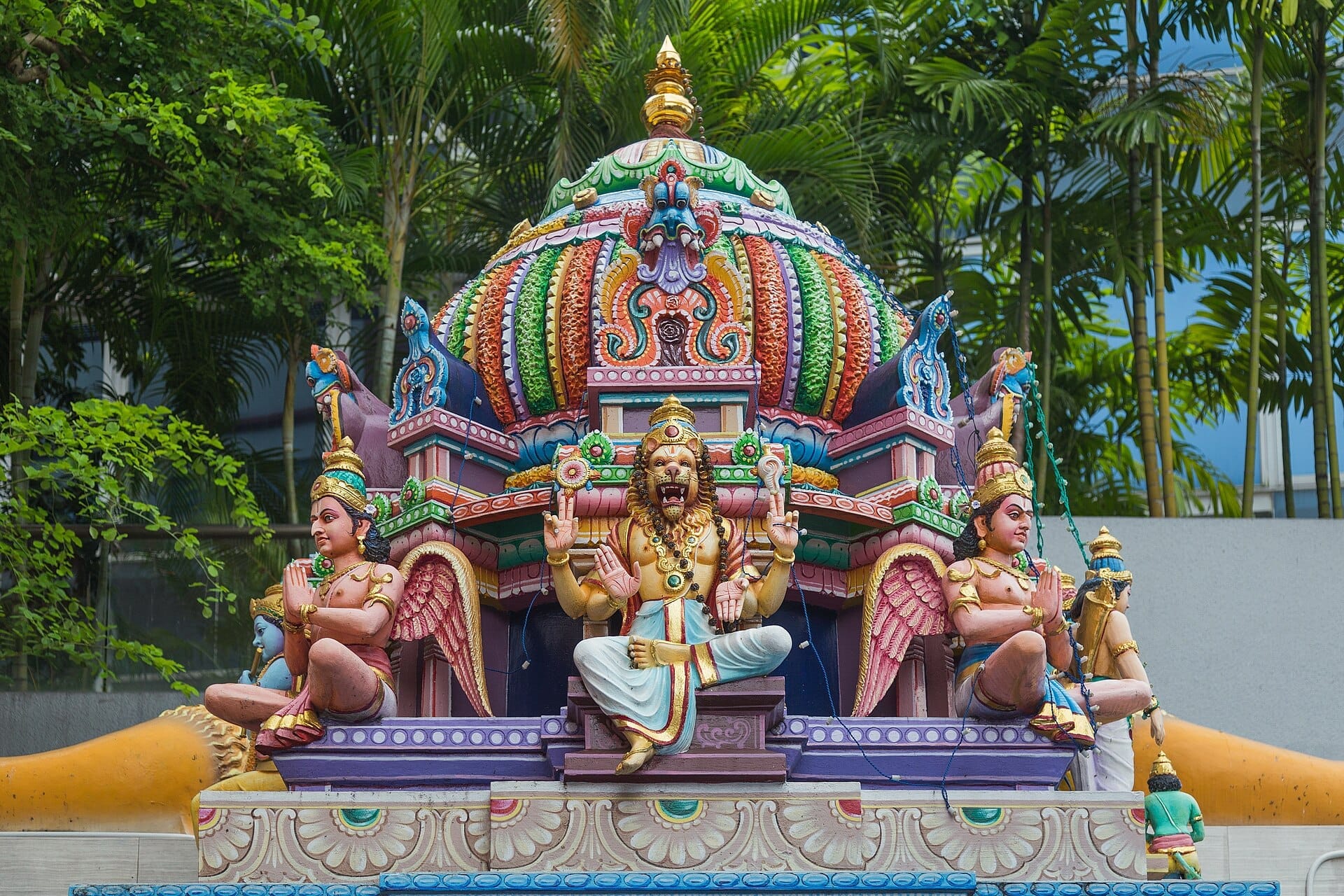
Standing on Serangoon Road since 1855, Sri Veeramakaliamman Temple is Singapore's first temple dedicated to the goddess Kali. Its 18-metre Dravidian tower, crowded with 600 hand-painted stucco figures, is one of the most photographed religious facades in the city. Entry is free, and the daily ritual schedule gives visitors genuine access to living worship.
Quick Facts
- Location
- 141 Serangoon Road, Little India, Singapore 218042
- Getting There
- Little India MRT (NE7/DT11) – 3-minute walk
- Time Needed
- 30–60 minutes
- Cost
- Free entry
- Best for
- Hindu architecture, cultural immersion, photography
- Official website
- www.srivkt.org
What Sri Veeramakaliamman Temple Actually Is
Sri Veeramakaliamman Temple is the oldest Hindu temple in Singapore dedicated to Kali, the fearsome goddess of time, death, and transformation. It sits at the southern end of Serangoon Road, the artery of Little India, and has been a place of continuous worship since 1855. That is not a restored heritage site or a reconstructed cultural attraction. It is an active, functioning temple where Tamil Singaporeans and visiting Hindus come to pray at four scheduled rituals every single day.
The building you see today reflects more than 160 years of incremental construction: a granite sanctum added in 1908, the main tower completed in 1933, a marriage hall in 1950, and a full conservation rebuilding project crowned by a kumbhabhishekam ceremony on 21 February 2016. A kumbhabhishekam is the most sacred Hindu consecration ritual, effectively re-energising the temple and its deities after renovation. The result is a structure that carries genuine historical depth without feeling like a museum.
ℹ️ Good to know
The temple is open daily from 5:30am to 9:00pm. Scheduled poojas (rituals) take place at 6:30 AM, 12:00 PM, 6:30 PM, and 9:00pm. Visiting during a pooja means witnessing the real spiritual purpose of the space, but the main hall is quieter for photography and contemplation between sessions.
The Rajagopuram: Reading the Tower
The first thing most visitors stop to examine is the rajagopuram, the gateway tower that rises 18 metres above Serangoon Road. It is built in the South Indian Dravidian tradition, a style that traces its origins to the ancient temples of Tamil Nadu, and every surface is covered in painted stucco sculpture. In total, 600 individual deities and mythological figures are arranged across the tower in rows, their colours refreshed during the 2016 restoration to the sharp reds, greens, and golds they would have carried when new.
The tower is flanked by eight large domes and several smaller ones, which give the roofline an unusually layered silhouette for Singapore's streetscape. In the context of a city where most religious buildings are set back behind compound walls, this one presses directly onto the pavement edge, making it feel confrontational and generous at the same time. Stand on the opposite side of Serangoon Road in the late afternoon when the sun falls directly on the painted figures, and the tower reads almost like an illuminated manuscript.
Photography tip: the tower is best shot from across the road rather than from the entrance steps. Early morning (before 9 AM) brings soft light from the east with minimal pedestrian and vehicle interference. Midday light is harsh but reveals the colour of the stucco figures most vividly. After dark, the tower is lit and takes on a completely different character, the colours becoming more saturated against the black sky.
Tickets & tours
Hand-picked options from our booking partner. Prices are indicative; availability and final rates are confirmed when you complete your booking.
Adventure Cove Waterpark™ e-ticket
From 27 €Instant confirmationWild Wild Wet Waterpark Entrance Ticket
From 15 €Instant confirmationLion City bike tour in Singapore
From 55 €Instant confirmationFree cancellationLuggage Storage in Singapore
From 7 €Instant confirmationFree cancellation
Inside the Temple: What to Expect
You leave your shoes at the rack outside the entrance, a practical ritual that immediately signals the transition between street and sacred space. The floor inside is cool granite, and the air smells of jasmine garlands, camphor smoke, and the trace of coconut oil used in lamp offerings. The central sanctum contains the presiding deity, Kali (referred to here as Veeramakaliamman, meaning 'the brave and powerful Kali'), depicted in one of her fierce forms: eyes wide, tongue extended, flanked by her sons Ganesha and Murugan.
Several subsidiary shrines surround the main hall. Look for the shrines to Ganesha (the remover of obstacles, and the deity most visited by people dropping in quickly before work or an important task) and to Murugan, whose worship is particularly strong in the Tamil community. During a scheduled pooja, priests in white and orange dhoti move between the shrines, lighting lamps and performing the arati, the waving of fire before the deity. The sound of a brass bell struck in rapid succession, the smell of burning camphor, and the chanting of Tamil liturgy combine into something that is much more physically present than quiet museum-style contemplation.
Non-Hindu visitors are generally welcome in the outer areas of the temple. Respectful, quiet observation of the rituals is accepted. Entering the innermost sanctum area, directly in front of the main deity, is typically reserved for worshippers actively participating in the pooja. If you are unsure, follow the lead of other visitors or ask a temple attendant. Modest dress is expected: shoulders and knees covered, and sarongs are often available to borrow at the entrance.
💡 Local tip
Arrive 10–15 minutes before any scheduled pooja to find a good vantage point. The 6:30 PM Sayaraksha Pooja is generally the most attended and the most atmospheric, often drawing local worshippers after work. The 6:30 AM session is significantly quieter and more meditative.
Historical Roots: From Lime Pits to Heritage Trail
The story of this temple begins not with a grand founding act but with the practical lives of migrant labourers. In 1855, Tamil workers at the nearby Kampong Kapor lime pits erected a small shrine for protection and spiritual support. The area was called 'Sunnambu Kambam Kovil', which translates roughly as 'temple at the lime village'. The lime pits are long gone. The temple has outlasted them by more than 170 years.
The first formal structure was built in 1881, funded by Tamil and Bengali labourers who had settled in the district. The temple's survival across Singapore's colonial period, Japanese Occupation, post-independence redevelopment, and the comprehensive urban renewal of Little India in the late 20th century reflects how central it has been to the community's continuity. It was designated a conserved building by Singapore's Urban Redevelopment Authority and is part of the Little India Heritage Trail launched by the National Heritage Board in 2017, one of the first official trails to systematically document the district's Tamil heritage.
Today the temple functions as more than a place of worship. It hosts up to 200 marriage ceremonies a year and runs educational programmes in Tamil literacy, Carnatic music, and Bharatanatyam dance. That breadth of activity makes it a cultural institution in the fullest sense. For more context on how Little India's heritage layer connects across the neighbourhood, the Indian Heritage Centre on Campbell Lane (a short walk away) provides detailed archival material on the Tamil and broader South Asian community in Singapore.
How the Experience Changes by Time of Day
At 5:30 AM, when the gates open, the temple is quiet enough to hear the birds on Serangoon Road. Early worshippers arrive with fresh flower garlands purchased from the vendors along the street, and the atmosphere is contemplative. This is the best time for visitors who want to observe the space closely without feeling like an intrusion.
By mid-morning on weekends, tour groups begin to arrive, and Serangoon Road itself becomes busier with the food vendors, textile shops, and spice merchants that define Little India's commercial character. The temple's internal courtyard absorbs foot traffic reasonably well, but the entrance area can feel crowded around popular prayer times. Weekday mornings between rituals are consistently the least pressured period.
The 6:30 PM pooja draws the largest regular congregation, as local worshippers stop in on their way home. The temple's exterior lighting activates at dusk, and the tower takes on a warm amber glow that makes the stucco sculptures look almost theatrical. If you are spending an evening in Little India (the neighbourhood's restaurants and the covered Tekka Centre market are both reasons to stay after dark), timing a temple visit to coincide with this service is straightforward.
⚠️ What to skip
During major Hindu festivals, particularly Thaipusam (January/February) and Deepavali (October/November), the temple area and surrounding streets become extremely crowded. Thaipusam processions in Singapore are one of the most intense public religious events in Southeast Asia. Plan accordingly if visiting during these periods, and check the temple's official site for any special access arrangements.
Getting There and the Surrounding Area
Little India MRT station (North-East Line NE7, Downtown Line DT11) puts you on Serangoon Road in under three minutes on foot. The temple is visible from the station exit. If you are approaching from Tekka Centre (the covered market at the western end of Serangoon Road), it is a 10-minute walk east along the main road.
The streets immediately around the temple reward slow exploration. The stretch of Serangoon Road between the temple and Tekka Centre is lined with garland sellers, sari shops, and gold jewellers. Perpendicular streets like Dunlop Street and Clive Street connect through to the broader Little India district, where the density of Tamil cultural life is unlike anywhere else in Singapore. The Indian Heritage Centre sits about 10 minutes on foot if you want to extend the visit into a half-day cultural itinerary.
For visitors combining multiple neighbourhoods in one day, Little India is a manageable 20-minute walk or short taxi ride from Kampong Glam (the Malay quarter), making both districts workable on a single morning without rushing. Comfortable walking shoes are worth wearing, as the surrounding pavements are uneven in places and often wet from flower-washing and street cleaning outside the temple.
Insider Tips
- The flower garland sellers on Serangoon Road just outside the temple open early and are not purely tourist-facing: regulars buy from them every morning. Purchasing a garland to offer (S$1–3 for a basic jasmine strand) is welcomed as participation, not performance, as long as you place it respectfully at the appropriate shrine.
- The 12:00 PM Uchikala Pooja tends to attract fewer visitors than the evening session but is fully attended by the temple priests and is no less complete as a ritual experience. It is a good option for those who want to observe without the larger crowd.
- The stucco deities on the tower were individually repainted during the 2016 renovation. Spending five minutes examining the upper tiers with some patience reveals dozens of distinct narrative scenes from Hindu mythology, including Kali in battle, Ganesha in multiple forms, and scenes from the epics.
- If you are visiting Singapore during Thaipusam, the procession route passes through Little India and the atmosphere around this temple is central to the day's events. Arrive well before dawn if you want to observe kavadi (elaborate ritual frame) carriers at close range.
- The temple's community programmes in Carnatic music and Bharatanatyam are open to the public for registration. If you are staying in Singapore for an extended period, these offer a different and more sustained engagement with Tamil cultural life than a single visit.
Who Is Sri Veeramakaliamman Temple For?
- Travellers interested in living Hindu religious practice rather than sanitised heritage displays
- Architecture enthusiasts drawn to Dravidian tower design and South Indian temple craft
- First-time visitors to Little India who want a single anchor point for understanding the neighbourhood's Tamil roots
- Photographers looking for strong colour, texture, and figurative sculpture within a compact urban setting
- Those building a half-day or full-day Little India itinerary that combines worship sites, markets, and cultural institutions
Nearby Attractions
Other things to see while in Little India:
- Indian Heritage Centre
Opened in 2015, the Indian Heritage Centre in Singapore's Little India traces the origins, migration, and cultural contributions of the Indian diaspora across Southeast Asia. Housed in a striking building inspired by ancient stepwells, it is one of the most thoughtfully curated heritage museums in the city.
- Little India Arcade
Little India Arcade is a free-entry heritage shopping arcade at 48 Serangoon Road, sitting at the heart of Singapore's Indian cultural quarter. Housed in a conserved colonial shophouse block, it trades in jasmine garlands, saris, spices, and religious goods that you will not find in any mall. Compact enough to explore in under an hour, it rewards slow walkers who take time to look and smell.
- Tekka Centre
Tekka Centre at 665 Buffalo Road is one of Singapore's oldest and most atmospheric public markets, blending a working wet market, a packed hawker food centre, and floors of textile and spice traders. Free to enter and open daily from 6:30am to 9pm, it offers a concentrated dose of Indian-Singaporean daily life that no curated attraction can replicate.