East Coast is Singapore's seaside residential corridor, stretching from the waterfront lawns of East Coast Park through the Peranakan shophouse streets of Katong to the Malay cultural heart of Geylang Serai. It's where locals go to cycle at dawn, eat chilli crab by the water at night, and live without the noise of the city centre.
East Coast is the side of Singapore that most tourists miss and most locals love. Spanning a broad arc of the island's southeastern edge, it trades skyscrapers for seaside casuarina trees, heritage shophouses, and hawker centres that have been feeding the same neighbourhoods for decades.
Orientation
East Coast sits in Singapore's East Region, running roughly from Tanjong Rhu and Katong in the west to Bedok and beyond in the east. The area is framed to the south by the East Coast Parkway (ECP) expressway and the South China Sea, and to the north by Geylang Road, Mountbatten Road, and the broader Marine Parade planning area. Key arteries include East Coast Road, Marine Parade Road, Amber Road, Meyer Road, and Still Road South, all of which run parallel to the coastline and connect the neighbourhood's distinct pockets.
The neighbourhood does not have a single centre. Instead, it operates as a loose chain of sub-districts: Katong and Joo Chiat form the cultural and culinary heart in the west; Marine Parade is the suburban residential backbone in the middle; and Bedok anchors the eastern end with its hawker centres and HDB towns. East Coast Park itself runs along the entire southern edge, a 20-kilometre green and sandy buffer between the expressway and the sea.
Compared to the dense, tourist-heavy corridors of Chinatown or Kampong Glam, East Coast feels spacious and unhurried. The streets are wider, the buildings lower, and the pace noticeably slower. This is residential Singapore at its most livable.
Character & Atmosphere
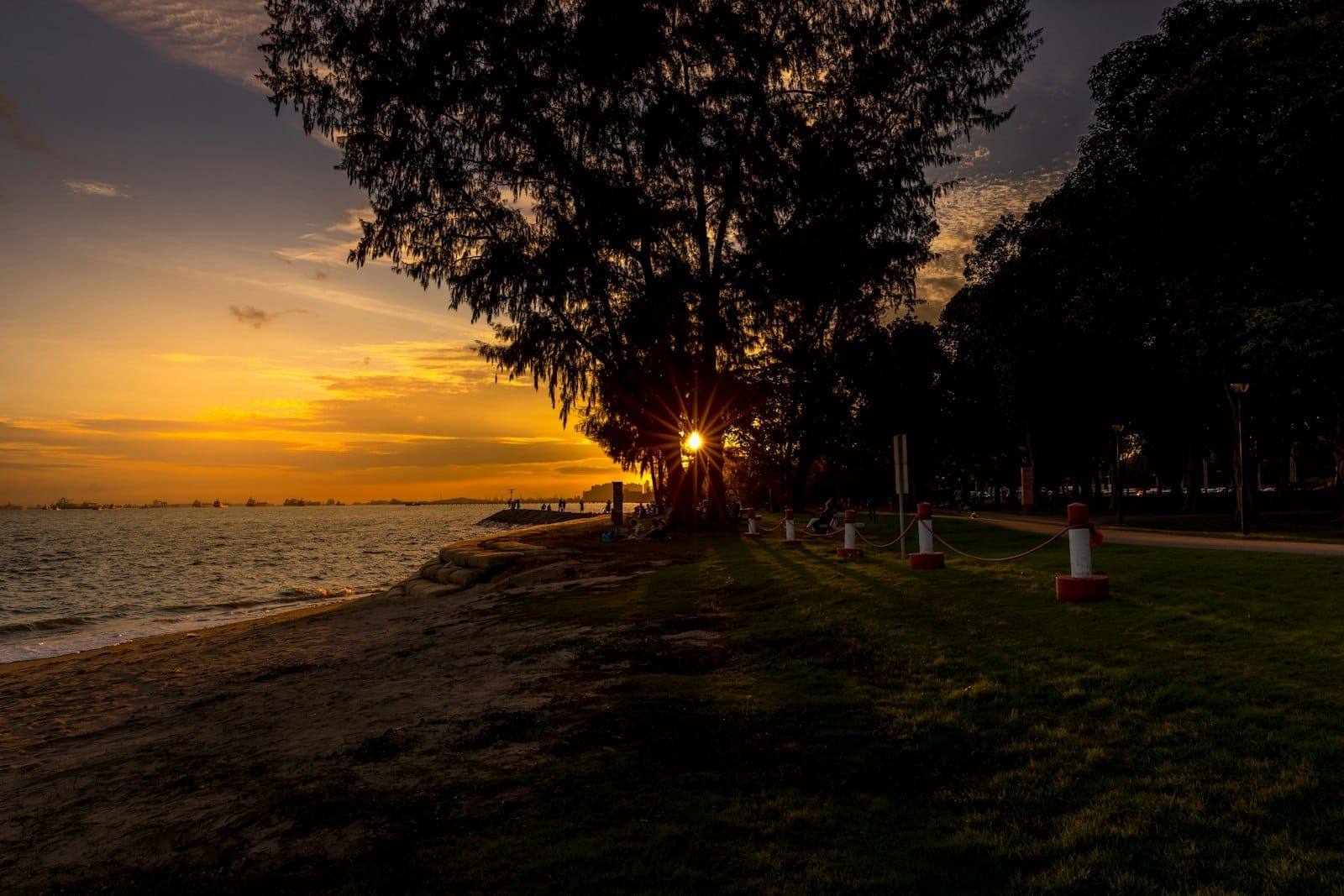
Early mornings in East Coast belong to the regulars. By 6am, cyclists are already stacking up laps along the East Coast Park coastal path, runners move in both directions past the casuarina groves, and the seafood restaurants from the night before are being hosed down. The air smells of salt and cut grass. At the lagoon food village, the first hawker stalls fire up their woks before 8am.
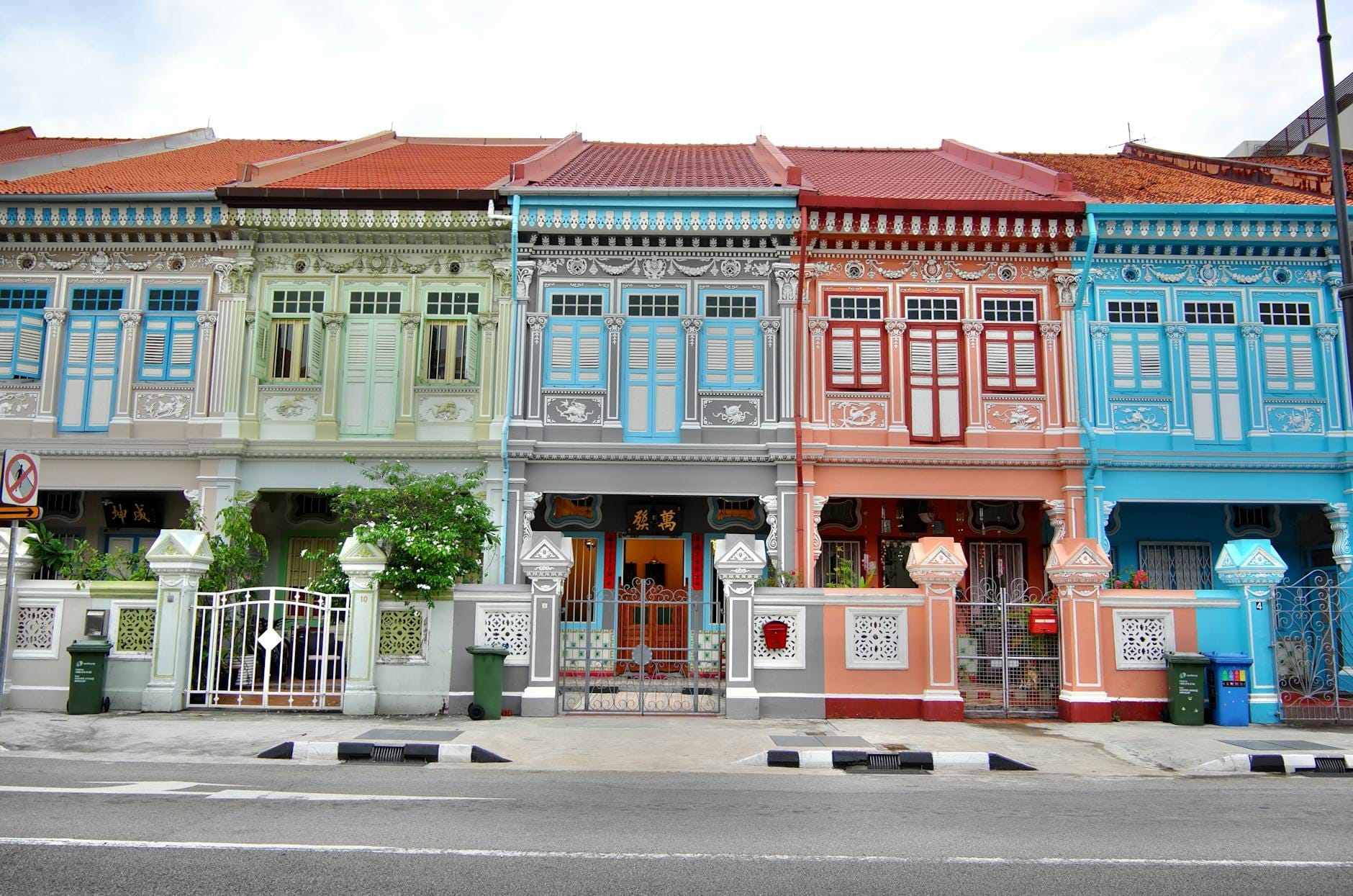
By mid-morning, the Katong and Joo Chiat end of the neighbourhood comes alive. Along East Coast Road and Joo Chiat Road, two and three-storey Peranakan shophouses painted in ochre, mint green, and coral pink line the pavement. Antique shops sit next to bakeries and noodle stalls. The architecture here is some of the most intact in Singapore, and walking these blocks on a weekday morning, when crowds are thin and the light is soft, is genuinely one of the better urban walks the city offers.
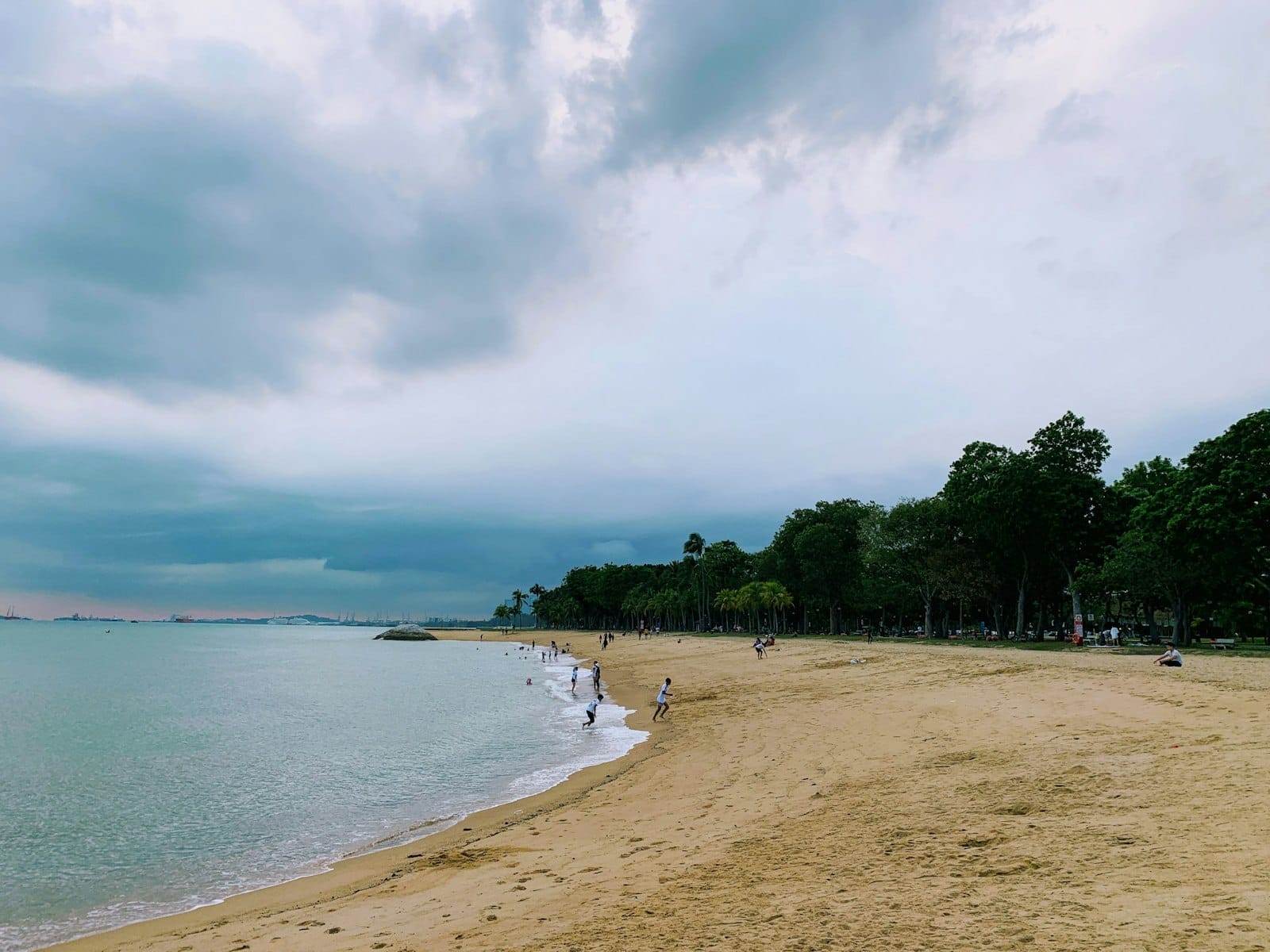
Afternoons in East Coast Park draw families, picnickers, and inline skaters. Weekends amplify everything: the park becomes one of Singapore's great social mixing grounds, with barbecue pits booked out months in advance and the car parks along Fort Road and Bedok South Avenue filling early. On weekday afternoons, though, the park can feel almost contemplative, the sea breeze steady and the shade of the casuarinas dense enough to make the heat bearable.
After dark, East Coast shifts to a seafood and supper culture. The big open-air seafood restaurants along the park road do their best business between 7pm and 10pm, with tables of extended families working through whole crabs and tiger prawns. Geylang, just to the northwest, adds a rawer late-night dimension: it is Singapore's most uncensored neighbourhood, known equally for its durian stalls, its cheap zichar restaurants, and its red-light activity. It is busy, frank, and entirely worth visiting for the food, though solo travellers should be aware of what they are walking into after midnight.
ℹ️ Good to know
Geylang is a legal grey area by Singapore standards, with licensed brothels operating within designated lorongs (lanes). The streets are safe and well-lit, and the food scene is genuinely excellent, but it is not a family-oriented area after dark. Most travellers visit specifically for the late-night durian stalls and 24-hour eating.
What to See & Do
The anchor attraction of the entire East Region is East Coast Park, Singapore's largest urban park. The 20-kilometre coastal strip runs from Marina Bay in the west to Changi in the east, and it packs in a lot: swimming lagoons, beach volleyball courts, the Xtreme Skate Park, the National Sailing Centre, barbecue pits, cycling rental outlets, and a string of food and beverage outlets. The beach itself is not a tropical showstopper — the water here is the Strait of Singapore, so expect shipping traffic on the horizon — but for what it is, a free, well-maintained, sea-adjacent green space minutes from the city, it earns its popularity.
The cultural weight of East Coast sits in Katong and Joo Chiat. This area preserves one of Singapore's most significant concentrations of Peranakan heritage, a culture descended from Chinese immigrants who intermarried with local Malay communities from the 15th century onwards. The Katong and Joo Chiat precinct rewards slow walking: look for the intricate ceramic tile facades, the ornate ventilation openings above shophouse doors, and the narrow backlanes where the original layout of these buildings becomes clear.
East Coast Park: cycling, rollerblading, beach lagoons, skate park, and kite flying on the open lawns near the Bedok end
Joo Chiat Road and East Coast Road: Peranakan shophouse architecture, antique shops, independent cafes
Geylang Serai Market: the cultural hub of Singapore's Malay community, especially worth visiting during Ramadan for the Geylang Serai bazaar
Bedok Jetty: a quieter stretch of the park's eastern end with fishing families and sea views
Changi Boardwalk: a short walk connecting East Coast Park's eastern end toward Changi Point, with mangroves and sea views
East Coast is not a neighbourhood defined by museums or paid attractions. Its appeal is more ambient: the quality of daily life, the food, the park, and the architecture. If you are looking for a concentrated list of ticketed sights, you will run out of options quickly. If you are looking for a neighbourhood that rewards a full day of eating, walking, and watching how Singapore actually lives, it delivers consistently.
Eating & Drinking
East Coast may be the single best neighbourhood in Singapore for eating. The combination of hawker centres, Peranakan restaurants, seafood houses, and Malay kampung-style cooking gives it a range that few other parts of the city can match. For a broader overview of Singapore's food culture, the Singapore food guide covers the full landscape, but East Coast deserves its own focus.
Katong laksa is the dish most closely identified with this neighbourhood: a coconut milk-based noodle soup with prawns, cockles, and fish cake, traditionally served with short-cut noodles you eat with a spoon rather than chopsticks. Several competing stalls along East Coast Road have been claiming the original recipe for decades, which means you can do your own comparative tasting within a few hundred metres. The differences are real and worth arguing about.
Chilli crab and black pepper crab at the seafood restaurants along East Coast Park Service Road are a Singapore ritual. These are large, noisy, open-air restaurants built for groups. Prices are not cheap — a whole crab can run to S$60-80 or more depending on weight and species — but the experience of eating seafood outdoors with the park around you is distinct from eating the same dish in an air-conditioned restaurant in Orchard Road. Lunch service tends to be quieter and sometimes cheaper than dinner.
East Coast Lagoon Food Village: one of Singapore's most beloved hawker centres, open late, with famous satay, char kway teow, and barbecue seafood stalls
Geylang Serai Market and Food Centre: Malay and Indian Muslim cooking, including nasi padang, murtabak, and roti john
Ceylon Road and the surrounding streets: roti prata and Indian Muslim breakfast culture
Katong and Joo Chiat Road: Peranakan kueh (small cakes and snacks), nonya cooking, and a growing number of independent cafes
Geylang: zichar restaurants and durian stalls open until 2am or later
💡 Local tip
East Coast Lagoon Food Village gets crowded on weekend evenings. Arriving before 6:30pm or after 9pm makes a noticeable difference. Many of the best stalls sell out of their signature items by 8pm, so earlier is generally better for full choice.
For reference on how East Coast's hawker culture compares to the rest of the city, the hawker centres guide is worth reading before you visit. East Coast Lagoon Food Village sits in a different league from a food court in a shopping mall: it is an outdoor centre that has operated continuously for decades and retains a distinctly local character.
Getting There & Around
East Coast's transit connections are improving significantly. The Thomson-East Coast Line (TEL) has stations at Katong Park, Marine Parade, Marine Terrace, Siglap, Bayshore, Bedok South, and Sungei Bedok, making the western portion of East Coast far more accessible by MRT than it was for most of its history. The East-West Line (EWL) runs along the northern edge of the broader area, with Paya Lebar, Eunos, Kembangan, and Bedok stations providing access to the Geylang and Bedok ends of the neighbourhood.
East Coast Park itself sits between the expressway and the sea, which means it is not directly served by any MRT station. The most practical approach is to alight at one of the TEL stations, walk through the residential areas south of Marine Parade Road, and enter the park via the pedestrian underpasses that cross beneath the East Coast Parkway. It takes roughly 10-15 minutes on foot from Marine Parade MRT to the park's main recreation areas.
Bus 401 runs directly into East Coast Park on Saturdays from 2pm to 10pm and Sundays from 10am to 8pm, departing from Bedok MRT interchange. This is the most convenient public transport option for the park on weekends. On weekdays, buses along Marine Parade Road and East Coast Road connect to various parts of the corridor, though journeys from the city centre can be slow in traffic.
Grab (Singapore's dominant ride-hailing app) and taxis are reliable throughout East Coast and are often the most practical way to get between specific points within the neighbourhood, particularly for restaurant visits at night. Cycling is also a genuine option: bicycle rental is available at multiple points within East Coast Park, and the coastal path is flat and well-maintained the full length of the park.
💡 Local tip
If you are visiting from Changi Airport, Bus 36 runs from the airport along the East Coast Road corridor toward Orchard Road, passing through much of the neighbourhood. It is slow compared to the MRT but gives you an unplanned introduction to the area at a fraction of taxi cost.
Where to Stay
East Coast is not a primary hotel district in Singapore. Most international hotels cluster around Marina Bay, Orchard Road, and Sentosa. For a full breakdown of accommodation zones across the city, the where to stay in Singapore guide covers the trade-offs in detail. East Coast makes sense as a base for a specific type of traveller: someone staying longer than a few days, prioritising neighbourhood life and food over proximity to the main tourist circuit, or travelling with family and wanting access to the park.
The Katong and Marine Parade end of East Coast has a modest supply of boutique hotels, serviced apartments, and guesthouses within the shophouse strip. These tend to be quieter and more characterful than city-centre options at a similar price point. The trade-off is that you will need the MRT or a taxi to reach Marina Bay, Chinatown, or Orchard Road, each of which is roughly 20-30 minutes away depending on your starting point.
Bedok, at the eastern end, offers more budget accommodation options and has strong local hawker infrastructure, but it feels further from the aesthetic and cultural draw of Katong. For most travellers who want to experience East Coast without fully basing themselves here, a day trip from a city-centre hotel is a perfectly valid approach.
⚠️ What to skip
East Coast Road and the main Katong streets can be noisy on weekend nights, when the restaurant and bar trade runs late. If you are a light sleeper, confirm your accommodation's facing and soundproofing before booking.
Practical Notes
East Coast works well as a half-day or full-day excursion from the city centre. A logical route combines a morning walk through the Katong and Joo Chiat shophouse streets, lunch at one of the laksa stalls on East Coast Road, an afternoon in the park, and dinner at East Coast Lagoon Food Village or one of the seafood restaurants. If you are travelling with children, Singapore with kids has more tailored suggestions, but East Coast Park's open spaces and cycling rentals make it one of the more child-friendly areas in the city.
The neighbourhood has no significant safety concerns. East Coast Park is well-lit along its main sections and frequented until late on weekends. Geylang, as noted, requires some awareness of context after midnight, but is not dangerous. Petty theft is rare by regional standards, consistent with Singapore broadly.
East Coast sits far enough from the usual tourist route that most visitors to Singapore never reach it, which is part of what makes it worth the trip. It is not trying to attract you with spectacle. It is simply a neighbourhood that has worked out how to be pleasant to live in, and that quality is something Singapore's more obvious attractions sometimes lack.
TL;DR
East Coast is best understood as a residential neighbourhood that happens to have excellent food, a 20km beach park, and some of Singapore's most intact Peranakan heritage architecture.
East Coast Park is the main draw for visitors: flat, accessible, and free, with cycling, beach lagoons, barbecue pits, and hawker food all in one place.
Katong laksa, chilli crab, and the East Coast Lagoon Food Village are the eating highlights. This is one of Singapore's strongest neighbourhoods for local food culture.
Transit access has improved significantly with the Thomson-East Coast Line, but the park itself still requires a short walk or a weekend bus from Bedok MRT.
Best for: food-focused travellers, families wanting park access, anyone seeking a day away from the tourist circuit. Less suited to travellers prioritising nightlife or iconic sights.
Singapore sits just one degree north of the equator, which means warm, humid weather all year round. But that doesn't mean every month is equal. This guide breaks down the best time to visit Singapore by weather, crowds, festivals, and budget so you can plan a trip that actually works.
Singapore has one of the most efficient public transport systems in the world. This guide covers everything from MRT fares and bus routes to taxis, ride-hailing apps, and how to get from Changi Airport to the city centre without overpaying.
Singapore is compact, well-connected, and surrounded by islands, jungle, and a whole other country just across the Causeway. Whether you want to cycle through mangroves, shop across the border, or laze on a beach, these are the day trips that actually deliver. Here is what to expect, how to get there, and what to skip.
Singapore packs more culinary diversity per square kilometre than almost any city on earth. This guide breaks down the essential dishes, the best hawker centres, neighbourhood food streets, and honest advice on where to spend your appetite and your Singapore dollars.
Singapore's hawker centres are where the city's food culture lives. With over 110 centres and 6,000 stalls serving Chinese, Malay, Indian, and fusion dishes for under $10 SGD, this guide covers everything from the best centres to visit, to unwritten rules locals actually follow.
Whether you have a long weekend or a full week, Singapore rewards every length of stay. This itinerary guide builds day by day, from the essential Marina Bay icons and multicultural neighborhoods to wildlife parks, island escapes, and local food pilgrimages.
Singapore is one of Asia's premier shopping destinations, with low import tariffs, world-class malls, and lively street markets all within a compact city. This guide cuts through the noise to tell you exactly where to shop, what to expect, and how to get the best value.
Singapore is one of the easiest cities in the world to travel with children. World-class wildlife parks, interactive museums, beach days, and theme park thrills are all packed into a compact, safe, and well-connected island. This guide covers the best family attractions in Singapore, organized by experience type so you can plan a trip that keeps kids genuinely excited from morning to night.
Singapore packs an extraordinary range of experiences into just 733 square kilometres. This guide covers the top things to do in Singapore, from world-class attractions and neighbourhood food trails to nature reserves and cultural landmarks, with honest assessments of what's worth your time and money.
Choosing where to stay in Singapore shapes your entire trip. This guide breaks down every major area by character, price range, and practical pros and cons, so you can book with confidence regardless of your budget or travel style.