Where to Stay in Singapore: The Complete Neighbourhood Guide
Choosing where to stay in Singapore shapes your entire trip. This guide breaks down every major area by character, price range, and practical pros and cons, so you can book with confidence regardless of your budget or travel style.
Plan and book this trip
Tools from our partner Travelpayouts help you compare flights and hotels. If you book through them, we may earn a commission at no extra cost to you.
Flights
Hotels map
TL;DR
- Singapore is compact and well-connected by MRT, so location matters less than in larger cities, but your neighbourhood still sets the tone for your stay.
- Marina Bay and the Colonial District suit first-timers who want iconic sights on their doorstep; Clarke Quay and Orchard Road offer the best balance of access and price for most travellers. See the full Singapore itinerary guide to plan your days around your base.
- Budget hotels and hostels start around S$50–70 per night (roughly US$37–52); luxury rooms at Marina Bay Sands typically run S$400–600+ per night.
- Book well ahead for December and January, when prices spike significantly around the holiday season and Formula 1 proximity events.
- Sentosa is not as isolated as it looks on a map: the MRT Sentosa Express connects it to HarbourFront in minutes. For resort-style accommodation near Universal Studios Singapore and the beaches, it is a legitimate option.
How Singapore's Neighbourhoods Work
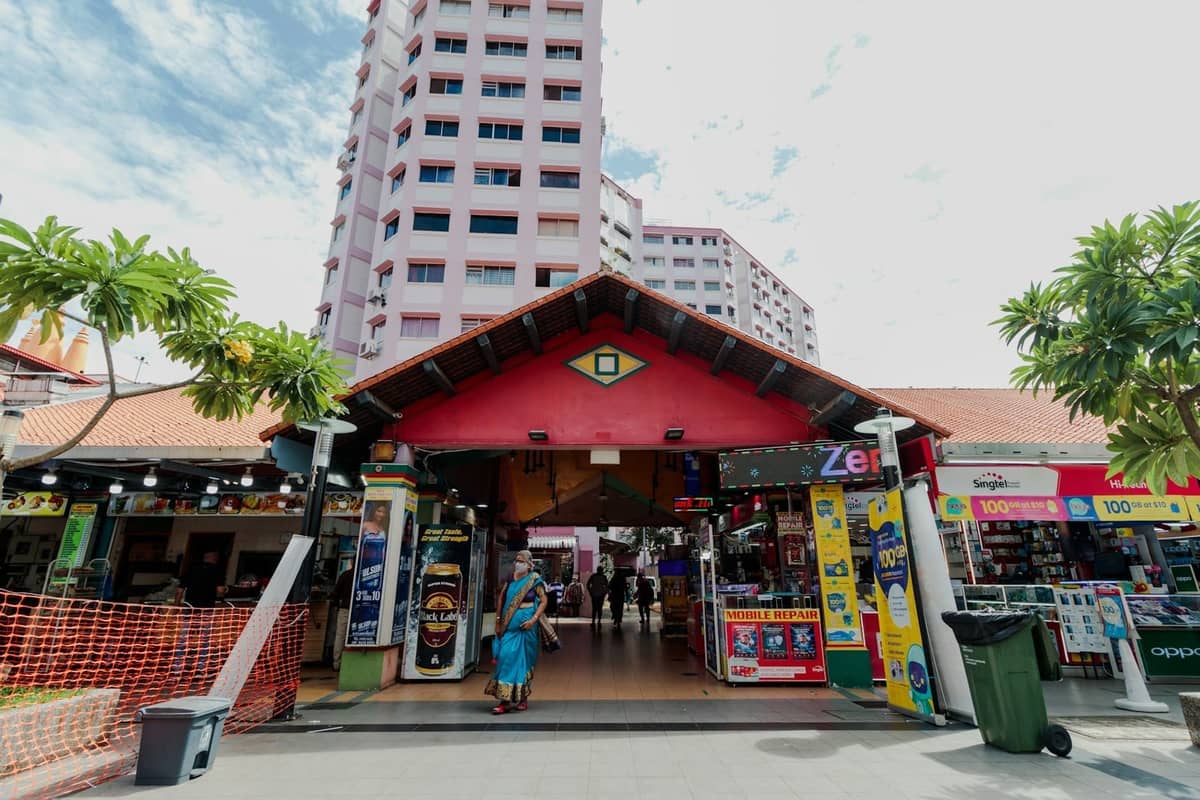
Singapore covers 734.3 square kilometres and is divided into five regions, 55 planning areas, and hundreds of subzones. For travellers, the practical question is simpler: stay somewhere on or near the MRT network and you can reach almost any attraction within 30 minutes. The North-South, East-West, Circle, and Downtown lines cover the major tourist corridors. If you are trying to decide how to get around Singapore, the MRT is your answer for most journeys.
The main hotel clusters for tourists are Marina Bay, the Colonial District, Orchard Road, and Clarke Quay. Each has a distinct atmosphere and price band. Beyond those, Kampong Glam and Little India offer genuine neighbourhood character at lower prices, while Sentosa and Changi Airport serve specific needs. What follows is an honest assessment of each.
Marina Bay: Iconic Views, Premium Prices
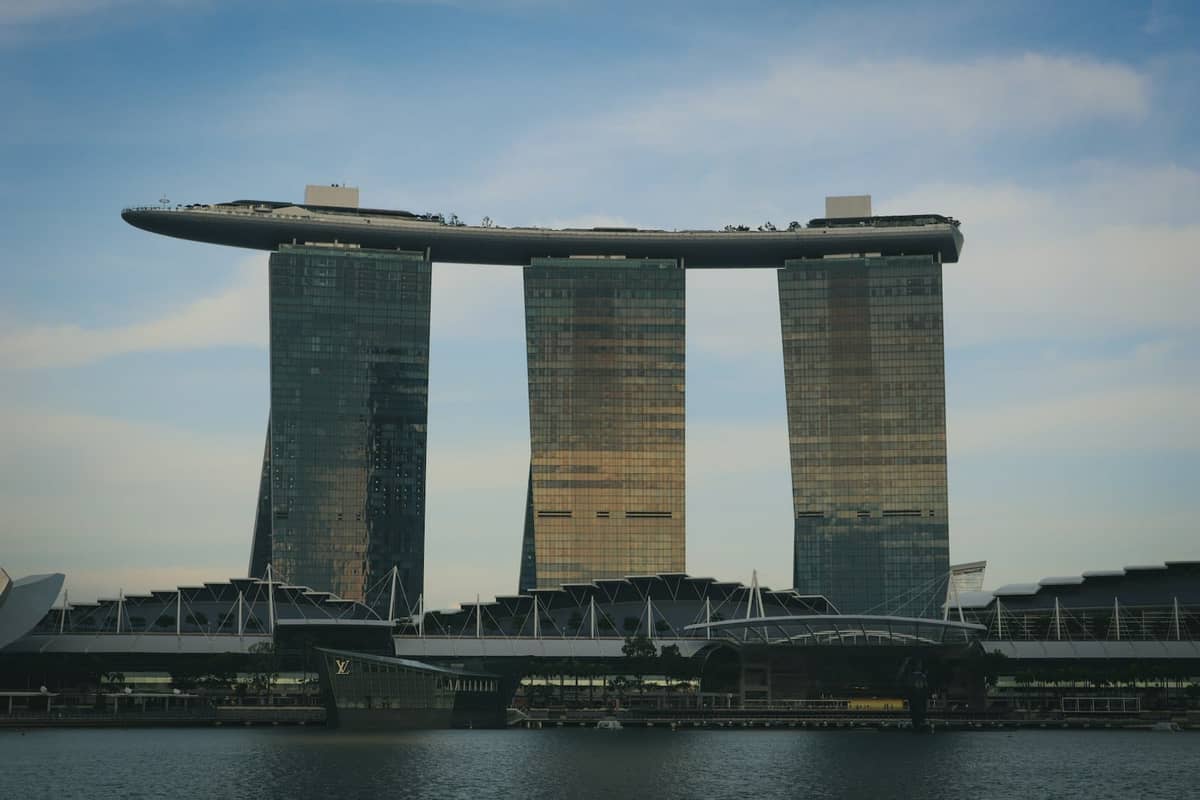
Marina Bay is Singapore's showpiece waterfront district and the address most travellers picture when they think of the city. The Marina Bay Sands hotel is the centrepiece: three towers capped by a sky park with an infinity pool that has become one of the most photographed spots in Southeast Asia. Rooms here start around S$400–600 per night for standard categories, and suites climb far higher. The pool is reserved for hotel guests only, which is worth factoring into the cost-benefit calculation.
Other strong options in the area include the Pan Pacific Singapore, which offers a sleek modern product and outdoor pool at prices that are somewhat easier to justify for longer stays. The Gardens by the Bay and the ArtScience Museum are walkable from most Marina Bay hotels, which is a genuine practical advantage. The Singapore Flyer is also close by. For the full picture of what this area offers, the Marina Bay neighbourhood guide covers it in detail.
⚠️ What to skip
Marina Bay Sands is genuinely impressive, but it is not the best value option in Singapore. If seeing the infinity pool is the goal, consider booking the SkyPark Observation Deck separately (around S$35 per adult) rather than paying hotel rates for room access. The view is largely the same.
Clarke Quay and the Colonial District: Best Central Base for Most Travellers
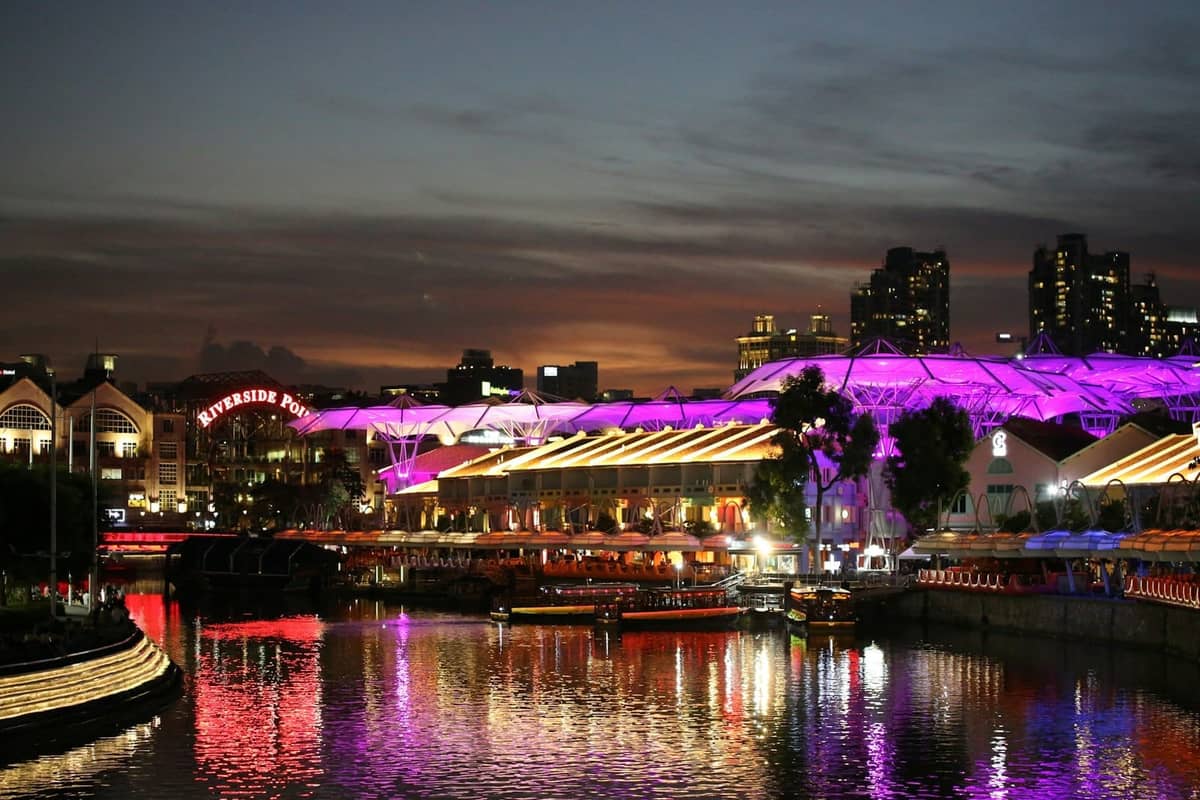
Clarke Quay sits on the Singapore River, roughly equidistant between the Colonial District and Chinatown, and it is the most practical base for travellers who want to explore broadly. Clarke Quay itself is a riverside entertainment strip best known for bars and restaurants that get genuinely busy from Thursday to Sunday nights. If noise is a concern, look for hotels set back slightly from the quayside. The Clarke Quay MRT station (North-East Line) connects quickly to Little India, Orchard Road, and Chinatown.
Budget options in this corridor include the Ibis Budget on Bencoolen Street (around S$80–120 per night) and several well-reviewed hostels that come in under S$50 for a dorm bed. At the higher end, the Fullerton Hotel occupies a beautifully restored 1928 building on the river and remains one of Singapore's most respected addresses, with rooms typically starting around S$400–500 per night.
The Colonial District, just north of the river, is home to Raffles Hotel, arguably Singapore's most famous address. Restored and reopened in 2019, it blends colonial architecture with genuinely luxurious modern rooms. The Long Bar, birthplace of the Singapore Sling, draws crowds regardless of whether you are staying there. The nearby National Gallery Singapore and National Museum of Singapore make this area particularly rewarding for culture-focused visitors.
✨ Pro tip
Fort Canning MRT station (Downtown Line) opened in 2016 and significantly improved access to the Clarke Quay and Colonial District area. If a hotel quotes its proximity to City Hall MRT, check that it is not a 15-minute walk away from the actual station entrance, as this corridor has several oversized blocks.
Orchard Road: Shopping-Focused with Strong Connections
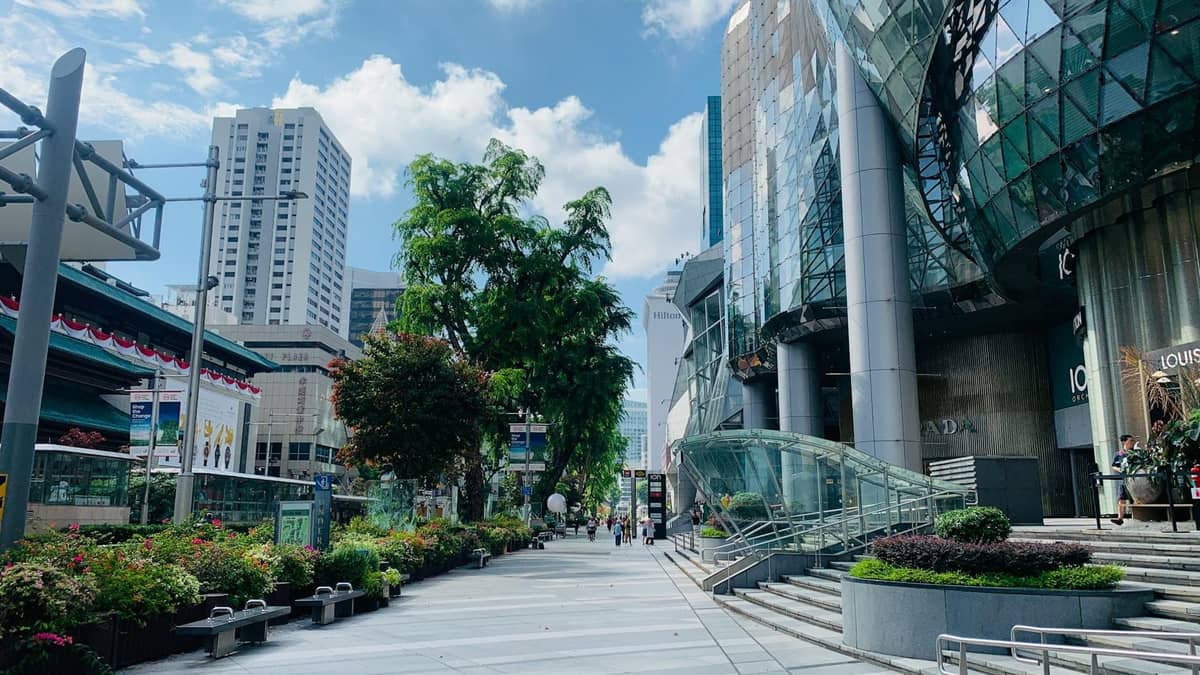
Orchard Road is Singapore's main retail corridor, and staying here makes sense if shopping is a priority or if you value a wide spread of mid-range international hotel brands in one place. The street runs about 2.2 kilometres and is served by three MRT stations (Orchard, Somerset, and Dhoby Ghaut), so no hotel in this area is particularly inconvenient. The ION Orchard mall is connected directly to the Orchard MRT and anchors the luxury end of the strip.
Shangri-La Singapore (on Orange Grove Road, a short walk from the main strip) is consistently rated among the city's top luxury properties and has one of the largest hotel pools in Singapore. The Goodwood Park Hotel is a heritage option with a genuinely large outdoor pool and a slightly quieter setting. For budget travellers, the Holiday Inn Express on Orchard Road offers functional, clean rooms typically starting around S$120–160 per night, which is competitive for the location.
Kampong Glam, Little India, and Chinatown: Local Atmosphere at Lower Prices
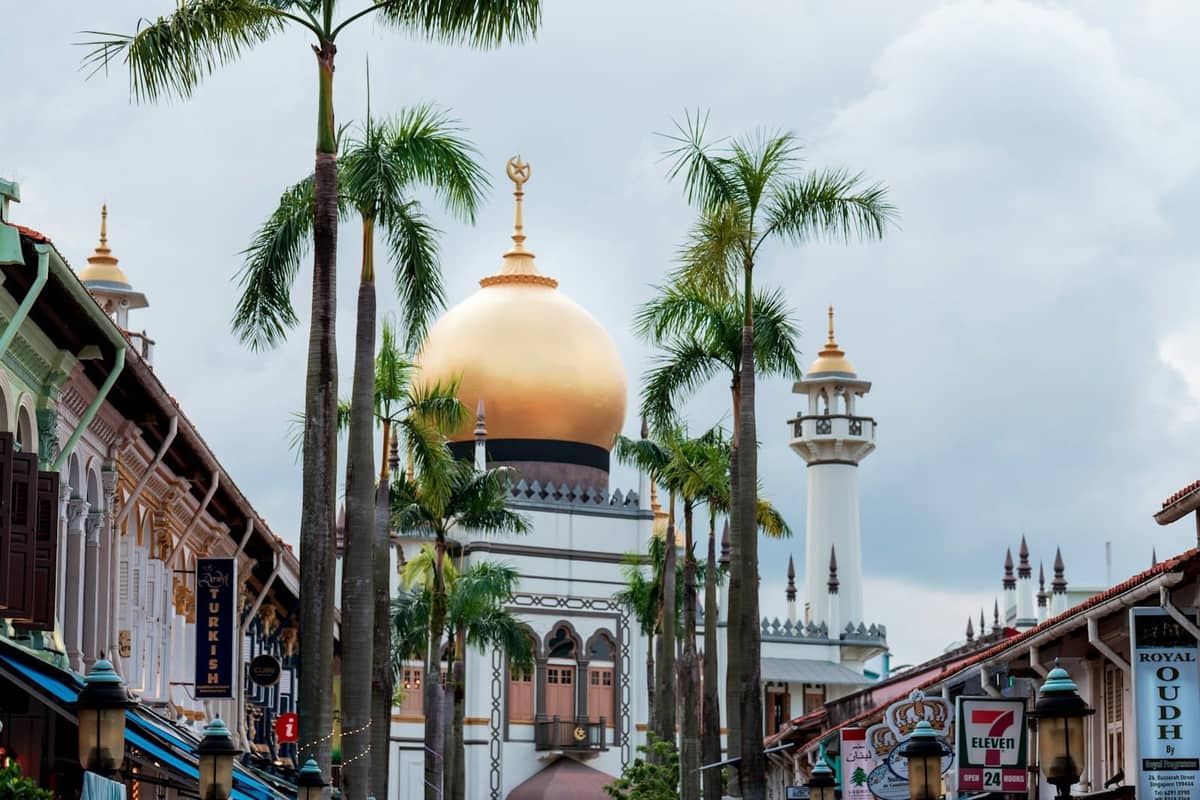
These three heritage districts each have a distinct cultural identity and generally offer lower accommodation prices than the central hotel corridor. Kampong Glam is centred around the Sultan Mosque and Haji Lane, a narrow street lined with independent boutiques and cafes. It is a legitimately interesting neighbourhood to wake up in, and Bugis MRT provides fast connections elsewhere.
Little India around Serangoon Road is Singapore's most sensory-rich neighbourhood: produce markets, flower garlands, and the smell of incense from the Sri Veeramakaliamman Temple. Hotels here tend to be small guesthouses and budget properties, generally in the S$70–130 range. It is not a refined hotel area, but for travellers who want to be embedded in a working neighbourhood rather than a tourist zone, it works well. Chinatown is similar: the area around Buddha Tooth Relic Temple has several competent mid-range options and some excellent budget hostels, with direct MRT access on the North-East Line.
- Marina Bay Best for: first-timers, special occasions, bucket-list luxury. Price range: S$350–800+/night. Downside: expensive food and drink in the immediate vicinity.
- Clarke Quay / Colonial District Best for: most travellers, all budgets. Price range: S$70–500+/night. Downside: Clarke Quay riverside gets noisy on weekends.
- Orchard Road Best for: shoppers, business travellers, families. Price range: S$120–600+/night. Downside: less local character than other areas.
- Kampong Glam Best for: culture seekers, mid-range budget. Price range: S$80–200/night. Downside: fewer hotel options overall.
- Little India / Chinatown Best for: budget travellers, backpackers, independent explorers. Price range: S$50–130/night. Downside: budget properties vary widely in quality.
- Sentosa Island Best for: families, beach holidays, resort stays. Price range: S$200–600+/night. Downside: feels removed from the rest of Singapore, food is pricier on the island.
- Changi Airport area Best for: very early or late flights, overnight connections. Price range: S$150–300/night. Downside: a long way from central sights.
Sentosa and Changi: Niche but Useful
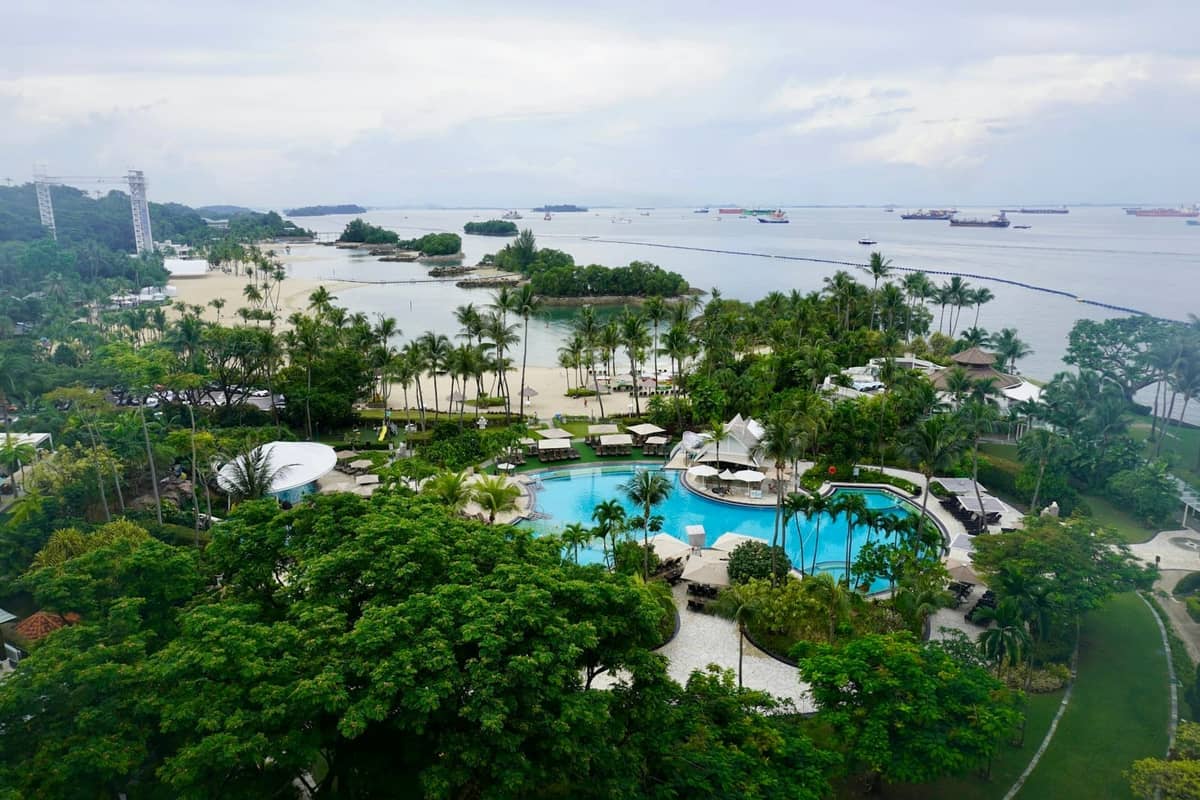
Sentosa Island is connected to the mainland by the Sentosa Express monorail from HarbourFront MRT, making it less isolated than its island status suggests. Staying here makes most sense if your trip revolves around Universal Studios Singapore or the Sentosa beaches. The Sofitel Singapore Sentosa Resort and Spa is the standout luxury option, with private pool villas and a genuinely resort-like atmosphere. Hard Rock Hotel and Shangri-La Rasa Sentosa are solid family options. Just be aware that dining on Sentosa is consistently 20–30% more expensive than equivalent meals in the city.
Changi Airport's Crowne Plaza hotel is physically connected to Terminal 3 via a covered walkway, which is a real advantage for early-morning international departures. It is not a place to base a Singapore holiday, but for a layover of 12–24 hours it is genuinely convenient. The Jewel Changi Airport complex next door has enough restaurants and attractions to fill an evening.
Pricing, Seasons, and Booking Advice
Singapore operates in a narrow year-round temperature band of roughly 25–32°C, so there is no traditional high or low season driven by weather. Hotel pricing is driven by events and school holidays instead. December and early January are the most expensive period by a significant margin, coinciding with the year-end holiday season. The Formula 1 Singapore Grand Prix (usually held in September) causes significant price spikes around Marina Bay specifically. Chinese New Year (January or February) and Deepavali weekends also push prices up.
As a rough guide: budget guesthouses and hostels start around S$50–70 per night for a private room, sometimes less for a dorm bed. Solid mid-range hotels (clean, well-located, 3-4 star) typically run S$150–280 per night. Luxury properties start around S$350 and can exceed S$1,000 for suites. Singapore is simply an expensive city to sleep in compared to regional neighbours, and that is unlikely to change. If budget is the main concern, check the Singapore food guide to offset costs by eating at hawker centres, where excellent meals cost S$4–8.
💡 Local tip
Singapore's GST (Goods and Services Tax) is applied to hotel rates. Always check whether the displayed rate is inclusive or exclusive of taxes and service charge, which together can add 9–18% to the headline price. The phrase 'nett' in local hotel pricing means the all-in rate with taxes included.
- Book December and January stays at least 2–3 months ahead; availability tightens early.
- Formula 1 Grand Prix weekend (September): Marina Bay hotels can double in price. Book 6+ months out or stay away from the waterfront.
- February to early April and July to August are generally the most affordable months for mid-range and luxury hotels.
- Always compare the hotel's own direct booking rate against aggregators: Singapore properties frequently offer perks (room upgrades, breakfast, late checkout) for direct bookings.
- For stays under 30 days, tourists are typically charged the full nightly rate without GST exemptions, but always confirm with the property.
FAQ
Where is the best area to stay in Singapore for first-time visitors?
Clarke Quay and the Colonial District offer the best combination of central location, MRT access, and range of hotel options across budgets. Marina Bay is more iconic but significantly more expensive for equivalent room quality. First-timers who want convenience without paying Marina Bay rates should focus on the stretch between Raffles Place and Clarke Quay MRT stations.
Is it worth staying at Marina Bay Sands?
If the infinity pool experience and iconic location are important to you and budget is not a constraint, yes. The rooms are well-appointed, the integrated resort is self-contained, and the location is genuinely central. If you are purely optimising for value, the same S$400–600 per night can buy you a better room at several other luxury properties in Singapore, and you can still visit the SkyPark Observation Deck as a non-guest for around S$35.
Are there budget accommodation options in Singapore?
Yes, despite Singapore's reputation as an expensive destination. Hostels and budget guesthouses in Chinatown, Little India, and the Bugis/Kampong Glam area offer private rooms from around S$50–90 per night and dorm beds from around S$25–40. The Ibis Budget brand has properties in accessible locations at competitive rates. Just verify reviews carefully, as quality varies significantly at the budget end of the market.
Is Sentosa Island a good place to stay?
It depends entirely on your priorities. If your trip centres on the beach, Universal Studios Singapore, or a resort-style experience, Sentosa makes sense and the Sentosa Express monorail keeps you connected to the mainland. If you plan to spend most of your time exploring the city's cultural districts, eating at hawker centres, and using public transport, staying on Sentosa will add unnecessary transit time and cost to every outing.
When is the cheapest time to book hotels in Singapore?
February to early April (after Chinese New Year) and the months of July and August generally see softer hotel prices. Avoid December, early January, and the Formula 1 Grand Prix weekend in September if price is a priority. Booking on weeknights also tends to yield lower rates than weekend bookings, especially for business-oriented hotels in the Orchard Road and Marina Bay areas.