ArtScience Museum: Where Ideas Take Shape at Marina Bay
Housed in one of Singapore's most recognizable buildings, the ArtScience Museum brings together science, technology, and culture in 21 gallery spaces across 6,000 square metres. It sits at the edge of Marina Bay Sands, making it a natural stop on any Marina Bay itinerary.
Quick Facts
- Location
- 6 Bayfront Avenue, Marina Bay Sands, Singapore 018974
- Getting There
- Bayfront MRT (Circle/Downtown Line) — approx. 10-minute walk
- Time Needed
- 2 to 3 hours for a single exhibition; half-day if exploring multiple
- Cost
- Ticket prices vary by exhibition; book online in advance to skip queues
- Best for
- Families, design lovers, curious travelers, rainy-day plans
- Official website
- www.marinabaysands.com/museum.html
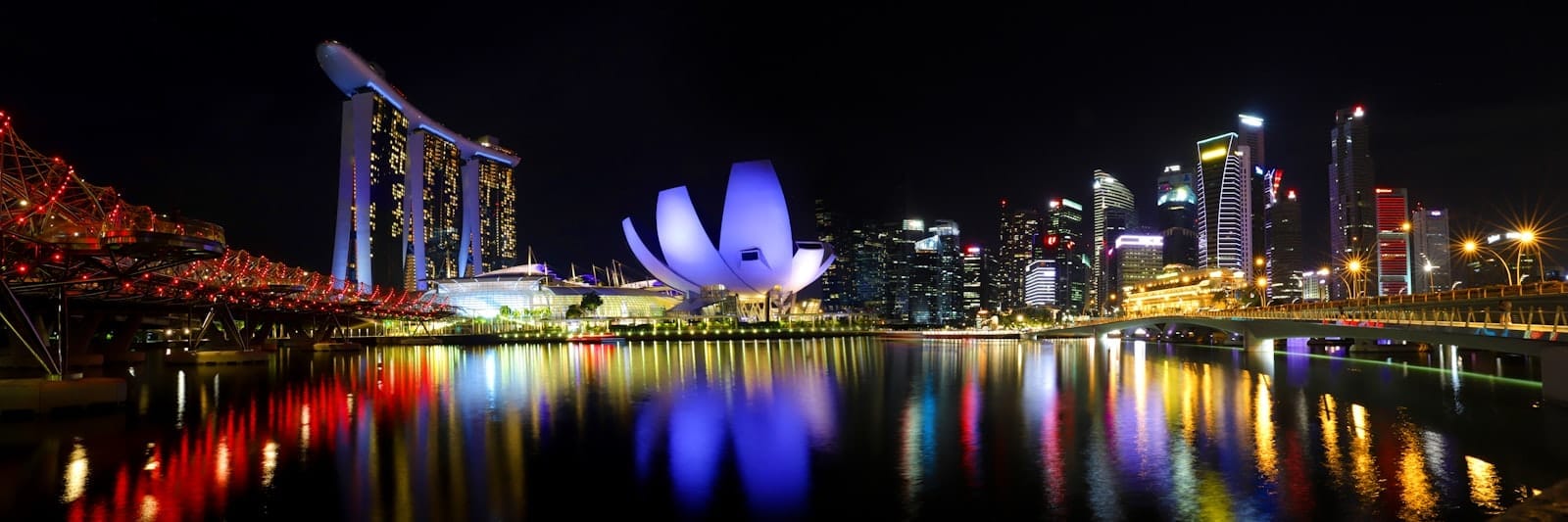
What the ArtScience Museum Actually Is
The ArtScience Museum opened on 19 February 2011, making it one of the younger landmarks on the Marina Bay waterfront, yet it has already become one of the most visited cultural institutions in Singapore. Designed by Canadian-Israeli architect Moshe Safdie, the building takes the shape of a lotus flower, with 10 irregular petals rising from a central column over the water. From across the bay, it looks almost sculptural, more like an installation than a museum.
Inside, the museum stretches across 6,000 square metres of gallery space organized into 21 individual galleries. It holds the distinction of being Singapore's largest private museum. The programming shifts regularly between blockbuster international exhibitions and more experimental shows, covering everything from natural history and digital art to pop culture retrospectives.
ℹ️ Good to know
The museum runs a rolling calendar of ticketed exhibitions. Always check the official website before visiting — walking in without a ticket during a popular show can result in sold-out queues at the door.
The Architecture: A Building Worth Looking At Before You Go In
The lotus shape is not purely decorative. The petals are constructed from fibre-reinforced plastic over an internal steel lattice, and the open top of the central column functions as a skylight, channeling natural light down into the atrium below. On a clear day, sunlight moves across the interior walls as the sun shifts position, creating a slow light show that costs nothing extra to appreciate.
The museum holds both LEED Gold Green Building Certification and BCA Green Mark status, reflecting design choices that go beyond aesthetics. The skylights reduce dependence on artificial lighting, and rainwater collected from the roof structure is funneled into a central waterfall feature in the atrium.
Before entering, spend five minutes walking the exterior perimeter along the Marina Bay waterfront promenade. The building photographs differently depending on which angle you approach from, and the view from the water side, with the Bayfront behind it, is the most dramatic.
Tickets & tours
Hand-picked options from our booking partner. Prices are indicative; availability and final rates are confirmed when you complete your booking.
Adventure Cove Waterpark™ e-ticket
From 27 €Instant confirmationWild Wild Wet Waterpark Entrance Ticket
From 15 €Instant confirmationLion City bike tour in Singapore
From 55 €Instant confirmationFree cancellationLuggage Storage in Singapore
From 7 €Instant confirmationFree cancellation
What Visiting Feels Like: Time of Day, Crowds, and Atmosphere
Weekday mornings between 10am and noon are the calmest window. School groups arrive later, and weekend crowds tend to build from mid-morning onward. If you're visiting on a Saturday afternoon during a popular exhibition, expect narrow gallery corridors with slow foot traffic and photography queues at key installations.
The building stays cool throughout, well air-conditioned against Singapore's equatorial heat, which makes it an effective midday retreat if you've spent the morning outdoors. The atrium area near the entrance has a particular quality: the echo of footsteps, the diffused light from above, and the waterfall feature combine to make it feel more spacious than a standard museum lobby. Children tend to run directly to the water feature.
Exhibition galleries vary significantly in atmosphere depending on the show. Digital and immersive exhibitions are typically dark and LED-lit, with ambient soundscapes. Natural history or photography-based shows tend to use brighter, warmer lighting. There is no single predictable 'feel' to the space, which is part of its appeal and occasionally part of its challenge when moving between very different exhibitions on the same visit.
💡 Local tip
Photography is generally permitted in most gallery areas, but individual exhibition rules vary. Check posted signage at each gallery entrance — some immersive experiences restrict flash or tripods.
Current and Upcoming Exhibitions
As of early 2026, the museum is running 'Insects: Microsculptures Magnified,' running now. The exhibition presents macro photography of insects at extraordinary scale, producing images that look more like alien landscapes than the creatures you'd find in your garden. It is visually accessible for all ages, though the subject matter may not appeal to everyone equally.
'The World of Studio Ghibli' is scheduled to open from October 2026, which will likely drive significant advance bookings. If you're planning a visit around that period, booking tickets the moment they go on sale is strongly advised.
The museum's programming model means that the specific shows on offer when you visit may look entirely different from what is described here. Checking the official website at marinabaysands.com/museum is not optional — it is the most important step in planning your visit.
Getting There and Practical Planning
Bayfront MRT Station serves both the Circle Line and the Downtown Line, making it reachable from most parts of Singapore without a transfer. From the station, the museum is roughly a 10-minute walk through the Marina Bay Sands complex. Follow signage for 'ArtScience Museum' rather than the casino or hotel towers, as the complex is large enough to cause confusion.
The museum sits within one of Singapore's most concentrated tourism zones. Gardens by the Bay is a 15-minute walk across the Dragonfly Bridge, and the Marina Bay Sands observation deck is directly above. You can reasonably combine all three in a full-day itinerary without needing additional transport.
Admission pricing varies by exhibition and changes over time. The museum's online ticketing system lists current prices, and advance booking typically offers a small saving over walk-in rates. On-site ticket purchase is possible, but during peak exhibitions the queues can be disproportionately long relative to the time saved by skipping ahead online.
⚠️ What to skip
Opening hours have been listed differently across sources: 10am to 7pm on some platforms, and 10am to 10pm on others. Verify directly via the official website or call +65 6688 3176 before planning a late visit.
Accessibility and Family Considerations
The museum is fully wheelchair accessible, with lifts connecting all gallery levels. Prams and strollers move through the space without significant obstacles, which makes it practical for families with young children. The central atrium waterfall, the scale of the space, and the visual density of most exhibitions hold children's attention reasonably well.
That said, this is not a hands-on science center with interactive displays throughout. Most exhibitions are observational rather than participatory. Some younger children may find specific gallery formats overstimulating, particularly loud or dark immersive environments, while older children and adults typically find the same spaces the most engaging.
Families spending the day in the Marina Bay area might also consider combining the museum with a walk along the waterfront toward Merlion Park, or evening entry to Gardens by the Bay's domed conservatories, which provide a different but complementary kind of spectacle.
Who This Museum Is Not For
If you are visiting Singapore for a short trip and need to prioritize, the ArtScience Museum is most rewarding when a specific exhibition matches your interests. Generic interest in 'art and science' is sometimes not enough to justify the time and ticket price if the current programming does not resonate with you. Check what is showing before committing.
Travelers expecting a permanent collection with a consistent identity may also be surprised. Unlike traditional museums with curated historical holdings, the ArtScience Museum operates more like a temporary exhibition venue in a spectacular building. The experience depends heavily on timing. That is a feature for some visitors and a limitation for others.
Insider Tips
- The museum's atrium waterfall is free to view from the ground level without purchasing a gallery ticket. Worth a brief stop even if you're not doing the full exhibition.
- The exterior of the building reflects differently in early morning light versus evening. If you're staying near Marina Bay, walking past at dusk gives you a version of the building that most day visitors never see.
- Some exhibitions run separate ticketing for timed entry slots. If you book a general entry ticket without checking for time slots, you may arrive and find you need to queue regardless.
- The museum cafe and retail area near the entrance are accessible without an exhibition ticket, making it a usable rest stop between activities if you're doing a full Marina Bay day.
- For the Studio Ghibli exhibition opening in October 2026, expect demand comparable to major international touring shows. Booking as early as possible is not an overreaction.
Who Is ArtScience Museum For?
- Families with children aged 6 and above who appreciate visual spectacle
- Design and architecture enthusiasts who want to experience Moshe Safdie's building from the inside
- Travelers caught in Singapore's afternoon heat looking for a substantial indoor cultural option
- Pop culture and digital art fans who follow the museum's international exhibition calendar
- First-time visitors to Marina Bay combining multiple landmarks in a single day
Nearby Attractions
Other things to see while in Marina Bay:
- Gardens by the Bay
Gardens by the Bay is Singapore's signature green landmark: 105 hectares of sculpted gardens, climate-controlled conservatories, and towering vertical structures that glow after dark. Here is what each section delivers, and how to make the most of your time there.
- Marina Bay Sands
Marina Bay Sands is Singapore's most recognizable landmark, a three-tower integrated resort crowned by a cantilevered SkyPark and infinity pool 200 metres above the city. Whether you're visiting for the views, the ArtScience Museum, or the mall, here's how to do it right.
- Marina Bay Waterfront Promenade
The Marina Bay Waterfront Promenade is a 3.5-kilometre pedestrian path hugging the western edge of Marina Bay. Free, open around the clock, and anchored by some of Singapore's most recognisable landmarks, it is the city's most rewarding walk for understanding how this island nation presents itself to the world.
- Merlion Park
Merlion Park is Singapore's most photographed landmark — a free, open-air waterfront space anchored by the 8.6-metre Merlion statue facing Marina Bay. It takes about 20 minutes to see, but its position in the heart of the city makes it a natural starting point for exploring the bay.