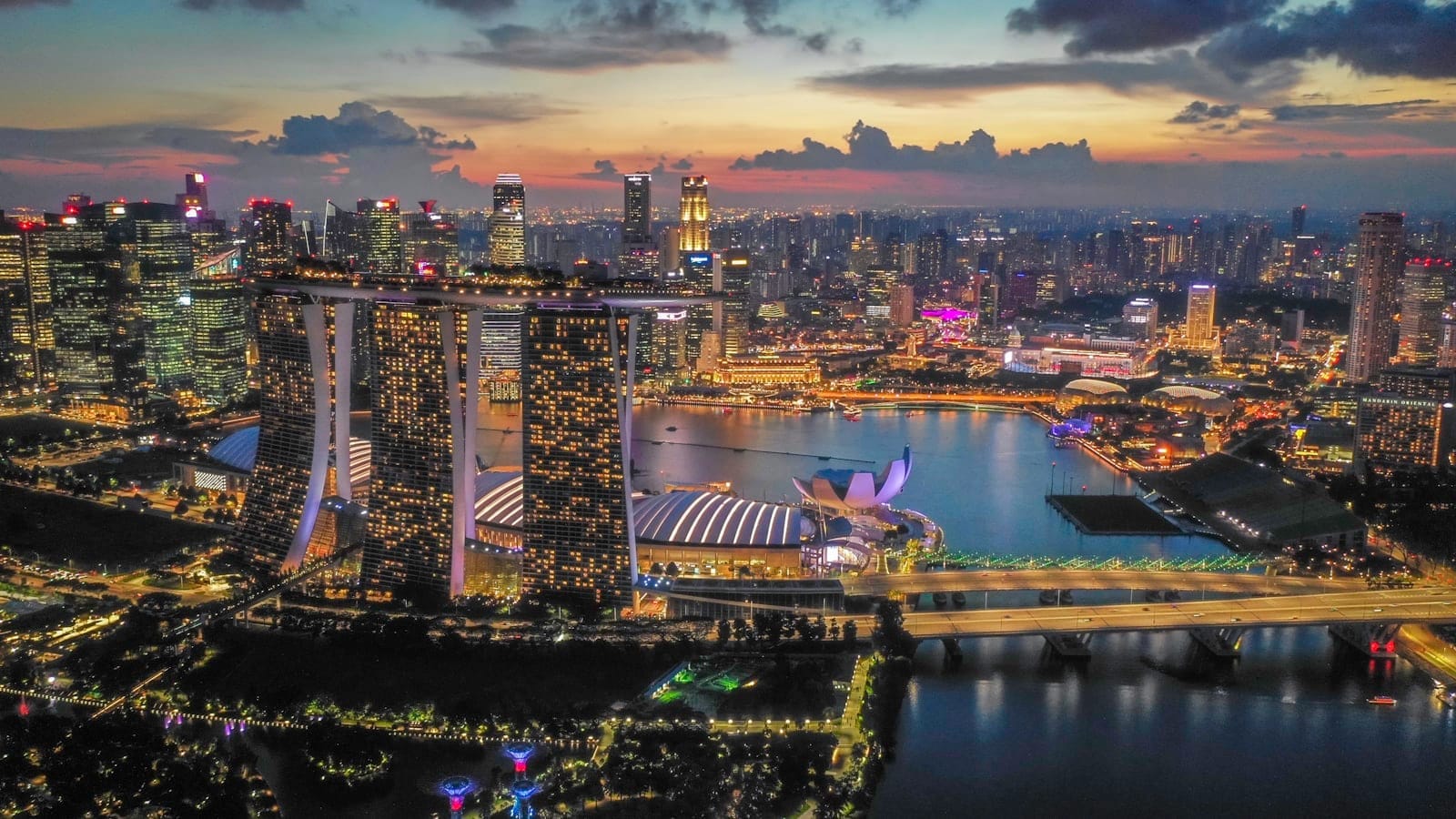
Marina Bay is Singapore's most recognizable district, a 360-hectare waterfront built almost entirely on reclaimed land. Home to Marina Bay Sands, Gardens by the Bay, and a skyline that defines the city, it blends high finance, world-class architecture, and leisure in a way that few urban precincts anywhere can match.
Marina Bay is the face Singapore shows the world: a planned, polished waterfront district where the skyline reflects off a purpose-built bay at every hour of the day. It is simultaneously the city's financial center, its tourism showcase, and its grandest public space, and it earns all three roles without obvious contradiction.
Orientation
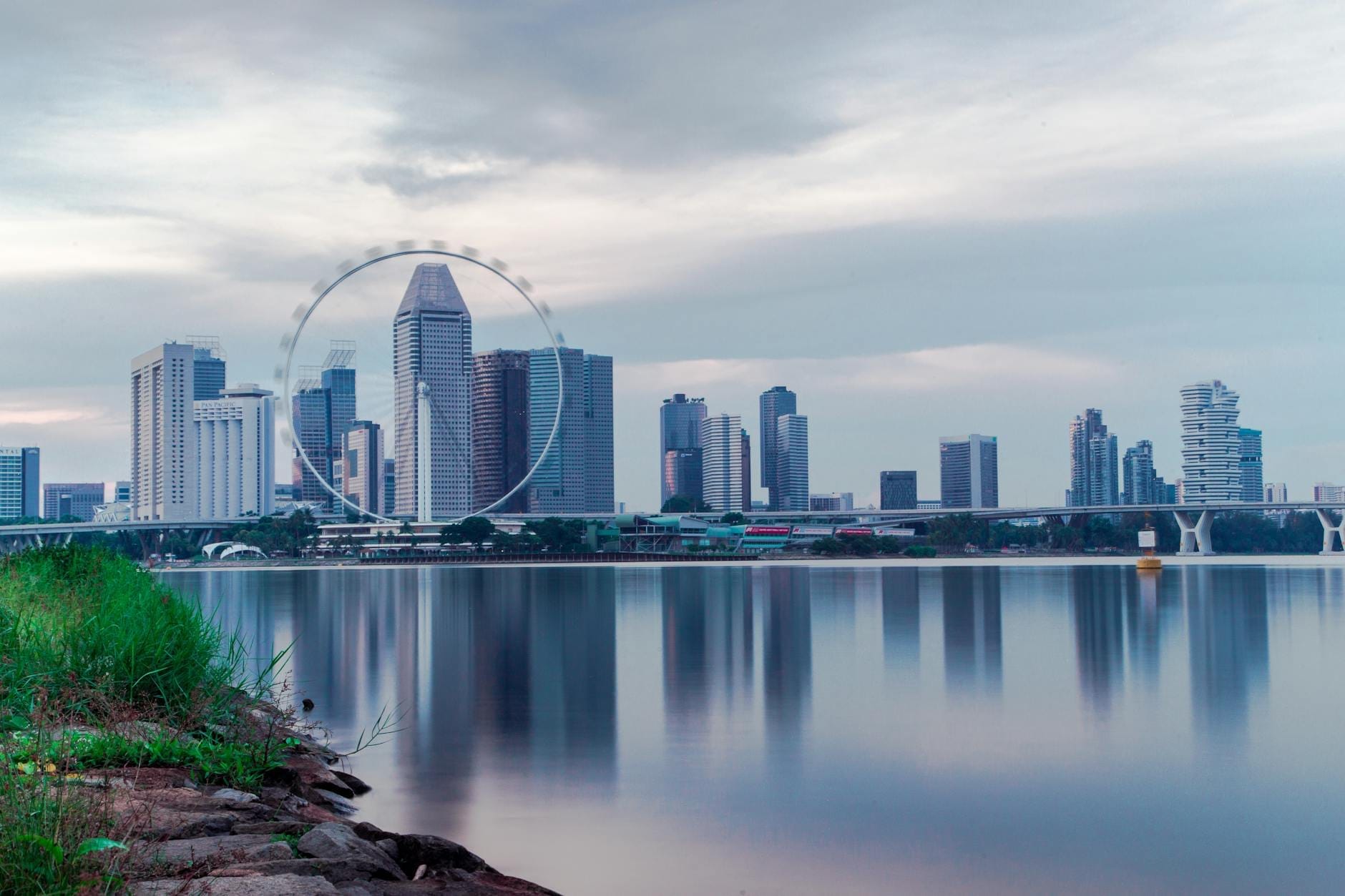
Marina Bay sits at the geographic and psychological center of Singapore, a 360 hectare extension to the adjacent Central Business District that did not exist in its current form until the late 20th century. The bay itself is a freshwater reservoir formed by the construction of the Marina Barrage in 2008, which dammed the mouth of the Singapore River and three other waterways. The surrounding precinct grew outward from there, shaped by one of the most ambitious urban planning exercises in Southeast Asian history.
The district's rough boundaries run along Esplanade Drive to the north, where it meets the Civic District and the historic Padang. To the west, Shenton Way and Cecil Street mark the edge where Marina Bay blends into the older Central Business District. The southeastern edge opens onto the Straits of Singapore, and the entire eastern fringe is occupied by Gardens by the Bay, which stretches toward Marina East. Bayfront Avenue cuts through the heart of the precinct, connecting the casino-hotel complex to the gardens.
Understanding Marina Bay's relationship to its neighbors matters for navigation. The Fullerton Heritage Precinct, anchored by the 1928 former General Post Office building, bridges Marina Bay to the older colonial Civic District. Walk north across the Esplanade Bridge and you reach the Esplanade arts venue and, further on, Beach Road and Kampong Glam. Cross the Anderson Bridge heading west and you are walking into Raffles Place, the historic financial core. Marina Bay is therefore not isolated: it is the newest and most dramatic layer in a city that has been building outward from its colonial riverside for over two centuries.
Character & Atmosphere
Marina Bay operates on a scale that is hard to absorb at first. The distances between landmarks are longer than they appear on maps, the buildings are genuinely enormous, and the open waterfront promenade means you are often walking in direct equatorial sun with very little shade. The district was designed to impress from a distance and it does exactly that, but the experience at street level is more transactional than intimate: grand public plazas, hotel lobbies you can walk through, gleaming towers, and very little of the everyday texture that makes older neighborhoods interesting.
In the early morning, usually before 8am, Marina Bay belongs to joggers and dog walkers circling the promenade. The light at that hour is soft and the bay is glassy, reflecting the Supertrees and the double helix of the Marina Bay Sands hotel towers without the glare that comes later. Financial workers begin arriving by 8:30am, streaming off the MRT at Downtown and Raffles Place, and the office tower lobbies fill with the quiet efficiency of one of Asia's most productive business districts.
By midday the tourist activity peaks. Queues form at the Marina Bay Sands SkyPark, the ArtScience Museum, and the Gardens by the Bay ticketing counters. The waterfront promenade is bright and largely shadeless, so most people retreat into the shopping malls and hotel interiors during the hottest hours between noon and 3pm. The underground CityLink Mall connecting several stations to the financial district does serious business at lunchtime, filling with office workers and hotel guests alike.
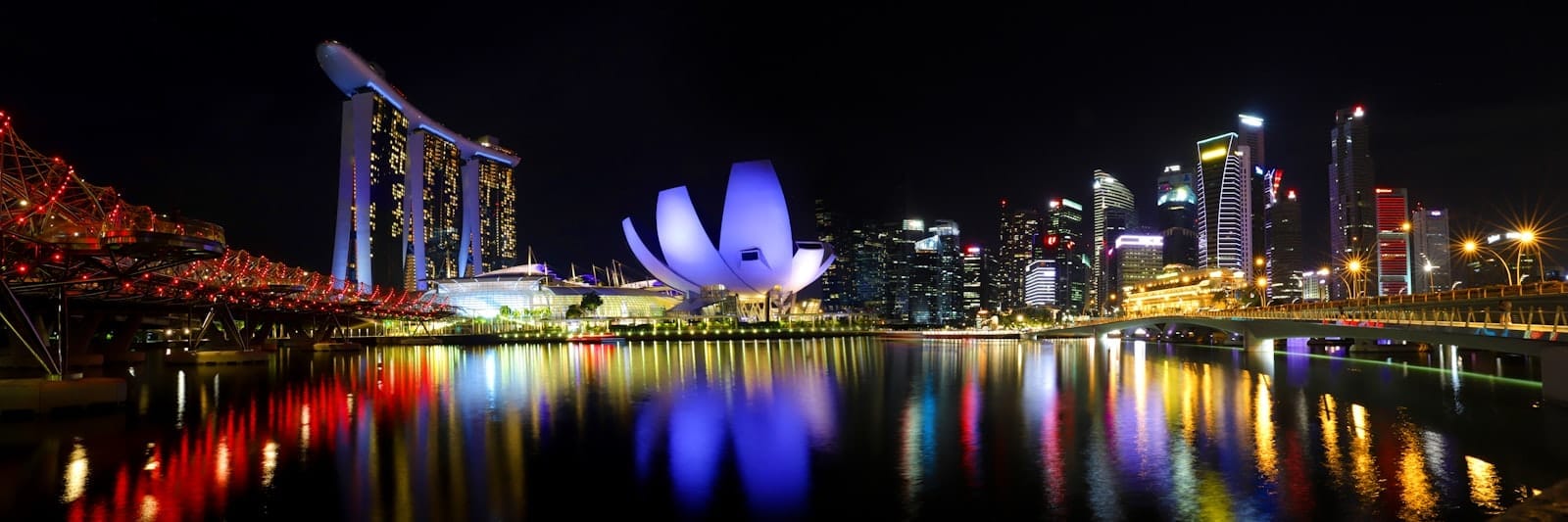
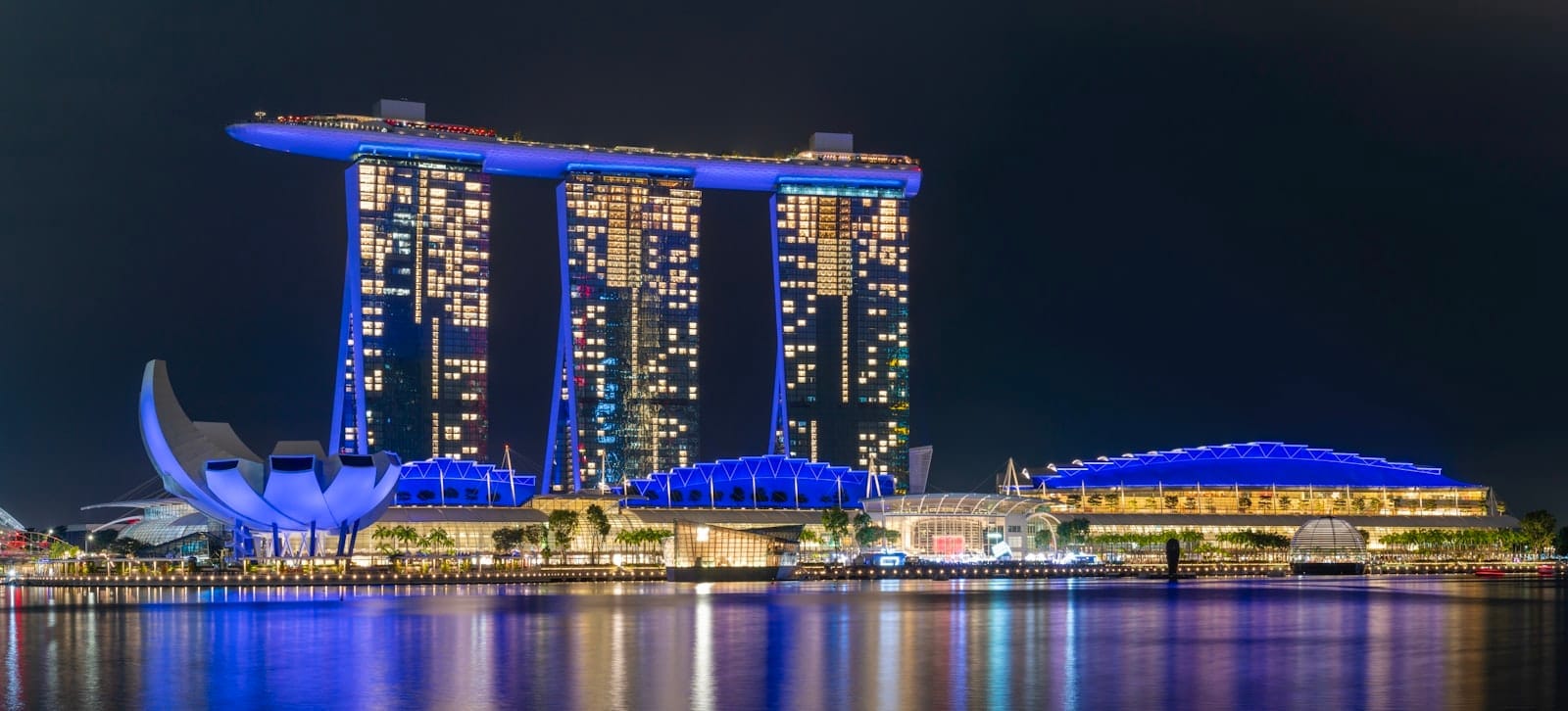
After dark, Marina Bay transforms most convincingly. The Supertree light shows at Gardens by the Bay run nightly, the Marina Bay Sands facade lights up in color-changing sequences, and the waterfront promenade fills with a mix of tourists, couples, and after-work crowds. The Formula One Singapore Grand Prix, held on the Marina Bay Street Circuit each September, supercharges the entire district for several days: the street circuit wraps around the bay and transforms the outdoor spaces into a roaring, floodlit spectacle unlike anything else in the city.
💡 Local tip
The best time to walk the full Marina Bay promenade is just after sunset, when the temperature drops and the skyline lights are fully active. The loop from Merlion Park past the Helix Bridge to the ArtScience Museum and back takes about 40 minutes at a relaxed pace.
What to See & Do
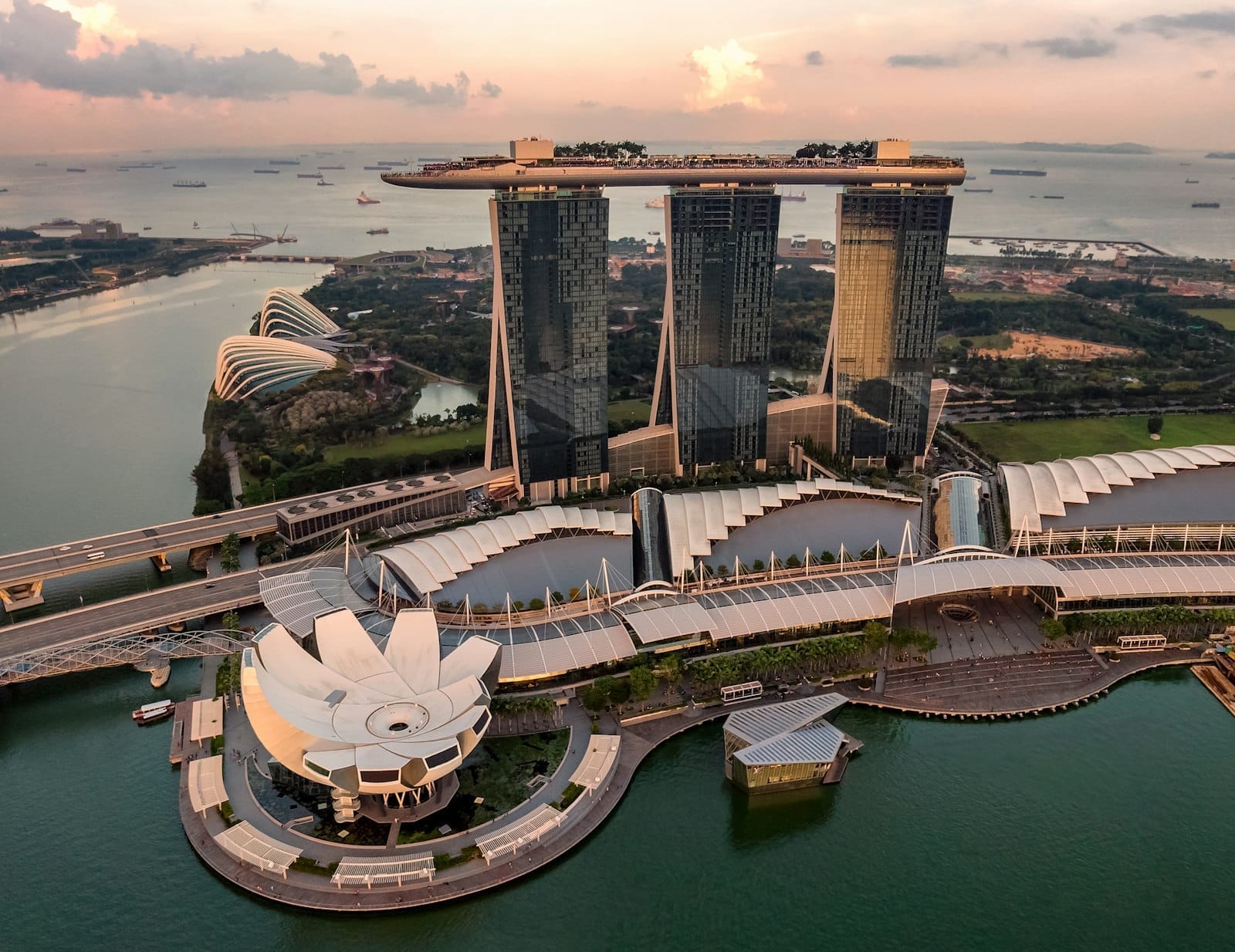
The anchor experience for most visitors is Marina Bay Sands, the three-tower integrated resort whose rooftop SkyPark and infinity pool have become one of the most photographed sights in Asia. Non-hotel guests can access the SkyPark observation deck for a fee, and the view from the SkyPark takes in the entire Marina Bay precinct, the downtown skyline, and on clear days the Indonesian islands to the south. The hotel complex also contains a casino, a convention center, and the Shoppes at Marina Bay Sands, one of Singapore's most upscale shopping destinations.
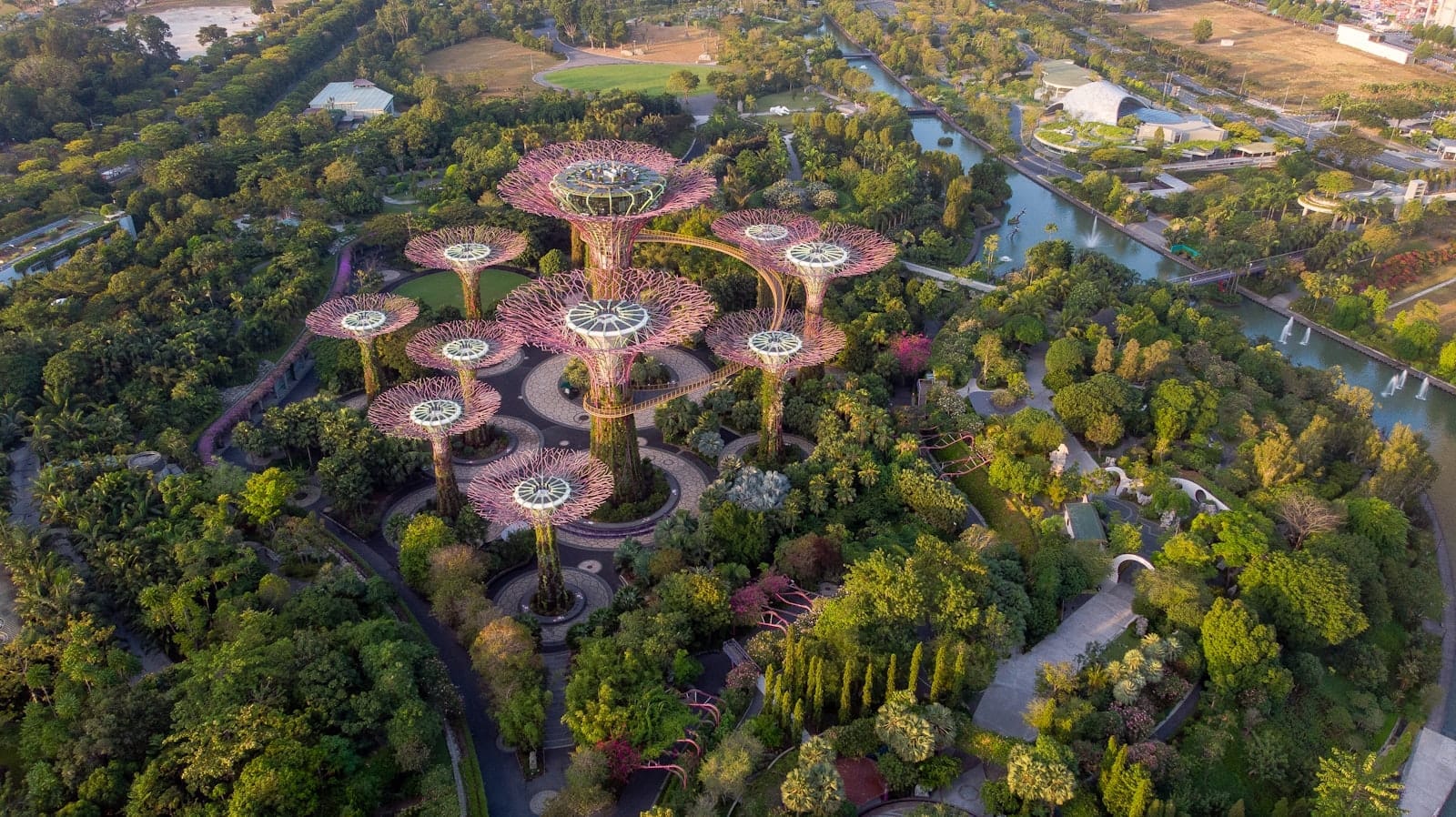
Immediately east of Marina Bay Sands, the 54-hectare Bay South Garden Gardens by the Bay is among the most technically ambitious public gardens anywhere in the world. The Bay South garden is the main draw: the Supertree Grove, a cluster of steel-and-plant vertical gardens ranging from 25 to 50 meters tall, anchors the eastern end of the precinct. Two climate-controlled conservatories, the Flower Dome and the Cloud Forest, sit side by side and require separate ticketing. The Cloud Forest in particular, built around a 35-meter indoor mountain with a cascading waterfall, justifies the admission cost even for non-garden enthusiasts.
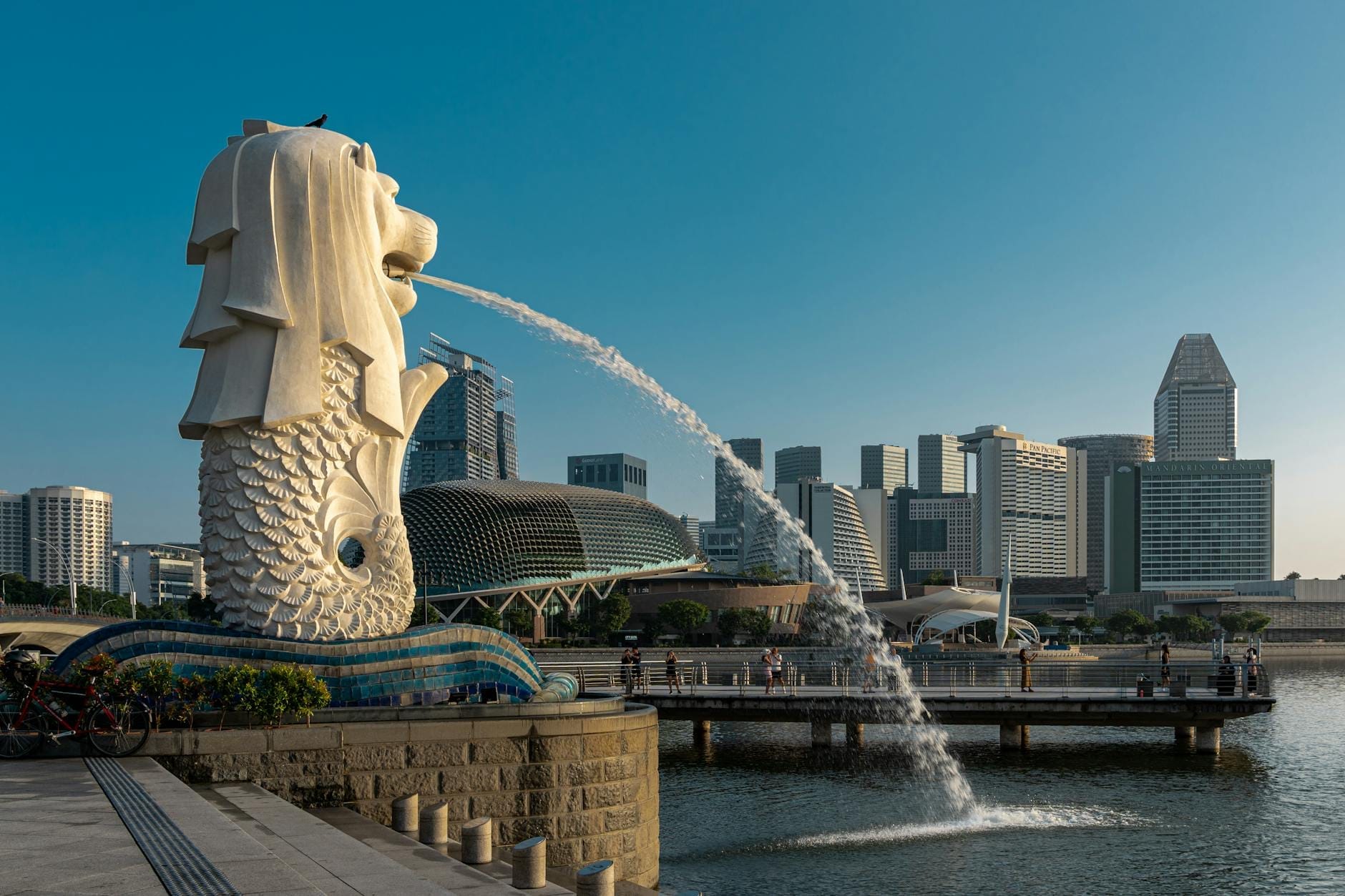
On the northwestern edge of the bay, the Merlion Park is small but significant as Singapore's most-photographed official landmark. The 8.6-meter statue spouting water into the bay is a mandatory stop for first-time visitors and is best photographed from across the water, from the promenade near the Helix Bridge, with Marina Bay Sands in the background.
The ArtScience Museum, designed to resemble a lotus flower and sitting at the water's edge beside Marina Bay Sands, runs consistently strong permanent and traveling exhibitions at the intersection of art, science, and technology. It is genuinely worth two to three hours and is one of the few attractions in the district that rewards return visits as programming changes. For a different perspective on the water, Singapore River Cruise bumboats depart from several points near Merlion Park and offer a 40-minute loop covering Marina Bay and the Singapore River up to Clarke Quay.
Marina Bay Sands SkyPark Observation Deck: ticketed access for non-hotel guests, open daily
Gardens by the Bay: free outdoor access to Supertree Grove, paid entry to conservatories
ArtScience Museum: exhibitions rotate every few months, check current programming before visiting
Merlion Park: free, best visited at dusk or after dark when the bay lights activate
Helix Bridge: pedestrian bridge with a double helix DNA structure, best walked at night
Marina Barrage: free rooftop park popular with kite flyers at weekends, excellent bay views
The Float at Marina Bay: largest floating performance stage in the world, hosts National Day Parade
ℹ️ Good to know
The Formula One Singapore Grand Prix takes place on the Marina Bay Street Circuit each September. Roads around the bay close for several days and accommodation prices spike across the city. Book well in advance if visiting during race weekend, or adjust your itinerary if you want to avoid the disruption.
Eating & Drinking
Marina Bay is not where you come for cheap or exploratory eating. The food scene here is built around hotel restaurants, celebrity chef outposts, and the dining floors of integrated resorts and financial towers. Prices throughout the district sit at the high end of Singapore's range, and while the quality is generally excellent, you are paying a significant premium for location and atmosphere.
The Shoppes at Marina Bay Sands houses several internationally recognized restaurant names across multiple levels, and the hotel's restaurants range from casual waterfront dining to formal fine dining rooms with bay views. For something closer to local character, Lau Pa Sat near Marina Bay, a 10-minute walk west of Bayfront MRT, is a restored Victorian cast-iron market hall built in 1894. It functions as a hawker center during the day and an outdoor satay street in the evenings, when the road alongside it is closed to traffic and dozens of satay stalls set up on the pavement. Prices are higher than suburban hawker centers but still reasonable for the district.
The Fullerton Hotel area at the river mouth has several waterfront restaurant and bar options that are more atmospheric than those inside the towers, with views of the bay and the Anderson Bridge. Drinks prices at the rooftop and waterfront bars in Marina Bay are among the highest in Singapore, but watching the Supertree light show from a bar terrace with a cocktail is a specific experience that many visitors find worth the price once.
For visitors self-catering or watching budgets, the most practical option is to eat before entering Marina Bay proper. Tanjong Pagar Plaza and Maxwell Road, both a short MRT ride or walk away in Chinatown, have excellent and affordable hawker options that make the premium pricing of Marina Bay more bearable when you return for the evening waterfront experience.
⚠️ What to skip
Alcohol prices at marina-view bars and rooftop venues can exceed S$25 per cocktail. Budget travelers should eat and drink before arriving in Marina Bay and treat the waterfront as a walking and sightseeing experience rather than a dining destination.
Getting There & Around
Marina Bay is exceptionally well connected by MRT, though the geography of the district means knowing which station to use for which attraction saves significant time. There are five relevant stations within or immediately adjacent to the precinct, each serving different parts of it.
Bayfront MRT (Circle and Downtown Lines): the primary station for Gardens by the Bay, Marina Bay Sands, and the ArtScience Museum. Underground walkways connect directly to the Shoppes at Marina Bay Sands.
Marina Bay MRT (North-South and Circle Lines): best for the financial district towers, Marina Bay Financial Centre, and the southern waterfront promenade.
Downtown MRT (Downtown Line): serves Asia Square and the financial core, 5-10 minutes walk from Bayfront.
Promenade MRT (Circle and Downtown Lines): good access to the Esplanade performing arts center and the northern waterfront.
Esplanade MRT (Circle Line): best for the Esplanade arts venue and access to the Civic District and Merlion Park.
Walking between attractions inside Marina Bay is feasible but requires planning. The loop from Merlion Park to Gardens by the Bay is about 2.5 kilometers, which takes 30 to 40 minutes on flat ground, mostly along the waterfront promenade. In the middle of the day, the heat and direct sun make this walk uncomfortable. Underground connections exist between several towers and shopping complexes, and following air-conditioned routes adds time but saves significant physical discomfort.
Taxis and ride-hailing apps (Grab is the dominant service) are plentiful but drop-off and pick-up points at Marina Bay Sands and Gardens by the Bay can involve queuing during peak evening hours. The getting around Singapore guide covers transit options across the city in full detail. For visitors combining Marina Bay with a waterfront walk to the Singapore River area, Clarke Quay and Boat Quay are accessible on foot in about 20 minutes heading northwest along the river from Merlion Park.
Where to Stay
Accommodation in Marina Bay clusters around two distinct propositions. Marina Bay Sands itself is the headline option: staying at the integrated resort puts you inside the precinct's most iconic building, with direct access to the infinity pool, the casino, and the Shoppes. The experience is genuinely special, particularly for the views from the upper floors, but the rates reflect the location and the brand, and the resort's sheer size means service can feel impersonal.
The Fullerton Hotel and Fullerton Bay Hotel, positioned at the mouth of the Singapore River on the precinct's western edge, offer a more refined and historically grounded alternative. The original Fullerton Hotel occupies the 1928 General Post Office building, one of Singapore's finest colonial-era structures, and the location gives easy walking access to both Marina Bay and the Civic District. For a full overview of accommodation options across Singapore, the Singapore accommodation guide covers every major neighborhood.
Marina Bay is best suited to travelers who want immediate access to the major waterfront attractions and do not need the everyday conveniences of a residential neighborhood. There are no supermarkets, local coffee shops, or morning markets in the district, and the absence of that daily texture means staying here can feel slightly sanitized over multiple nights. Business travelers and those on short itineraries centered on the iconic landmarks will find it ideal. Travelers looking for neighborhood character, local food, or budget accommodation should base themselves in Chinatown, Tanjong Pagar, or the Civic District and make day and evening trips to Marina Bay.
Practical Tips for Visiting
Marina Bay is one of Singapore's most tourist-focused precincts, so the practical infrastructure for visitors is excellent. Signage is clear, English is universal, and the MRT connections are reliable. For first-time visitors to Singapore planning a multi-neighborhood itinerary, the Singapore itinerary guide explains how to sequence Marina Bay alongside the city's other major areas efficiently. Marina Bay pairs naturally in a single day with the Civic District to the north and Chinatown to the southwest, which sits about 1.5 kilometers from Lau Pa Sat along Tanjong Pagar Road.
Dress code is relaxed for outdoor sightseeing but note that the Marina Bay Sands casino requires smart casual attire and has a minimum age requirement of 21 for Singapore residents (there is no age restriction for foreign visitors, but the 21 minimum applies at the door for Singapore identity card holders). Gardens by the Bay conservatories are cold by Singapore standards, around 23 degrees Celsius in the Cloud Forest, so a light layer is worth carrying.
Visitors combining Marina Bay with Sentosa Island should note that the two are connected: Gardens by the Bay sits on the eastern bay, and from Bayfront MRT you can reach HarbourFront station in under 10 minutes, from which the cable car and Sentosa Gateway provide access to Sentosa and its beaches, Universal Studios Singapore, and the rest of the resort island.
TL;DR
Marina Bay is Singapore's most dramatic urban precinct, built on reclaimed land and centered on the Marina Bay Sands integrated resort, Gardens by the Bay, and a spectacular waterfront promenade.
Best visited in the evening when the light show, skyline reflections, and cooler temperatures align. The Supertree light shows and bay reflections after dark are the signature Marina Bay experience.
Food and drink is expensive throughout the district. Lau Pa Sat on Robinson Road offers the only affordable and locally flavored eating option within reasonable walking distance.
Transit access is excellent via Bayfront, Marina Bay, Downtown, Promenade, and Esplanade MRT stations. Knowing which station serves which attraction saves time.
Best suited to first-time visitors to Singapore, travelers on short itineraries, and those who want easy access to the city's headline landmarks. Not ideal for travelers seeking local neighborhood atmosphere or budget-friendly accommodation.
Singapore sits just one degree north of the equator, which means warm, humid weather all year round. But that doesn't mean every month is equal. This guide breaks down the best time to visit Singapore by weather, crowds, festivals, and budget so you can plan a trip that actually works.
Singapore has one of the most efficient public transport systems in the world. This guide covers everything from MRT fares and bus routes to taxis, ride-hailing apps, and how to get from Changi Airport to the city centre without overpaying.
Singapore is compact, well-connected, and surrounded by islands, jungle, and a whole other country just across the Causeway. Whether you want to cycle through mangroves, shop across the border, or laze on a beach, these are the day trips that actually deliver. Here is what to expect, how to get there, and what to skip.
Singapore packs more culinary diversity per square kilometre than almost any city on earth. This guide breaks down the essential dishes, the best hawker centres, neighbourhood food streets, and honest advice on where to spend your appetite and your Singapore dollars.
Singapore's hawker centres are where the city's food culture lives. With over 110 centres and 6,000 stalls serving Chinese, Malay, Indian, and fusion dishes for under $10 SGD, this guide covers everything from the best centres to visit, to unwritten rules locals actually follow.
Whether you have a long weekend or a full week, Singapore rewards every length of stay. This itinerary guide builds day by day, from the essential Marina Bay icons and multicultural neighborhoods to wildlife parks, island escapes, and local food pilgrimages.
Singapore is one of Asia's premier shopping destinations, with low import tariffs, world-class malls, and lively street markets all within a compact city. This guide cuts through the noise to tell you exactly where to shop, what to expect, and how to get the best value.
Singapore is one of the easiest cities in the world to travel with children. World-class wildlife parks, interactive museums, beach days, and theme park thrills are all packed into a compact, safe, and well-connected island. This guide covers the best family attractions in Singapore, organized by experience type so you can plan a trip that keeps kids genuinely excited from morning to night.
Singapore packs an extraordinary range of experiences into just 733 square kilometres. This guide covers the top things to do in Singapore, from world-class attractions and neighbourhood food trails to nature reserves and cultural landmarks, with honest assessments of what's worth your time and money.
Choosing where to stay in Singapore shapes your entire trip. This guide breaks down every major area by character, price range, and practical pros and cons, so you can book with confidence regardless of your budget or travel style.