Singapore Food Guide: What & Where to Eat in 2026
Singapore packs more culinary diversity per square kilometre than almost any city on earth. This guide breaks down the essential dishes, the best hawker centres, neighbourhood food streets, and honest advice on where to spend your appetite and your Singapore dollars.
Plan and book this trip
Tools from our partner Travelpayouts help you compare flights and hotels. If you book through them, we may earn a commission at no extra cost to you.
Flights
Hotels map
TL;DR
- Hawker centres are the heart of Singapore's food scene: meals cost SGD 3-10 and quality rivals most restaurants.
- The national dish is Hainanese chicken rice. Start there, then work through laksa, char kway teow, and chili crab. Our Singapore hawker centres guide maps the best spots by neighbourhood.
- Maxwell Food Centre, Lau Pa Sat, and Old Airport Road Food Centre are the three most reliable hawker centres for first-timers.
- Durian season runs June to August. Outside that window, skip the pricey imported fruit.
- Most hawker stalls are cash-only. Carry small SGD notes — SGD 2, 5, and 10 denominations.
Why Singapore Food Is Unlike Anywhere Else in Asia
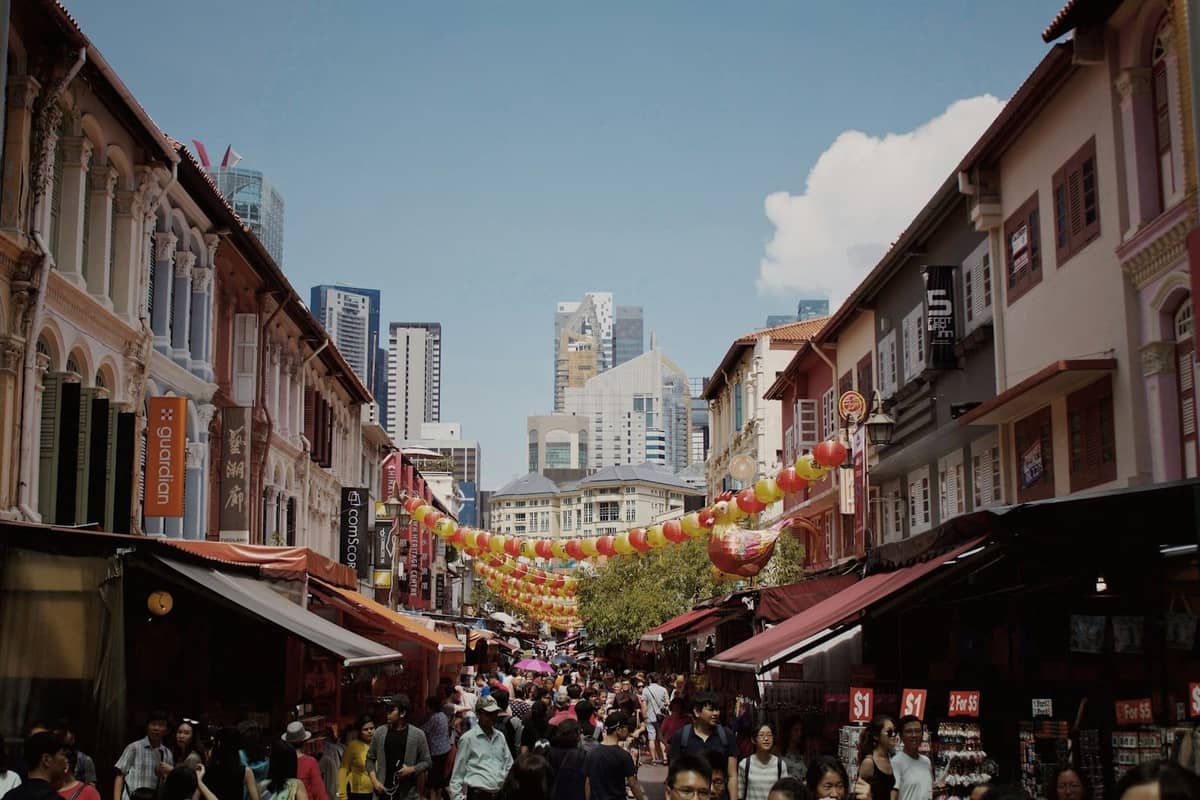
Singapore's food culture is the direct product of its history as a colonial trading port that pulled in waves of Chinese, Malay, Indian, and later, Indonesian and Peranakan settlers. Each community cooked what they knew, adapted to local ingredients, and over generations those cuisines started borrowing from each other. The result is not fusion in the trendy sense — it is something deeper, where dishes have fixed identities and fierce local loyalists behind them.
In 2020, Singapore's hawker culture was inscribed on UNESCO's Representative List of the Intangible Cultural Heritage of Humanity. That is not just an award for the food itself — it recognises the social function of hawker centres as spaces where people from every background sit at shared tables. Understanding that context makes the eating experience richer.
The food landscape spans extremes: a bowl of laksa at a hawker stall costs around SGD 6, while a chili crab dinner at a seafood restaurant on Boat Quay or Dempsey Hill can run SGD 80-120 for two. Both are worth doing, for different reasons, and neither should be skipped.
The Essential Dishes: What to Order and Why
Singapore has a long list of iconic dishes, but not every one deserves equal priority on a short trip. Here is a ranked breakdown of what to prioritise, what the dish actually is, and what to watch for.
- Hainanese Chicken Rice The national dish, full stop. Poached or roasted chicken served over rice cooked in chicken stock and fat, with ginger paste, chili sauce, and dark soy on the side. The rice is the thing — fragrant, slightly oily, almost creamy. Expect SGD 4-6 per plate at hawker stalls.
- Laksa Thick rice noodles in a spiced coconut curry broth loaded with prawns, fish cake, and cockles. Katong-style laksa (from the east coast) is served with shorter noodles you eat with a spoon alone. Around SGD 5-7.
- Char Kway Teow Flat rice noodles wok-fried over high heat with lard, dark soy, Chinese sausage, egg, bean sprouts, and cockles. The char (wok breath) is everything — stall quality varies dramatically based on the cook's technique. SGD 4-6.
- Chili Crab Mud crab cooked in a thick, sweet-savory tomato and egg sauce spiked with chili. Messy, hands-on, and genuinely spectacular. Order fried mantou buns to mop up the sauce. Budget SGD 50-80 per crab at dedicated seafood restaurants.
- Hokkien Mee Yellow noodles and rice vermicelli stir-fried with prawns, squid, pork belly, and egg in a prawn stock, then finished with sambal chili and lime. Old Airport Road's Nam Sing stall is widely considered the benchmark. SGD 5-8.
- Satay Marinated meat skewers grilled over charcoal and served with peanut sauce, cucumber, and ketupat (compressed rice). Lau Pa Sat's outdoor satay street operates from around 7PM and is one of Singapore's most atmospheric food experiences. SGD 8-15 for a set.
- Kaya Toast with Soft-Boiled Eggs The definitive Singapore breakfast. Toast spread with kaya (coconut and egg jam), served with half-boiled eggs seasoned with dark soy and white pepper, plus a strong kopi (coffee). Chains like Ya Kun and Killiney do this well. Under SGD 6 for the full set.
- Chai Tow Kway (Carrot Cake) Do not let the name mislead you: there is no carrot and it is not a dessert. It is fried radish cake with egg, in either white (lighter) or black (with sweet dark soy) versions. A genuinely misunderstood dish worth ordering.
ℹ️ Good to know
Durian — Singapore's polarising king of fruits — is seasonal. Peak quality runs June to August when local Mao Shan Wang and D24 varieties are in supply. Outside this window, most durian sold is imported and noticeably inferior. If you visit between November and May, skip the fruit stalls and wait for your next trip.
Hawker Centres: The Definitive Ranking for Visitors
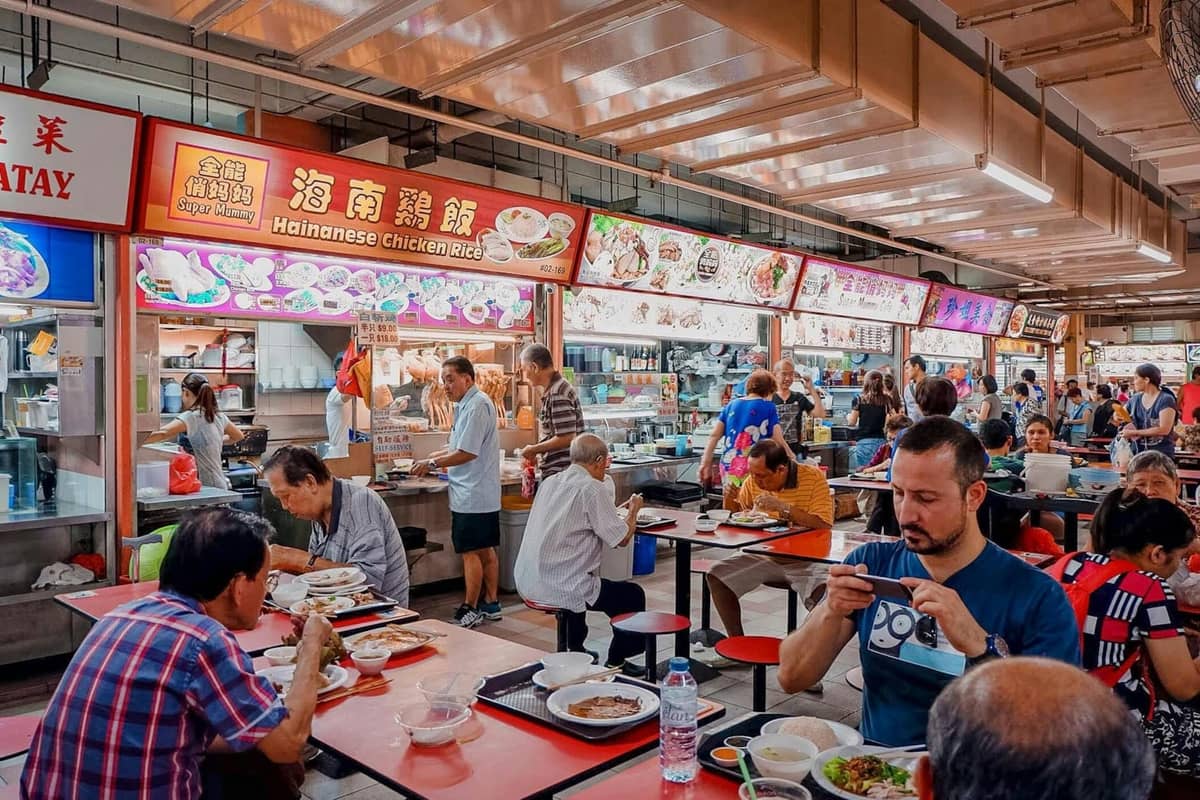
Hawker centres are the backbone of daily eating in Singapore. They are covered, open-air complexes with dozens of individual stalls, shared seating, and prices that have not changed much in years. The government subsidises rents in many of these centres specifically to keep food affordable. For a thorough breakdown of how they work, read the Singapore hawker centres guide — but here are the three to prioritise.
- Maxwell Food Centre (Chinatown) The most tourist-accessible hawker centre and still legitimately excellent. Tian Tian Hainanese Chicken Rice has a queue every lunchtime for good reason. Also strong for oyster omelette and roast meat. Open roughly 8AM-10PM; busiest noon-2PM and 6-8PM.
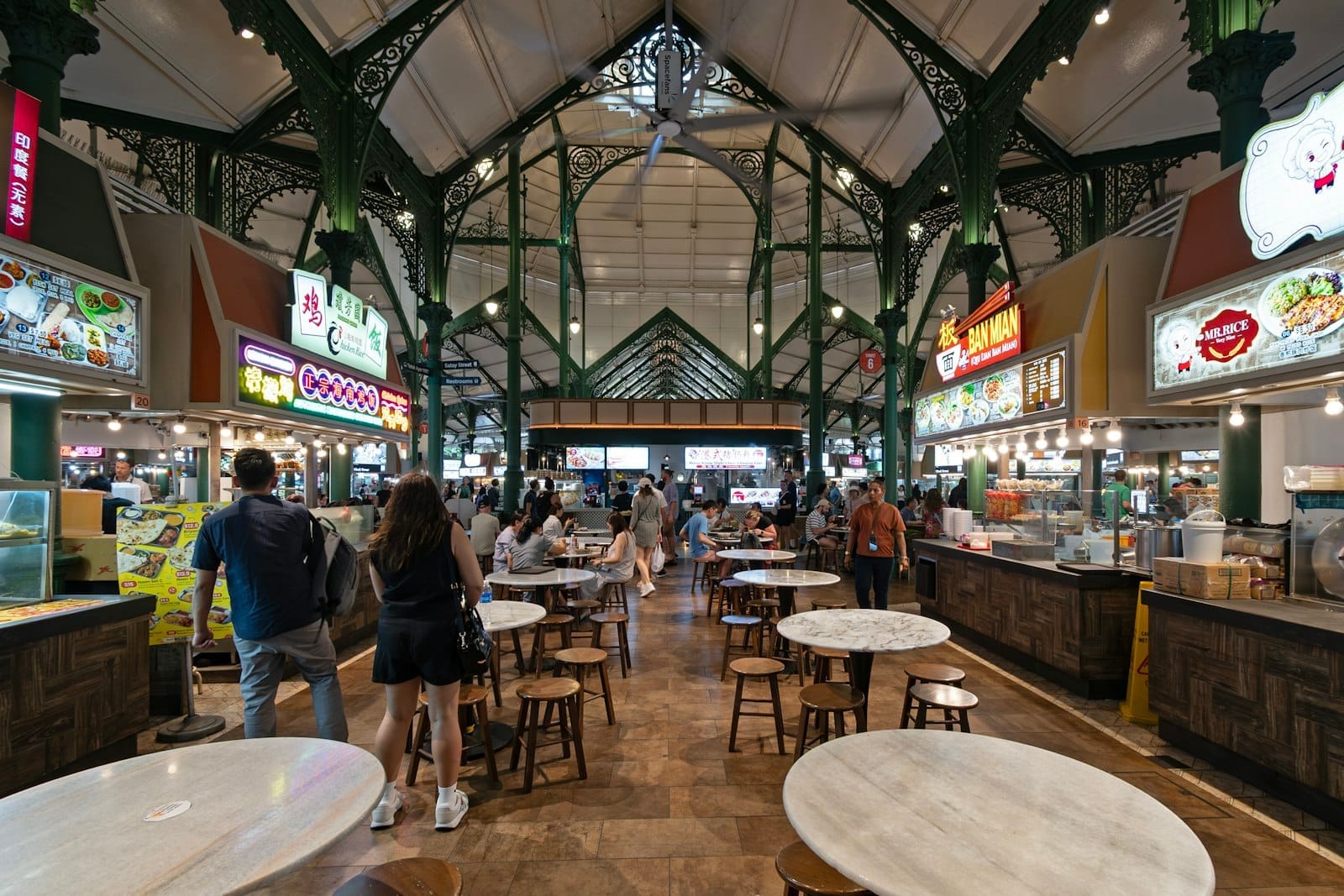
- Lau Pa Sat (Downtown Core) A Victorian cast-iron market building dating to 1894, now a hawker centre surrounded by office towers. Standard daytime hawker food inside, but the real draw is the outdoor satay street that kicks off after 7PM on Boon Tat Street. Good for evening drinks and grilling atmosphere.
- Old Airport Road Food Centre (Kallang) Slightly off the tourist trail, which keeps it more local. Home to Nam Sing Fried Hokkien Mee, widely regarded as one of Singapore's best. Also strong for rojak, popiah, and Teochew porridge. Worth the 15-minute MRT ride from the city centre.
Two more worth knowing: the Chinatown Complex Food Centre is Singapore's largest hawker centre and home to Hawker Chan, which holds a Michelin star for its soya sauce chicken. Tekka Centre in Little India leans heavily into South Indian and Muslim food: biryani, roti prata, and fish head curry are the things to order there.
💡 Local tip
To hold a table at a hawker centre before ordering, place a packet of tissues or an umbrella on the seat. This is called 'choping' and is universally understood. It is not rude — it is standard practice.
Neighbourhood Food Streets: Eating by Area
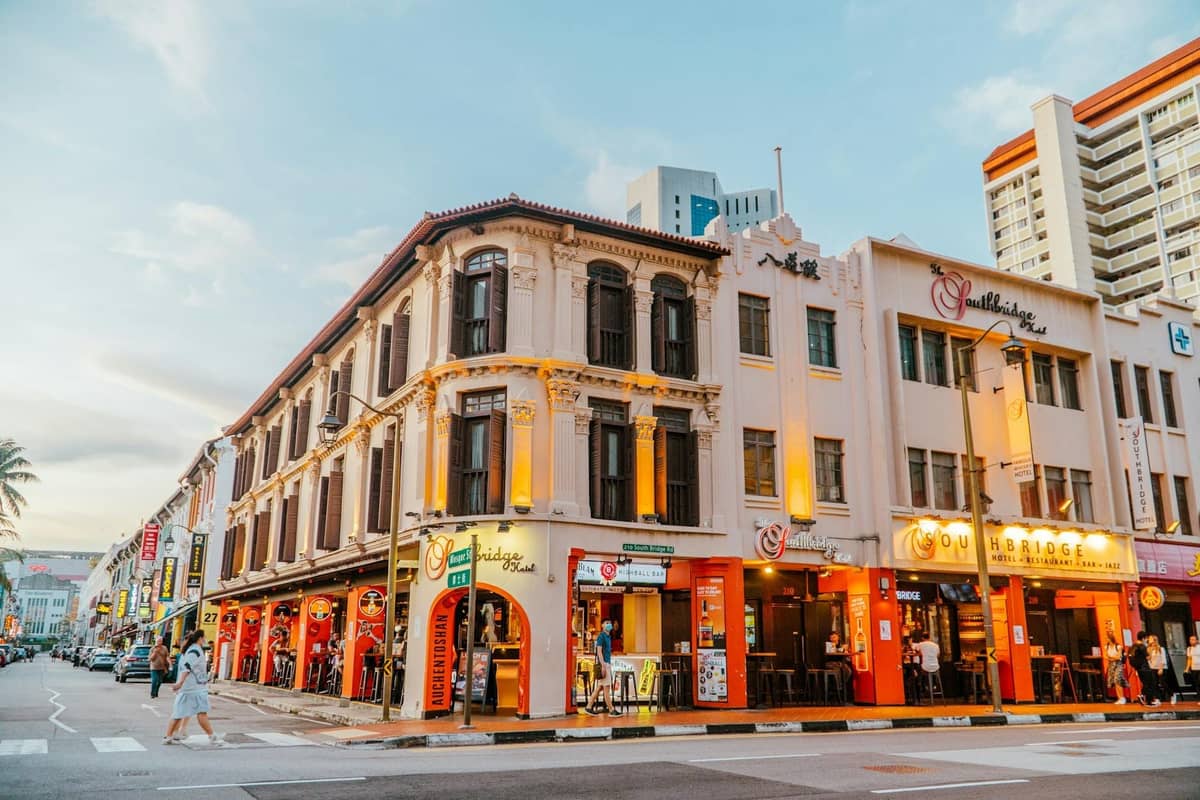
Singapore's food geography is useful to understand if you are planning by neighbourhood rather than by dish. Each district has a distinct culinary identity that reflects its community history.
Chinatown concentrates the island's Cantonese, Hokkien, and Teochew heritage. Smith Street and the surrounding blocks are where to find traditional roast meat shops, dim sum, and herbal soup stalls alongside the hawker centres mentioned above. It gets crowded on weekends, so go weekday morning for quieter queues.
Little India is the place for South Indian vegetarian thali, dosai, and banana-leaf rice. Serangoon Road and the surrounding streets have restaurants that stay open late, often past midnight. The food here is some of the best-value eating in Singapore: a full banana-leaf rice meal with multiple curries rarely tops SGD 12-15.
Kampong Glam, anchored around Arab Street and Haji Lane, is the hub for Malay and Middle Eastern food. Nasi padang (Malay rice with various sides), murtabak (stuffed flatbread), and teh tarik (pulled tea) are the staples here. Several of the area's restaurants are halal-certified, making this the easiest neighbourhood for Muslim travellers.
The Katong and Joo Chiat area on the east coast is where Peranakan cuisine is most concentrated. Peranakan food blends Chinese ingredients with Malay spices and techniques — dishes like ayam buah keluak (chicken with black nut), laksa, and kueh (layered rice flour cakes) define the tradition. Explore more via the Katong and Joo Chiat neighbourhood guide.
⚠️ What to skip
Clarke Quay and the Riverside area look good on Instagram but are among Singapore's worst-value eating zones. Restaurants here charge 2-3x hawker prices for food that is frequently mediocre. The location is better for evening drinks than serious eating. For good food near the river, walk to Chinatown instead.
Practical Eating: Prices, Timing, and Logistics
Singapore is not the cheapest destination in Southeast Asia, but eating well does not require a large budget if you know how the pricing tiers work. Hawker centres and coffee shops (kopitiams) are the budget tier: SGD 3-10 covers most meals. Food courts inside malls occupy a middle tier at SGD 8-15. Sit-down restaurants range from SGD 20-40 per person at the casual end to SGD 80 and above at fine dining establishments.
Timing matters more in Singapore than in many cities. Popular stalls at major hawker centres sell out of key dishes by early afternoon — Tian Tian Chicken Rice at Maxwell often runs out of chicken by 2PM. For the best variety, aim for a 11:30AM arrival at hawker centres before the lunch rush peaks. Dinner queues at top stalls build from 6:30PM onward.
- Most hawker stalls are cash-only; carry SGD 2, 5, and 10 notes
- PayNow QR codes are increasingly common at newer stalls and food courts
- GST (Goods and Services Tax) applies at restaurants; check if prices are listed '+' (before tax) or inclusive
- Tipping is not customary at hawker centres or kopitiams; at restaurants, a 10% service charge is usually added automatically
- Tap water in Singapore is safe to drink, so buying bottled water is unnecessary
- Most hawker centres are open 7AM-10PM; some run 24 hours (Changi Village Hawker Centre is a notable example)
If you are travelling with children, Singapore's food scene is extremely family-friendly. Mild dishes like chicken rice, yong tau foo, and popiah (fresh spring rolls) work well for younger palates, and most hawker centres have air-conditioned sections. More practical advice is in the Singapore with kids guide.
Beyond Hawkers: Seafood Restaurants, Kopitiams, and What to Drink
Kopi (coffee) culture in Singapore is its own subject. Kopitiams are traditional coffee shops that pre-date the modern hawker centre concept — they serve kopi (robusta coffee with condensed milk), kopi-O (black with sugar), teh (tea with condensed milk), and Milo. The terminology has its own ordering logic: 'gao' means strong, 'siu dai' means less sweet, 'peng' means iced. Ordering kopi-gao-siu-dai will earn you a nod of approval from the uncle behind the counter.
For chili crab and black pepper crab, the big-name restaurants near East Coast and Dempsey Hill are the traditional choices. Long Beach Seafood and Jumbo Seafood are the two most reliable names, though neither is cheap. If budget is a concern, some hawker centres along the East Coast do simpler seafood at a fraction of the price — the trade-off is a more casual environment and a shorter menu.
Singapore also has a growing craft beer and cocktail scene centred in Tiong Bahru and Chinatown. The Tiong Bahru neighbourhood has transformed into a food and cafe district without entirely losing its old-school kopitiam character — both coexist on the same blocks, which makes it one of the more interesting places to spend a morning eating.
FAQ
What is the cheapest way to eat well in Singapore?
Stick to hawker centres and kopitiams. A full meal of two dishes with a drink rarely exceeds SGD 10-12. Maxwell Food Centre, Old Airport Road, and Tekka Centre consistently deliver high quality at hawker prices. Avoid mall food courts and riverside restaurants if budget is a priority.
Is Singapore food spicy?
It depends on the dish. Laksa, chili crab, and many Malay and Indian dishes carry real heat. Hainanese chicken rice, yong tau foo, and kaya toast are mild. Most stalls serve chili sauces on the side rather than cooking them into the dish, so you have some control over heat level.
Are there good vegetarian and vegan options in Singapore?
Yes, though it requires some navigation. Little India has the strongest vegetarian options: South Indian thali, dosai, and banana-leaf rice meals are often fully vegetarian. Hawker centres have dedicated vegetarian stalls, often identified by the Chinese character for veg food or a green sign. Note that many Malay and Chinese dishes use lard or shrimp paste even if they appear vegetarian.
What is the best time of day to visit hawker centres?
Early morning (7-9AM) for breakfast dishes like kaya toast, soft-boiled eggs, and congee. For lunch, arrive before 11:30AM or after 1:30PM to avoid peak queues. Evening sessions at hawker centres pick up from 6PM onward, with satay streets and outdoor stalls getting especially lively after 7PM.
Is Singapore's food scene actually worth the hype?
For variety, accessibility, and value at the hawker level, yes — it genuinely is. The concentration of distinct culinary traditions in a small geographic area is unusual. That said, fine dining in Singapore is expensive and not always proportional in quality to what you pay. The real case for Singapore's food scene is the hawker centres, not the Michelin-starred restaurants.