Arab Street, Singapore: The Complete Guide to Kampong Glam's Historic Heart
Arab Street is the spine of Kampong Glam, Singapore's Malay-Arab heritage quarter. Lined with restored shophouses selling batik, rattan, and perfume oils, it connects centuries of mercantile history to a neighbourhood that now hums with cafés, street art, and one of the city's most photogenic mosques.
Quick Facts
- Location
- Between Victoria Street and Beach Road, Kampong Glam, Central Singapore
- Getting There
- Bugis (East-West / Downtown Line) or Lavender (East-West Line), Bugis ~10 min walk, Lavender ~12 min walk
- Time Needed
- 1.5 to 3 hours for the street and surrounds
- Cost
- Free (public street); individual shops and cafés vary
- Best for
- Architecture lovers, textile shoppers, cultural explorers, photographers
What Is Arab Street?
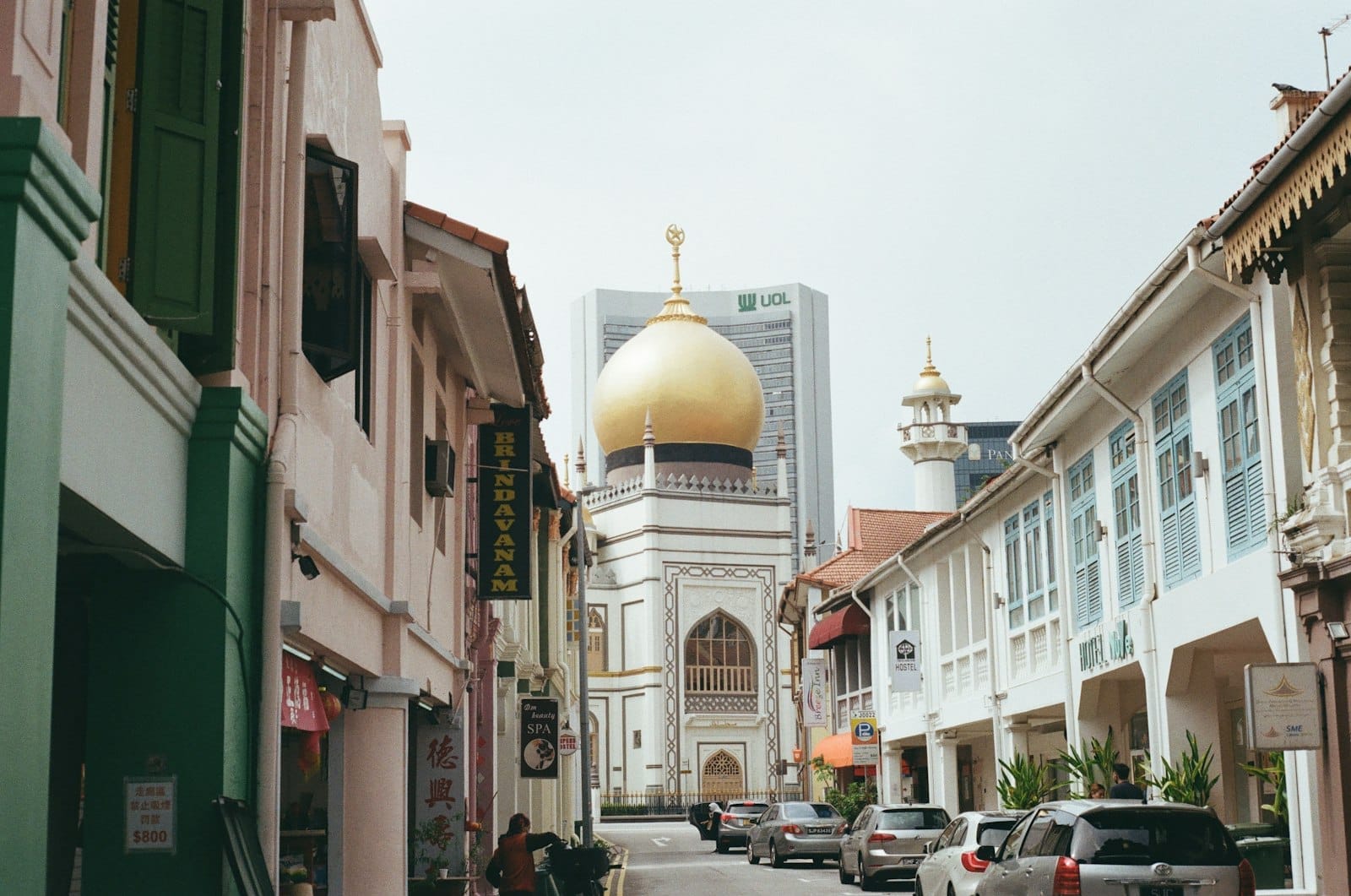
Arab Street is a short, relatively quiet road in the Kampong Glam district of central Singapore, but its cultural weight is disproportionate to its length. The street runs roughly 300 metres, flanked by two-storey shophouses with painted shutters, overhanging upper floors, and ground-level arcades that shade walkers from the equatorial sun. Fabric merchants, basket weavers, and perfume dealers occupy many of these units, some in businesses that have been on the same block for generations.
The street does not announce itself dramatically. There is no grand entrance, no ticketed zone. You simply turn off Beach Road or Victoria Street and find yourself in a low-rise streetscape that feels genuinely different from the rest of Singapore. The gold dome of Sultan Mosque rises above the roofline to the south, framing the far end of Bussorah Street, a pedestrian lane that connects Arab Street to the mosque's courtyard.
ℹ️ Good to know
Many Arab Street shops close on Sundays. If your visit falls on a weekend, plan for Saturday. Friday afternoons can also see reduced activity around prayer times near the mosque.
History: A Street That Kept Its Name
Arab Street is one of the few roads in Singapore that has retained the name assigned to it in Sir Stamford Raffles' 1822 town plan. That plan divided early Singapore into ethnic enclaves. The area around Kampong Glam was designated for the Malay sultan and later for Arab, Bugis, and Javanese communities. Wealthy Arab traders, many of them from the Hadhramaut region of present-day Yemen, settled along and around this street, establishing a mercantile community that traded in textiles, spices, and goods flowing through the Straits of Malacca.
The adjacent street names still echo that history: Baghdad Street, Muscat Street, Kandahar Street, Haji Lane. Each one maps onto the geography of the Arab world as early 19th-century traders would have known it. The shophouses standing today date largely from the late 19th and early 20th centuries, built in the Chinese Transitional and later Art Deco styles common across Singapore's heritage districts. They were gazetted for conservation in 1989, which accounts for the architectural consistency you see now.
The broader Kampong Glam area also contains the Malay Heritage Centre, housed in the former Istana Kampong Glam (the Malay royal palace), which gives deeper context to the political and cultural history of the neighbourhood. A visit there pairs well with a walk along Arab Street.
Tickets & tours
Hand-picked options from our booking partner. Prices are indicative; availability and final rates are confirmed when you complete your booking.
Adventure Cove Waterpark™ e-ticket
From 27 €Instant confirmationWild Wild Wet Waterpark Entrance Ticket
From 15 €Instant confirmationLion City bike tour in Singapore
From 55 €Instant confirmationFree cancellationLuggage Storage in Singapore
From 7 €Instant confirmationFree cancellation
The Street Itself: What You Will Actually See
Walking from the Beach Road end, the first thing you notice is the textile trade. Several shophouses are still occupied by fabric merchants selling batik, silk, lace, and woven cotton in bolts and cut lengths. The merchandise spills slightly onto the five-foot walkways. You can smell the slight mustiness of layered cloth, mixed with incense from a nearby shop and, depending on the direction of the breeze, the sweet smoke of shisha from a café on a parallel street.
Rattan and basketwork shops occupy a few units, their wares hanging from hooks outside: round-lidded baskets, prayer mats rolled in plastic, trays in graduated sizes. These are functional goods sold at market prices, not tourist-inflated souvenirs. If you need a laundry basket or a woven tray, you can buy a good one here for a fair price.
Mid-block, the street passes a row of perfume and incense shops. The oud oils and attar blends sold here are serious products, not airport gift sets. Some vendors will let you test oils on a strip of paper. The smell changes noticeably within a few steps: woody, resinous oud gives way to the lighter floral note of rose water, then to the sharp clean smell of incense sticks burning on a small holder inside a doorway.
At the southern end, the view opens toward Sultan Mosque, whose golden dome is most photogenic in the soft light of morning or the hour before sunset. Bussorah Street, the pedestrianised lane leading directly to the mosque courtyard, is the most-photographed corridor in the neighbourhood, and for good reason.
How the Street Changes Through the Day
Early morning, before 9 am, Arab Street belongs to locals. Shopkeepers are arranging stock, delivery riders are dropping off boxes, and the area is almost empty of visitors. The light is clean and low, making it the best time for photography if you want clear shots of the shophouse facades without crowds.
By mid-morning, the street reaches its commercial peak. Fabric shops are open and occasionally attended by tailors taking measurements from repeat customers. The weekday crowd is a mix of tourists moving slowly and local buyers who move quickly and know exactly what they want. Between 11 am and 2 pm, particularly on Fridays, foot traffic increases around Sultan Mosque as worshippers arrive for Friday prayers.
Late afternoon and evening, the character shifts. The shophouses close progressively from around 6 pm, but the restaurants and cafés on Haji Lane, Baghdad Street, and Bussorah Street fill up. The area turns into a social neighbourhood rather than a commercial one. The streets are lit, people linger at outdoor tables, and the mosque is illuminated. This evening version of Kampong Glam has a different energy, more relaxed and less about shopping.
💡 Local tip
For the best of both worlds, arrive at Arab Street around 10 am to catch the fabric shops open and the morning light on the shophouses, then return after 7 pm when the café strip on Haji Lane is at its liveliest.
Beyond Arab Street: The Wider Kampong Glam Quarter
Arab Street is best understood as the commercial backbone of a neighbourhood worth spending two to three hours in rather than a destination in isolation. The surrounding streets each have their own character. Haji Lane, one block east, is a narrow alley lined with independent boutiques, vintage clothing stores, and cafés. It draws a younger crowd and is especially lively on weekend evenings. Baghdad Street, running parallel to Arab Street on the west side, has a mix of souvenir shops and local prayer goods vendors.
Bussorah Street is the neighbourhood's showpiece pedestrian lane. It runs south from Arab Street directly to Sultan Mosque and is flanked by restored shophouses now occupied by restaurants serving Malay, Middle Eastern, and Turkish cuisine. The lane is paved and car-free, which makes it genuinely pleasant to walk at any hour.
North of Arab Street, crossing Beach Road, you enter the Bugis area, which has a different atmosphere: the street market atmosphere of Bugis Junction, and the mix of old and new that characterises that part of the city. You can combine a Kampong Glam walk with the adjacent areas without doubling back.
Getting There and Getting Around
The most practical MRT stop is Bugis station, served by both the East-West (Green) Line and the Downtown (Blue) Line. From Exit B, the walk to Arab Street takes about 10 minutes on foot, passing through a section of low-rise streetscape that eases you into the neighbourhood. Lavender station on the East-West Line is also within walking distance from the northeast side, though the route is slightly less direct.
The streets of Kampong Glam are flat and fully walkable. Arab Street itself is a one-way road with a continuous five-foot walkway, giving pedestrians a shaded corridor along both sides. There are no stairs or significant elevation changes in the immediate area, making it accessible for most visitors. Specific wheelchair accessibility details for individual shops are not confirmed, but the street surface is paved and even.
For a broader orientation to moving around the city, the getting around Singapore guide covers the MRT system, bus routes, and ride-hailing options in detail.
⚠️ What to skip
Parking in Kampong Glam is limited and traffic on surrounding roads can be heavy in the early evening. Arriving by MRT is faster and much less stressful than driving.
Honest Assessment: Who Should Think Twice
Arab Street is a genuine heritage street, not a theme park reproduction. If you are expecting a curated market with uniform signage, food courts, and performance schedules, this is not that. The shops are real businesses; some are small and require you to ask before touching. If a merchant has their head down in work, a brief greeting before browsing is expected rather than optional.
Visitors who prioritise air-conditioned comfort, fixed-price shopping, and English-language menus at every turn may find the experience slightly effortful, though most shopkeepers do speak English. On Sundays, the majority of fabric and goods shops are closed, and the street loses much of its commercial character. A Sunday visit is still pleasant for photography and café culture, but it is not the best day to experience the street at full capacity.
Insider Tips
- The fabric shops on Arab Street sell cloth by the metre at trade-adjacent prices. If you are having anything tailored during your stay in Singapore, buying fabric here and taking it to a tailor on nearby Bussorah Street or in the Bugis area can save money compared to buying ready-made.
- The perfume vendors in the middle of Arab Street will often let you test oud oils on a paper strip. Do not rush the process: a genuine oud takes several minutes to develop its full character after application. Buying immediately after a single sniff is a common tourist mistake.
- For the cleanest photos of Sultan Mosque framed through Bussorah Street, position yourself at the northern end of Bussorah Street and shoot south. Morning light hits the dome directly from around 8 to 10 am.
- Several shophouses on Arab Street have been converted into boutique hotels and guesthouses at the upper floor level. Staying in one gives you access to the neighbourhood before and after the tourist hours that most day visitors experience.
- The narrow five-foot walkways along Arab Street can get congested mid-morning on weekdays when stock is being moved in and out. Walk on the road-side if you want to move faster; there is very little vehicle traffic on the street itself.
Who Is Arab Street For?
- Architecture and heritage enthusiasts who appreciate preserved shophouse design and urban planning history
- Shoppers looking for fabric, textiles, or traditional craft goods at non-tourist prices
- Photographers targeting golden-dome mosque compositions and colourful shophouse facades
- Travellers interested in Singapore's Malay and Arab mercantile history beyond the standard highlights
- Evening café-hoppers using Arab Street as a starting point before moving into Haji Lane and Bussorah Street
Nearby Attractions
Other things to see while in Kampong Glam:
- Bugis Street Market
Bugis Street Market packs over 800 stalls into a covered labyrinth near Bugis MRT, selling everything from budget fashion and phone cases to local snacks and tourist keepsakes. It's loud, crowded at peak hours, and unapologetically commercial — but for price-conscious shoppers and souvenir hunters, few places in Singapore deliver more variety for less money.
- Haji Lane
Haji Lane is a narrow alley in Kampong Glam where pastel-painted 19th-century shophouses line up beside hand-painted murals, independent boutiques, and rooftop cafes. It is free to walk, open around the clock, and most rewarding in the late afternoon when the light softens and the street starts to breathe.
- Malay Heritage Centre
Housed in the 19th-century Istana Kampong Gelam, the Malay Heritage Centre is Singapore's dedicated museum for Malay history, culture, and identity. Entry is free, the building is a gazetted National Monument, and the surrounding Kampong Glam neighbourhood adds layers of living context that make the visit feel genuinely rewarding.
- Sultan Mosque
Rising above the rooftops of Kampong Glam on North Bridge Road, Sultan Mosque is Singapore's most significant Islamic landmark and a gazetted national monument. Its golden domes and Indo-Saracenic facade draw visitors from every corner of the city, while the interior remains an active place of worship for up to 5,000 congregants.