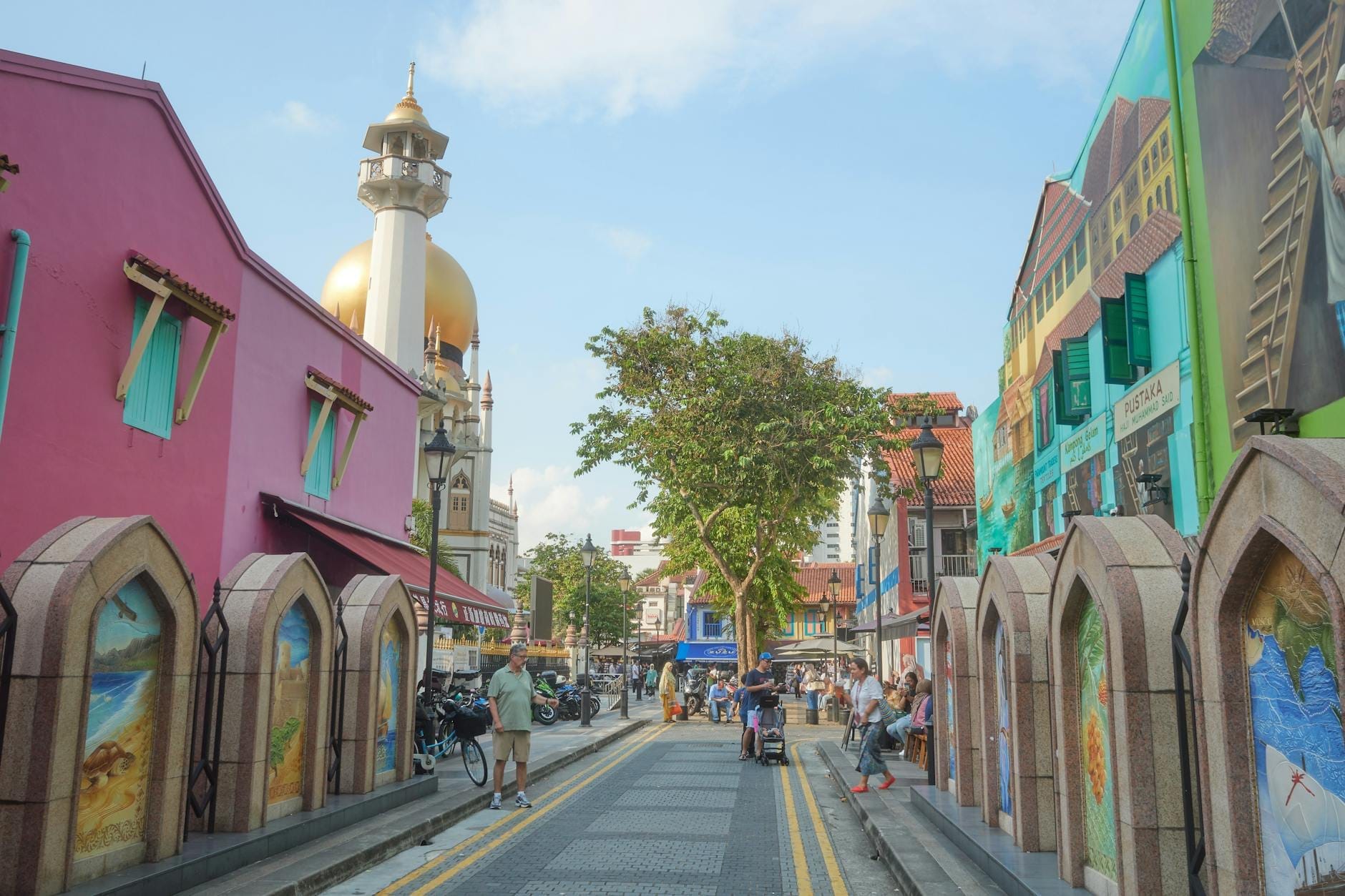
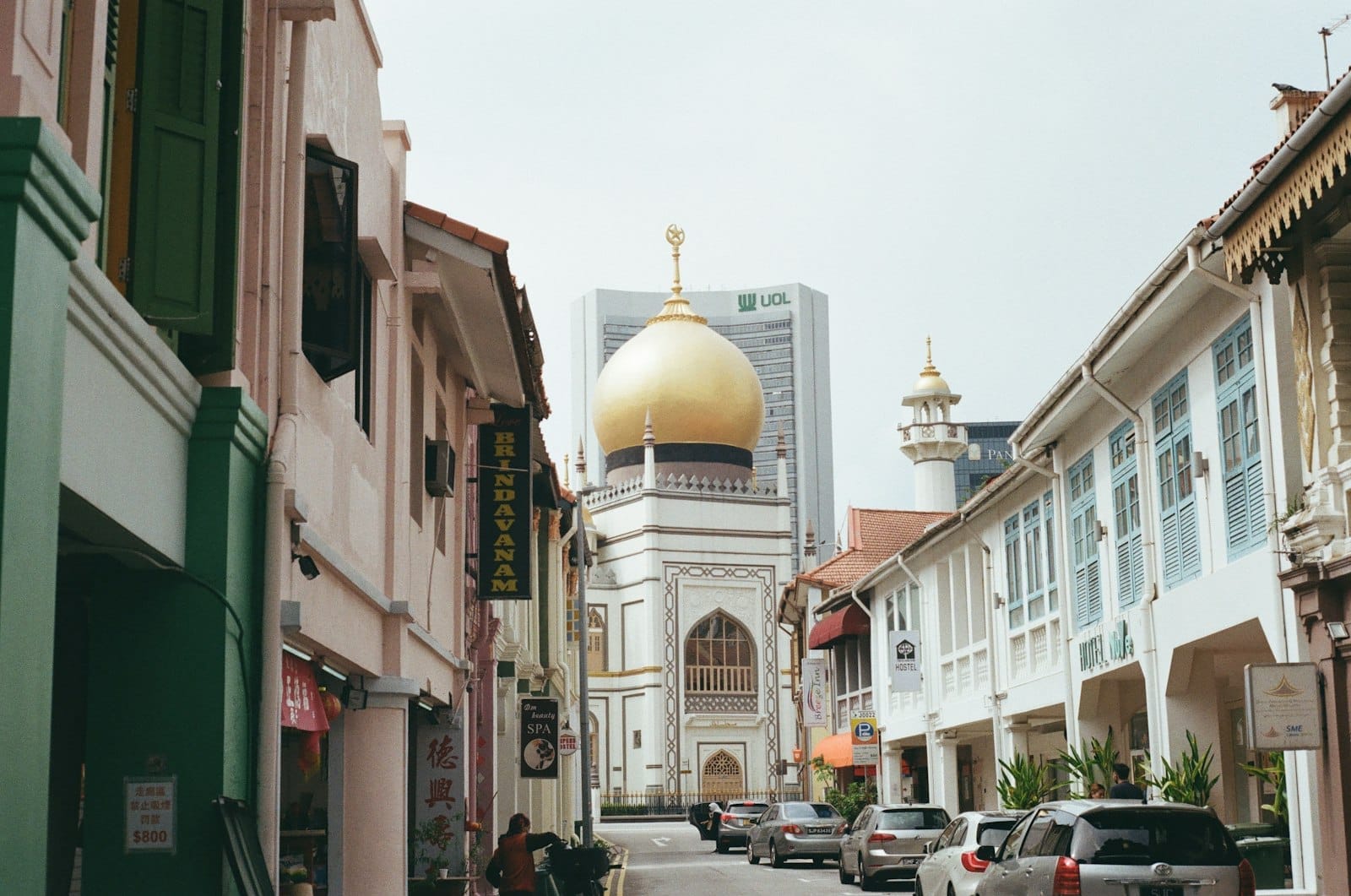
Kampong Glam is Singapore's historic Muslim Quarter, where the golden dome of Sultan Mosque anchors a compact grid of shophouse streets ranging from traditional textile traders to indie cafes and street-art-covered Haji Lane. It is one of the city's most architecturally coherent neighbourhoods and one of the most rewarding to explore on foot.
Kampong Glam sits at the intersection of Singapore's colonial past and its contemporary creative scene, where Arab merchants, Malay royalty, and Javanese traders once shaped a district that still carries that layered identity today. The gold dome of Sultan Mosque rises above streets lined with preserved shophouses selling everything from batik cloth and Persian carpets to specialty coffee and vinyl records. Few neighbourhoods in Singapore pack this much history, sensory detail, and street-level energy into such a walkable area.
Orientation
Kampong Glam occupies a compact rectangle in the Rochor planning area, roughly bounded by Beach Road to the southeast, Ophir Road to the northeast, Jalan Sultan to the north, and Victoria Street to the west. North Bridge Road cuts diagonally through the district, functioning as its commercial spine. The neighbourhood sits roughly two kilometres northeast of the Civic District and Marina Bay, and about one kilometre north of Bugis Junction, making it an easy addition to any day that starts in the city centre.
The internal street grid is tight and navigable on foot within twenty minutes. The main visitor corridor runs from Arab Street (closest to the mosque) through Baghdad Street and up to Haji Lane, which runs parallel one block to the northwest. Muscat Street and Bali Lane connect these arteries at right angles, creating a walkable loop that covers the neighbourhood's core without retracing steps.
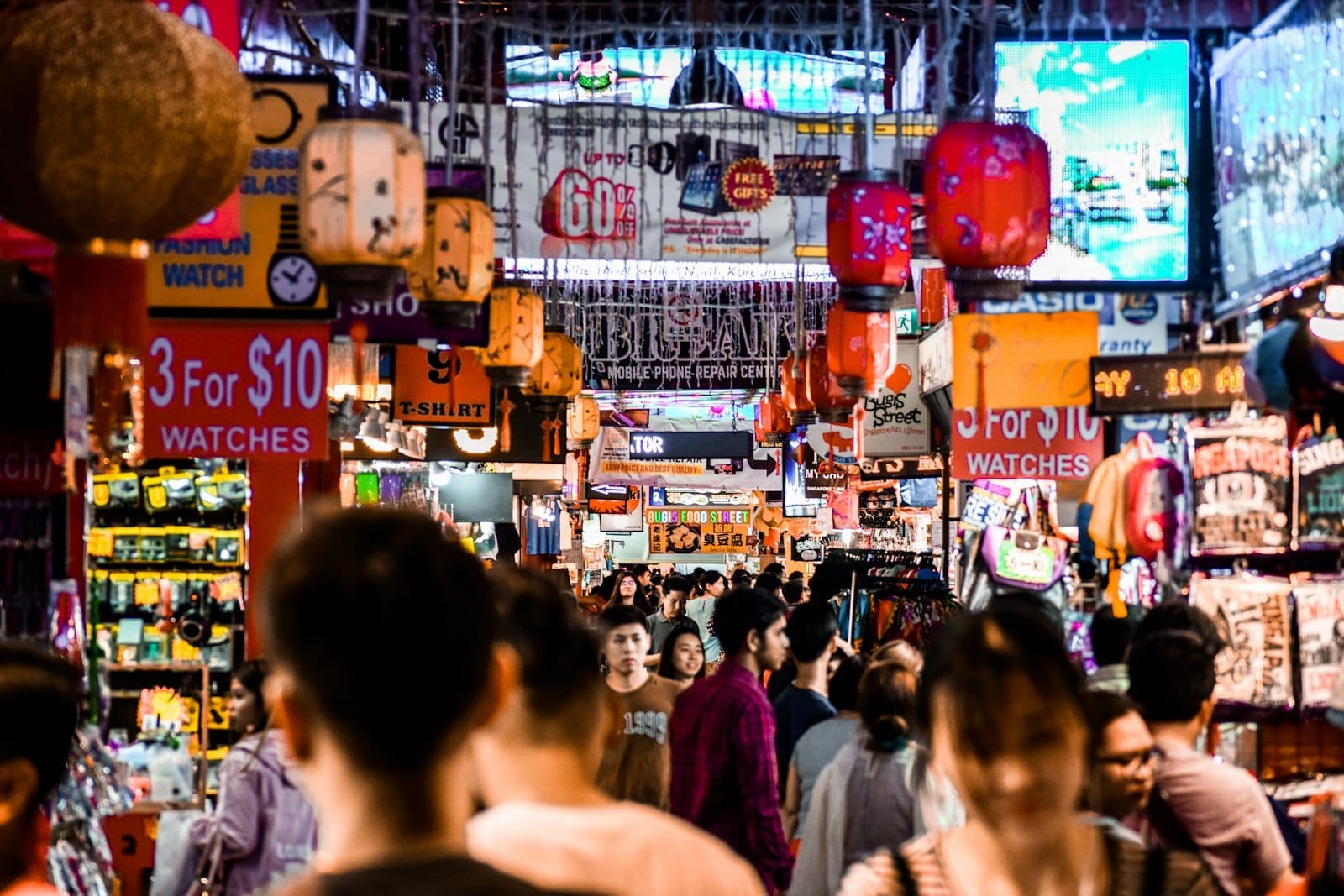
Kampong Glam borders the Bugis area to the south, where Bugis Street Market and the major Bugis MRT interchange sit within a ten-minute walk. To the east, Beach Road transitions toward the Lavender and Kallang areas. Understanding this positioning helps: Kampong Glam is not isolated but works naturally as part of a broader loop that includes Little India to the northwest, reachable in about fifteen minutes on foot via Jalan Sultan and Serangoon Road.
Character & Atmosphere
Kampong Glam was designated a conservation area in 1989, which means the two- and three-storey shophouses that line its streets have been preserved rather than demolished for high-rises. That decision gave the neighbourhood a human scale that most of Singapore no longer has. Walking down Baghdad Street in the late morning, you pass open-fronted shops with bolts of fabric stacked to the ceiling, the smell of oud drifting from incense traders, and the occasional delivery scooter navigating between pedestrians. It feels unhurried in a way that surprises visitors arriving from Orchard Road or Marina Bay.
The rhythm of the neighbourhood shifts noticeably across the day. By 8am, the streets are quiet enough to hear the call to prayer from Sultan Mosque echoing off the shophouse facades. Coffee shops and bakeries open first, drawing a mix of local residents and early-rising travellers. By mid-morning the textile and carpet traders lift their shutters on Arab Street, and the street takes on its characteristic visual density: rolls of batik and songket fabrics hanging in doorways, woven baskets stacked on the pavement. The afternoon heat sends most visitors toward the shaded cafes and restaurants, particularly along Haji Lane and Beach Road, where awnings create welcome cover.
After dark, Kampong Glam transforms again. The mosque is illuminated, casting a warm glow over the surrounding streets. The restaurants along Arab Street and North Bridge Road fill with evening diners, with Middle Eastern, Turkish, and Malay kitchens doing peak business from around 7pm. Haji Lane's bars and cocktail spots open up, drawing a younger crowd that lingers well past midnight on weekends. The neighbourhood stays lively but never reaches the high-volume noise of Clarke Quay. There is an ease to the evenings here that is harder to find in the city's more tourism-heavy nightlife zones.
ℹ️ Good to know
During Ramadan, Kampong Glam hosts one of Singapore's largest bazaars along Bussorah Street and the surrounding lanes. The area comes alive each evening with food stalls, lights, and crowds from sunset until late. If you're visiting during this period, arrive early in the evening to navigate the bazaar before peak congestion.
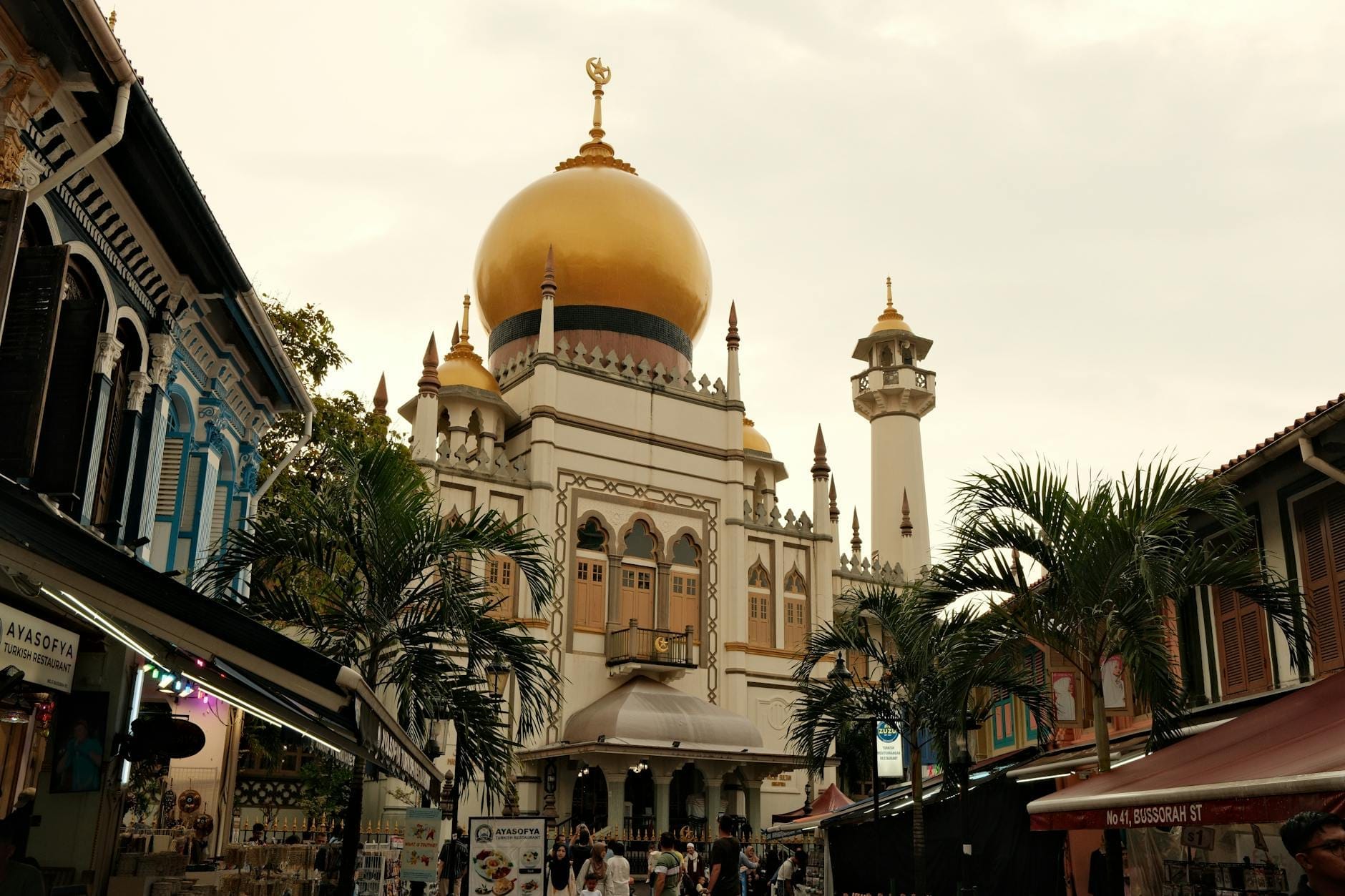
The neighbourhood draws a genuinely mixed crowd: Singaporean Muslim families shopping for textiles and religious items, tourists working through camera memory cards on Bussorah Street with Sultan Mosque behind them, young locals hunting vintage clothing on Haji Lane, and expats from the Arab Street restaurant scene. It is one of the few places in Singapore where heritage tourism and local daily life coexist without one completely overtaking the other, though the balance tips further toward tourism on weekend afternoons.
What to See & Do
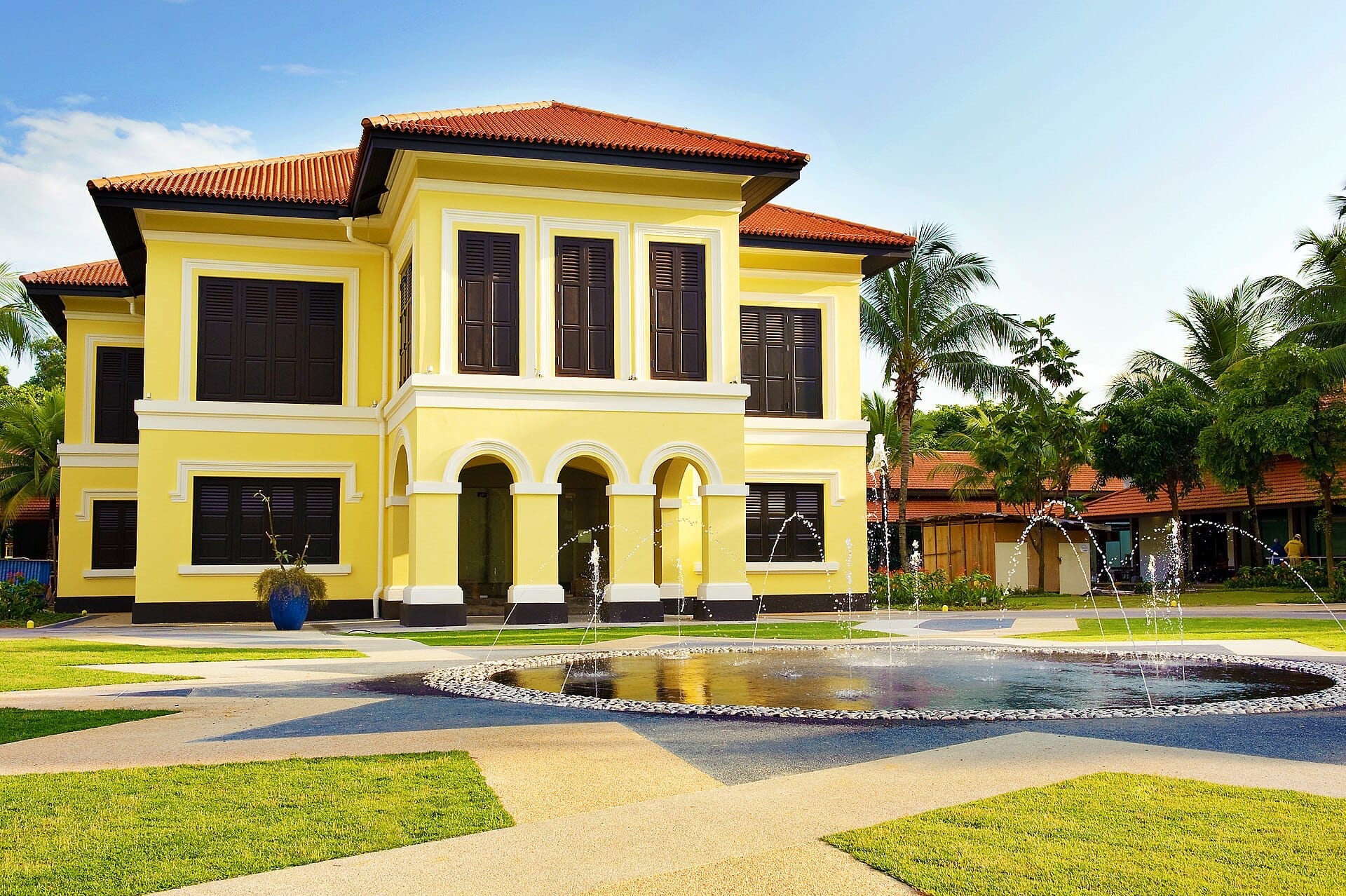
The neighbourhood's focal point is Sultan Mosque on North Bridge Road, completed in its current form in 1928 on the site of an original 1824 structure. The mosque accommodates thousands of worshippers and is open to non-Muslim visitors outside prayer times. The approach along Bussorah Street, with the mosque's golden dome framed by the narrow lane, is one of the most photographed streetscapes in Singapore. Nearby, the Malay Heritage Centre occupies the restored Istana Kampong Glam, the former palace of the Malay sultans. The museum traces the history of the Malay community in Singapore and the royal lineage that shaped this district, and it deserves more time than most visitors give it.
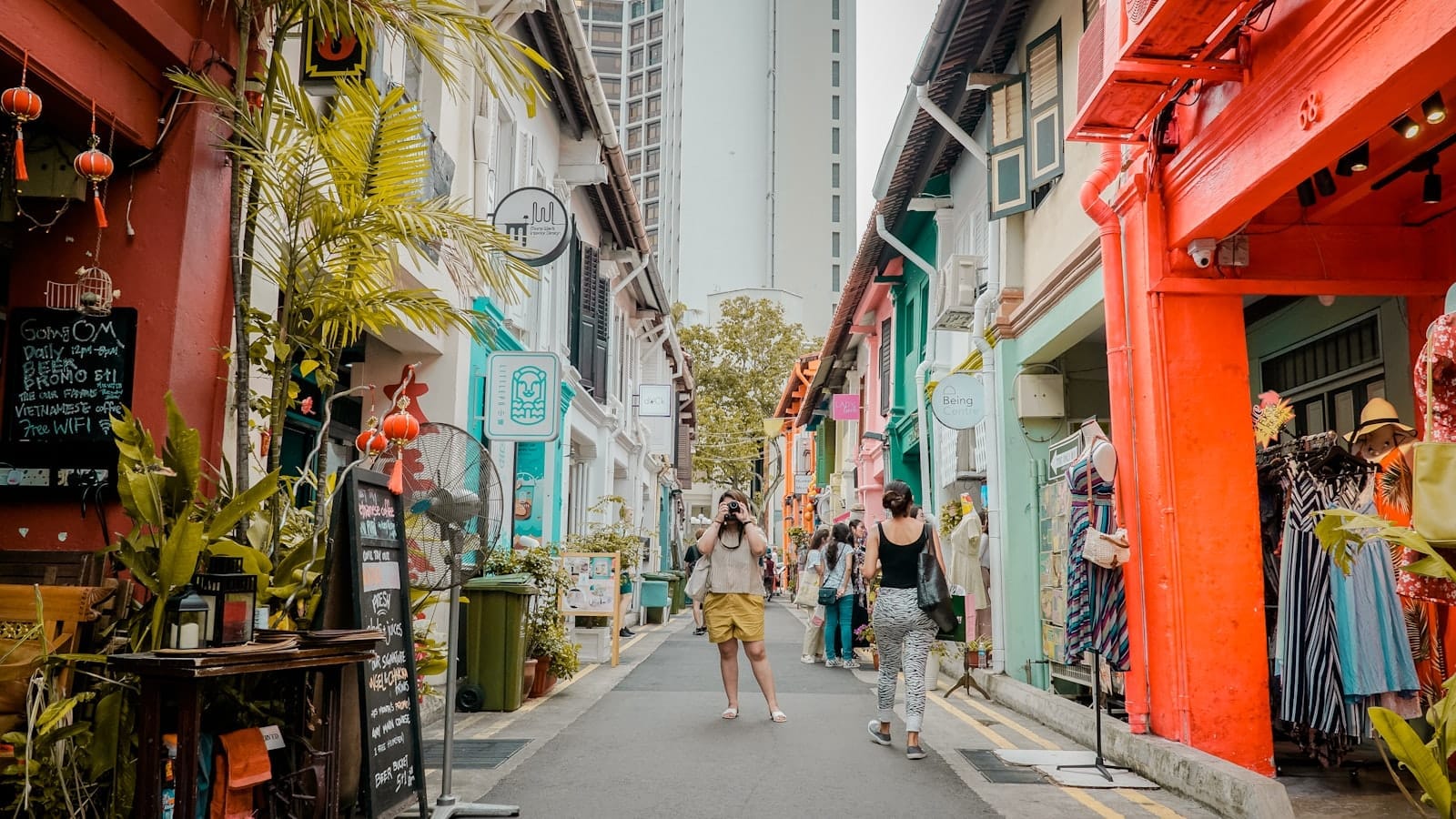
Arab Street itself is worth walking slowly, less for specific attractions than for its retail character. Shops here have traded in textiles, lace, prayer rugs, and craft materials for generations, and several of the businesses have been in the same families for decades. A few minutes' walk away, Haji Lane occupies a completely different register: a narrow alley with street murals scaling the full height of the shophouse walls, indie fashion boutiques, vinyl shops, tattoo studios, and cafes with outdoor seating that spills onto the lane itself.
Sultan Mosque: free entry for non-Muslim visitors outside prayer times; dress modestly and remove footwear at the entrance
Malay Heritage Centre: museum with permanent and rotating exhibitions on Malay history and culture; paid admission
Bussorah Street: pedestrianised section with direct mosque views, good for photography in the early morning before crowds arrive
Arab Street and Baghdad Street: traditional textile, carpet, and craft shops; best explored on weekday mornings
Haji Lane: street art, boutique retail, and cafe culture; busiest on weekend afternoons
Muscat Street: connects the main arteries and has several good independent food spots
Kampong Glam also works well as a base for extending into adjacent areas. Arab Street connects southward toward Bugis, where you can continue to Marina Bay via a twenty-minute taxi or a couple of MRT stops. The neighbourhood also pairs logically with Little India: the two heritage districts sit close enough to cover in a single day without feeling rushed.
Eating & Drinking
The food scene in Kampong Glam is anchored by Middle Eastern and Malay cooking, with a secondary layer of cafes, brunch spots, and international restaurants that has grown significantly over the past decade. North Bridge Road is the main restaurant corridor: Lebanese, Turkish, and Moroccan kitchens sit alongside Malay nasi padang stalls and Persian cuisine. Many restaurants here are halal-certified, reflecting the neighbourhood's identity, and that certification also means they attract a wide Muslim audience from across Singapore and the region.
For a full sit-down meal, the stretch of restaurants between the mosque and Beach Road offers the most atmosphere in the evening. Meze platters, grilled meats, and fragrant rice dishes dominate the menus. Budget around S$20-35 per person at mid-range restaurants; a few of the more established Turkish and Lebanese spots run higher. For something quicker and cheaper, several Malay and Indian Muslim stalls operate in the area, serving nasi lemak, murtabak, and biryani at hawker prices, typically under S$10.
Haji Lane is where the cafe culture concentrates. Specialty coffee shops, dessert bars, and brunch menus aimed at a younger crowd fill the lane on weekends, with tables extending onto the alley itself when the weather cooperates. The quality is generally high, and a few spots have developed followings well beyond the neighbourhood. Prices are slightly above average for Singapore cafes but not unreasonable.
💡 Local tip
If you want to eat with locals rather than tourists, walk one block west of the main visitor circuit to the smaller lanes around Jalan Pisang and Ophir Road, where Malay and Indian Muslim stalls operate with less foot traffic and often better value.
Kampong Glam is not a heavy drinking neighbourhood by Singapore standards, and that is partly by design given its character as a Muslim heritage district. That said, Haji Lane has a genuine bar scene that picks up after 9pm, with cocktail bars and craft beer spots that attract a mixed local and expat crowd. For a broader nightlife circuit, Clarke Quay is about fifteen minutes away by taxi and offers a very different atmosphere.
Getting There & Around
The closest MRT station to the core of Kampong Glam is Bugis (East-West Line and Downtown Line), about a ten-minute walk south along North Bridge Road. Nicoll Highway MRT (Circle Line) provides access from the northeast and is roughly equidistant to the Baghdad Street end of the neighbourhood. Both stations are well-served and connect to the rest of the MRT network without requiring transfers for most journeys.
Several bus routes run along North Bridge Road, Victoria Street, and Beach Road, making the neighbourhood accessible from Chinatown, Orchard Road, and the city centre without using the MRT. The buses are reliable and give a better ground-level orientation of how the district connects to its surroundings than the underground train. Taxis and ride-hailing apps (Grab is the dominant platform in Singapore) are easy to flag or book, and the neighbourhood's street layout means drop-off points are flexible.
Within the neighbourhood itself, walking is the only sensible option. The core area from Arab Street to Haji Lane spans about 300 metres, and the entire district can be covered on foot in a relaxed two-to-three hours. There are no cycleways specific to the area, though bicycles and personal mobility devices operate on nearby paths. Flat terrain and short distances make this one of Singapore's most comfortable neighbourhoods to explore without transport.
⚠️ What to skip
Kampong Glam gets genuinely crowded on weekend afternoons, particularly along Bussorah Street and Haji Lane. Visiting on a weekday morning gives you a completely different experience: quieter streets, easier access to shops, and better photo opportunities at Sultan Mosque without tour groups in the foreground.
Where to Stay
Kampong Glam has a growing range of accommodation, from boutique heritage hotels in converted shophouses to budget hostels catering to the backpacker circuit that runs through this part of Singapore. Staying here puts you within walking distance of the neighbourhood's restaurants and nightlife, and on the doorstep of the MRT network. For travelers who want a base that feels rooted in a specific local character rather than a generic hotel zone, Kampong Glam makes a strong case. For a broader comparison of where to stay across Singapore, the where to stay in Singapore guide covers all the main options by neighborhood type and budget.
The best-positioned hotels sit along or just off Beach Road, close enough to the neighbourhood's core to walk everywhere but with slightly more street space than the tighter interior lanes. Shophouse-style boutique properties on the smaller streets offer more atmosphere but come at a noise cost on weekend nights, when the bar scene on Haji Lane runs late. Travelers who are light sleepers and want a quieter base might consider staying in the Bugis area to the south and treating Kampong Glam as a day destination.
Practical Notes
Sultan Mosque is an active place of worship. Non-Muslim visitors are welcome outside prayer times but must dress modestly: shoulders and knees covered, no shorts or sleeveless tops. Robes are available to borrow at the entrance if needed. Behave respectfully and avoid visiting during Friday midday prayers when the mosque fills with worshippers and the surrounding streets become very congested.
The neighbourhood is safe at all hours, and Singapore's general reputation for low street crime applies fully here. Standard urban awareness is sufficient. For a broader orientation to Singapore before you arrive, the getting around Singapore guide covers transit logistics across the city, and the Singapore food guide provides useful context for the halal food scene that Kampong Glam represents at its best.
TL;DR
Kampong Glam is Singapore's best-preserved historic quarter: a conservation district where the shophouse architecture, mosque, and Malay royal heritage remain legible in the streetscape rather than being reduced to a museum exhibit.
Best visited on a weekday morning for the least crowds and the most atmospheric experience around Sultan Mosque and the textile traders on Arab Street.
The food scene is genuinely strong, particularly for halal Middle Eastern and Malay cuisine, with a solid cafe and bar layer on Haji Lane for evenings.
Most suited to travelers interested in cultural history, street photography, independent retail, and food; less suited to those looking primarily for nightlife or beach access.
Pairs naturally with Little India and Bugis for a full day exploring Singapore's heritage districts without touching the main tourist circuit.
Singapore sits just one degree north of the equator, which means warm, humid weather all year round. But that doesn't mean every month is equal. This guide breaks down the best time to visit Singapore by weather, crowds, festivals, and budget so you can plan a trip that actually works.
Singapore has one of the most efficient public transport systems in the world. This guide covers everything from MRT fares and bus routes to taxis, ride-hailing apps, and how to get from Changi Airport to the city centre without overpaying.
Singapore is compact, well-connected, and surrounded by islands, jungle, and a whole other country just across the Causeway. Whether you want to cycle through mangroves, shop across the border, or laze on a beach, these are the day trips that actually deliver. Here is what to expect, how to get there, and what to skip.
Singapore packs more culinary diversity per square kilometre than almost any city on earth. This guide breaks down the essential dishes, the best hawker centres, neighbourhood food streets, and honest advice on where to spend your appetite and your Singapore dollars.
Singapore's hawker centres are where the city's food culture lives. With over 110 centres and 6,000 stalls serving Chinese, Malay, Indian, and fusion dishes for under $10 SGD, this guide covers everything from the best centres to visit, to unwritten rules locals actually follow.
Whether you have a long weekend or a full week, Singapore rewards every length of stay. This itinerary guide builds day by day, from the essential Marina Bay icons and multicultural neighborhoods to wildlife parks, island escapes, and local food pilgrimages.
Singapore is one of Asia's premier shopping destinations, with low import tariffs, world-class malls, and lively street markets all within a compact city. This guide cuts through the noise to tell you exactly where to shop, what to expect, and how to get the best value.
Singapore is one of the easiest cities in the world to travel with children. World-class wildlife parks, interactive museums, beach days, and theme park thrills are all packed into a compact, safe, and well-connected island. This guide covers the best family attractions in Singapore, organized by experience type so you can plan a trip that keeps kids genuinely excited from morning to night.
Singapore packs an extraordinary range of experiences into just 733 square kilometres. This guide covers the top things to do in Singapore, from world-class attractions and neighbourhood food trails to nature reserves and cultural landmarks, with honest assessments of what's worth your time and money.
Choosing where to stay in Singapore shapes your entire trip. This guide breaks down every major area by character, price range, and practical pros and cons, so you can book with confidence regardless of your budget or travel style.