Getting Around Singapore: MRT, Buses, Taxis & More
Singapore has one of the most efficient public transport systems in the world. This guide covers everything from MRT fares and bus routes to taxis, ride-hailing apps, and how to get from Changi Airport to the city centre without overpaying.
Plan and book this trip
Tools from our partner Travelpayouts help you compare flights and hotels. If you book through them, we may earn a commission at no extra cost to you.
Flights
Hotels map
TL;DR
- The MRT is the fastest and cheapest way to cover most of Singapore, with 166 stations across six lines operating from around 5:30am to midnight.
- Fares are distance-based, starting at S$1.09 for short trips. Always tap in and out with an EZ-Link card or contactless bank card to get the correct fare.
- Buses carry more daily passengers than the MRT and are essential for reaching areas not on the rail network, including parts of East Coast and outer neighbourhoods.
- Taxis and ride-hailing apps (Grab, Gojek) are convenient after midnight and for luggage-heavy journeys, but factor in peak surcharges.
- Renting a car is rarely worth it for tourists. Driving costs are extremely high due to the Certificate of Entitlement system and Electronic Road Pricing tolls.
The MRT: Singapore's Rail Backbone
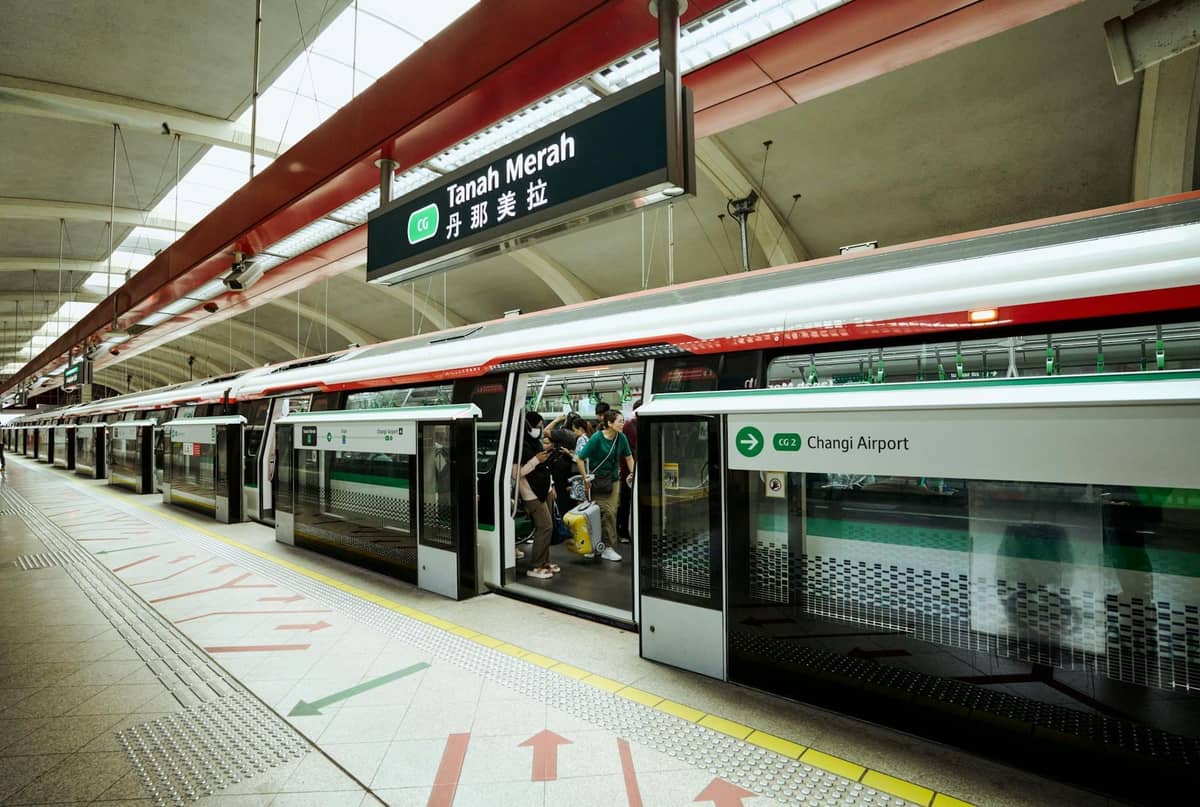
Getting around Singapore by MRT is straightforward enough that most visitors figure it out within the first day. The network covers over 230 km across six main lines: the North-South Line, East-West Line, Circle Line, Thomson-East Coast Line, North East Line, and Downtown Line. As of 2024, there are 166 stations, and the system averages around 3.4 million passenger journeys daily. SMRT Trains operates the first four lines; SBS Transit runs the North East and Downtown Lines.
Trains run from 5:30am to 11:18pm/12:03am depending on the line on most lines, with frequencies of 2 to 5 minutes during peak hours and 5 to 8 minutes off-peak. That reliability matters: you will rarely wait long. The system is air-conditioned throughout, which is not a minor detail in a country sitting one degree north of the equator.
💡 Local tip
Download the MyTransport.SG app before you arrive. It provides real-time MRT and bus arrival times, journey planning, and service alerts. It is the official LTA platform and more reliable than third-party apps.
For most tourist destinations, the MRT delivers you within a 10-minute walk. Gardens by the Bay is a short walk from Bayfront Station. Chinatown has its own station on the North East and Downtown Lines. Orchard Road sits on the North-South Line. The only major visitor areas that require a bus connection are in the outer east, around Changi Village and Pulau Ubin, and parts of the west.
Fares, EZ-Link Cards, and Payment Options
Singapore's public transport fares are distance-based. A short trip up to 3.2 km costs S$1.09-S$1.49 by card. Longer journeys reach a maximum of around S$2.97 for distances above 40 km. These are among the lowest urban transit fares globally for a city of Singapore's income level. The monthly unlimited pass runs S$142 and suits long-stay visitors or those working in the city.
- EZ-Link Card The standard stored-value card, available at all MRT station ticketing machines and 7-Eleven stores. Top up at station kiosks, convenience stores, or via the EZ-Link app. Costs S$12 upfront (S$7 stored value, S$5 non-refundable card fee).
- Contactless Bank Card Visa and Mastercard contactless payments work directly at MRT and bus fare gates since 2019. No setup required. Fares are calculated correctly as long as you tap the same card consistently.
- Singapore Tourist Pass Unlimited travel on trains and buses for 1, 2, or 3 days (around S$22, S$29, S$34 plus S$10 deposit). Worth it only if you plan to make six or more separate trips per day.
- Single-trip tickets Available at station machines but cost more per journey than a stored-value card. Avoid for anything beyond a single one-off trip.
⚠️ What to skip
Always tap out when exiting. Failing to do so triggers a maximum-fare penalty charge and can cause card issues on subsequent journeys. This applies to both buses and the MRT.
Buses: The Network You Should Not Ignore
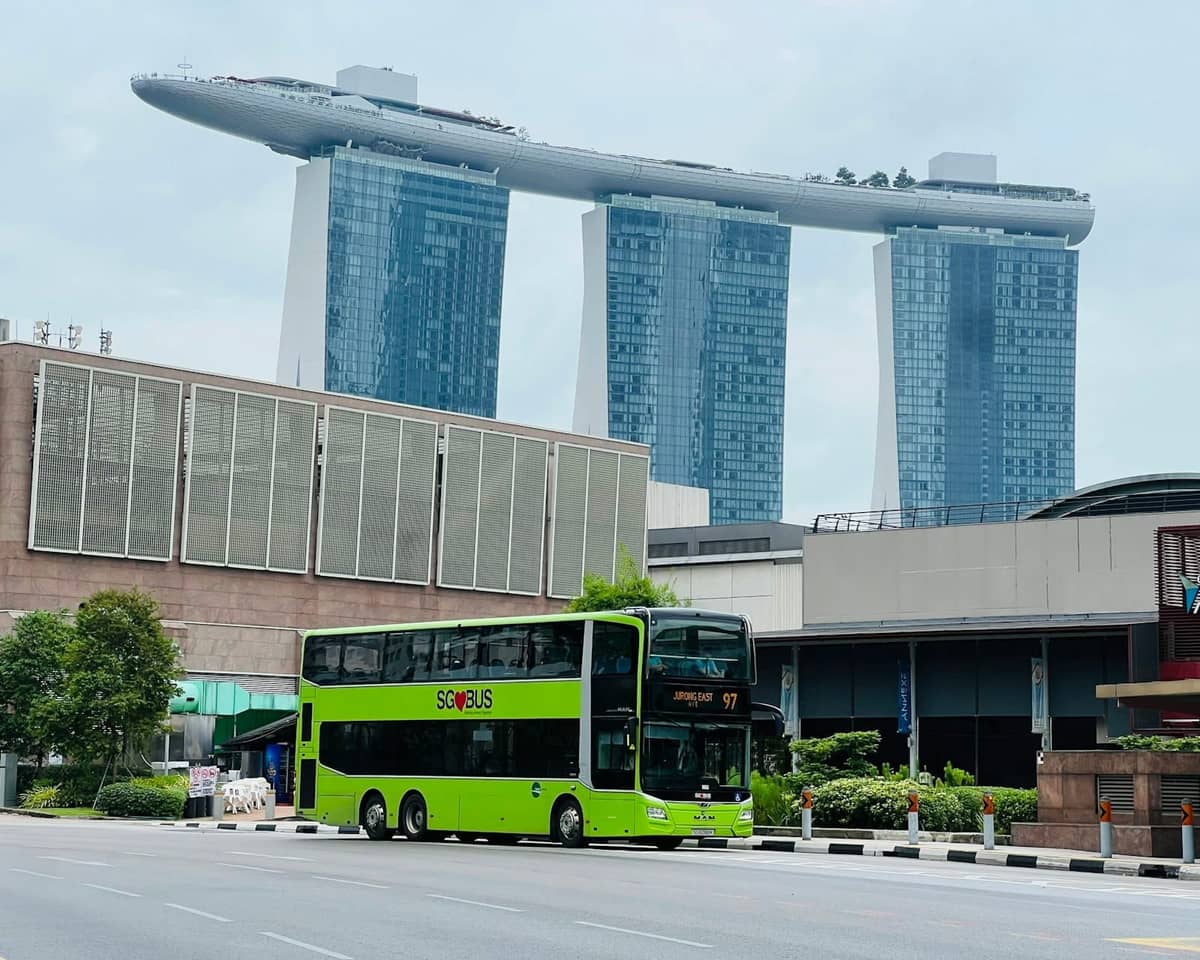
A common mistake among first-time visitors is treating buses as a backup option. In reality, buses carry around 3.5 million passengers daily, more than the MRT, and they reach every corner of the island. There are over 365 bus services operated by four companies: SBS Transit, SMRT Buses, Tower Transit, and Go-Ahead. The fleet runs to around 5,800 vehicles.
Buses use the same EZ-Link or contactless card as the MRT, and fares are calculated on the same distance-based system. Key tourist-relevant routes include services connecting Dempsey Hill and Holland Village to the MRT network, as well as services reaching East Coast Park along the coast, which has no MRT station nearby. Night buses operate on selected routes after midnight when the MRT closes.
✨ Pro tip
The SG BusRouter app or Google Maps gives accurate bus timings. Board at the front door, tap your card, and exit from the rear. Signal the driver by pressing the bell button one stop before your destination. Buses stop only on request outside the city centre.
Taxis and Ride-Hailing Apps
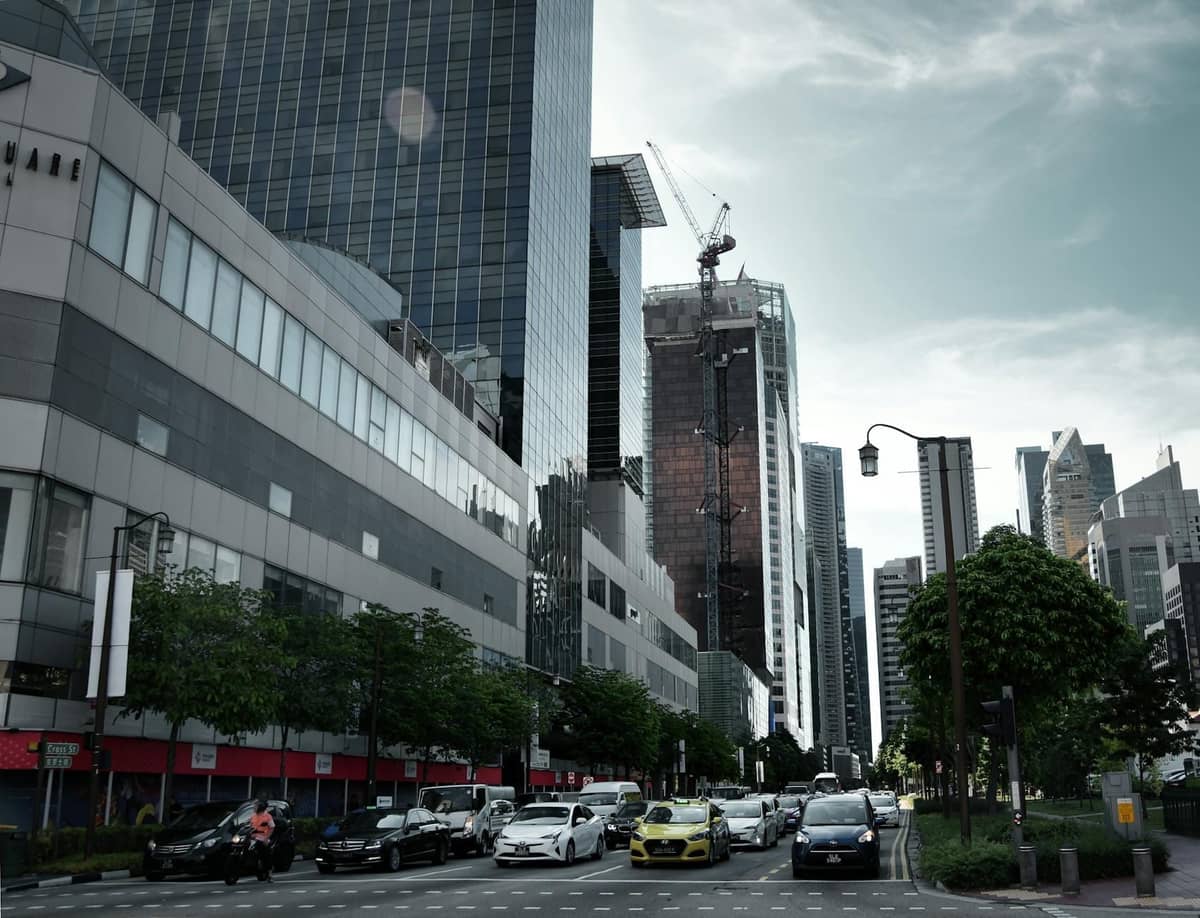
Singapore's taxi fleet is large, metered, and generally reliable. Base fare starts at S$3.90 depending on the time of day and vehicle type. Surcharges apply during peak hours (6am to 9:30am and 6pm to midnight on weekdays), from midnight to 6am, for trips originating from the airport, and for booking via phone or app. These add-ons stack quickly and can double the base fare.
Grab is the dominant ride-hailing platform in Singapore, functioning similarly to Uber with upfront pricing. Gojek operates as a smaller competitor and often has lower fares during non-peak periods. Both apps require a Singapore mobile number for registration, but international numbers typically work. Ride-hailing is most useful late at night, when carrying luggage between transport hubs, or when visiting locations poorly served by public transit.
- Grab: Dominant app, available island-wide, multiple service tiers from budget to premium
- Gojek: Good competition on price, especially outside peak hours
- ComfortDelGro Taxi: Largest traditional taxi fleet, bookable via CDG Zig app
- TADA: Blockchain-based platform with no surge pricing, worth checking during busy periods
Getting from Changi Airport to the City
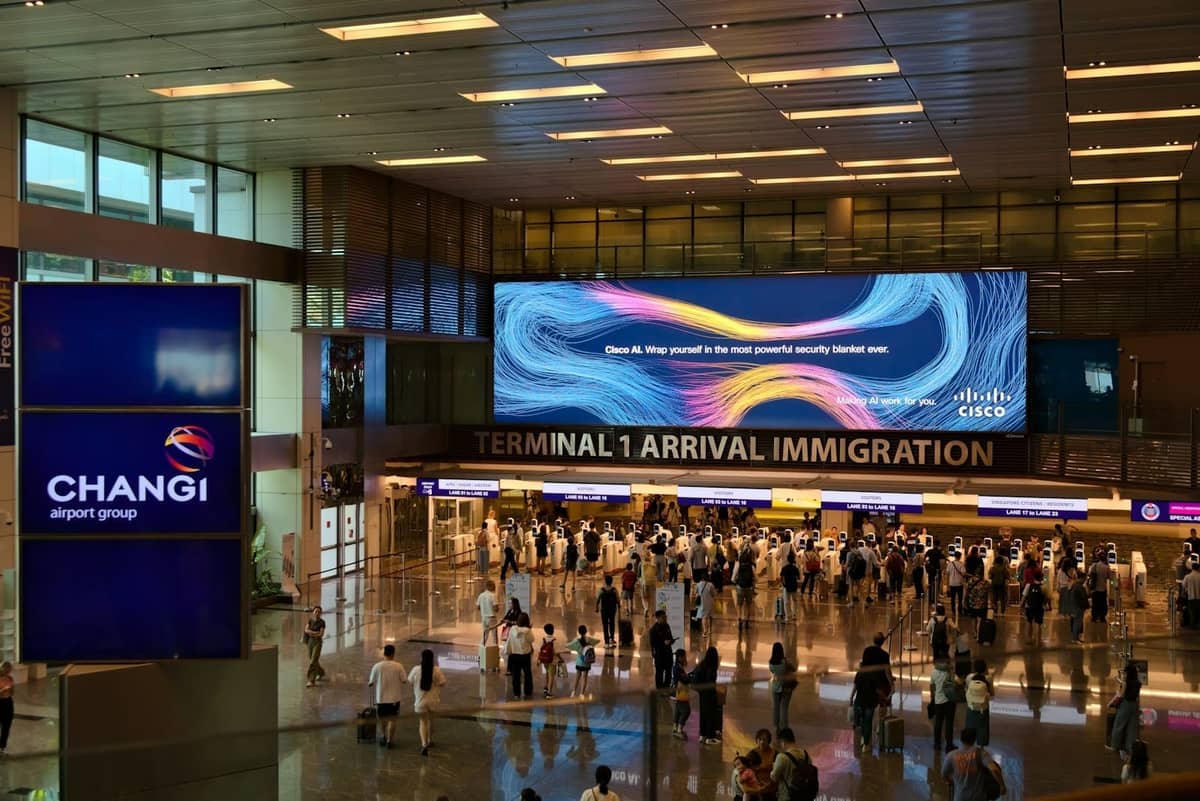
Changi Airport sits at the eastern end of the East-West MRT Line. The direct train into the city centre (City Hall or Raffles Place) takes around 30 to 40 minutes and costs S$1.89 to S$2.39 depending on your destination. Trains run from 5:30am to 11:18pm. This is the obvious choice for solo travellers and couples with manageable luggage.
If you land late or have significant luggage, a metered taxi from Changi costs roughly S$25 to S$35 to central Singapore, not including surcharges that apply between midnight and 6am and for airport pick-ups. A Grab ride often works out slightly cheaper with upfront pricing. Note that Jewel Changi Airport, the lifestyle complex attached to the airport, is worth a stop regardless of which transport you choose. The Rain Vortex indoor waterfall is a legitimate spectacle.
ℹ️ Good to know
The airport shuttle bus service (operated by various hotels) is another option but takes longer due to multiple stops. It costs around S$9 per person and suits travellers staying in the central business district hotels that are covered by the route. Confirm coverage with your accommodation before booking.
Practical Tips for Getting Around Singapore
Rush hours run from 8am to 9am and 5pm to 7pm on weekdays. Trains and buses are genuinely packed during these windows, particularly on the North-South and East-West Lines. If your itinerary is flexible, shift major cross-city journeys to mid-morning or early afternoon. The Singapore itinerary guides are structured to cluster nearby attractions together, which reduces unnecessary transit time.
Singapore's network is expanding significantly. The Jurong Region Line and Cross Island Line are scheduled for phased openings between 2027 and 2030, and the North-South Corridor expressway is due for completion around the same period. These will expand coverage into the western and central-northern parts of the island that currently depend on buses.
For visitors focused on specific neighbourhoods, note that areas like Kampong Glam (served by Bugis MRT) and Little India (Little India MRT on the North East Line) are easy rail destinations. Sentosa Island is accessible via the Sentosa Express monorail from VivoCity mall, by cable car from Mount Faber, or on foot via the Sentosa Boardwalk.
- Keep your EZ-Link card topped up: minimum balance of S$3 needed to board buses, but S$3 is safer for unexpected longer journeys
- Google Maps and Apple Maps both give accurate Singapore transit directions including real-time bus arrival data
- Platform screen doors on MRT platforms display which side the doors will open, helpful for positioning yourself on the platform
- Queuing is strictly observed at bus stops and MRT platforms. Join the marked queue lines on the platform floor
- Food and drink are prohibited on MRT trains and in station concourses. Fines can reach S$500 and enforcement is real
FAQ
What is the cheapest way to get around Singapore?
Public transport is far cheaper than taxis or ride-hailing. A single MRT or bus trip costs between S$1.09 and S$2.97 depending on distance. Using an EZ-Link card or contactless bank card gives you the lowest fares automatically. The Singapore Tourist Pass (from S$22 per day) is worth considering only if you plan to make many separate trips daily.
Do I need to buy an EZ-Link card or can I use my bank card?
You can use a contactless Visa or Mastercard directly at MRT and bus fare gates without any setup. This works well for short visits. However, if your bank charges foreign transaction fees, an EZ-Link card (available at airport MRT stations) will save money over a longer stay.
Is Grab or a taxi better in Singapore?
Grab offers upfront pricing which makes budgeting easier, and rates are often competitive with metered taxis during off-peak periods. Traditional taxis can be faster to flag during non-peak hours without waiting for the app to match a driver. For airport pickups and late-night rides, Grab is generally more convenient and predictable in cost.
How long does the MRT from Changi Airport to the city centre take?
Around 30 to 40 minutes to City Hall or Raffles Place, depending on which line changes you make. The East-West Line runs directly from Changi to the city. Trains are frequent and the journey is comfortable with luggage racks available.
Is it worth renting a car in Singapore?
Almost never for tourists. Car ownership in Singapore is deliberately expensive due to the Certificate of Entitlement system, and visiting drivers face Electronic Road Pricing tolls on expressways and in the city centre. Parking in central areas is also costly. The public transport network covers virtually every attraction, so a car adds cost and complication without meaningful convenience.