Holland Village is Singapore's most liveable-feeling neighborhood: low-rise, tree-lined, and anchored by a core of shophouse restaurants and independent stores. A short walk away, Dempsey Hill occupies former British military barracks repurposed into one of the city's best dining and leisure destinations. Together they form an area that rewards slow exploration.
Holland Village and Dempsey Hill occupy a quiet corner of Singapore's central-west that has been popular with expatriates for decades without ever feeling packaged for tourism. The two areas feel genuinely different from each other, yet they complement each other well: Holland Village offers street-level energy and affordable hawker food steps from an MRT station, while Dempsey Hill delivers colonial architecture, lush greenery, and some of the city's most acclaimed restaurants tucked into former army barracks.
Orientation
Holland Village sits roughly 6 kilometres west of the Singapore city centre, along the boundary between the Bukit Timah and Queenstown planning areas. The neighborhood's commercial core is a crescent of shophouses and low-rise malls formed by Holland Road, Holland Avenue, Lorong Liput, and Lorong Mambong. These four streets loop around a central block that contains most of the restaurants, cafes, bars, and shops. The area is compact enough to walk end-to-end in under fifteen minutes.
Across Holland Avenue to the north and east lies Chip Bee Gardens, a quieter residential enclave of terraced houses built in the 1950s. Jalan Merah Saga, the main commercial street through Chip Bee Gardens, has evolved into a secondary dining and café strip with a noticeably more neighbourhood feel than the main Holland Village core. This street is worth the five-minute walk from the MRT even if you are only spending a few hours in the area.
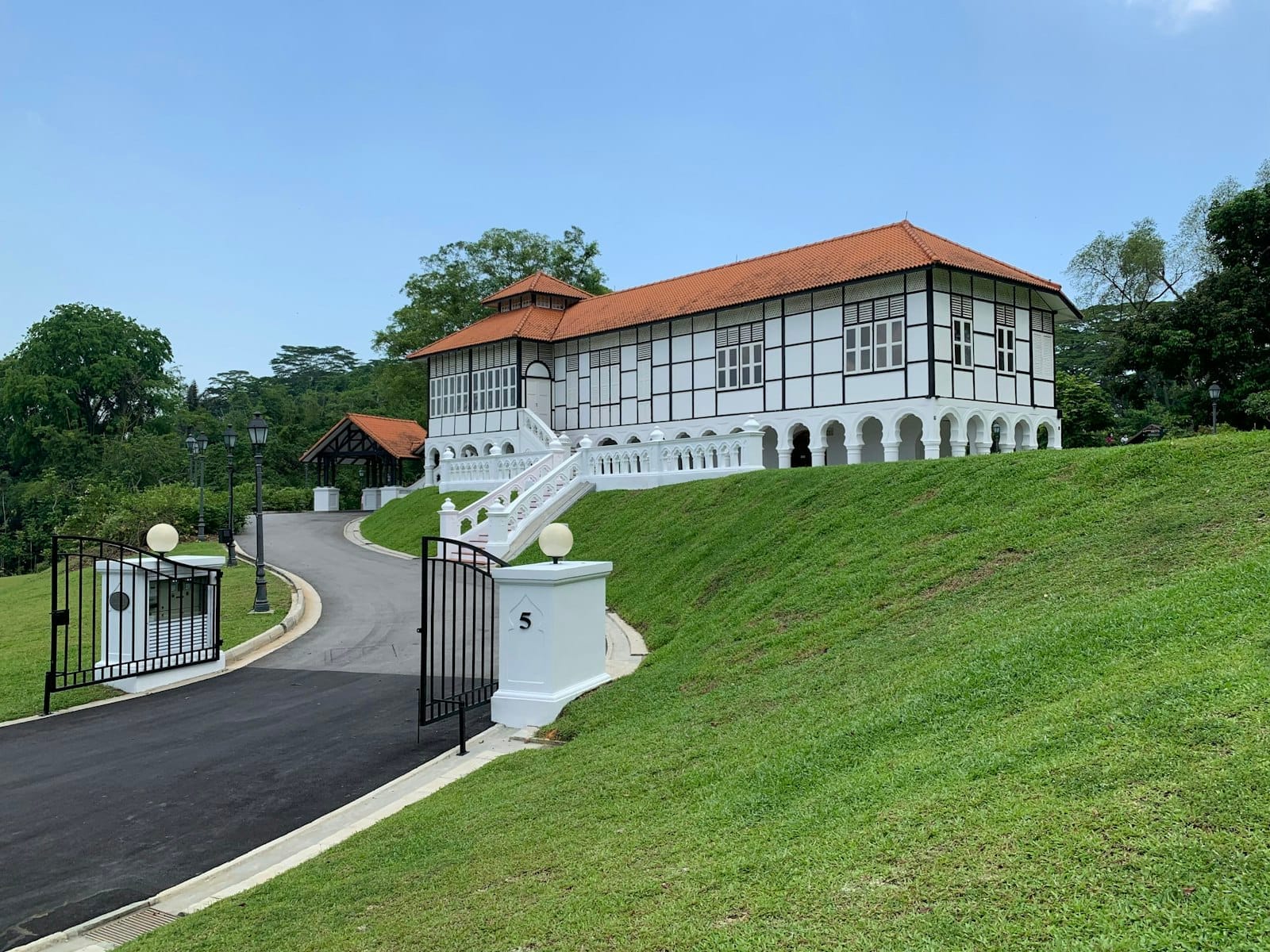
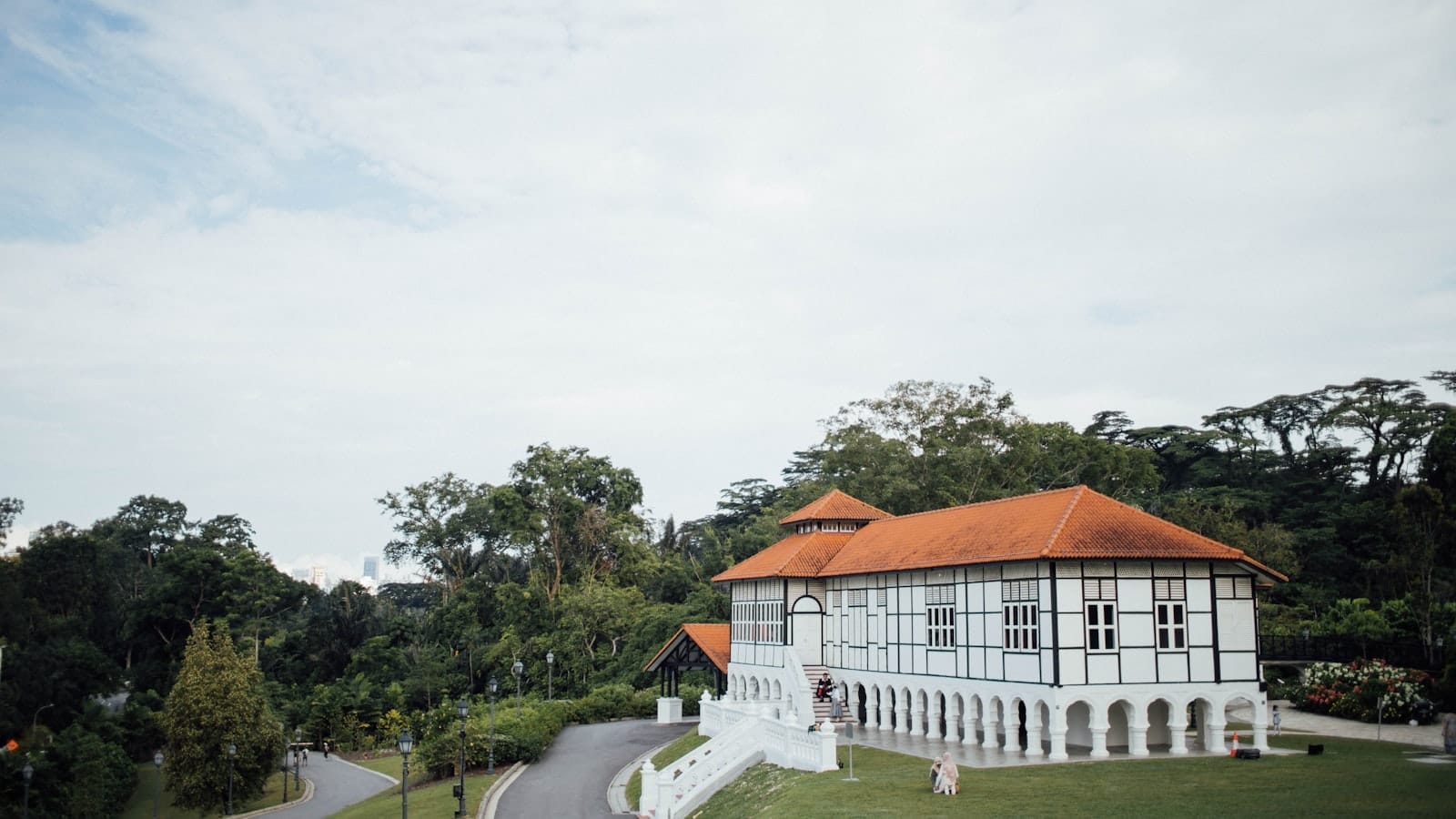
Dempsey Hill sits roughly 1.5 kilometres northeast of Holland Village MRT, separated from the shophouse core by Holland Road and a stretch of low-density housing. It is not walkable from the MRT in any comfortable sense, but it is easily reachable by taxi, Grab, or bus. The site occupies the former Tanglin Barracks, a British military compound built in the late 19th century that was handed over to Singapore after independence. The buildings, spread across a low hillside thick with rain trees, were eventually converted into restaurants, antique shops, galleries, and lifestyle stores. The surrounding area also connects westward toward the Singapore Botanic Gardens and northward toward Orchard Road.
ℹ️ Good to know
Holland Village MRT sits on the Circle Line (CC21). The journey from Dhoby Ghaut takes around 12 minutes, and from Botanic Gardens (where the Circle Line intersects the Downtown Line) about 3 minutes. Buona Vista MRT, a 10-minute walk south, adds Circle and East-West Line access.
Character & Atmosphere
Holland Village has been an expatriate enclave since the British colonial period, when officers and their families lived in the surrounding bungalows and shophouses supplied them with provisions. That history is still visible in the architectural scale: buildings stay low, streets stay wide enough for shade trees, and the whole area feels less compressed than central Singapore. Today the neighborhood draws a mix of long-term expats, young Singaporean professionals, and families, and that mix produces a specific atmosphere, relaxed but not sleepy, international but not tourist-facing.
On a weekday morning, the pace around Lorong Liput and the adjacent market is genuinely unhurried. Regulars collect coffee from their usual kopitiam, wet market vendors arrange produce, and the main roads carry school-run traffic before quieting by mid-morning. By early afternoon the pavements heat up and foot traffic thins, which is the right time to sit under a café awning or retreat into one of the air-conditioned shophouse restaurants for a long lunch.
Evenings transform the strip. The al fresco tables on Lorong Mambong fill from around 6pm, and the cluster of bars and restaurants stays busy until well past midnight on weekends. The noise level is high near the pub strip but drops off quickly once you move a block away into the residential streets. Weekend nights can feel crowded along the main row, but there is none of the aggressive tout culture you find in some other entertainment zones in Singapore.
Dempsey Hill has a completely different rhythm. The barracks buildings sit far enough apart that the place never feels crowded, and the canopy of mature rain trees means it stays cooler and quieter than you expect given its proximity to the city. Morning joggers use the paths between the buildings, and the whole compound has a specific quality of light in the late afternoon, when the sun filters through the tree cover and hits the low red-brick walls at a low angle. Most of the restaurants here open for lunch and do not hit their stride until dinner.
What to See & Do
Holland Village itself is primarily an eating and drinking destination rather than a sightseeing one. The pleasure here is in walking the loop of Lorong Liput, Lorong Mambong, and the connecting lanes, looking into the shophouses, and finding your own rhythm. The mix of independent stores, beauty studios, independent galleries, and specialty food shops makes it more browseable than most comparable strips in Singapore.
The Chip Bee Gardens side of the neighborhood deserves more attention than it typically gets from visitors. Jalan Merah Saga has a handful of independent stores and cafes that attract a local crowd rather than a tourist one. From here it is a short drive or a longer walk through residential streets toward the Singapore Botanic Gardens, which sit about 2 kilometres to the north, making a combined morning visit genuinely feasible.
At Dempsey Hill, the main activity is simply wandering the compound. The buildings house antique shops dealing in Asian furniture and art, galleries, lifestyle boutiques, and several of Singapore's most respected restaurants. The site also connects, for those willing to walk further, toward the Southern Ridges trail system to the south and west, which links together several parks along a spine of forested hills.
Walk the full loop of Lorong Liput and Lorong Mambong to get a sense of the shophouse scale and independent retail character
Explore Chip Bee Gardens and Jalan Merah Saga for a quieter, more residential version of the Holland Village atmosphere
Browse the antique dealers and galleries at Dempsey Hill for Asian art, furniture, and collectibles
Use Dempsey Hill as a base for exploring the Botanic Gardens, which sit just north of the compound
Combine a Dempsey Hill dinner with an early evening walk through the barracks grounds while the light is good
💡 Local tip
One Holland Village, a mixed-use development incorporating a mall, residences, and a hotel, has added new dining and retail options to the MRT-adjacent end of the neighborhood. It sits directly above Holland Village MRT and is worth checking for newer restaurant openings in the area.
Eating & Drinking
Food is the central reason most people come to Holland Village, and the range across the two areas is unusually wide. In Holland Village proper, the Chip Bee Gardens hawker centre and the wet market area off Lorong Liput provide some of the most straightforward and affordable eating in this part of Singapore. Char kway teow, laksa, and chicken rice are available at the kind of prices that remind you this is a neighborhood hawker centre, not a tourist-facing food hall.
The shophouses on Lorong Mambong and the surrounding streets house a rotating lineup of international restaurants, from Japanese izakayas to Italian trattorias to modern Southeast Asian cooking. Prices here run higher than the hawker centre but remain reasonable by Singapore standards. For a broader overview of the city's food culture and what to eat across different neighborhoods, the Singapore food guide is useful context before you visit.
The bar strip along Lorong Mambong is one of the more relaxed late-night options in central Singapore. Unlike Clarke Quay, which draws a louder and more transient crowd, Holland Village's bars lean toward regulars and long-term residents. The vibe is closer to a European neighbourhood bar street than a purpose-built nightlife zone. Noise levels rise on Friday and Saturday nights, but the crowd is generally mixed in age and nationality.
Dempsey Hill operates at a different price point. The restaurants here are among Singapore's better-regarded destination dining options, with a particular concentration of Japanese cuisine alongside European and contemporary Asian restaurants. Tables at the more popular spots often need to be booked several days in advance for weekend dinners. Lunch is generally more accessible. The setting, inside converted brick barracks with outdoor seating under rain trees, makes even an average meal feel like an occasion.
Hawker food at Chip Bee Gardens: budget-friendly, local, reliable. Opens early morning and winds down by mid-afternoon
Café culture on Jalan Merah Saga: independent coffee shops and brunch spots with a neighbourhood clientele
International restaurant strip on Lorong Mambong: mid-range to slightly upscale, best for dinner
Bar strip along Lorong Mambong: al fresco tables, relaxed atmosphere, busy from 7pm on weekends
Destination dining at Dempsey Hill: upscale, reservation recommended for weekends, exceptional setting
⚠️ What to skip
Dempsey Hill has limited street parking and fills quickly on weekend evenings. If you are driving, arrive before 7pm or use Grab to avoid circling. There is no direct MRT access, so budget for a taxi or rideshare both ways if you are not combining the visit with a walk.
Getting There & Around
Holland Village MRT (CC21 on the Circle Line) is the main entry point for the neighborhood. From the city centre, take the Circle Line from Dhoby Ghaut (around 12 minutes) or transfer at Botanic Gardens from the Downtown Line. The MRT station exits place you directly at the edge of the One Holland Village development and within a few minutes' walk of Lorong Liput and Lorong Mambong. For a full overview of navigating the city by train, bus, and other modes, the getting around Singapore guide covers everything you need.
Buona Vista MRT (CC22 / EW21) is a 10-minute walk south along Holland Avenue and adds East-West Line connectivity, making it useful if you are coming from Jurong, Tampines, or Changi. Several bus services run along Holland Avenue, Holland Drive, and Holland Road, which is helpful for reaching Dempsey Hill or the Botanic Gardens without doubling back to the MRT.
Getting from Holland Village to Dempsey Hill directly requires a Grab or taxi. The distance is about 1.5 kilometres but involves navigating Holland Road and the approach roads into the Dempsey compound, which is not a comfortable walk without footpaths along the whole route. The fare by Grab is typically under SGD 6. Some visitors combine a Holland Village lunch with a Dempsey Hill dinner by taking Grab between the two, spending the afternoon at the Botanic Gardens in between.
Within Holland Village itself, everything is walkable. The LTA has implemented pedestrian improvements along Holland Avenue, Holland Drive, and Lorong Liput, including wider pedestrian dividers and road humps, which make the main commercial loop noticeably more comfortable to navigate on foot. Cycling is possible but not particularly convenient given the shophouse-density of the core streets.
Where to Stay
Holland Village is not a traditional hotel district, and accommodation options are sparser here than in Marina Bay, Orchard Road, or the heritage districts. That said, staying in this area makes sense for a specific type of visitor: those who want to experience Singapore as a residential city rather than a tourist circuit, and those who are in Singapore for more than a few days and value easy access to everyday neighbourhood life. For a broader comparison of accommodation zones across Singapore, the where to stay in Singapore guide provides useful context.
The One Holland Village development has introduced a boutique hotel option directly above the MRT station, which is convenient for transit access while keeping you close to the neighbourhood eating and drinking scene. Serviced apartments in the surrounding area cater largely to long-stay expats but are bookable on shorter stays through major platforms. The residential streets around Chip Bee Gardens also have some guesthouses and short-stay options.
Guests staying in Holland Village are well-positioned for day trips to the Botanic Gardens, Orchard Road (two MRT stops east via Buona Vista to Somerset, or directly on the Circle Line), and the southern neighbourhoods. It is a longer journey to the main tourist corridor around Marina Bay, typically 30 to 40 minutes by MRT with a transfer, which is worth considering if your itinerary is heavily concentrated in that area.
Honest Assessment: Who This Area Is For
Holland Village and Dempsey Hill are not the right base for first-time visitors who want to be walking distance from Singapore's main sights. The distance from Marina Bay, Chinatown, and the heritage districts means that a significant portion of daily transit time goes into getting to and from those areas. If your priority is maximising time at the Merlion, Gardens by the Bay, or the colonial civic district, staying centrally makes more sense.
Where the area excels is in showing a version of Singapore that most short-stay tourists never see: a functioning, mixed-demographic neighbourhood with good food at multiple price points, a genuine local bar scene, and a pace that is not shaped around visitor convenience. Combine a morning at the Singapore Botanic Gardens, a hawker lunch in Holland Village, and an evening dinner at Dempsey Hill, and you have one of the most satisfying days Singapore offers.
The area also sits well on a longer Singapore itinerary. After the standard highlights of Marina Bay, Chinatown, and Kampong Glam, spending half a day or a full day in Holland Village and Dempsey Hill gives the trip a sense of depth that purely tourist-circuit itineraries miss.
TL;DR
Holland Village is a low-rise, expat-influenced neighbourhood centred on Lorong Liput and Lorong Mambong, about 6 km west of the city centre and served by Holland Village MRT (Circle Line, CC21)
Dempsey Hill sits 1.5 km from the MRT in former British military barracks, now home to upscale restaurants, galleries, and antique dealers under a canopy of mature rain trees
The food range is the area's strongest feature: affordable hawker food at Chip Bee Gardens, a mid-range international restaurant strip on Lorong Mambong, and destination dining at Dempsey Hill
Best suited to repeat visitors to Singapore, long-stay travellers, and anyone who wants a day away from the main tourist circuit rather than an alternative base for the standard highlights
Not ideal as a primary base for first-timers focused on Marina Bay and the heritage districts, given the 30-40 minute MRT journey with transfer to the central tourist corridor
Singapore sits just one degree north of the equator, which means warm, humid weather all year round. But that doesn't mean every month is equal. This guide breaks down the best time to visit Singapore by weather, crowds, festivals, and budget so you can plan a trip that actually works.
Singapore has one of the most efficient public transport systems in the world. This guide covers everything from MRT fares and bus routes to taxis, ride-hailing apps, and how to get from Changi Airport to the city centre without overpaying.
Singapore is compact, well-connected, and surrounded by islands, jungle, and a whole other country just across the Causeway. Whether you want to cycle through mangroves, shop across the border, or laze on a beach, these are the day trips that actually deliver. Here is what to expect, how to get there, and what to skip.
Singapore packs more culinary diversity per square kilometre than almost any city on earth. This guide breaks down the essential dishes, the best hawker centres, neighbourhood food streets, and honest advice on where to spend your appetite and your Singapore dollars.
Singapore's hawker centres are where the city's food culture lives. With over 110 centres and 6,000 stalls serving Chinese, Malay, Indian, and fusion dishes for under $10 SGD, this guide covers everything from the best centres to visit, to unwritten rules locals actually follow.
Whether you have a long weekend or a full week, Singapore rewards every length of stay. This itinerary guide builds day by day, from the essential Marina Bay icons and multicultural neighborhoods to wildlife parks, island escapes, and local food pilgrimages.
Singapore is one of Asia's premier shopping destinations, with low import tariffs, world-class malls, and lively street markets all within a compact city. This guide cuts through the noise to tell you exactly where to shop, what to expect, and how to get the best value.
Singapore is one of the easiest cities in the world to travel with children. World-class wildlife parks, interactive museums, beach days, and theme park thrills are all packed into a compact, safe, and well-connected island. This guide covers the best family attractions in Singapore, organized by experience type so you can plan a trip that keeps kids genuinely excited from morning to night.
Singapore packs an extraordinary range of experiences into just 733 square kilometres. This guide covers the top things to do in Singapore, from world-class attractions and neighbourhood food trails to nature reserves and cultural landmarks, with honest assessments of what's worth your time and money.
Choosing where to stay in Singapore shapes your entire trip. This guide breaks down every major area by character, price range, and practical pros and cons, so you can book with confidence regardless of your budget or travel style.