Singapore Botanic Gardens: The UNESCO Garden That Never Closes
Covering 82 hectares at the edge of Orchard Road, the Singapore Botanic Gardens is the city's most beloved green space and its only UNESCO World Heritage Site. From the National Orchid Garden to a surviving patch of primary rainforest, it rewards visitors who show up at dawn just as much as those who wander in after dinner.
Quick Facts
- Location
- 1 Cluny Rd, Singapore 259569 (fringe of Orchard Road)
- Getting There
- Botanic Gardens MRT (Downtown Line); buses 7, 105, 174
- Time Needed
- 2–4 hours; full day if including all gardens and the orchid collection
- Cost
- Free (main gardens); fee applies for National Orchid Garden
- Best for
- Morning joggers, families, orchid enthusiasts, landscape photography
- Official website
- www.nparks.gov.sg/sbg
What the Singapore Botanic Gardens Actually Is
The Singapore Botanic Gardens is a 82-hectare tropical garden that has been cultivated continuously since 1859, making it one of the oldest living institutions in Southeast Asia. It spans roughly 2.5 kilometres at its longest axis and contains everything from manicured themed gardens and heritage lawns to a genuine patch of primary rainforest that has never been cleared. In 2015, UNESCO inscribed it as a World Heritage Site, the first and only tropical botanic garden on the UNESCO World Heritage List and Singapore's first UNESCO-inscribed site.
It sits at the northwestern fringe of the Orchard Road corridor, which means you can be stepping out of a luxury mall and into old-growth forest canopy within fifteen minutes. That contrast is part of what makes the gardens feel more significant than their size suggests. This is not a decorative park attached to a city. It is a functioning scientific institution, a conservation site, and a public garden all layered on top of each other.
ℹ️ Good to know
The gardens are open every day from 5 a.m. to midnight. The main gardens are free to enter at all times. The National Orchid Garden operates on separate paid admission and has its own opening hours — check the NParks website for current prices before visiting.
History: From Colonial Experiment to World Heritage
The very first "Botanical and Experimental Garden" in Singapore was started in 1822. That first garden lasted only a few years. The present site on Cluny Road was opened in 1859 by the Agri-Horticultural Society, and it has been in continuous operation ever since, later coming under government administration.
An important chapter in its history came in the 1870s and 1880s, when the gardens became a centre for the cultivation and propagation of Hevea brasiliensis, the rubber tree, which had significant impact on Southeast Asia's economy. The resulting rubber industry transformed the entire Malay Peninsula's economy and, indirectly, the global industrial landscape. A modest rubber tree grove near the Tanglin Gate still stands as a quiet marker of that outsized legacy.
The gardens were also the birthplace of Singapore's orchid-breeding programme, which began in the 1920s. The programme has produced over 3,000 hybrids, and the tradition of naming new orchid cultivars after visiting dignitaries continues. Several hybrids are named after world leaders who have passed through Singapore.
The UNESCO designation recognises not just the scientific contribution but also the exceptional integration of colonial-era landscape design with tropical ecology. If you want broader context for how this fits into the city's heritage, the National Museum of Singapore covers the colonial and post-independence periods in detail.
Tickets & tours
Hand-picked options from our booking partner. Prices are indicative; availability and final rates are confirmed when you complete your booking.
Self-guided Singapore exploration tours with downloadable app
From 7 €Instant confirmationNational Orchid Garden Singapore tickets
From 10 €Instant confirmationFree cancellationLion City bike tour in Singapore
From 55 €Instant confirmationFree cancellationLuggage Storage in Singapore
From 7 €Instant confirmationFree cancellation
The Gardens by Time of Day
Arriving before 8 a.m. gives you the gardens at their most atmospheric. The air is noticeably cooler, the light falls in long horizontal shafts through the canopy, and the sounds shift every few minutes: cicadas giving way to mynahs, then the occasional monitor lizard rustling through undergrowth. The main lawn, Swan Lake, and the Shaw Foundation Symphony Stage area are used by joggers and tai chi groups at this hour. The paths are wide enough that it never feels crowded, even on weekday mornings.
Midday between 11 a.m. and 2 p.m. is the least comfortable window in Singapore's equatorial heat. The open lawns offer no shade, and the humidity is at its highest. If you arrive during these hours, the best strategy is to move directly to the Rainforest, which is a designated Nature Area containing primary forest that genuinely lowers the perceived temperature under dense canopy, or to the National Orchid Garden, which has climate-controlled indoor sections.
Late afternoon from around 4 p.m. onward is arguably the most pleasant window for a leisurely walk. The direct sun drops behind the mature trees along the western edge, families arrive after school, and the light becomes warm and photogenic. Weekends between 5 p.m. and 8 p.m. fill the Symphony Stage lawn with picnickers, some of whom have clearly been here before and arrive with proper setups including folding chairs, wine, and portable speakers.
💡 Local tip
The gardens stay open until midnight, and the core areas around Swan Lake and the Symphony Stage are lit well enough for an evening stroll. It is one of the very few places in Singapore where you can walk through tropical greenery after dark without entering a paid attraction.
Key Areas to Navigate
The National Orchid Garden
Occupying about three hectares within the main grounds, the National Orchid Garden contains more than 1,500 orchid species and 3,000 hybrid varieties. The collection is arranged across multiple themed sections including the VIP Orchid Garden, where named hybrid cultivars for state visitors are displayed, and the Cool House, which simulates highland growing conditions and contains species from cloud forests across Southeast Asia.
Paid admission is required to enter, and it is worth it if orchids or tropical botany are any part of your interest. The density and condition of the plants here goes well beyond what you would find in a commercial nursery or even most botanical collections globally. Photography is permitted throughout. Morning visits before 10 a.m. mean softer light and fewer visitors, which matters given that some of the display pathways are narrow.
The Rainforest
A corner of the gardens near the Tanglin Core contains a fragment of primary tropical rainforest, one of the few remaining in central Singapore. The canopy is dense with tropical flora including ferns, climbing palms, and strangler figs. There are no manicured edges. The path through it is short but gives a genuine sense of how this entire island once looked. Look for interpretive signs identifying Heritage Trees, which are protected under Singapore's Heritage Tree Scheme.
Swan Lake and the Central Core
The Swan Lake area in the Tanglin Core is where most casual visitors spend their time. The lake itself is one of three in the gardens and is home to a resident pair of black Australian swans. The surrounding grass slopes toward the Bandstand, a restored Victorian-era structure, and the Shaw Foundation Symphony Stage, a covered outdoor concert venue used for regular free performances including the long-running outdoor concert series. Dates and programme information are available through the NParks website.
Getting There and Getting Around
The most convenient entry point depends on which part of the gardens you want to reach first. The Botanic Gardens MRT station (Downtown Line) deposits you at the Bukit Timah Gate, which puts the National Orchid Garden close. If you are coming from Orchard Road, buses 7, 105, and 174 stop near the Tanglin Gate entrance, which opens into the older, more characterful part of the grounds. Taxis and ride-hailing services can drop off at the main visitor services building.
The gardens cover enough ground that you will cover several kilometres if you walk the full circuit. Comfortable shoes matter here, especially if it has rained recently. The paths are a mix of tarmac, gravel, and boardwalk, and some sections near the Rainforest can be uneven. Wheelchairs and prams can access the main areas without significant difficulty, though the Rainforest path has some limitations. Free maps are available at the visitor centre near Tanglin Gate.
⚠️ What to skip
Singapore's equatorial weather means afternoon thunderstorms are common, particularly between November and January during the northeast monsoon season. The gardens have limited covered shelter across their full extent. If you see dark clouds building to the north, start moving toward one of the visitor buildings or the National Orchid Garden's covered sections.
Photography, Events, and Practical Details
The gardens are widely considered one of the best photography locations in Singapore. The Swan Lake area at golden hour produces reflections that are predictably good. The orchid garden offers close-up detail work that can fill an entire session. The Rainforest interior, while dark, rewards patience with a compact lens. Commercial photography and drone operation require permits from NParks.
The Symphony Stage hosts regular free outdoor concerts, covering classical, jazz, and popular genres on weekends and public holidays. The lawn fills up quickly for well-known programmes, particularly on weekend evenings. Bring a mat or a folding chair if you plan to stay for a concert. Food and drink are available at the Halia restaurant near the Ginger Garden, which operates within the gardens and offers a view over the orchid collection. Other kiosks near the visitor centre sell snacks and drinks.
The gardens pair naturally with the surrounding area. The Orchard Road shopping district is a short ride away, and the ION Orchard mall is one of the closest endpoints if you want to move from greenery to air-conditioned retail. For a longer green day, the Southern Ridges walk in the west of the island offers a very different kind of outdoor experience.
If you are planning a full day of Singapore sightseeing, check the Singapore itinerary guide for sequencing ideas that make geographic sense. The gardens work well as a morning start before heading into the city centre or as a late-afternoon decompression before dinner.
Honest Assessment: Is It Worth Your Time?
For most visitors, yes. The combination of historical depth, genuine ecological value, and free access makes it a rare attraction that does not ask you to trade money for experience. The National Orchid Garden charges admission but is genuinely among the best orchid collections on the planet, and the rest of the grounds are as rewarding as you make them.
The caveat: this is not a high-intensity attraction. It does not have the spectacle of Gardens by the Bay or the novelty factor of a night safari. If you have very limited time in Singapore and are choosing between this and something more structurally dramatic, the gardens reward slowness. Visitors who rush through in 45 minutes rarely connect with what makes the place exceptional. It works best as somewhere you wander with no particular agenda.
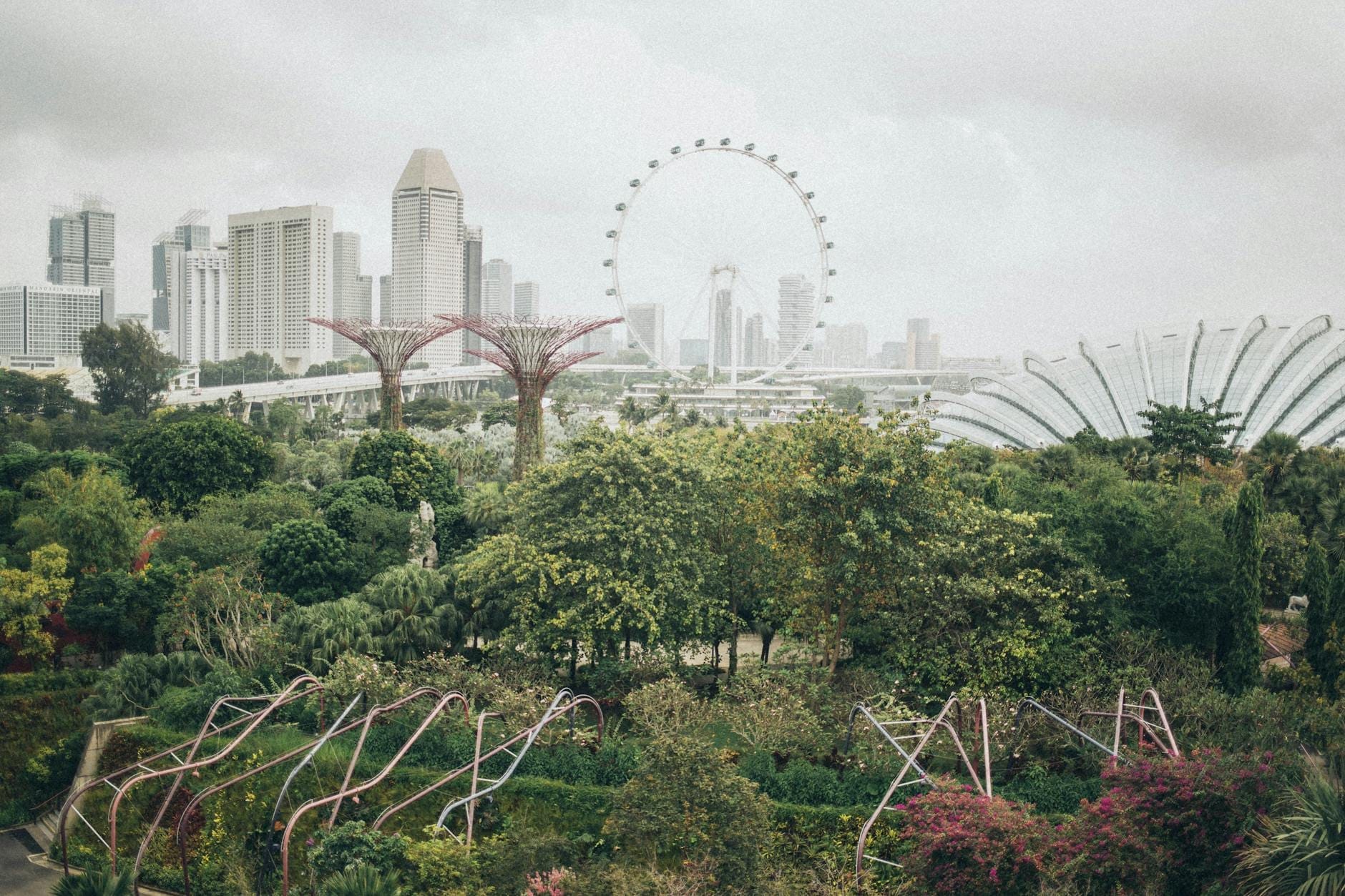
Visitors who want an iconic skyline or a dramatic landmark experience would be better served by the Gardens by the Bay Supertree Grove or the observation deck at the Marina Bay Sands. Those attractions deliver maximum visual impact in a short window. The Botanic Gardens rewards patience and a slower pace.
Insider Tips
- The Eco-Lake loop in the Bukit Timah Core is one of the least-visited sections of the gardens. It sits away from the main pedestrian flow and offers uninterrupted birdwatching, especially in the early morning when kingfishers and herons are reliably present along the water's edge.
- If you visit on a weekend evening, check the NParks calendar for free outdoor concert listings at the Shaw Foundation Symphony Stage before you go. Turning up without a mat on a popular concert night means you will be standing on uneven grass for two hours.
- The Halia restaurant accepts walk-ins but gets busy on weekend afternoons. Either arrive before noon or make a reservation for the weekend lunch service if you want a table with a view.
- The Tanglin Gate entrance on Cluny Road is quieter and more atmospheric than the main visitor centre entrance. It opens into the older heritage section of the grounds and sets a very different tone for the visit compared to arriving via the MRT-adjacent Bukit Timah Gate.
- Heritage Tree plaques around the gardens identify trees officially protected under Singapore law. Look for the Tembusu tree near the Tanglin Core, which appears on the Singapore five-dollar note and is one of the most photographed trees in the country.
Who Is Singapore Botanic Gardens For?
- Early risers who want a calm start to the day before the city heats up
- Orchid enthusiasts and anyone with a serious interest in tropical botany
- Families with children who need outdoor space to decompress between indoor attractions
- Photography visitors looking for landscape, botanical, and wildlife shots
- Travellers on a tight budget who want a full morning of quality experience at no cost
Nearby Attractions
Other things to see while in Orchard Road:
- ION Orchard
ION Orchard is the architectural centrepiece of Orchard Road, housing over 300 tenants across eight levels of retail space. Free to enter and directly connected to Orchard MRT station, it appeals equally to luxury shoppers, architecture enthusiasts, and anyone wanting a sweeping view of Singapore from its upper floors.
- National Orchid Garden
The National Orchid Garden sits on the highest hill of Singapore Botanic Gardens, displaying over 1,500 species and 3,000 hybrids across 3 landscaped hectares. It is the largest tropical orchid display in the world, and one of the few paid attractions within the otherwise free Botanic Gardens.