National Orchid Garden: Singapore's Living Collection of 1,500+ Orchid Species
The National Orchid Garden sits on the highest hill of Singapore Botanic Gardens, displaying over 1,500 species and 3,000 hybrids across 3 landscaped hectares. It is the largest tropical orchid display in the world, and one of the few paid attractions within the otherwise free Botanic Gardens.
Quick Facts
- Location
- Within Singapore Botanic Gardens, Tyersall Entrance — near Orchard Road
- Getting There
- Botanic Gardens MRT (Downtown Line)
- Time Needed
- 1.5 to 2.5 hours
- Cost
- S$20 adults | S$15 citizens, PRs & students | S$5 children (7–12) | Last entry 6:00pm
- Best for
- Plant lovers, photographers, families, and anyone who wants a cool green retreat near Orchard Road
- Official website
- www.nparks.gov.sg/sbg
What the National Orchid Garden Actually Is
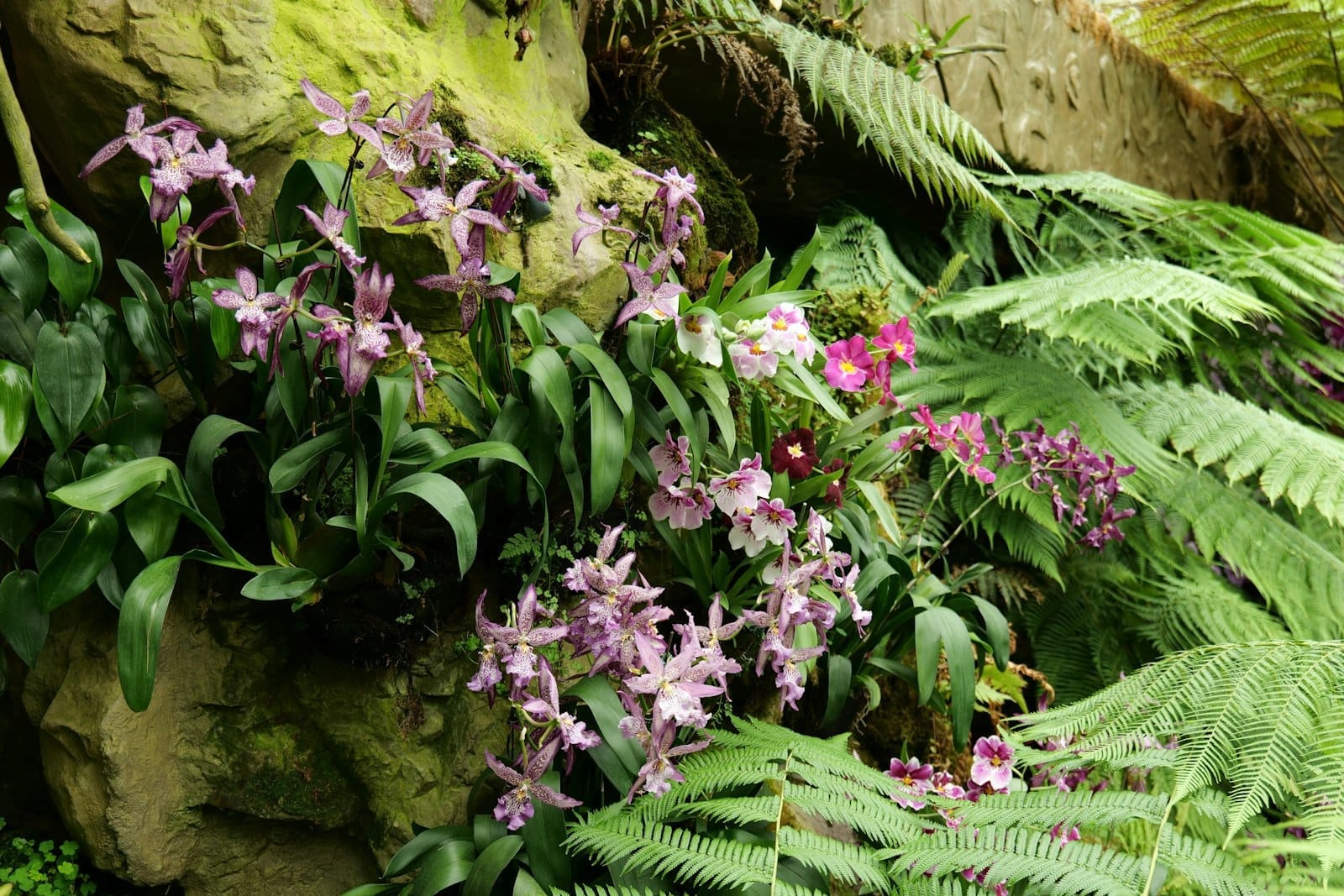
The National Orchid Garden is a ticketed botanical collection set within the Singapore Botanic Gardens, occupying 3 hectares on the gardens' highest hill. Opened on 20 October 1995 by then-Senior Minister Lee Kuan Yew, it houses over 1,500 orchid species and more than 3,000 hybrids, making it the largest tropical orchid display in the world. Singapore's orchid breeding program dates back to 1928, and this garden is its living showcase — decades of hybridization work arranged into a single, walkable collection.
Unlike many botanical attractions that feel like glorified flower markets, this place has genuine scientific depth. The orchids here aren't just decorative arrangements. They represent a research lineage that produced Vanda Miss Joaquim, Singapore's national flower, and the custom hybrid orchids named after visiting dignitaries from Princess Diana to Nelson Mandela. The VIP Orchid Garden, a dedicated section within the grounds, displays these named hybrids with explanatory plaques.
💡 Local tip
The Botanic Gardens entry is free. You only pay to enter the National Orchid Garden itself. Buy tickets at the gate or check if NParks offers online purchase to avoid queues on weekends.
How the Visit Actually Unfolds
The garden sits uphill from the main Botanic Gardens pathways, which means the approach involves a gradual climb. The paths are paved and landscaped, but the slope is real — comfortable walking shoes are more important than they might seem. At the top, the site opens into a series of zones that feel distinct from one another: dense tropical plantings give way to more formal displays, then to the climate-controlled Tan Hoon Siang Mist House.
The Mist House, expanded to 760 square metres, re-creates the cool, humid conditions that many highland orchid species require. Walking in from Singapore's equatorial heat into a chamber of hanging orchid cascades and fine mist is a genuine contrast, and one of the more memorable moments in the garden. Highland orchids that could never survive Singapore's lowland temperatures thrive here because of precise climate control.
Burkill Hall, a colonial-era building constructed in 1886 and named after botanist Isaac Henry Burkill, anchors the historical context of the site. It now houses an orchid gift shop and is worth a look for the architecture alone: white-painted timber, wraparound verandah, and the feel of a Victorian-era plantation bungalow that somehow survived Singapore's relentless development.
Tickets & tours
Hand-picked options from our booking partner. Prices are indicative; availability and final rates are confirmed when you complete your booking.
National Orchid Garden Singapore tickets
From 10 €Instant confirmationFree cancellationSelf-guided Singapore exploration tours with downloadable app
From 7 €Instant confirmationAdventure Cove Waterpark™ e-ticket
From 27 €Instant confirmationWild Wild Wet Waterpark Entrance Ticket
From 15 €Instant confirmation
Time of Day and What Changes
Mornings between 8:30am and 10:30am are consistently the best window. The light at this hour is soft and diffuse, which is ideal for photographing flowers without harsh shadows or blown highlights. The crowds are thin, birdsong carries from the surrounding Botanic Gardens canopy, and the mist house feels genuinely cool rather than just a relief from outside heat.
Midday visits between 11am and 2pm are the most demanding. The equatorial sun is directly overhead and temperatures on the open hillside paths can feel punishing. The covered Mist House becomes extremely popular at this hour as visitors seek the air-conditioned relief, and it gets crowded in a way that disrupts the atmosphere. If this is your only available time slot, budget extra water and stay in the shaded zones as much as possible.
Late afternoon, around 4pm to 5:30pm, is the second-best window. The sun is lower, the light turns warmer, and the garden takes on a different quality. Fewer visitors are on the grounds. The last ticket sale is at 6:00pm, and the garden closes at 7:00pm, so a late afternoon entry still gives you enough time to see the full collection without rushing.
⚠️ What to skip
Singapore's sudden tropical downpours can hit with almost no warning. The open hillside paths offer little shelter. A small umbrella or packable rain jacket is practical, not paranoid.
The Orchid Collection: What You're Actually Looking At
Orchids are the largest family of flowering plants, with over 25,000 species globally. The collection here represents a curated selection weighted toward tropical and equatorial species, particularly the Vanda, Dendrobium, and Spathoglottis genera, all of which thrive in Singapore's lowland climate. The hybrids, numbering over 3,000, are the result of the National Parks Board's ongoing breeding work and are registered with the Royal Horticultural Society.
For non-specialists, the most accessible part of the collection is the sheer visual variety. Orchids range from thumb-sized blooms on ground-level plants to large pendant sprays hanging above eye level. Colors across the garden cover almost the full spectrum, and the spatial arrangement prevents the visual overload that can happen when too many flowering plants are crammed into a small space.
The VIP Orchid Garden section is easy to overlook but worth seeking out. The named hybrids come with the stories of the state visits that prompted their creation, and the combination of botanical precision and diplomatic history is oddly compelling. Each hybrid name is registered permanently once presented to a visiting dignitary, making it a form of living archive of Singapore's foreign relations.
Getting There and Practical Logistics
The most straightforward route is the Botanic Gardens MRT station, served by both the Circle Line and the Downtown Line. From the station, it is a short walk into the gardens. For visitors coming from Orchard Road, the Tanglin Gate entrance at the Holland/Cluny Road junction is the closest entry point into the Botanic Gardens, with the Orchid Garden uphill from there.
The garden is open daily from 8:30am to 7:00pm, with last ticket sales and last entry at 6:00pm. Admission is S$20 for adults, S$15 for Singapore citizens, permanent residents, and students, and S$5 for children aged 7 to 12. The surrounding Botanic Gardens remain free to enter.
The site is hilly, and while the paths are paved, the gradients make wheelchair navigation challenging in some sections. Visitors with limited mobility should be aware of this before choosing the attraction. Strollers can be managed on the main paths but may struggle on steeper sections.
ℹ️ Good to know
There is paid parking at the Tyersall Entrance and additional options at Nassim Gate and Tanglin Gate. However, public transit is significantly easier on weekends when surrounding roads experience congestion.
The Broader Botanic Gardens Context
The National Orchid Garden exists within the Singapore Botanic Gardens, a UNESCO World Heritage Site since 2015. The Botanic Gardens as a whole covers 74 hectares and traces its origins to 1859, making it one of the oldest and most significant tropical botanic gardens in the world. The Orchid Garden, while the most-visited paid section, is just one part of a much larger site that includes the Ginger Garden, the Evolution Garden, and the Swan Lake.
A visit to the Orchid Garden pairs naturally with a longer loop through the Botanic Gardens. Many visitors spend a morning in the Orchid Garden and then move to the free sections of the surrounding gardens for the rest of the day. The combination gives you both the curated intensity of the orchid collection and the more open, park-like experience of the broader grounds.
Photography Conditions and Practical Notes
The garden is one of the more photogenic spots in Singapore, and it knows it. Morning light through the tropical canopy creates dappled conditions that work well for close-up flower photography. A macro lens or a smartphone with portrait mode will capture the detail of individual blooms. Inside the Mist House, the humidity fogs lenses quickly when entering from outside, so give your camera a minute to adjust before shooting.
Tripods are technically allowed but impractical in the narrower path sections, particularly when other visitors are moving through. Most photographers work handheld. The VIP Orchid Garden is slightly less trafficked and offers cleaner backgrounds for individual plant shots.
Is It Worth the Entry Fee?
At S$20 per adult, the National Orchid Garden costs more than many comparable botanical experiences in Southeast Asia. Whether it justifies the price depends almost entirely on your interest in plants. For travelers who find the idea of a world-class orchid collection genuinely compelling, or for photographers looking for extraordinary floral subjects, it earns its ticket. For visitors who are primarily looking for a green outdoor space to relax in, the free sections of the Singapore Botanic Gardens deliver that without the charge.
Families with children typically find the garden engaging for about an hour before younger visitors lose interest. The Mist House tends to be the highlight for children because of the sensory contrast and the unusual hanging displays. If you are visiting with kids, plan to enter the Mist House early in your loop rather than saving it for last.
Insider Tips
- Arrive at 8:30am when the gates open. The first hour gives you near-empty paths and the best natural light for photography, with temperatures still manageable.
- The Mist House interior fogs camera lenses on entry. Hold off on shooting for two to three minutes to let the lens adjust to the humidity change.
- Ask staff at the ticket counter about which orchid varieties are currently in peak bloom. The collection changes appearance month to month and certain zones are more spectacular depending on the season.
- The VIP Orchid Garden section is easy to walk past without noticing its significance. Look for the plaques beside each named hybrid — the diplomatic history behind the naming is genuinely interesting.
- If you want to combine the Orchid Garden with other parts of the Botanic Gardens, enter through the Tanglin Gate, do the uphill Orchid Garden first while your energy is highest, then enjoy the downhill walk through the free gardens afterward.
Who Is National Orchid Garden For?
- Plant enthusiasts and botanically curious travelers who want more than a surface-level garden visit
- Photographers looking for macro and floral subjects in a structured, walkable environment
- Families with children who can engage with the sensory contrast of the Mist House
- Visitors who want a green, shaded retreat within walking distance of Orchard Road
- Travelers interested in Singapore's history of botanical research and its diplomatic traditions
Nearby Attractions
Other things to see while in Orchard Road:
- ION Orchard
ION Orchard is the architectural centrepiece of Orchard Road, housing over 300 tenants across eight levels of retail space. Free to enter and directly connected to Orchard MRT station, it appeals equally to luxury shoppers, architecture enthusiasts, and anyone wanting a sweeping view of Singapore from its upper floors.
- Singapore Botanic Gardens
Covering 82 hectares at the edge of Orchard Road, the Singapore Botanic Gardens is the city's most beloved green space and its only UNESCO World Heritage Site. From the National Orchid Garden to a surviving patch of primary rainforest, it rewards visitors who show up at dawn just as much as those who wander in after dinner.