Singapore River Cruise: 40 Minutes on the Water That Actually Tells the City's Story
The Singapore River Cruise runs traditional bumboats along a 40-minute loop past Clarke Quay, Boat Quay, Marina Bay, and Clifford Pier. It is one of the most efficient ways to understand how Singapore's waterfront evolved from a working trade port into one of Asia's most recognisable skylines. Adults pay SGD 28; children SGD 18.
Quick Facts
- Location
- Board at Clarke Quay Jetty, Read Bridge Jetty, or Bayfront South Jetty (Clifford Pier)
- Getting There
- Clarke Quay (NE5) on the North East Line (TE17 Thomson-East Coast Line); short walk to main jetty
- Time Needed
- 40 minutes on the water; allow 60-75 minutes total including boarding and queuing
- Cost
- Adult SGD 28 / Child (3-11) SGD 18. Tickets valid approximately 90 days from purchase
- Best for
- First-time visitors, families, history buffs, and evening photography
- Official website
- rivercruise.com.sg
What the Singapore River Cruise Actually Is
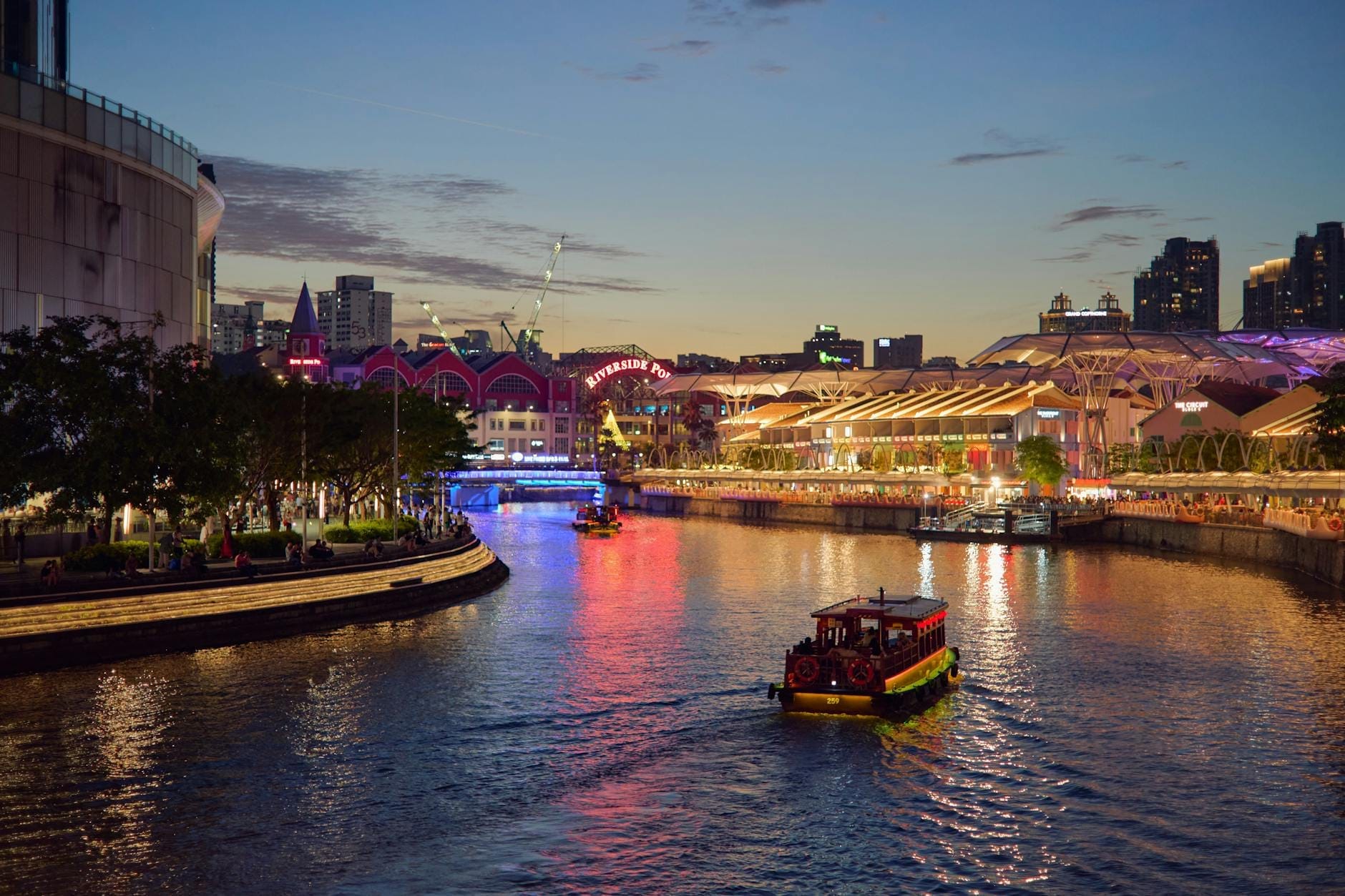
The Singapore River Cruise is a 40-minute loop aboard a traditional wooden bumboat, tracing the length of the Singapore River from Clarke Quay south to the Marina Bay waterfront and back. The fleet of 24 vessels operates from three jetties: Clarke Quay, Read Bridge, and Bayfront South (Clifford Pier). You can board at any of them and ride the full circuit before disembarking at the same point.
The boats themselves are a piece of history. Bumboats were the cargo lighters that once crowded this river, offloading goods from merchant ships anchored in the harbour. Today they carry tourists rather than sacks of rice and bolts of cloth, but the low-slung wooden hull and open-sided design are intentional callbacks to that era. The ride is not just scenic transport: it is a curated historical route.
💡 Local tip
Buy tickets at the jetty counter rather than waiting until you arrive at a specific departure time. Tickets are valid for approximately 90 days, so you can purchase in advance and board whenever the next boat is ready.
A Brief History: From Working Port to Heritage Route
The Singapore River was the commercial heart of the colony from the moment Stamford Raffles landed in 1819. For over 150 years, the river banks on either side, Boat Quay to the south and Clarke Quay to the north, were lined with godowns (warehouses) stacked with pepper, gambier, rubber, and tin. Bumboats ferried cargo between the quays and oceangoing ships in the roads offshore. By the 1970s, the accumulated pollution from that commerce had turned the river into an open drain.
The 1983 Clean Rivers Campaign, one of the largest environmental efforts in Singapore's history, relocated thousands of street hawkers and boat dwellers, dredged the riverbed, and replanted the banks. By 1987 the river was clean enough to sustain fish life again. The Singapore River Cruise launched that same year, initially with just four bumboats, as a way to reconnect people with a waterway that was suddenly worth looking at. The fleet has since grown to 24 vessels.
Understanding this history makes the cruise considerably more interesting. The shophouse facades along Boat Quay are not a theme park recreation: they are preserved 19th-century mercantile buildings that once housed trading firms. The contrast between that low-rise terrace and the glass towers directly behind it captures about 200 years of economic history in a single glance.
Tickets & tours
Hand-picked options from our booking partner. Prices are indicative; availability and final rates are confirmed when you complete your booking.
Small-group Singapore history and culture tour with river cruise
From 118 €Instant confirmationFree cancellationSingapore River Cruise admission tickets
From 17 €Instant confirmationFree cancellationSingapore River Wonders admission ticket
From 29 €Instant confirmationLuxurious sunset cruise in Singapore on catamaran
From 107 €Instant confirmationFree cancellation
What You See Along the Route
The route passes through three visually distinct stretches. Between Clarke Quay and Elgin Bridge, the river is narrow and the banks close. Restored shophouses painted in terracotta, olive, and cream crowd both sides. The roofline is low and human in scale. Street-level restaurants and bars spill out toward the water, and on weekends the noise from Clarke Quay's nightlife carries clearly even from the middle of the river.
South of Elgin Bridge through the Boat Quay section, the perspective opens slightly. The Cavenagh Bridge, built in 1869 and Singapore's oldest surviving bridge, frames the view ahead. Look up at the Anderson Bridge just downstream and you will spot the original lamp posts, still intact. The juxtaposition of Victorian ironwork against the Marina Bay Sands towers in the background is one of the more photogenic moments on the route.
As the boat rounds into Marina Bay, the scale changes entirely. Marina Bay Sands rises to the left, the ArtScience Museum sits like a white lotus on the waterfront, and the dome of the Esplanade looms across the bay. The Merlion is visible from the water, though at this distance it reads more as a landmark than a spectacle. The shift from intimate colonial streetscape to 21st-century waterfront is abrupt and intentional: this is how Singapore has chosen to present its transformation.
Day vs. Evening: When to Go and Why It Matters
The cruise runs from late morning through to 10pm or 10:30pm depending on the day, and the experience changes significantly depending on when you board. During the day, the light is useful for reading architectural detail: you can clearly see the shophouse tiles, the carved timber screens on old godowns, and the painted murals that appear sporadically along the riverbank. The boat feels less crowded on weekday afternoons, and the commentary (available via the on-board audio guide) is easier to follow without the ambient noise of an evening crowd.
The evening cruise, particularly after 7:30pm, is a different proposition entirely. The entire waterfront illuminates: the Fullerton Hotel glows amber, the LED light show at Marina Bay Sands reflects off the water, and the Esplanade's durian-skin facade catches the floodlights from across the bay. Photography in low light from a moving boat requires some patience, but the results at this hour are considerably more dramatic than anything you will capture at noon.
ℹ️ Good to know
Clarke Quay Jetty and Read Bridge Jetty operating hours are subject to change; check official website for current schedule. Hours are subject to change during major waterfront events, when route diversions may apply.
Families with young children tend to do better on a late afternoon departure: light is still good, the heat has eased, and the boats are not yet packed with the dinner-and-drinks crowd. The 40-minute duration is short enough that even restless children rarely become a problem.
Practical Details: Boarding, Tickets, and Getting There
The most convenient boarding point for most visitors is Clarke Quay Jetty, a short walk from Clarke Quay MRT station on the North East Line. The station exit deposits you near the riverside, and signage for the jetty is reasonably clear. If you are approaching from the Marina Bay area, Bayfront South Jetty at Clifford Pier is the logical alternative.
Tickets are sold at the jetty counters. Adult fare is SGD 28; children aged 3 to 11 pay SGD 18. Children under 3 are generally free. Tickets are valid for approximately 90 days from purchase, which means you can buy in advance if a queue is short and ride later. There is no reserved seating: boats fill on a first-come basis and depart when ready rather than on a rigid timetable.
The bumboats have open sides with windows for ventilation but no air conditioning. In Singapore's tropical heat, this means the daytime experience can feel warm, particularly if the boat sits at the dock for more than a few minutes before departing. Bring water. The ride itself generates a breeze once moving, which provides relief. For more context on managing Singapore's climate, the best time to visit Singapore guide covers the wet season months worth avoiding for outdoor activities.
⚠️ What to skip
Accessibility information for wheelchair users is not clearly published by the operator. If mobility is a concern, contact Singapore River Cruise directly via rivercruise.com.sg before arriving to confirm boarding arrangements at specific jetties.
Photography Tips from the Water
The bumboat sits low on the water, which gives an unusual angle on the buildings lining the quays: you are looking slightly upward at the shophouse facades rather than straight across from street level. This works particularly well for the Boat Quay terrace, where the buildings stack visually against the towers behind them.
The best light for the colonial streetscape sections is late afternoon, when the sun comes from the west and catches the painted plasterwork of the shophouses directly. For the Marina Bay section, the magic window is the 20-30 minutes after sunset, when the sky holds enough ambient light to balance the artificial illumination from the buildings without creating the harsh contrast you get in full darkness.
The boat moves at a gentle pace but does not stop. A wide-angle lens or the standard camera on a modern smartphone handles the river corridor well. For the broader Marina Bay panorama, a slight zoom helps compress the scene and bring the Sands closer in the frame. Avoid using flash: it illuminates the boat's interior and passengers rather than the buildings 30 metres away.
Honest Assessment: Is It Worth the Price?
At SGD 28 per adult, the Singapore River Cruise is not cheap for a 40-minute ride. Whether it represents value depends on what you are comparing it to. If your alternative is walking the same route along the riverside promenade, the ground-level experience is free and arguably richer in sensory detail: you can stop, read the heritage plaques, smell the food from the restaurants, and linger at the Cavenagh Bridge. The boat cannot do any of that.
What the boat does offer is perspective. The view of the Boat Quay shophouses from the water, with the CBD towers stacked behind them, is simply not replicable from the pavement. The transition from the intimate colonial river corridor into the open expanse of Marina Bay is genuinely dramatic when experienced from water level rather than from a viewing platform. For first-time visitors who want to understand the city's physical geography quickly, the cruise does that efficiently. Combined with an afternoon walk along the Marina Bay waterfront promenade after disembarking, it makes for a coherent half-day on the water.
Repeat visitors to Singapore, or those who have already walked the river extensively, will find less new ground here. The commentary, while informative, does not go significantly deeper than what good signage along the banks already provides. If budget is tight, prioritise the walk.
Insider Tips
- Board at Read Bridge Jetty (open from 1pm) if you want a quieter embarkation point with a shorter queue than Clarke Quay, especially on weekend evenings.
- Sit on the right side of the boat when departing from Clarke Quay heading toward Marina Bay: this side faces Boat Quay and gets the better sightline for the Fullerton Hotel and Cavenagh Bridge.
- The boats run more frequently during peak evening hours. If you arrive at Clarke Quay around 7:30pm, you may board within 10-15 minutes. Midday departures can have longer gaps between boats.
- The audio commentary is available on board, but the boat's engine and wind noise make it hard to follow in some sections. Reading up on the route's history beforehand, particularly the 1983 Clean Rivers Campaign, adds considerably to the experience.
- Route diversions occasionally apply during the Singapore Grand Prix and major national day events, when sections of the waterfront are closed. Check the operator's website at rivercruise.com.sg before visiting during August or September.
Who Is Singapore River Cruise For?
- First-time visitors who want a spatial overview of how the city centre is laid out around the river and marina
- Families with children aged 4 and above: the 40-minute duration and novelty of a boat ride holds attention well
- History enthusiasts interested in Singapore's colonial-era trade infrastructure and the Clean Rivers Campaign
- Evening photographers looking for the Marina Bay skyline reflected on the water
- Visitors with limited time who want to cover the colonial river quarter and Marina Bay in a single efficient loop
Nearby Attractions
Combine your visit with:
- Boat Quay
Boat Quay stretches along the south bank of the Singapore River, its two- and three-storey shophouses packed with restaurants, bars, and cafes. Once the beating commercial heart of colonial Singapore, the strip today offers one of the city's most atmospheric settings for an evening meal or a morning walk with history underfoot.
- Clarke Quay
Clarke Quay lines the Singapore River with five blocks of conserved warehouses and shophouses, now packed with restaurants, rooftop bars, and clubs. Free to enter and active from dusk until well past midnight, it rewards visitors who arrive after dark when the neon reflects off the water and the crowds find their rhythm.
- Fort Canning Park
Standing 48 metres above the city centre, Fort Canning Park packs more history per square metre than almost anywhere else in Singapore. From ancient Malay royalty to British colonial command, the hill has shaped this island for over seven centuries — and today offers a genuinely peaceful escape just minutes from Orchard Road.
- Henderson Waves
Henderson Waves is Singapore's tallest pedestrian bridge at 36 metres above Henderson Road, connecting Mount Faber Park and Telok Blangah Hill Park along the Southern Ridges trail. Free to access at any hour, the 274-metre-long structure is equally rewarding at dawn, midday, and after dark.