National Gallery Singapore: Southeast Asia's Largest Visual Art Museum Inside Two Colonial Monuments
National Gallery Singapore occupies the former Supreme Court and City Hall, two of the island's most significant colonial-era buildings. Together they form Southeast Asia's largest public collection of modern art, with over 9,000 works spanning Singapore and the wider region. This guide covers what to see, when to visit, and how to make the most of the space.
Quick Facts
- Location
- 1 St Andrew's Road, Singapore 178957 (Civic District, facing the Padang)
- Getting There
- City Hall MRT (North South and East West Lines) — roughly 5-minute walk; also accessible from Esplanade MRT (CC3)
- Time Needed
- 2–4 hours for a focused visit; a full day if you include guided tours and dining
- Cost
- Free for Singapore citizens and permanent residents; general admission fees apply for visitors (verify current pricing at official site before visiting)
- Best for
- Art enthusiasts, architecture lovers, families seeking an indoor option on a hot or rainy day
- Official website
- www.nationalgallery.sg
What National Gallery Singapore Actually Is
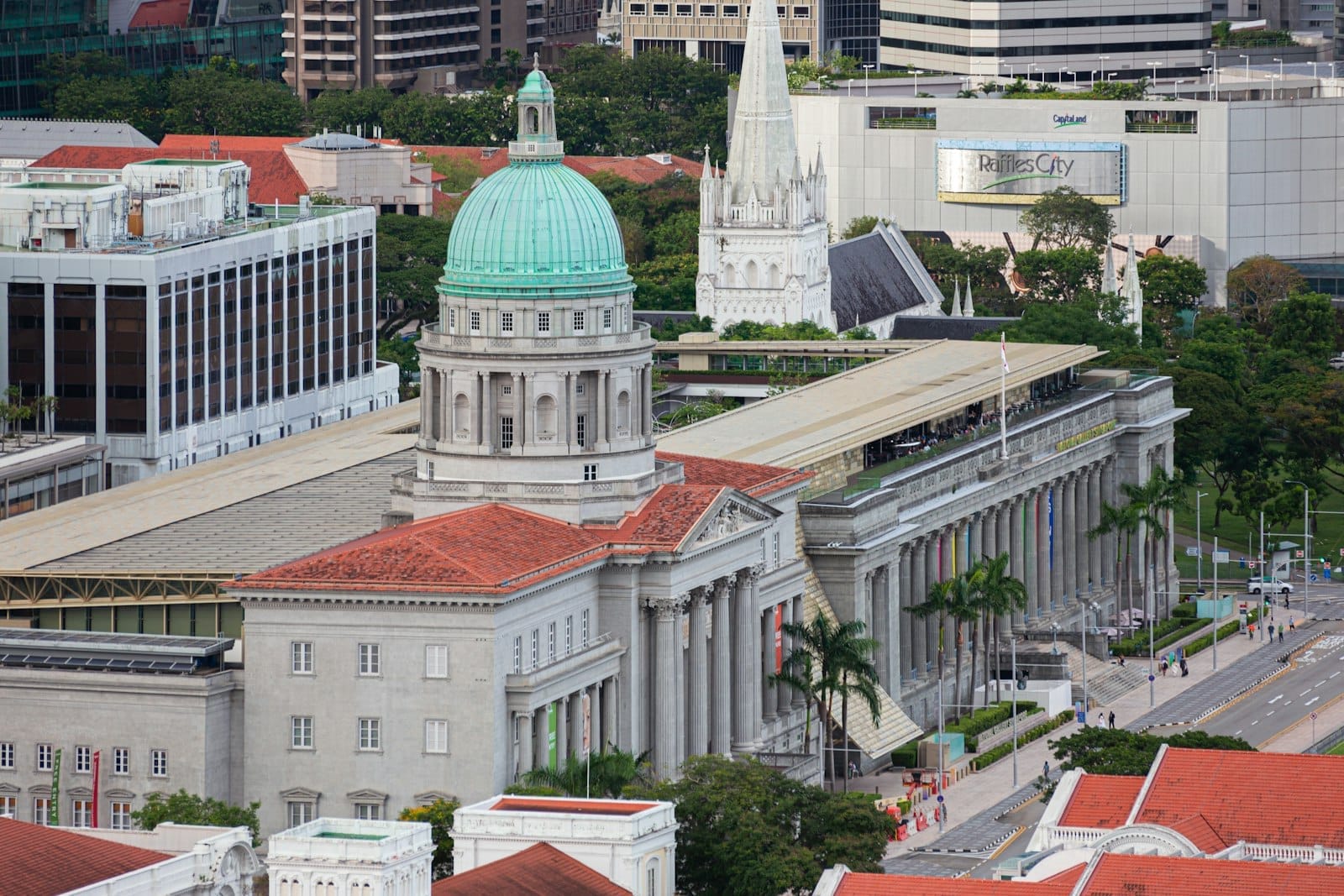
National Gallery Singapore opened on 24 November 2015 and immediately became something of a benchmark for how a post-colonial city can reclaim its own architectural heritage. The museum occupies two former government buildings: the neo-classical City Hall and the old Supreme Court. Both are designated national monuments. Together they cover 64,000 square metres of floor space, making this the largest art museum in Singapore and one of the most ambitious adaptive reuse projects in Southeast Asia.
The collection focuses on modern art from Singapore and the broader Southeast Asian region, with over 9,000 works across painting, sculpture, and works on paper. This is not a global survey museum. It has a specific editorial point of view: how did artistic modernism develop in this part of the world, on its own terms, rather than as a derivative of European movements? That question gives the collection real coherence, even when individual works are unfamiliar.
ℹ️ Good to know
The two buildings are connected by a glass-and-steel roof that spans the courtyard between them. Walking underneath it is one of the more striking architectural moments in Singapore, and it costs nothing to experience even if you don't enter the galleries.
The Buildings: A Brief Architectural History
The old Supreme Court, completed in 1939, is the more ornate of the two. Its green dome is a reference point on the Singapore skyline, and its classical columns, friezes, and interior marble finishes reflect the confidence of late British colonial authority. The building served as the city's main court until 2005. The City Hall next door dates to 1929 and is plainer in style but carries its own historical weight: it was on the steps of City Hall that Lord Louis Mountbatten accepted Japan's surrender in 1945, and where Singapore's first Prime Minister Lee Kuan Yew declared independence in 1965.
When the gallery was designed, architects Studio Milou Singapore (working with CPG Consultants) chose to preserve both facades almost entirely intact while carving out new gallery spaces within and between them. The most dramatic intervention is the glass canopy that links the two buildings and shelters what was once an open courtyard. It lets in diffused light without the heat, and on a bright afternoon it fills the internal space with a kind of soft, even glow that changes as clouds move overhead.
Visitors who appreciate layers of history will find this setting particularly rewarding. For more architectural and historical context around the Civic District, it's worth pairing a visit here with time at the National Museum of Singapore, which sits a short walk away and focuses more broadly on Singapore's social history.
Tickets & tours
Hand-picked options from our booking partner. Prices are indicative; availability and final rates are confirmed when you complete your booking.
Singapore National Gallery ticket to all exhibitions
From 9 €Instant confirmationLion City bike tour in Singapore
From 55 €Instant confirmationFree cancellationLuggage Storage in Singapore
From 7 €Instant confirmationFree cancellationSingapore Little India self-guided walking audio tour
From 13 €Instant confirmationFree cancellation
What You'll See Inside: The Permanent Collection
The gallery's permanent collection is split across two wings. The DBS Singapore Gallery traces the development of Singapore's visual art from the 19th century through to the late 20th, beginning with colonial-era topographic paintings and moving through the Nanyang Style, a movement developed by artists who trained in Shanghai or Paris and then brought those influences into dialogue with the tropical landscape, local street life, and multi-ethnic communities of Malaya and Singapore in the mid-20th century. Artists like Liu Kang and Cheong Soo Pieng are central figures here, and their work holds up well even for visitors with no prior knowledge of the context.
The UOB Southeast Asia Gallery is the more ambitious of the two in scope. It attempts to map modernism across the entire region, moving between Myanmar, Thailand, Indonesia, the Philippines, Vietnam, and beyond. The curation is thematic rather than strictly chronological, which can be slightly disorienting at first but rewards slow looking. You will notice recurring preoccupations: the tension between tradition and modernity, colonial influence and resistance, urban change and rural nostalgia.
Temporary exhibitions run in dedicated gallery spaces and tend to be well-resourced. Some require separate tickets. Check the gallery's website before you visit, as these shows are often the reason to time a particular trip.
💡 Local tip
The gallery offers free guided tours at scheduled times throughout the week. These are worth attending even if you normally prefer to explore independently — the docents provide context about specific works that is not always captured in the wall text. Check the website or the information desk upon arrival for that day's schedule.
How the Experience Changes by Time of Day
Arriving at opening time (10am) on a weekday gives you the closest thing to a private experience. The galleries in the upper floors of the old Supreme Court are especially quiet then, and you can stand in front of major works for as long as you like without navigating around other visitors. School groups tend to arrive mid-morning and can make the ground-floor spaces noisier between roughly 10:30am and noon.
Weekday afternoons settle into a calm rhythm. The glass canopy courtyard area, which houses a cafe and some seating, gets warm but not unbearably so, thanks to ventilation built into the structure. Late afternoon light (from around 4pm) does interesting things to the dome visible through interior windows of the old Supreme Court wing.
Weekend mornings are noticeably busier, particularly around the ground-floor entrance lobby and the more popular permanent galleries. If you visit on a weekend, consider going directly upstairs first and working your way down as the morning crowds thin. The gallery closes at 7pm daily, and the hour before closing is often the quietest period of the day.
Practical Walkthrough: Navigation and Orientation
The building's complexity is real. Two colonial structures connected by a modern bridge structure, with multiple levels and wings that don't always match up, can disorient even experienced museum visitors. Pick up a physical map at the main entrance — it is more useful than the digital version for navigating across floors. Staff at the information desk are genuinely helpful and can suggest a route based on how much time you have.
There are lifts and ramps throughout the building, and the gallery is navigable by wheelchair, though some of the historic corridors are narrow. The bathrooms are well-maintained and easy to find on each level.
Food and drink options within the gallery include a rooftop restaurant and a more casual cafe on the ground level of the courtyard. The rooftop space overlooks the Padang and the surrounding civic buildings, and on a clear day you can see across to Marina Bay. It is a good spot for a break even if you eat elsewhere.
The gallery's location in the Civic District puts it within easy walking distance of several other major draws. Merlion Park is roughly a 10-minute walk south along the waterfront, and the Marina Bay waterfront promenade is an easy extension for the afternoon.
Photography, Accessibility, and Who Might Skip This
Photography for personal use is permitted in most gallery spaces, though specific works may be restricted due to copyright. The architecture itself is highly photogenic: the courtyard canopy, the dome viewed from inside the old Supreme Court, and the long corridors with their original terrazzo floors all reward a careful eye. Flash photography is not permitted near artworks.
Be honest with yourself about what you want from a visit. This is not a spectacle museum with interactive installations or crowd-pleasing blockbusters at every turn. It is a serious art institution with a focused regional perspective. Visitors looking for a general overview of world art history will not find it here. Visitors with no particular interest in modern Southeast Asian art may find the collection rewarding precisely because it is unfamiliar, but it does ask you to engage, not just observe.
Families with young children can find the visit manageable if you keep to specific areas. The gallery does offer family-oriented programming on selected days, so check the website in advance. For a more reliably child-focused museum experience in Singapore, the ArtScience Museum at Marina Bay Sands may be a better fit.
⚠️ What to skip
Admission pricing and specific gallery policies can change. The gallery is free for Singapore citizens and permanent residents, but international visitors should verify current general admission fees and any special exhibition surcharges directly on the official website before arriving.
Insider Tips
- The Rotunda Library inside the old Supreme Court wing is a small reading room with original architectural details and a quieter atmosphere than the main galleries. It is easy to miss but worth finding on an upper floor.
- If you are visiting on a weekend, use the St Andrew's Road entrance rather than the main St Andrew's Road plaza approach — the queues at the main entrance can build up, while the side entry is typically faster.
- The courtyard canopy is freely accessible without a gallery ticket. On a hot or rainy day, it makes for a useful resting stop even if you are not visiting the collection that day.
- For the clearest views of the Padang from the rooftop area, arrive during the late afternoon when the light falls across the colonial buildings at a low angle and the space is less crowded than at lunchtime.
- Temporary exhibitions sometimes require booking in advance, especially on weekends. If there is a specific show you want to see, buy tickets online before your visit rather than risking a sold-out desk on the day.
Who Is National Gallery Singapore For?
- Art lovers with an interest in modern Southeast Asian and Singaporean painting and sculpture
- Architecture and history enthusiasts drawn to adaptive reuse of colonial-era buildings
- Visitors seeking a substantive indoor attraction on a hot afternoon or during one of Singapore's frequent rain showers
- Travelers wanting to understand Singapore's cultural identity beyond its food and skyline
- Those combining a walking loop through the Civic District, Marina Bay, and the waterfront promenade
Nearby Attractions
Combine your visit with:
- Boat Quay
Boat Quay stretches along the south bank of the Singapore River, its two- and three-storey shophouses packed with restaurants, bars, and cafes. Once the beating commercial heart of colonial Singapore, the strip today offers one of the city's most atmospheric settings for an evening meal or a morning walk with history underfoot.
- Clarke Quay
Clarke Quay lines the Singapore River with five blocks of conserved warehouses and shophouses, now packed with restaurants, rooftop bars, and clubs. Free to enter and active from dusk until well past midnight, it rewards visitors who arrive after dark when the neon reflects off the water and the crowds find their rhythm.
- Fort Canning Park
Standing 48 metres above the city centre, Fort Canning Park packs more history per square metre than almost anywhere else in Singapore. From ancient Malay royalty to British colonial command, the hill has shaped this island for over seven centuries — and today offers a genuinely peaceful escape just minutes from Orchard Road.
- Henderson Waves
Henderson Waves is Singapore's tallest pedestrian bridge at 36 metres above Henderson Road, connecting Mount Faber Park and Telok Blangah Hill Park along the Southern Ridges trail. Free to access at any hour, the 274-metre-long structure is equally rewarding at dawn, midday, and after dark.