Sentosa Beaches: A Realistic Guide to Siloso, Palawan, and Tanjong
Sentosa Island's three beaches, Siloso, Palawan, and Tanjong, each have a distinct personality. Whether you're after water sports, family shade structures, or a sundowner cocktail, knowing the difference before you arrive saves time and disappointment.
Quick Facts
- Location
- Southern coast of Sentosa Island, Singapore
- Getting There
- Sentosa Express to Beach Station, then Beach Tram; buses and cable car from VivoCity also available
- Time Needed
- 2–4 hours for one beach; full day if visiting all three
- Cost
- Beach access free; Sentosa Island entry S$4 adult / S$3 child or senior (via Sentosa Express)
- Best for
- Families, water sports, beach bars, casual afternoon escapes
- Official website
- www.sentosa.com.sg/en/things-to-do/attractions/siloso-beach
What the Sentosa Beaches Actually Are
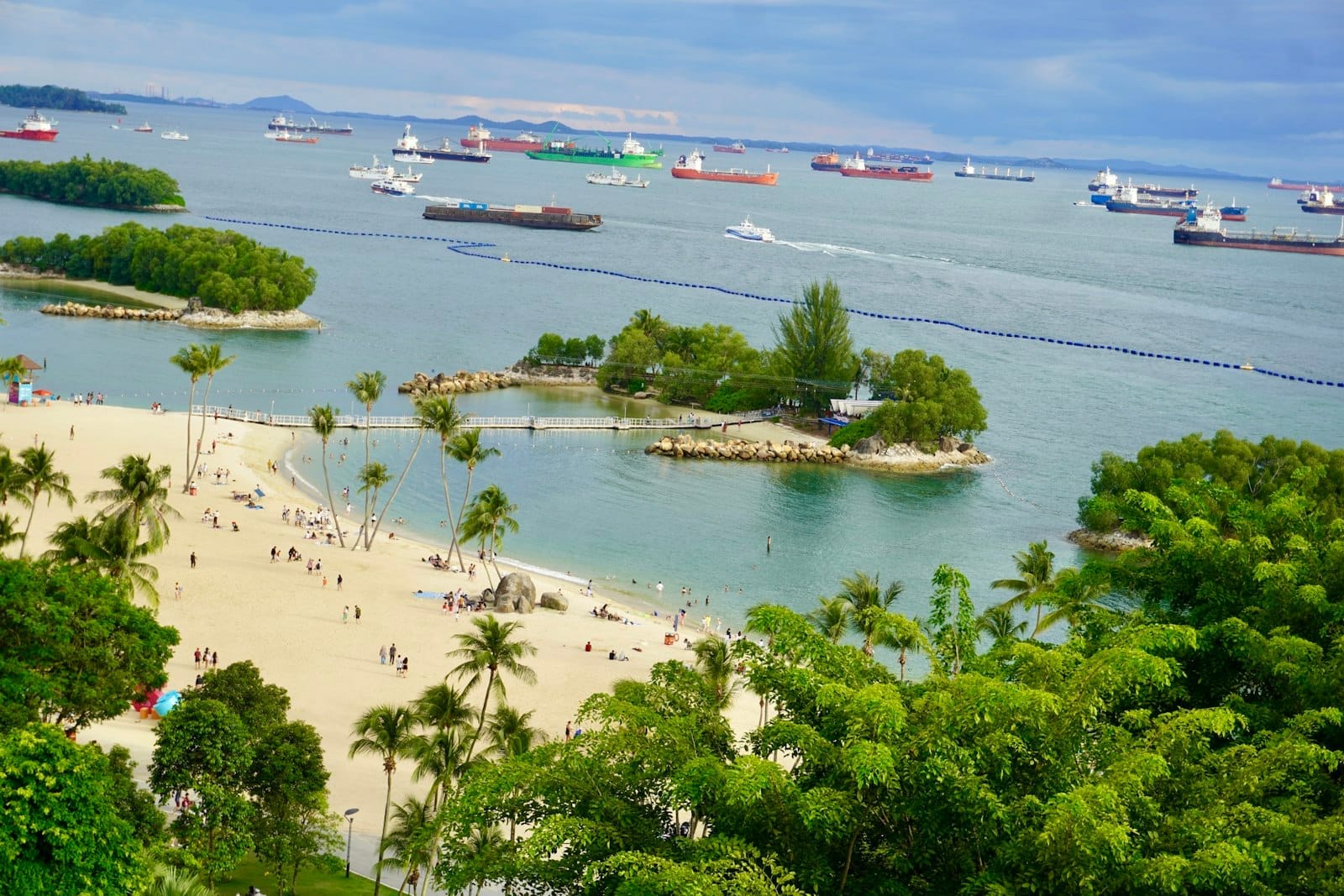
Sentosa Island's three beaches, Siloso, Palawan, and Tanjong, run along the island's southern shore and together stretch roughly two kilometres. They are artificial beaches: the sand was imported and the shoreline engineered, which explains why the water stays relatively calm and the sand stays uniformly pale. The South China Sea visible from the shore is technically the Singapore Strait, and on clear days you can make out cargo ships anchored offshore. This is not a remote tropical beach. It is a well-managed urban resort beach about a 20-minute journey from the city centre.
The name Sentosa comes from Malay, meaning peace and tranquility. Before 1970, the island was known as Pulau Blakang Mati (island of death from behind), a British military base and later a prisoner-of-war site during the Japanese occupation of World War II. The renaming marked a deliberate reinvention into leisure territory. Today the beaches coexist with Universal Studios Singapore, resort hotels, and cable car infrastructure, so the surrounding landscape is unambiguously developed.
ℹ️ Good to know
All three beaches are open 24 hours a day, year-round. You pay the Sentosa Island entry fee (S$4 adult, S$3 child/senior) when taking the Sentosa Express, cable car, or specific bus routes, but beach access itself is free once you're on the island.
Siloso Beach: The Loudest and Liveliest
Siloso Beach is the first stop off the Beach Tram from Beach Station and the most energetic of the three. Its name derives from the Malay word Selusuh, a medicinal plant once common in the area, though British mispronunciation gradually shifted it to the version used today. The beach has undergone refurbishment to improve its amenities, adding cleaner pavilions, more shaded seating, and improved water sports infrastructure.
During weekend afternoons, Siloso draws the largest crowds of any Sentosa beach. The beach volleyball nets are usually occupied, the water sports operators are active, and the snack kiosks run a steady queue. Early mornings, before 9am, offer an entirely different scene: the sand is freshly raked, the air carries a faint salt smell, and you can walk the shoreline almost alone before the resort crowds arrive.
Siloso is also the closest beach to Fort Siloso, a preserved coastal gun battery from the British colonial era, reachable by a short uphill walk or the Skyride cable. If history is part of your Sentosa plan, combining the beach with the fort makes efficient use of the entry fee.
💡 Local tip
Photography at Siloso is best in the late afternoon when the sun angles from the west, catching the water and sand without the harsh overhead glare of midday. The cargo ships anchored offshore provide unexpected depth in wide-angle shots.
Tickets & tours
Hand-picked options from our booking partner. Prices are indicative; availability and final rates are confirmed when you complete your booking.
Adventure Cove Waterpark™ e-ticket
From 27 €Instant confirmationWild Wild Wet Waterpark Entrance Ticket
From 15 €Instant confirmationLion City bike tour in Singapore
From 55 €Instant confirmationFree cancellationLuggage Storage in Singapore
From 7 €Instant confirmationFree cancellation
Palawan Beach: Best for Families with Children
Palawan Beach sits in the centre of the three and is the widest stretch of sand on Sentosa. Its defining feature is the shallow water lagoon near the main beach area, which makes it the safest option for young children. A suspension bridge connects the main beach to a small islet claimed to be the southernmost point of continental Asia, though this is a marketing designation rather than a geographical absolute. Still, the islet's elevated platform does give a decent vantage point over the strait.
The beach has more shade structures, including large covered pavilions and permanent sun shelters, than either Siloso or Tanjong. This matters significantly in Singapore's equatorial heat. Midday temperatures regularly exceed 32°C with high humidity, and without shade, an afternoon on Palawan can become genuinely uncomfortable rather than relaxing. The pavilions fill up quickly on weekends, so arriving before 10am is the practical move if you want a covered spot.
Palawan is also the most convenient beach to use as a base if you're combining the beach with nearby Sentosa attractions. Universal Studios Singapore is a short tram ride away, and S.E.A. Aquarium is within walking distance, making Palawan the natural anchor for a full family day on the island.
Tanjong Beach: The Quietest of the Three
Tanjong, meaning furthest in Malay, is exactly that: the beach at the eastern end of the tram line, furthest from the entry points and the theme park crowds. It is the narrowest and least developed of the three beaches, which also makes it the most genuinely relaxing during the week. On weekday mornings, Tanjong can feel almost private by Singapore standards.
The Tanjong Beach Club, a bar and pool venue at the eastern end of the beach, draws a nightlife crowd on Friday and Saturday evenings. This is worth knowing: if you're seeking calm late on a weekend, Tanjong's tranquility becomes relative. If you're actively seeking that social beach-bar scene, this is where it happens on Sentosa.
The sand at Tanjong is the same pale imported variety as the other beaches, but the tree coverage near the back of the beach is slightly denser, which provides natural shade in the late afternoon. Couples and travellers looking to read or decompress rather than do activities tend to gravitate here without realising it is even a separate destination.
Getting There and Moving Between Beaches
The Sentosa Express monorail from VivoCity's Level 3 is the most straightforward way to reach the beaches. Take it to Beach Station. The Beach Tram, a free shuttle running between all three beaches, operates daily and is the easiest way to move between them once on the island. The tram runs frequently enough that waiting times are generally short.
The cable car from VivoCity offers an aerial approach that some travellers find worthwhile in itself, especially as part of the broader Singapore Cable Car experience. Bus services also run to Sentosa, and cycling rentals are available on the island if you'd prefer to move between beaches at your own pace.
Covered walkways and travellators help with mobility on rainy days, and the island's infrastructure is largely accessible for strollers and wheelchairs. The beach itself is less accommodating: the soft imported sand is genuinely difficult to navigate with a wheelchair or stroller, and the firmer packed sand near the waterline is the practical route if mobility is a concern.
⚠️ What to skip
Rain affects the beaches significantly. Singapore's tropical climate produces sudden heavy afternoon downpours, particularly between November and January. The beaches offer limited shelter during these, and the tram service can experience delays. Mornings are statistically drier and cooler.
Honest Expectations: What Sentosa Beaches Are and Are Not
The water at all three beaches is warm year-round but is not crystal-clear tropical water. Visibility is limited by the shipping traffic and silt in the surrounding strait. You can swim comfortably in designated zones, but snorkelling is not worthwhile. The seabed is sandy and free of hazards in the marked swimming areas, and lifeguards are present during designated hours.
Travellers expecting something comparable to the beaches of Thailand, Bali, or the outer islands of the Philippines will find Sentosa underwhelming by comparison. If you're staying in Singapore for a week or more and want a beach afternoon without leaving the city, the beaches serve that purpose well. If beach quality is a top priority for your trip, Pulau Ubin offers a more natural environment, though still not a tropical beach in the classic sense.
For context on how Sentosa fits into Singapore's wider leisure landscape, the Sentosa Island overview covers the full range of attractions, which extend well beyond the beaches. And if you're planning your overall time in the city, the Singapore itinerary guide helps prioritise which parts of the island are worth your time.
Insider Tips
- Arrive at Siloso or Palawan before 9am on a weekend to get a covered pavilion spot before families claim them. By 10:30am on a Saturday, the best shaded areas are consistently taken.
- The Beach Tram is free but can be slow during peak hours. If you're walking fit, the path between Siloso and Palawan is pleasant and takes about 10 minutes on foot along the boardwalk.
- Sunscreen is essential. At 1 degree north of the equator, UV intensity is extreme year-round, and the reflected light off water and pale sand amplifies exposure. SPF 50 applied before you reach the beach, not after you arrive, makes a measurable difference.
- Tanjong Beach Club requires reservations for their pool access on weekends. If this is your plan, book at least a week ahead during peak periods such as public holidays and December.
- Bring your own towels. Towel rentals are available but cost extra, and the selection is limited. The beach has coin-operated lockers near the main pavilion areas if you want to swim without carrying valuables.
Who Is Sentosa Beaches For?
- Families with young children who want a calm, shallow swimming area with nearby facilities
- Travellers combining a beach afternoon with Sentosa resort attractions like cable car or theme parks
- Couples looking for a low-key weekday escape from the city without leaving Singapore
- Groups planning a beach bar evening at Tanjong Beach Club on a Friday or Saturday night
- Visitors with a limited schedule who want a beach experience accessible directly from central Singapore
Nearby Attractions
Other things to see while in Sentosa Island:
- Singapore Cable Car
The Singapore Cable Car spans 1.75 kilometres across Keppel Harbour, linking Mount Faber to Sentosa Island across three stations. It is one of the few ways to see Singapore's southern coastline, container port, and skyline from the air, and the ride itself is as much the point as the destination.
- Singapore Oceanarium
Reopened in July 2025 after a major expansion, Singapore Oceanarium is one of the most ambitious marine attractions in Asia. Housed within Resorts World Sentosa, it offers 22 ocean zones and a scale that few aquariums in the region can match. Here is what serious visitors need to know before they go.
- Universal Studios Singapore
Universal Studios Singapore is Southeast Asia's first Universal theme park, located on Sentosa Island. With 7 themed zones, 6 roller coasters, and a mix of thrill rides and family attractions, it's a full-day commitment. Here's how to make it count.
- Wings of Time
Wings of Time is Singapore's only permanent daily outdoor night show, staged at Siloso Beach on Sentosa Island. Combining pyrotechnics, 3D projection mapping, robotic water fountains, and laser effects over the open sea, it runs twice nightly and lasts around 20 minutes. Tickets start from S$18.