Pulau Ubin: Step Back Into Singapore's Kampung Past
Pulau Ubin is a 1,000-hectare island off Singapore's northeastern coast where granite quarries, mangrove wetlands, and old kampung houses survive largely unchanged. Reached by a short bumboat ride from Changi Village, it offers cycling trails, wildlife spotting, and a pace of life that feels nothing like the mainland.
Quick Facts
- Location
- Off the northeastern coast of Singapore, accessible from Changi Village Jetty
- Getting There
- MRT to Pasir Ris or Tanah Merah, then Bus 2 or 29 to Changi Village; 5–10 min bumboat to Ubin Jetty
- Time Needed
- Half day to full day; cyclists can cover the island in 3–4 hours
- Cost
- Free entry; bumboat SGD 2–4 per adult one-way; bicycle rental additional
- Best for
- Nature lovers, cyclists, families, and anyone wanting genuine quiet in Singapore
- Official website
- www.nparks.gov.sg/pulauubin
What Is Pulau Ubin, and Why Does It Matter?
Pulau Ubin is the closest thing Singapore has to its own rural past. While the mainland has been reshaped by five decades of rapid development, this boomerang-shaped island of roughly 10.2 square kilometres has been deliberately preserved. The granite quarries that gave the island its name — 'Pulau Batu Jubin' translates loosely as Granite Stone Island in Malay — closed in the 1960s and 1970s, and the land was never redeveloped. The result is a place where secondary forest crowds the dirt paths, monitor lizards cross the road at their own pace, and a handful of families still live in wooden kampung houses.
The island was first recorded on European maps in 1828 as Pulo Obin, and came under British control during the early 19th century. Its seven granite hills made it commercially important for decades, supplying stone for major construction projects across the region. Today, the flooded quarry pits have become serene lakes fringed by casuarina trees, and the infrastructure left behind gives the island an unusual, layered character: simultaneously wild and historically legible.
ℹ️ Good to know
Pulau Ubin is open 24 hours, 365 days a year. There is no admission fee to enter the island. The bumboat from Changi Village Jetty operates on demand when enough passengers are waiting — typically 10 people per boat. Off-peak weekdays, you may wait 20–30 minutes for a full boat to assemble.
Getting There: The Bumboat Crossing
The journey starts at Changi Village, a low-key neighbourhood on Singapore's northeastern fringe. Take the MRT to Pasir Ris or Tanah Merah, then board Bus 2 or Bus 29 to Changi Village Bus Terminal. From there, it is a short walk through the market to the jetty. The crossing itself takes five to ten minutes, cutting across a narrow stretch of water with the Johor coastline visible to the north. The boat is a small, open-sided wooden bumboat — they have operated this route in roughly the same form for generations.
The fare is approximately SGD 2–4 per adult each way; verify the current rate at the jetty, as prices can be revised. No booking is required. Pay on the boat in cash. Return boats depart from Ubin Jetty using the same system: wait for a group of eight, or pay for the remaining seats if you want to leave immediately.
💡 Local tip
Weekday mornings are the quietest time to visit. Arrive at Changi Jetty before 9am and you will likely share the island with a handful of cyclists and birdwatchers rather than weekend crowds. Bring cash: there are no ATMs on the island.
Tickets & tours
Hand-picked options from our booking partner. Prices are indicative; availability and final rates are confirmed when you complete your booking.
Adventure Cove Waterpark™ e-ticket
From 27 €Instant confirmationWild Wild Wet Waterpark Entrance Ticket
From 15 €Instant confirmationLion City bike tour in Singapore
From 55 €Instant confirmationFree cancellationLuggage Storage in Singapore
From 7 €Instant confirmationFree cancellation
On the Island: What You Actually Experience
The moment you step off the boat at Ubin Jetty, the register changes. The sounds are different: birds instead of traffic, the creak of bicycle gears, the occasional rumble of a vendor's trishaw. The air carries the smell of warm earth, vegetation, and occasionally woodsmoke from the few remaining households. The jetty area has a cluster of bicycle rental shops, a small temple, and a couple of food stalls. Rent a bicycle here — most visitors do — and you will have access to every corner of the island on its network of unpaved and semi-paved trails.
Bicycle rental typically costs SGD 5–15 depending on the type and duration; mountain bikes are available for the rougher eastern tracks. If cycling is not possible for you, trishaws and basic taxis serve some of the main routes, though coverage is limited. The terrain across much of the island is flat to gently rolling, with more demanding sections in the interior hills. Wear closed shoes and bring water: there is limited shade on the eastern coastal paths and the equatorial heat is unforgiving after 10am.
The island divides into several distinct zones worth planning around. The western and central areas contain most of the old kampung houses, the community farm plots, and the restored Celestial Temple (Tua Pek Kong). The northeastern section is occupied by Chek Jawa Wetlands, the island's ecological centrepiece. For more context on Singapore's natural reserves and how they connect, the Singapore Botanic Gardens and MacRitchie Treetop Walk offer a different but complementary side of the city's green infrastructure.
Chek Jawa Wetlands: The Ecological Core
Chek Jawa occupies the eastern tip of Pulau Ubin and represents one of the richest intertidal ecosystems remaining in Singapore. Six distinct habitats converge in a relatively small area: coastal forest, mangroves, a sandy beach, a rocky shore, seagrass lagoons, and a coral rubble zone. At low tide, the mudflats are active with fiddler crabs, sea stars, and mudskippers. The 1-kilometre coastal boardwalk and a 20-metre-high Jejawi Tower give you access to the mangrove canopy without disturbing the ground level. Early mornings here are exceptional for birdwatchers, with sightings of Oriental Pied Hornbills, collared kingfishers, and smooth-coated otters reported regularly.
Chek Jawa came close to being reclaimed for housing in 2001. A public outcry led to a last-minute reprieve, and it has been protected and partially restored ever since. This context matters when you visit: the boardwalk and interpretive signs are not just amenities but evidence of a conservation outcome that was not inevitable. The area is managed by the National Parks Board, and guided tours are occasionally available through NParks. Check the official website before your visit for scheduled programs.
⚠️ What to skip
The Chek Jawa boardwalk and coastal areas may close temporarily during high tide, extreme weather, or maintenance. Check the NParks website at pulau-ubin.nparks.gov.sg before your visit, especially during the wet season months of November through January.
Quarry Lakes, Kampung Life, and the Interior
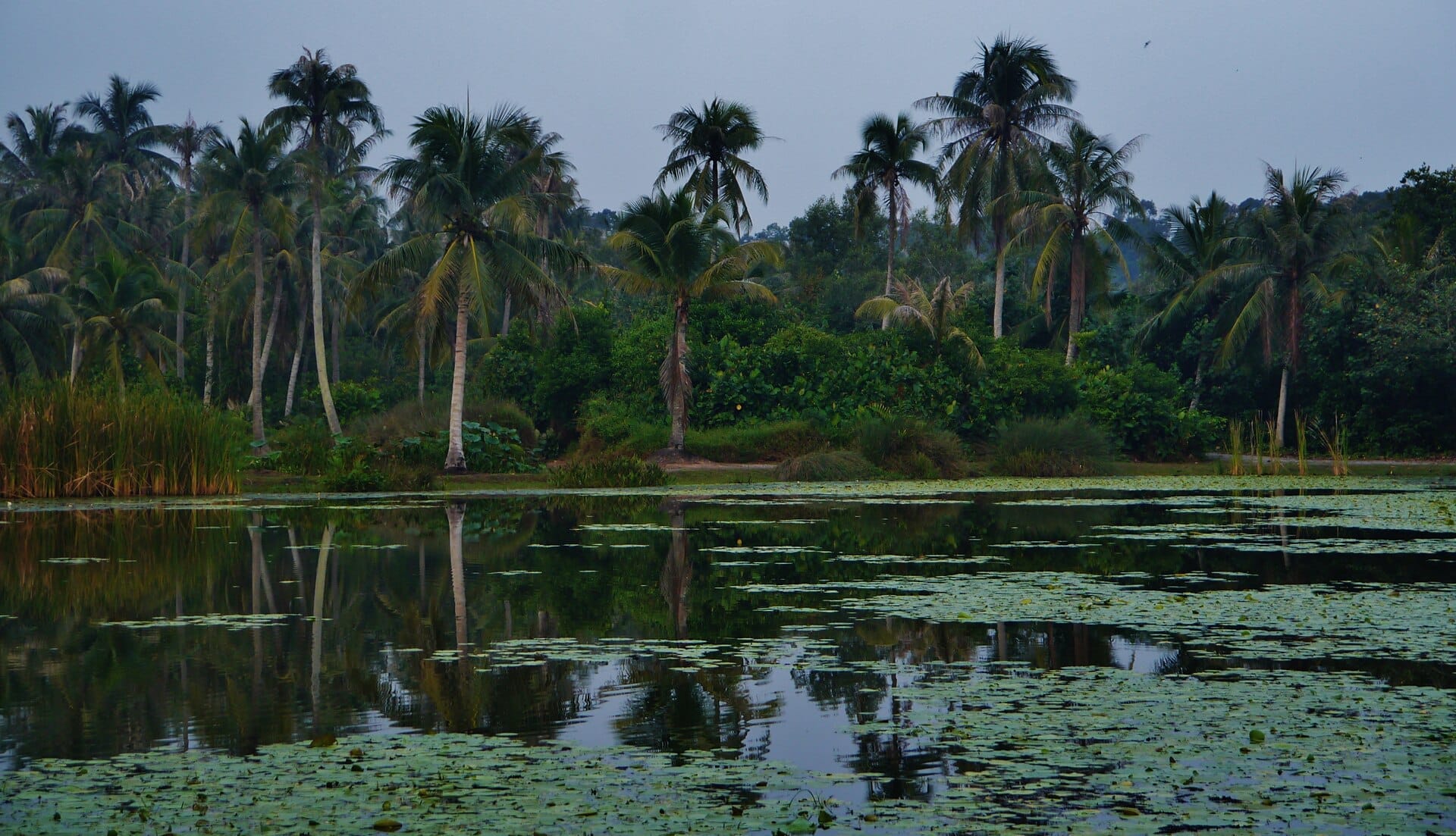
Away from Chek Jawa, the island's interior rewards slower exploration. The old granite quarry pits have flooded over decades to form deep, clear-water lakes surrounded by steep rock faces and secondary growth. The largest, Pekan Quarry near the main village, has an almost surreal stillness in the morning: the water reflects the tree line, and the scale of the pit walls gives a sense of how industrially significant the island once was. These quarries supplied stone for major infrastructure projects including, reportedly, the original Causeway linking Singapore to Johor.
The central kampung area still has a small number of permanent residents, and the village shops near the jetty feel genuinely lived-in rather than staged. There is usually a basic food stall serving noodles and drinks near the jetty; bring your own snacks for longer rides. The working farms scattered through the interior grow vegetables and rear chickens, and the narrow paths between them pass under canopies thick enough to block direct sun even at midday.
Practical Details: What to Know Before You Go
Pulau Ubin has no MRT or public bus service on the island itself. Everything relies on the bicycle, your own feet, or the limited trishaw and informal taxi services near the jetty. Mobile signal exists but is intermittent in forested areas. Download an offline map before you depart. There are no ATMs; all transactions are cash-based.
Bring at least 1.5 litres of water per person. Sunscreen and insect repellent are both essential. The trails are unpaved in many sections, meaning sandals are genuinely impractical. Long, lightweight trousers are worth considering if you plan to leave the main paths, particularly near Chek Jawa where the vegetation is dense. The island is entirely outdoors, so it is a poor choice on days with a red or orange rain advisory.
For travellers building a wider itinerary, Pulau Ubin pairs well with a morning at East Coast Park or an overnight stay on the eastern side of the island. If you are mapping out a full trip, the Singapore itinerary guide includes suggested day structures that incorporate day trips like this one.
Wheelchair access is very limited. The jetty and the main kampung area immediately around it are navigable on flat ground, but the trails, boardwalk sections, and quarry paths are not designed for wheelchairs or pushchairs. Families with young children in carriers manage the island well; families with strollers will find it genuinely difficult past the jetty zone.
Who should skip Pulau Ubin: if you are primarily interested in Singapore's architecture, dining, or cultural institutions, a full day here may feel like a long commitment for a single type of experience. The island rewards curiosity and patience; it does not reward a rushed half-hour stop. For those whose interests run toward urban Singapore, places like National Gallery Singapore or the Chinatown Heritage Centre will deliver more within a limited time budget.
Insider Tips
- Take the first bumboat of the day (departures typically begin around 6am) to have Chek Jawa's boardwalk almost entirely to yourself during the golden hour. The light and the birdsong at that hour are the best the island offers.
- The bumboat departs when the boat has eight passengers. On quiet weekday mornings, you can pay for the remaining empty seats rather than waiting — this costs the difference between your fare and the full SGD 20–30 capacity price, but saves significant time.
- If you rent a bicycle near the jetty, ask specifically for a mountain bike if you plan to reach Chek Jawa via the interior trail. The path east of the main village has loose gravel and exposed roots that make hybrid bikes uncomfortable.
- The old Celestial Temple (Tua Pek Kong) near the jetty is one of Singapore's few remaining active rural shrines. Visit in the morning when incense is being prepared and the atmosphere is notably different from the tourist temples on the mainland.
- The quarry lake near Pekan Quarry is easily missed because it sits slightly off the main cycling path. It is worth the short detour: the scale and colour of the water — a deep blue-green against pale granite walls — is unlike anything else on the island.
Who Is Pulau Ubin For?
- Nature enthusiasts and birdwatchers targeting intertidal and forest ecosystems
- Cyclists who want varied, car-free terrain and scenic stops
- Families with older children ready for a half-day outdoor adventure
- Travellers who want to understand what Singapore looked like before modernisation
- Photographers seeking contrasting textures: granite, mangrove, flooded quarries, and old timber houses in the same day
Nearby Attractions
Combine your visit with:
- Boat Quay
Boat Quay stretches along the south bank of the Singapore River, its two- and three-storey shophouses packed with restaurants, bars, and cafes. Once the beating commercial heart of colonial Singapore, the strip today offers one of the city's most atmospheric settings for an evening meal or a morning walk with history underfoot.
- Clarke Quay
Clarke Quay lines the Singapore River with five blocks of conserved warehouses and shophouses, now packed with restaurants, rooftop bars, and clubs. Free to enter and active from dusk until well past midnight, it rewards visitors who arrive after dark when the neon reflects off the water and the crowds find their rhythm.
- Fort Canning Park
Standing 48 metres above the city centre, Fort Canning Park packs more history per square metre than almost anywhere else in Singapore. From ancient Malay royalty to British colonial command, the hill has shaped this island for over seven centuries — and today offers a genuinely peaceful escape just minutes from Orchard Road.
- Henderson Waves
Henderson Waves is Singapore's tallest pedestrian bridge at 36 metres above Henderson Road, connecting Mount Faber Park and Telok Blangah Hill Park along the Southern Ridges trail. Free to access at any hour, the 274-metre-long structure is equally rewarding at dawn, midday, and after dark.