Sri Mariamman Temple: Singapore's Oldest Hindu Temple in the Heart of Chinatown
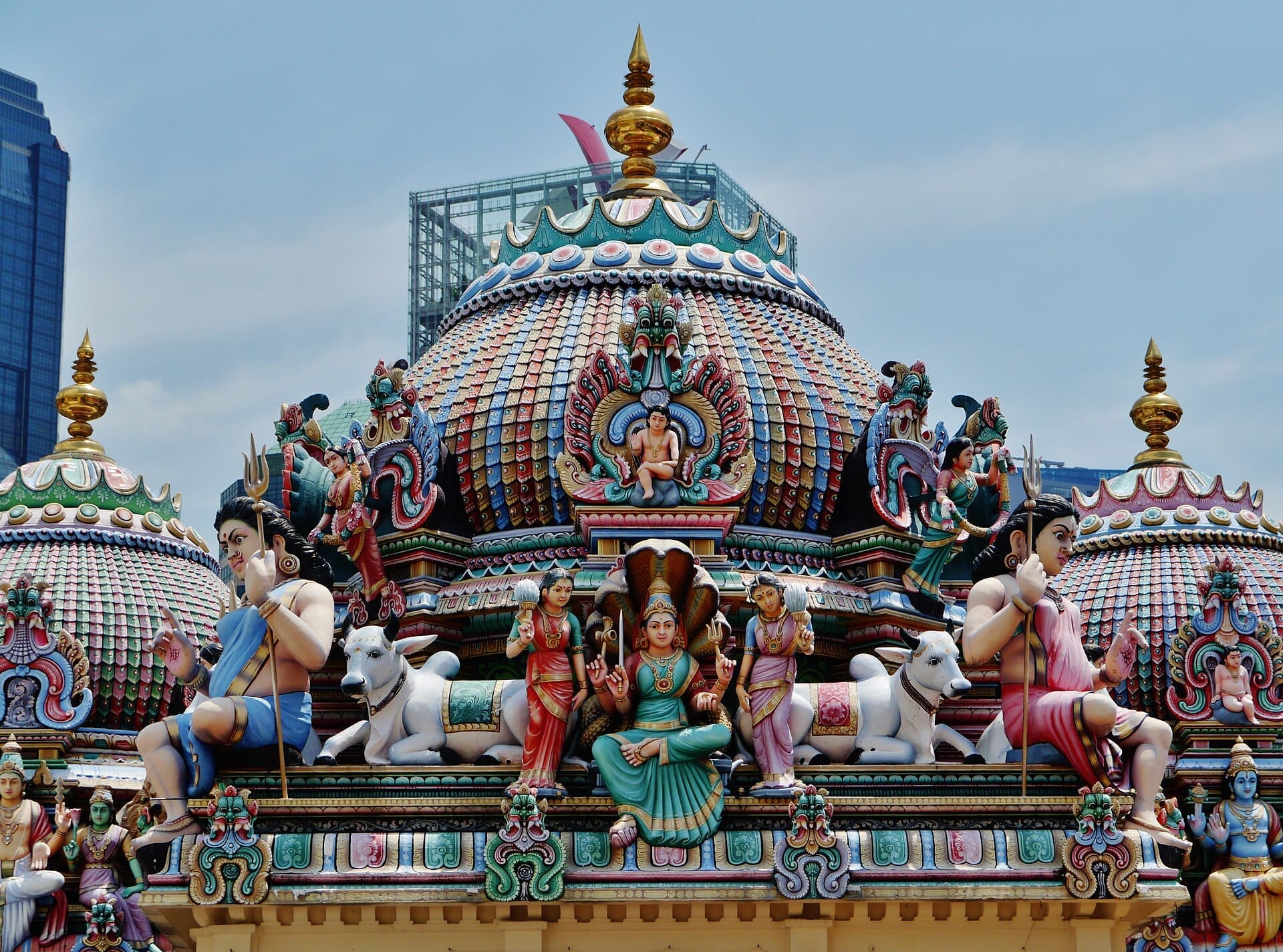
Built in 1827 and gazetted as a National Monument, Sri Mariamman Temple is the oldest Hindu temple in Singapore. Its towering five-tiered gopuram rises unexpectedly above the shophouses of South Bridge Road, and entry is free. Whether you're drawn by the architecture, the history, or simple curiosity, this is one of Chinatown's most rewarding stops.
Quick Facts
- Location
- 244 South Bridge Road, Chinatown, Singapore 058793
- Getting There
- Chinatown (NE4/DT19) or Telok Ayer (DT18), both a short walk
- Time Needed
- 30–60 minutes
- Cost
- Free entry
- Best for
- History lovers, architecture enthusiasts, cultural explorers
- Official website
- smt.org.sg
What Sri Mariamman Temple Is
Sri Mariamman Temple is the oldest Hindu temple in Singapore, first established in 1827 on the same South Bridge Road site where it stands today. It is a gazetted National Monument, a living place of worship, and one of the most architecturally striking buildings in Chinatown. Its full Tamil name is ஸ்ரீ மாரியம்மன் கோயில், and it is also known as the Gothanda Ramaswamy Mariamman Temple or simply Mariamman Kovil.
The temple is dedicated to Mariamman, a South Indian goddess associated with healing, rain, and protection from disease. Her worship was especially meaningful to early Tamil immigrants who arrived in colonial Singapore with few certainties and found in this temple a place of communal identity and spiritual refuge.
The surrounding area rewards time on its own. Chinatown holds a paradox that reveals something honest about Singapore's history: a Hindu temple, built by Tamil laborers, standing at the heart of a Chinese neighborhood. That layering is not incidental. It reflects the reality of how this city was actually built.
The Architecture: Reading the Gopuram
The first thing you notice is the gopuram, the monumental gateway tower that rises five tiers above the entrance on South Bridge Road. Added in 1925, it is densely populated with painted stucco figures: deities, mythological creatures, celestial guardians, and animals from Hindu cosmology. The colors are intense, the figures numerous, and the overall effect is one of controlled exuberance that demands you slow down and look properly.
The original structure was built from wood and attap (palm thatch) by Naraina Pillai, a Tamil clerk who arrived in Singapore with Stamford Raffles in 1819 and became one of the earliest Indian settlers. A brick structure replaced it in 1843, and the temple took its present form through modifications completed in 1862 and 1863. The gopuram came later, as the community's prosperity and confidence grew.
Inside the main prayer hall, the ceiling is painted with scenes from Hindu epics. The mandapam (pillared hall) is cooler than the street outside, and the smell of incense is constant but not overwhelming. The inner sanctum, which houses the main deity, is the ritual focal point of daily prayers. Photography inside is generally permitted but should be done unobtrusively and with respect for worshippers.
💡 Local tip
Remove your footwear before entering the temple. Shoe storage is available just inside the gate. The floor can be warm from the sun in the afternoon, so morning visits are slightly more comfortable for bare feet.
Tickets & tours
Hand-picked options from our booking partner. Prices are indicative; availability and final rates are confirmed when you complete your booking.
Adventure Cove Waterpark™ e-ticket
From 27 €Instant confirmationWild Wild Wet Waterpark Entrance Ticket
From 15 €Instant confirmationLion City bike tour in Singapore
From 55 €Instant confirmationFree cancellationLuggage Storage in Singapore
From 7 €Instant confirmationFree cancellation
When to Visit and What Changes by Time of Day
The temple opens in two sessions: mornings from 6:00am to 12:00pm, and evenings from 6:00pm to 9:00pm (9:15pm on Fridays). The midday closure is standard for South Indian temples, aligned with traditional worship schedules. If you arrive at noon expecting entry, you will find the gates closed.
Early morning, roughly 7:00am to 9:00am, is when the temple feels most alive as a place of worship. Devotees ring the bells at the timber gates, offerings of flowers and coconut are being prepared, and the smell of fresh jasmine garlands mingles with incense from the inner sanctum. This is when you understand the temple as a functioning religious space rather than a heritage site.
Late morning, from around 10:00am onward, sees an increase in visitors and tour groups. The gopuram photographs well in morning light when the sun hits the tower from the east, bringing out the reds and golds of the stucco figures. By late morning the light flattens and the surrounding shophouses cast partial shadow across the facade. Evening visits offer a different quality entirely: the tower is lit, the crowd is more local, and the atmosphere feels more intimate.
ℹ️ Good to know
During Thaipusam and Thimithi (firewalking festival), the temple draws very large crowds. Thimithi typically falls in October or November and involves devotees walking across a bed of burning coals in the temple courtyard. It is one of the most extraordinary religious events in Singapore and completely free to witness.
Cultural and Historical Context
The temple's founding tells you something important about Singapore's colonial history. Naraina Pillai, who established the first structure in 1827, was not a laborer but a government clerk, a businessman, and eventually one of the wealthiest Indians in early Singapore. The Tamil community he helped build this temple for included both free settlers and convict laborers brought by the British from South India. The temple served both groups.
For much of the 19th century, Sri Mariamman Temple also functioned as a community center and temporary shelter for new Tamil arrivals. Marriages within the Hindu community were registered here, and disputes among Indian settlers were sometimes mediated on the premises. The temple was, in the fullest sense, the civic heart of the Tamil community.
The temple was gazetted as a National Monument in 1973, placing it in the same category as Singapore's most significant heritage structures. It underwent a major reconsecration in 2023 following restoration works. For more on Singapore's Indian heritage, the Indian Heritage Centre in Little India provides deep archival context that complements a visit here.
Practical Walkthrough: What the Visit Actually Involves
Entering from South Bridge Road, you pass under the gopuram and into a covered entrance hall. Devotees ring a large bell suspended from the ceiling as they enter, a ritual marking of arrival. Remove your shoes at the designated area and store them in the cubby holes provided. There is no admission fee.
The main prayer hall opens ahead of you. The mandapam columns are painted and decorated, and the ceiling murals depicting scenes from Hindu epics are worth looking up at for several minutes. The inner shrines dedicated to various deities branch off from the central hall. At the rear of the complex is a smaller shrine and a courtyard where the Thimithi firewalking takes place annually.
The entire walkthrough takes around 20 to 30 minutes at a respectful pace. If you want more time in the neighborhood, pair it with the Chinatown Street Market on Pagoda Street, which runs directly alongside the temple, and the Chinatown Heritage Centre a few minutes' walk north on Pagoda Street.
⚠️ What to skip
Dress modestly. Shoulders and knees should be covered. Sarongs are sometimes available at the entrance for visitors who need them, but this is not guaranteed. Wearing appropriate clothing is a matter of basic respect.
Who This Attraction Suits and Who Should Skip It
Sri Mariamman Temple is genuinely worth visiting even if Hindu temples are not typically on your itinerary. The architecture alone, particularly the gopuram, is singular in Singapore and would stand out in any city in the world. The history is layered and directly connected to how Singapore was actually settled. And the entry cost is zero.
That said, if you have already visited major Hindu temples, particularly in South India, the scale here is modest by comparison. The interior, while beautifully maintained and freshly reconsecrated in 2023, is not large. Travelers looking for an immersive multi-hour cultural experience should pair this with the broader Chinatown area and schedule at least a half-day. Those with very limited time in Singapore may find that a 30-minute morning visit covers the essentials comfortably.
Children generally respond well to the color and spectacle of the gopuram, though the indoor space requires quiet and calm behavior. The temple is an active place of worship at all opening hours, not a museum, and that distinction matters when managing children's expectations.
Getting There
The temple is at 244 South Bridge Road, at the corner of Pagoda Street. The Chinatown MRT station (North East Line / Downtown Line) is approximately a 5-minute walk. Telok Ayer MRT station (Downtown Line) is a similar distance from the opposite direction. Taxis and ride-hailing apps drop off on South Bridge Road or the adjacent streets with no difficulty.
If you are combining this with broader Singapore sightseeing, the temple fits naturally into a Singapore itinerary that covers the cultural districts. From here, it is easy to walk to Maxwell Food Centre for lunch, or continue south toward the CBD.
Insider Tips
- Visit on a Friday evening when the temple stays open until 9:15pm. The tower is lit after dark, the crowd is more local than tourist-heavy, and the atmosphere is noticeably different from the daytime experience.
- The gopuram photographs best from the opposite side of South Bridge Road in the morning, roughly 8:00am to 10:00am, when the sun is directly on the tower. Step back toward Pagoda Street for the best angle to capture the full height.
- If you want to witness Thimithi, the firewalking festival, check the temple's official site at smt.org.sg well in advance. It typically falls in October or November and draws large crowds. Arriving early in the morning gives you the best position.
- The shoe storage cubby holes near the entrance are free. Leave your footwear there and collect it when you exit. Avoid wearing sandals with complicated buckles that slow down a large group trying to enter.
- The stucco figures on the gopuram were painstakingly restored as part of the 2023 reconsecration works. Look closely at the tier-by-tier arrangement of deities and you will notice the iconography follows a deliberate hierarchical order from base to apex.
Who Is Sri Mariamman Temple For?
- Architecture and heritage travelers wanting Singapore's most visually striking pre-modern building in Chinatown
- Cultural explorers interested in how Tamil Indian history shaped Singapore from its earliest colonial years
- Travelers on a budget who want genuine depth without any admission cost
- Visitors attending or researching Thimithi or Thaipusam, two of Singapore's most significant Hindu festivals
- Anyone building a half-day Chinatown itinerary who wants to go beyond food and shopping
Nearby Attractions
Other things to see while in Chinatown:
- Buddha Tooth Relic Temple
The Buddha Tooth Relic Temple and Museum on South Bridge Road is one of Singapore's most architecturally striking religious sites. Built in 2007 in Tang Dynasty style, it houses what is believed to be the left canine tooth of the Gautama Buddha, displayed in a 3,500-kilogram gold stupa. Admission is free, and six floors of museum galleries, ceremonial halls, and a rooftop garden make it worth more than a passing glance.
- Chinatown Complex Food Centre
With over 260 stalls spread across a single floor, Chinatown Complex Food Centre is the biggest hawker centre in Singapore. Built in 1983 to rehouse the city's street vendors, it remains one of the most authentic and affordable places to eat in the country. No tourist markup, no reservations, just real food at real prices.
- Chinatown Heritage Centre
Housed in three restored pre-war shophouses on Pagoda Street, the Chinatown Heritage Centre reconstructs life in 1950s Chinatown with meticulous detail. Cramped sleeping cubicles, preserved opium dens, and the recorded voices of real migrants make this one of Singapore's most affecting indoor cultural experiences.
- Chinatown Street Market
Chinatown Street Market sprawls across Pagoda, Trengganu, Sago, Temple, and Smith Streets in Singapore's historic Chinatown district. Free to enter and open daily, it offers souvenirs, snacks, and colonial streetscapes framed by red lanterns — at its best around dusk when the lights come on.