Liao Fan Hawker Chan: Singapore's Michelin-Starred Chicken Rice
Liao Fan Hawker Chan is the stall-turned-restaurant behind what the Michelin Guide called the world's most affordable starred meal. Located in Chinatown, it draws long queues for its glossy soya sauce chicken rice and noodles, served at prices that make fine dining comparisons almost absurd.
Quick Facts
- Location
- Chinatown, Singapore (multiple outlets; original fame from Smith Street hawker stall)
- Getting There
- Chinatown MRT (NE4/DT19), approximately 5-8 min walk
- Time Needed
- 30–60 minutes including queue
- Cost
- From approx. S$3–6 per dish; no admission fee. Cash preferred.
- Best for
- Food lovers, budget travelers, Michelin-curious diners, families
- Official website
- www.liaofanhawkerchan.com
What Is Liao Fan Hawker Chan?
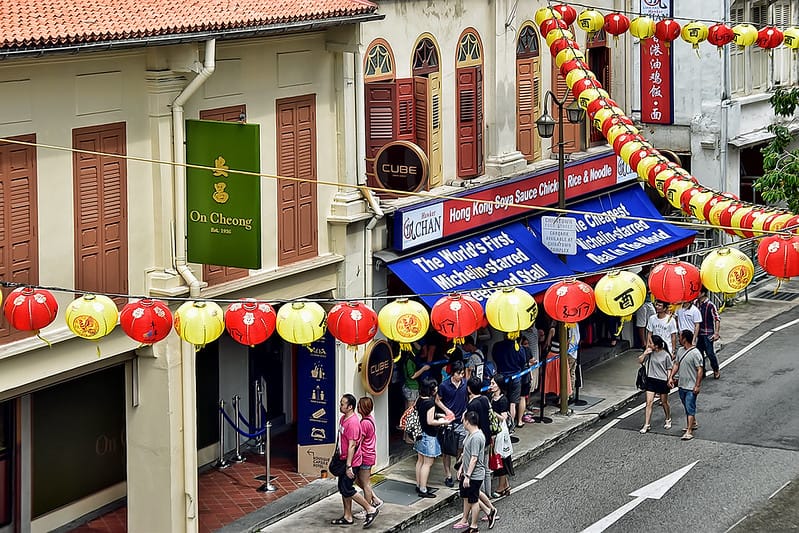
Liao Fan Hawker Chan is one of the most talked-about food stops in Singapore, and arguably in all of Southeast Asia. In July 2016, the Michelin Guide awarded a star to Chan Hon Meng's original Liao Fan stall, making it among the first street-food stalls in the world to receive the honour. The dish that earned it: soya sauce chicken rice, priced at just a few Singapore dollars a plate. The story grabbed international headlines and put Singapore's hawker food culture on the global culinary map in a way that little else had before.
The original fame came from a hawker stall on Smith Street in Chinatown, where Chan Hon Meng had been perfecting his recipe for over three decades. Following the Michelin recognition, the brand expanded under a franchise model, rebranding as Hawker Chan and opening air-conditioned restaurant outlets. The stall and the brand are separate in some ways, but the dish remains the draw.
ℹ️ Good to know
The Michelin star was awarded to the original hawker stall on Smith Street. The brand has since expanded to multiple outlets in Singapore and overseas. If you want the original experience, confirm which outlet you are visiting before heading out.
The Food: What to Order and Why It Matters
The menu is short, focused, and almost entirely built around one protein: soya sauce chicken. The bird is slow-poached in a dark, spiced soy broth until the skin turns a deep amber and lacquered sheen that you can see from across the counter. The flesh is silky, just past firm, with a faint sweetness from the marinade that cuts through the richness of the accompanying rice or noodles.
You can order the chicken over rice or over noodles. The noodles tend to be slightly less photographed but equally worth ordering, particularly with a drizzle of the house chili. The broth served on the side is light but carries the same soy perfume as the chicken itself. Portions are calibrated for a single diner, so groups often order multiple plates to share across the table.
For context on why this dish is culturally significant: chicken rice is one of Singapore's most beloved everyday foods. Finding a version this carefully executed at hawker pricing is not a novelty created for tourists. Chan Hon Meng spent decades developing the recipe before the Michelin recognition arrived. The star confirmed what regulars already knew.
If you want to understand chicken rice more broadly across Singapore, it is worth reading about Singapore's food culture before your visit. Chicken rice has multiple regional styles, and Liao Fan's soya sauce version is a specific and distinct preparation from the more common Hainanese poached-chicken style.
Tickets & tours
Hand-picked options from our booking partner. Prices are indicative; availability and final rates are confirmed when you complete your booking.
Jewel Changi Airport Experience Tickets
From 7 €Instant confirmationAdventure Cove Waterpark™ e-ticket
From 27 €Instant confirmationWild Wild Wet Waterpark Entrance Ticket
From 15 €Instant confirmationLion City bike tour in Singapore
From 55 €Instant confirmationFree cancellation
The Crowd Reality: Queues and Timing
Let's be direct about what to expect: there will be a queue. The length depends heavily on the time of day and the day of the week. Arriving right at opening, before the lunchtime crowd builds, gives you the best chance of a manageable wait. Mid-morning on a weekday is the sweet spot. Lunchtime between 11:30am and 1:30pm sees the longest lines, and the kitchen sometimes sells out of chicken before the afternoon is over.
Weekends attract a different crowd: a mix of locals, tourists who have read the headlines, and food bloggers. The queue can stretch out onto the footpath. Some visitors find the wait part of the experience. Others, especially those with young children or limited mobility, may find it frustrating. The restaurant outlets, being air-conditioned, offer slightly more comfort for waiting compared to the original hawker format.
💡 Local tip
Aim to arrive at least 10–15 minutes before opening to secure a place near the front. Bring cash: credit cards are not accepted at the stall.
The Chinatown Setting
Visiting Liao Fan Hawker Chan works best when paired with time in the surrounding neighbourhood. Chinatown in Singapore is dense with sensory detail: the smell of incense from nearby temples, the clatter of mahjong tiles from coffee shops, the shimmer of red lanterns along the shophouse-lined streets. The Chinatown Street Market runs along Pagoda and Trengganu Streets, where you can browse souvenirs, dried goods, and traditional snacks before or after your meal.
The area around Smith Street is also home to the Chinatown Complex Food Centre, one of Singapore's largest hawker centres, just a short walk away. If Liao Fan has sold out or the queue is prohibitively long, this is where locals head for equally serious food without the celebrity overhead.
The Sri Mariamman Temple is nearby on South Bridge Road, and the Buddha Tooth Relic Temple sits a few minutes' walk away on South Bridge Road. Both are worth a look if you have time before the lunchtime rush begins.
Practical Walkthrough: Getting There and What to Expect
The most accessible outlet sits within reach of Chinatown MRT station, served by both the North East Line and Downtown Line. From the station exit, the walk takes roughly five to eight minutes depending on which outlet you are heading to. Verify the address before leaving your accommodation, as the brand now operates multiple locations in Singapore and the details can cause confusion online.
The restaurant outlets are air-conditioned, which matters in Singapore's year-round heat and humidity. Tables turn over relatively quickly given the no-frills format: order at the counter, take a number, collect your tray when called. There is no table service. The setup is functional rather than atmospheric, which is partly the point. You are here for the chicken, not the decor.
Cash is the expected payment method. Bring small denominations. The menu is simple enough that decision fatigue is not a problem: most visitors order the soya sauce chicken rice or noodles, a soft drink, and perhaps a soup. Total spend per person rarely exceeds S$10.
⚠️ What to skip
Liao Fan Hawker Chan can sell out of chicken before closing time, especially on weekends. If you arrive after 1pm, call ahead or check recent visitor reports to confirm availability.
Honest Assessment: Is the Hype Justified?
For food travelers who care about craft and context, yes. The chicken is genuinely excellent: the skin-to-meat ratio, the depth of the soy marinade, and the textural precision of the bird reflect real skill developed over decades. At the price point, the value is hard to argue with.
For visitors expecting a transcendent fine-dining experience triggered by the word 'Michelin', calibrate expectations. This is hawker food. The seating is basic. The queue can be long. The portions are modest. The 'cheapest Michelin meal' narrative, while technically accurate at the time of the original award, can set up the wrong kind of anticipation.
Travelers who are deeply interested in how Singapore's food heritage works would benefit from pairing this visit with the Singapore hawker centres guide to understand the broader ecosystem that Chan Hon Meng's stall belongs to. The Michelin recognition did not create the quality. It just made it visible to the rest of the world.
Those who might skip this stop: anyone with limited time who has already explored Singapore's wider hawker scene thoroughly, visitors looking for sit-down service or a relaxed dining atmosphere, and anyone arriving mid-afternoon without confirming availability in advance.
Insider Tips
- Arrive at opening time on a weekday for the shortest queue and the best chance of getting chicken before it sells out.
- Order the noodle version at least once alongside the rice. It is less photogenic but the texture combination with the soy chicken works particularly well.
- Bring exact change or small notes. The ordering process is fast and staff are handling high volume, so fumbling with large bills slows everyone down.
- Cross-reference the outlet address carefully. The original Smith Street hawker stall, the Era Apac Centre outlet in Toa Payoh, and other franchise locations are different venues with different atmospheres.
- If the queue is too long at lunchtime, note your spot and explore the nearby Chinatown Street Market before returning. The line often shortens by mid-afternoon.
Who Is Liao Fan Hawker Chan For?
- Food travelers who want to taste the dish that made global headlines for Michelin street food recognition
- Budget-conscious visitors looking for extraordinary value without sacrificing quality
- Families comfortable with hawker-style ordering and informal seating
- First-time visitors to Singapore trying to understand the city's hawker food culture
- Travelers already spending time in Chinatown who want a focused, memorable meal stop
Nearby Attractions
Other things to see while in Chinatown:
- Buddha Tooth Relic Temple
The Buddha Tooth Relic Temple and Museum on South Bridge Road is one of Singapore's most architecturally striking religious sites. Built in 2007 in Tang Dynasty style, it houses what is believed to be the left canine tooth of the Gautama Buddha, displayed in a 3,500-kilogram gold stupa. Admission is free, and six floors of museum galleries, ceremonial halls, and a rooftop garden make it worth more than a passing glance.
- Chinatown Complex Food Centre
With over 260 stalls spread across a single floor, Chinatown Complex Food Centre is the biggest hawker centre in Singapore. Built in 1983 to rehouse the city's street vendors, it remains one of the most authentic and affordable places to eat in the country. No tourist markup, no reservations, just real food at real prices.
- Chinatown Heritage Centre
Housed in three restored pre-war shophouses on Pagoda Street, the Chinatown Heritage Centre reconstructs life in 1950s Chinatown with meticulous detail. Cramped sleeping cubicles, preserved opium dens, and the recorded voices of real migrants make this one of Singapore's most affecting indoor cultural experiences.
- Chinatown Street Market
Chinatown Street Market sprawls across Pagoda, Trengganu, Sago, Temple, and Smith Streets in Singapore's historic Chinatown district. Free to enter and open daily, it offers souvenirs, snacks, and colonial streetscapes framed by red lanterns — at its best around dusk when the lights come on.