Fifth Avenue, New York City: What to Expect, Where to Walk, and How to Make the Most of It
Fifth Avenue stretches about 6.2 miles through Manhattan, from Washington Square Park in Greenwich Village to around 143rd Street in Harlem. It passes through some of the city's most recognizable blocks: flagship luxury stores, landmark churches, world-class museums, and the edge of Central Park. Walking it costs nothing. Knowing where to focus makes the difference.
Quick Facts
- Location
- Fifth Avenue, Midtown Manhattan (central shopping stretch: roughly 49th to 59th Streets, NY 10022)
- Getting There
- Multiple subway lines: N/R/W at 49th St; E/M at 53rd St; 4/5/6 at 59th St–Lexington Ave; B/D/F/M at Rockefeller Center (47–50th Sts)
- Time Needed
- 1–2 hours for Midtown core; half a day if including Museum Mile or Central Park
- Cost
- Free to walk; individual stores and museums charge separately
- Best for
- Architecture lovers, window-shoppers, first-time visitors, photographers
- Official website
- fifthavenue.nyc
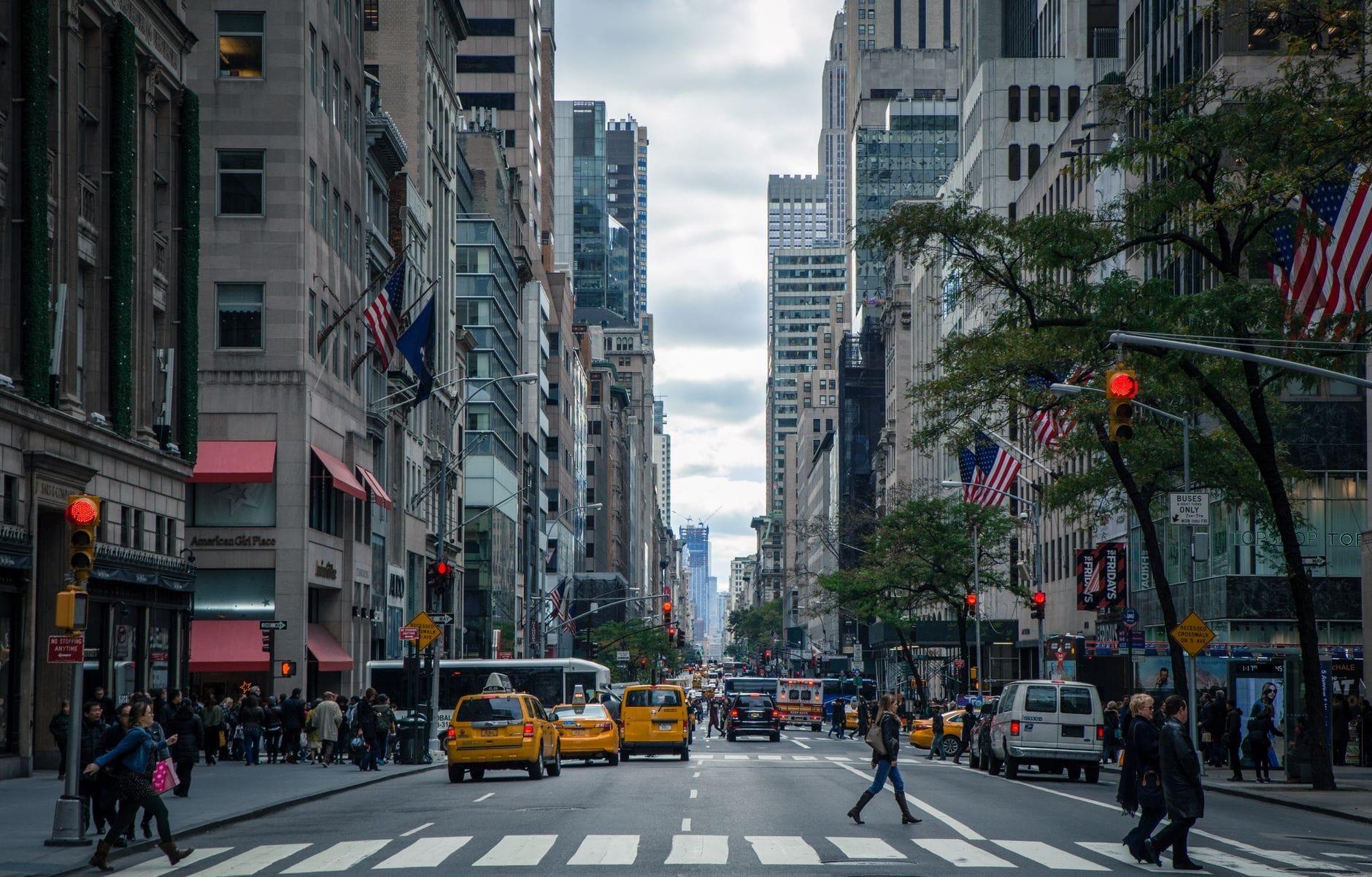
What Fifth Avenue Actually Is
Fifth Avenue is a roughly 6.2-mile north-south avenue that runs through Manhattan from Washington Square Park in Greenwich Village to around 142nd–143rd Street near the Harlem River. For most visitors, the relevant stretch is the Midtown section between roughly 34th and 60th Streets, where the street earns its global reputation: flagship luxury retailers, soaring Beaux-Arts and Art Deco facades, and one of the densest concentrations of recognizable landmarks in any city on earth.
North of 59th Street, Fifth Avenue becomes the eastern border of Central Park, and the character shifts entirely. From 82nd to 110th Streets, the avenue is home to Museum Mile, a stretch containing some of the world's most significant art and cultural institutions. South of 34th Street, the avenue loses its luxury character and passes through Koreatown, the NoMad neighborhood, and eventually becomes the western edge of Greenwich Village near the arch at Washington Square.
Fifth Avenue was laid out as part of the Commissioners' Plan of 1811, the grid that gave Manhattan its defining structure. The avenue has been reshaped by money and ambition ever since. Today it consistently ranks among the most expensive retail corridors on the planet. It appears in our New York City architecture guide for good reason: almost every block between 34th and 60th Streets contains something worth stopping to look up at.
💡 Local tip
Fifth Avenue is open 24/7 as a public street and costs nothing to walk. The value is in knowing which blocks to prioritize. Most visitors benefit from walking north from 34th Street (Empire State Building) to 59th Street (Grand Army Plaza) and then continuing into Central Park.
The Midtown Core: 34th to 59th Streets
The anchor at the southern end of the prestige stretch is the Empire State Building at 34th Street. Even if you are not going up, stand across the street and look at the setbacks of the limestone tower: the 1931 Art Deco crown is best seen in late afternoon when the low sun catches the mooring mast. From there, walking north, the street gets progressively more polished. By the time you reach 47th Street, you are passing the Diamond District, a block of jewelry wholesalers and retailers that has operated here since the mid-1940s. The sidewalk smells faintly of coffee from small takeout counters tucked between shop fronts.
Between 49th and 51st Streets, Rockefeller Center opens to the west of Fifth Avenue. The Channel Gardens, a narrow walkway flanked by fountains and seasonal plantings, leads you down toward the sunken plaza. The flagpoles that line the approach carry flags from United Nations member states and create a particular visual effect on windy days. Across the avenue at 51st Street sits St. Patrick's Cathedral, a Gothic Revival landmark whose main structure was completed in 1878 and opened in 1879, its white marble facade made sharper by the glass and steel towers rising behind it.
The luxury retail blocks between 55th and 59th Streets are dense with flagship stores from brands including Tiffany & Co. (at 57th and Fifth), Bergdorf Goodman, and several large European fashion houses. Foot traffic here is heavy on weekday afternoons and reaches its peak on weekend afternoons in late November and December. If you are not shopping, this stretch is more useful as architecture than retail: the scale of the store windows, the uniformly maintained facades, and the contrast between ornate older buildings and mid-century glass towers make for good photographs.
Tickets & tours
Hand-picked options from our booking partner. Prices are indicative; availability and final rates are confirmed when you complete your booking.
NYC Christmas tour with 5th Avenue, Rockefeller Tree and Xmas Village
From 34 €Instant confirmationFree cancellationStatue of Liberty, Ellis Island, and Brooklyn Bridge Happy Hour Cruise
From 49 €Instant confirmationFree cancellationSpirit of New York Dinner Cruise
From 161 €Instant confirmationFree cancellationNew York City Highlights bike tour
From 70 €Instant confirmationFree cancellation
How the Avenue Changes Through the Day
Early mornings, before 9 a.m., belong to delivery workers, joggers cutting through from the east side, and the occasional dog walker. The sidewalks are wide enough that you can stop and look at the architecture without being carried along by a crowd. The light on clear mornings hits the avenue from the east, bouncing off glass towers and throwing sharp shadows across limestone cornices.
By mid-morning on weekdays the office commute fills the side streets and spills onto the avenue, but Fifth Avenue itself moves fairly freely until around 11 a.m. Midday on weekends is peak congestion, particularly between 50th and 57th Streets. Sidewalks become slow and the experience shifts from architectural observation to crowd navigation. If you are walking the full Midtown stretch and want to move at your own pace, weekday mornings between 8 and 10 a.m. are the most comfortable.
Late afternoon brings a second rush. Shoppers, tourists leaving Rockefeller Center or the Empire State Building, and office workers all converge. By early evening, the avenue takes on a different quality. The illuminated storefronts, lit lobbies, and the glow from Rockefeller Center create a version of Fifth Avenue that is genuinely different from the daytime. In December, the decorative lighting installed by the Fifth Avenue Association adds to this considerably.
⚠️ What to skip
Fifth Avenue between 48th and 57th Streets on weekends, particularly from noon to 4 p.m., can feel overwhelming for anyone sensitive to crowds. If that applies to you, consider visiting on a weekday or arriving before 9 a.m.
Museum Mile: 82nd to 110th Streets
North of 59th Street, once Fifth Avenue borders Central Park, the avenue gradually quiets. The block-long facade of the Metropolitan Museum of Art appears at 82nd Street, its broad stone steps functioning as an informal public plaza from late spring through early fall. People eat lunch there, read, and watch the steady flow of visitors. The Met's main entrance faces Fifth Avenue directly, framed by banners that signal current exhibitions.
Further north, the Guggenheim Museum at 89th Street is one of the most photographed buildings in New York City. Frank Lloyd Wright's inverted spiral in off-white concrete looks almost deliberately defiant next to the rectangular apartment buildings surrounding it. It was completed in 1959 and remains architecturally unusual enough that people slow down or stop even if they are not going inside. The Neue Galerie at 86th Street, the Cooper Hewitt Design Museum at 91st, and the Museum of the City of New York at 103rd Street are all within walking distance along this stretch.
Museum Mile is significantly calmer than Midtown. The Upper East Side residential towers set back from the avenue, the park to the west keeps the sky open, and even on busy afternoons you can walk without interruption. This is the section of Fifth Avenue that rewards slower movement: the contrast between the neoclassical institutional buildings and the park greenery visible through cross streets is one of the more pleasant urban sequences in Manhattan.
Practical Walkthrough: How to Structure Your Visit
Most visitors approach Fifth Avenue as part of a larger Midtown day rather than as a standalone destination. A practical sequence for a first visit: arrive at 34th Street by subway (B/D/F/M/N/Q/R/W to 34th Street–Herald Square, then walk one block west), walk north to 59th Street, enter Central Park at Grand Army Plaza, and continue through the park toward the Met if time allows. This takes roughly 90 minutes at a moderate pace without stopping inside any buildings.
If your focus is the museum corridor, take the 4, 5, or 6 train to 86th Street and walk south from there. The stretch from 103rd to 82nd Streets is manageable in 45 minutes if you are only observing facades, or a full day if you are entering multiple institutions. Budget separately for museum admissions: the Met offers pay-what-you-wish admission for New York State residents and New York, New Jersey, and Connecticut students, but charges a set admission fee for adult visitors from elsewhere. Check the best museums in New York City guide for current pricing and reservation requirements.
Wear shoes you can walk several miles in. Fifth Avenue's sidewalks are concrete and uneven in places, particularly around construction hoarding or subway grates. There are no long stretches where you will want to sit down unless you find a cafe or the Met steps. Restroom access on the street itself is limited to Rockefeller Center (inside the complex), Bryant Park (at 42nd Street, one block west), and individual retailers who may or may not admit non-customers.
Photography Notes and Honest Limitations
Fifth Avenue is extremely photogenic, but the Midtown core is also extremely photographed. If you want images that look different from the standard wide-angle shot of storefronts and yellow cabs, look for the detail level: the carved limestone ornament above a bank entrance at 34th Street, the reflection of St. Patrick's Cathedral in the tower glass across the street, the flag lines at Rockefeller Center, the stepped setbacks visible from 57th Street looking south. Early morning and overcast days reduce the harsh contrast and crowd noise in images.
The views from street level are good but not exceptional compared to what you get from an elevated position. For elevated perspectives looking down onto the avenue or across the Midtown skyline, the Top of the Rock observation deck at Rockefeller Center and the Summit One Vanderbilt both offer views that incorporate Fifth Avenue into the broader grid. These come at a cost and require advance booking, especially on weekends.
The main limitation of Fifth Avenue as a destination is this: much of the Midtown section is a shopping street. If flagship retail does not interest you and you have already seen the Empire State Building and Rockefeller Center, there is less reason to walk the entire stretch multiple times. The Museum Mile section earns its place independently of the shopping. The Midtown core is worthwhile for the architecture and the sense of the city's scale, but it is not a quiet or contemplative experience at most hours.
ℹ️ Good to know
The Museum Mile Festival, typically held on one Tuesday evening in June, closes the stretch between 82nd and 105th Streets to traffic and offers free admission to participating institutions. Check the Fifth Avenue Association website at fifthavenue.nyc for the annual date.
Insider Tips
- The stretch between 57th and 59th Streets (Grand Army Plaza) is quieter than the blocks further south and offers a good view of the Plaza Hotel's French Renaissance facade, the Pulitzer Fountain, and the southern entrance to Central Park all within about 100 feet of each other.
- Bryant Park at 42nd Street and Sixth Avenue is one block west of Fifth Avenue and provides benches, public restrooms, and a notably calmer environment than the avenue itself. It functions as a useful rest point mid-walk and has seasonal programming including an outdoor market and winter ice rink.
- The blocks between 47th and 50th Streets have a different character at night, when the Diamond District closes and the foot traffic drops sharply. Walking north through Rockefeller Center's Channel Gardens after 8 p.m. gives you a much less interrupted view of the center plaza.
- If you are visiting in December, note that the avenue's holiday lighting is densest between 49th and 57th Streets and is typically switched on in mid-November. The sidewalks in this period, especially on weekends, are unusually congested; allow significantly more time than you would in other months.
- The eastern sidewalk of Fifth Avenue between 59th and 72nd Streets runs alongside the Central Park wall and is a notably pleasant walking surface in spring and autumn, with the park canopy visible over the low stone boundary. It is less trafficked than the 50th-57th Street blocks.
Who Is Fifth Avenue For?
- First-time visitors to New York City who want to see iconic Midtown in context
- Architecture enthusiasts interested in Art Deco, Beaux-Arts, and Gothic Revival in close proximity
- Museum-goers using the avenue to connect multiple Upper East Side institutions
- Photographers working early mornings for low-crowd, directional light conditions
- Visitors combining a Central Park walk with a Midtown approach from the south
Nearby Attractions
Other things to see while in Midtown Manhattan:
- Broadway Theater District
The Broadway Theater District in Midtown Manhattan is the center of American live theater, home to 41 official Broadway houses spanning nearly a century of performance history. Whether you're booking months in advance or hunting same-day discount tickets, this guide covers everything from curtain times to architectural details.
- Bryant Park
Tucked behind the New York Public Library on Sixth Avenue, Bryant Park is an 8-acre public park that holds its own against the surrounding skyscrapers. Free to enter year-round, it shifts character dramatically by season, from a winter ice rink to a summer outdoor cinema — and remains one of the most functional and well-managed public spaces in New York City.
- Carnegie Hall
Carnegie Hall has anchored Midtown Manhattan's cultural life since 1891. With three auditoriums ranging from 268 to 2,790 seats, it hosts everything from orchestral premieres to intimate recitals. This guide covers the halls, the history, and exactly how to make the most of a visit.
- Chrysler Building
Completed in 1930 and briefly the tallest building on earth, the Chrysler Building remains the finest example of Art Deco architecture in New York City. Visitors generally can't go inside beyond the main lobby, but the experience of standing beneath its gleaming stainless steel crown is genuinely unforgettable.