Upper Lascar Row (Cat Street): Hong Kong's Antiques Lane
Upper Lascar Row, known locally as Cat Street, is a narrow pedestrian lane in Sheung Wan lined with stalls and shopfronts selling antiques, vintage curios, Mao-era memorabilia, jade pieces, and assorted collectibles. It rewards slow walkers and curious browsers far more than it rewards rushed tourists.
Quick Facts
- Location
- Upper Lascar Row, Sheung Wan, Hong Kong Island
- Getting There
- Sheung Wan MTR Station (Island Line), Exit A2 — roughly 10-minute walk uphill
- Time Needed
- 45 minutes to 2 hours depending on your interest in antiques
- Cost
- Free to enter; prices negotiable at most stalls
- Best for
- Antique hunters, photographers, history buffs, curious walkers
What Is Cat Street and Why Does It Have Two Names?
The official address is Upper Lascar Row, a street name that dates to the colonial era when South and Southeast Asian sailors — known as lascars — settled in this part of Sheung Wan. Over time, the lane became a clearinghouse for stolen goods, and the thieves who traded here were nicknamed 'rats.' The buyers who came looking for suspiciously cheap items were called 'cats.' The nickname Cat Street stuck, and it still appears on maps and in conversation today.
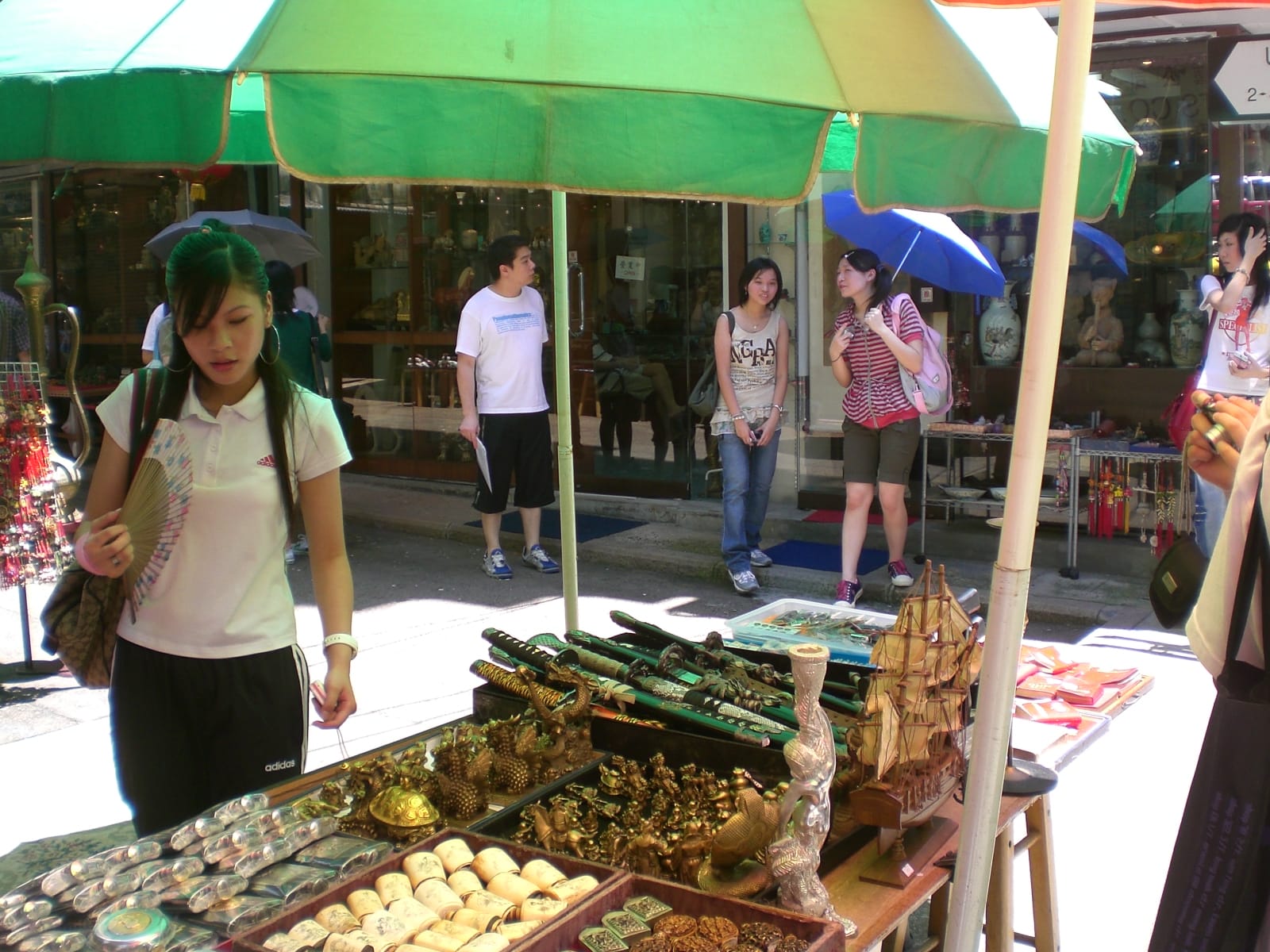
That history gives Cat Street a character that sanitized tourist markets tend to lack. The goods are eclectic in the truest sense: Qing dynasty porcelain fragments sit next to Cultural Revolution propaganda posters, old Hong Kong banknotes, brass Buddhist figurines, carved wooden furniture, Russian pocket watches, and boxes of loose coins from currencies that no longer exist. Not everything is genuine, and not everything is old. Approaching the market with curiosity rather than investment intent is the more rewarding posture.
💡 Local tip
If you're after authenticated antiques with provenance documentation, the licensed dealers along nearby Hollywood Road are the better option. Cat Street skews toward collectibles, curiosities, and affordable vintage pieces rather than museum-grade items.
The Physical Experience: What the Lane Actually Looks and Feels Like
Cat Street is short — around 200 metres from end to end — and it runs as a pedestrian-only lane parallel to Hollywood Road. The stalls are a mix of open-air folding tables and permanent shopfronts with glass cases. The ground-floor displays spill onto the pavement, so you end up navigating around stacks of ceramic pots, rows of framed prints, and crates of loose coins and medals.
In the mornings, particularly on weekdays before 10am, the lane is quiet enough that you can hear the details: a vendor unwrapping newspaper from a porcelain bowl, the scrape of a stool on the pavement, the faint scent of incense drifting down from Man Mo Temple a few streets away. This is the most productive time to browse if you want actual conversation with vendors, some of whom speak enough English to discuss the pieces they're selling.
By midday on weekends, the character shifts. Camera-carrying tourists outnumber serious buyers, and the lane feels more like a set piece than a working market. That's not necessarily a bad thing for a casual visitor, but it does mean less room to negotiate and less chance of the quiet, unhurried conversation that makes antique browsing enjoyable.
Tickets & tours
Live prices and dates from our booking partner. If you book, we may earn a commission at no extra cost to you.
Hong Kong audio guide with TravelMate app
From 8 €Instant confirmationHong Kong Tour with Peak Tram, harbour cruise and dim sum dinner
From 85 €Instant confirmationFree cancellationHong Kong night tour with Peak Tram and Symphony of Lights
From 63 €Instant confirmationFree cancellationLantau Cable Car and Big Buddha Guided Tour with Lunch in Hong Kong
From 85 €Instant confirmationFree cancellation
Historical and Cultural Context
Sheung Wan has been Hong Kong Island's commercial and cultural crossroads since the earliest days of British settlement in the 1840s. The district's street network still reflects that layered history: dried seafood vendors occupy Des Voeux Road West, traditional funeral goods are concentrated around Jervois Street, and the antiques and art trade runs along the Hollywood Road corridor, with Cat Street as its more casual, street-level extension.
The proximity of Man Mo Temple, one of Hong Kong's oldest Taoist temples located just a short walk away on Hollywood Road, reinforces the historical density of this part of Sheung Wan. Walking between the two — incense smoke, antique lacquer, and the occasional waft from a nearby herbal medicine shop — gives a textured sense of what this neighbourhood has retained despite decades of redevelopment elsewhere on Hong Kong Island.
The market's inventory has shifted considerably since the 1970s and 1980s, when Cat Street was a more significant source of genuine antiques flowing out of mainland China. Today's stalls reflect a broader collectibles culture: items from the Mao era are particularly popular with mainland Chinese visitors, while vintage Hong Kong ephemera — old tram tickets, colonial-era postcards, advertising tins — tend to interest local buyers and history-focused tourists.
Navigating the Market: A Practical Walkthrough
The most natural approach is from Hollywood Road. From Man Mo Temple, walk west a short distance and turn left onto the steps that descend to Upper Lascar Row. This entry puts you at the western end of the market, which tends to have a higher concentration of open-air stalls. Walking east from there brings you toward the more permanent gallery-style shops near the eastern end.
Bargaining is expected at open-air stalls but not in the enclosed shopfronts, which often display fixed prices. A reasonable opener is around 60–70% of the asking price at stalls, though this varies by vendor and item. Vendors who are genuinely attached to a price will simply say no and stay friendly about it. Pushing hard for dramatic discounts on items clearly marked in the small shops tends to create awkwardness rather than results.
ℹ️ Good to know
Most stalls open around 10am and close by 6pm. The market operates daily, though Monday sees fewer vendors than other days. Arrive before 11am on weekdays for the most relaxed browsing conditions.
The lane connects at its eastern end to the steps leading back up to Hollywood Road near the Lascar Row Antique Centre, a multi-floor indoor space that houses additional dealers. The building lacks the atmospheric quality of the street itself but is worth a quick sweep, especially for jade pieces and old coins presented under proper lighting.
Photography Notes and Practical Considerations
Cat Street photographs well in the soft morning light, when low sun rakes across the textures of porcelain, carved wood, and aged metal. Midday light is harsh and flattens the visual depth of the stalls. The narrow lane means wide-angle shots at close range distort proportions; a 35mm or 50mm equivalent works better for capturing individual objects and vendor interactions.
Always ask before photographing vendors or their private collections. Most are comfortable with it, but the request matters. Pointing a camera at an item with a questioning look is usually enough to get a nod or a wave-off.
Accessibility along Cat Street is limited. The lane has uneven paving, and the connecting steps from Hollywood Road are not wheelchair-friendly. Flat-soled shoes are sensible since the stone can be slippery after rain. If you're planning a full morning in the area, combining Cat Street with a visit to the Western Market further down towards the waterfront makes for a coherent half-day in Sheung Wan.
Honest Assessment: Who This Is For and Who Might Be Disappointed
Cat Street is a genuine working market, not a curated experience. If your expectation is a polished, easy-to-navigate antiques district with English-language labels and air conditioning, this will feel underwhelming. The value here is in the unpredictability: you might find a box of 1960s Hong Kong stock certificates, a Mao-era enamel mug in perfect condition, or a small oil painting with no identifiable origin but considerable charm.
Visitors who want a more edited, boutique experience should head to the higher-end galleries along Hollywood Road itself. Those interested in a broader view of Hong Kong before committing time to Sheung Wan might find the overview guide to things to do in Hong Kong useful for placing Cat Street within the city's wider range of attractions.
Travelers who find slow, aimless wandering tedious, or who have no interest in old objects, will exhaust Cat Street in under ten minutes. It is not a destination that performs for passive visitors. It rewards those who stop, pick things up, ask questions, and let the inventory surprise them.
Insider Tips
- The steps connecting Hollywood Road to Cat Street are easy to miss if you're walking quickly. Look for the narrow stone stairway just west of Man Mo Temple — that descent is part of the experience.
- Some vendors keep their better pieces inside or under tables rather than on open display. If you're looking for something specific, asking directly — even with a photo on your phone — often surfaces items that aren't visible.
- The Lascar Row Antique Centre at the eastern end of the lane has a small snack bar on one of the upper floors, useful if you're doing a longer morning circuit of the neighbourhood.
- Mao-era collectibles (enamel badges, Little Red Books, propaganda posters) are among the most consistently available items and tend to be honestly priced relative to their rarity. They also travel well.
- If you visit on a clear winter morning between November and February, the low angle of morning light and the cooler air make for the most comfortable and photogenic conditions on the lane.
Who Is Upper Lascar Row (cat Street) For?
- Antique collectors and serious curio hunters browsing for affordable finds
- Photographers interested in texture, urban history, and street portraiture
- History-focused travelers curious about Hong Kong's colonial and post-war past
- Slow travelers who appreciate unscripted browsing over scheduled attractions
- Anyone pairing a visit to Man Mo Temple or Hollywood Road galleries with a walk through the neighbourhood
Nearby Attractions
Other things to see while in Sheung Wan:
- Man Mo Temple
Man Mo Temple occupies a tight lot on Hollywood Road where giant incense coils hang from the ceiling and worshippers burn offerings to the gods of literature and war. Built between 1847 and 1862 by Chinese merchants, this declared monument survives as Hong Kong's most photographed temple interior. The smoke is thick, the space is small, and tourist groups cycle through constantly.
- Western Market
Western Market occupies a red-brick Edwardian block at the western edge of Central where trams clatter past on Des Voeux Road. Built in 1906 as a produce market, this declared monument now houses fabric merchants, a bus model shop, and Hong Kong dessert chains inside its preserved colonial shell.
Planning a trip? Discover personalized activities with the Nomado app.