Man Mo Temple: 1847 Incense Coils on Hollywood Road
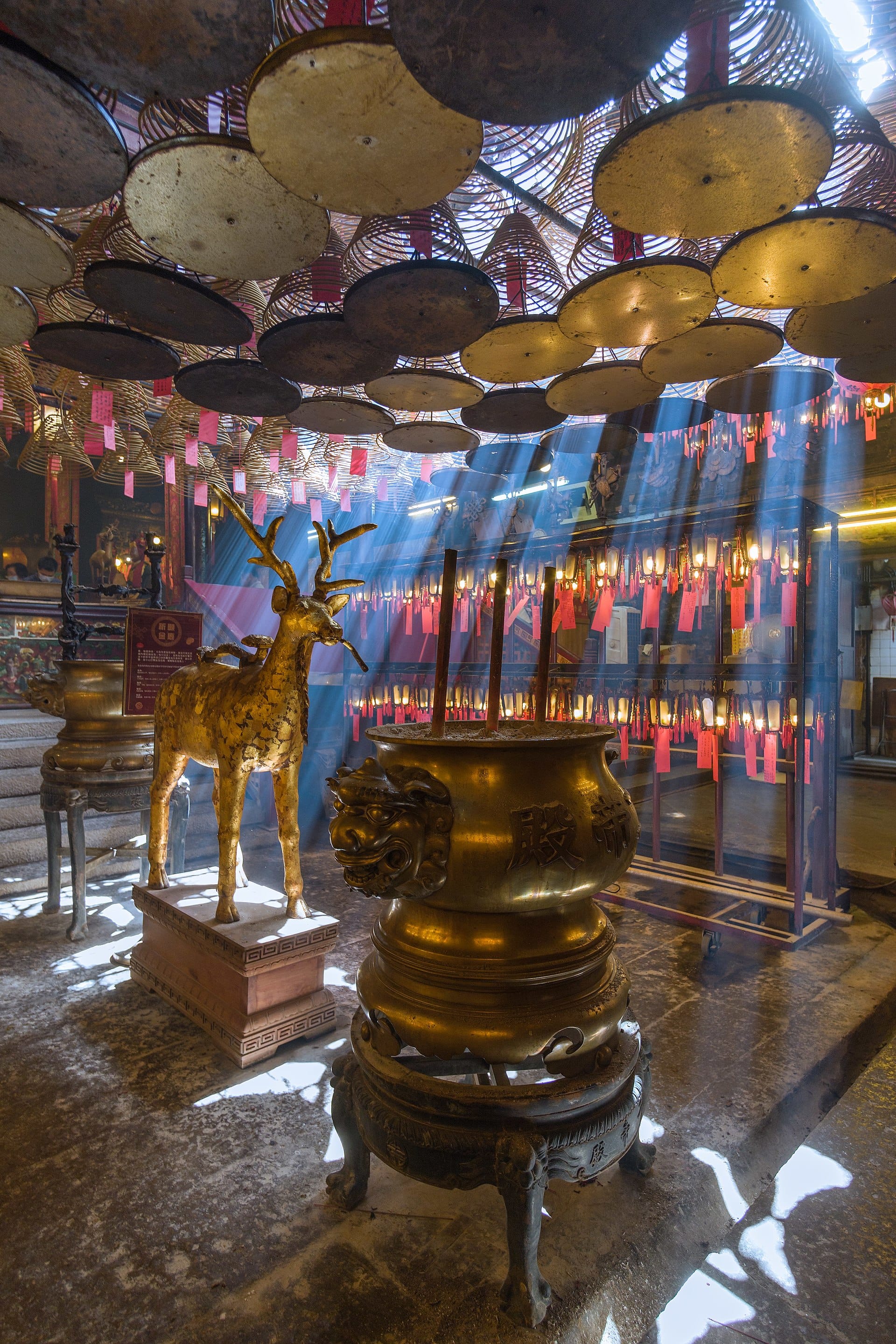
Man Mo Temple occupies a tight lot on Hollywood Road where giant incense coils hang from the ceiling and worshippers burn offerings to the gods of literature and war. Built between 1847 and 1862 by Chinese merchants, this declared monument survives as Hong Kong's most photographed temple interior. The smoke is thick, the space is small, and tourist groups cycle through constantly.
Quick Facts
- Location
- 124-126 Hollywood Road, Sheung Wan
- Getting There
- Sheung Wan MTR (Exit A2), 10-min uphill walk
- Time Needed
- 20-30 minutes
- Cost
- Free entry
- Best for
- Temple photography, incense atmosphere
Quick Snapshot
Man Mo Temple occupies a tight lot on Hollywood Road where giant incense coils hang from the ceiling and worshippers burn offerings to the gods of literature and war. Built between 1847 and 1862 by Chinese merchants, this declared monument survives as Hong Kong's most photographed temple interior. The smoke is thick, the space is small, and tourist groups cycle through constantly.
The temple consists of three sections: main hall with altars to Man Cheong (god of literature) and Mo Tai (god of war), a central courtyard, and smaller side chambers. The famous incense coils spiral down from rafters, some burning for weeks on behalf of worshippers who purchased them. Smoke layers the space, creating atmospheric haze that photographs well but irritates sensitive eyes and lungs.
Budget 20 to 30 minutes. Entry is free. Hours run 8 AM to 6 PM daily. The temple sits on Hollywood Road's eastern section, ten minutes uphill from Sheung Wan MTR (Exit A2). The walk gains elevation through narrow streets lined with antique shops and art galleries.
Man Mo Temple works if you want Hong Kong's most visually distinctive temple interior for photography. The incense coils and smoky atmosphere are unique among the territory's temples. However, constant tour groups reduce the contemplative quality. For quieter temple experiences, visit or smaller neighborhood shrines.
What Makes Man Mo Temple Visually Distinctive?
The incense coils define the space. Large spirals hang throughout the main hall, some measuring over a meter in diameter. Worshippers purchase these coils (prices vary by size), write prayers or names on attached red tags, then temple staff hang them to burn slowly over days or weeks. The cumulative smoke from dozens of coils creates the temple's signature hazy atmosphere.
The main altar area holds two central figures: Man Cheong on the left (dressed in green, holding a writing brush) and Kwan Tai on the right (dressed in red, holding a sword). Literature and war seem like odd companions, but both gods represented essential aspects of traditional Chinese civil society.
Side halls contain smaller shrines to other deities and historical tablets commemorating donors. Wooden plaques with gold calligraphy line the walls. Most text is Classical Chinese without translation. The architectural interest is secondary to the atmospheric smoke and religious objects.
The exterior is modest: gray brick walls, a small forecourt, stone lions flanking the entrance. The building reads more impressive inside than outside. Hollywood Road's slope positions the temple entrance slightly below street level on one side.
Tickets & tours
Live prices and dates from our booking partner. If you book, we may earn a commission at no extra cost to you.
Hong Kong audio guide with TravelMate app
From 8 €Instant confirmationHong Kong Tour with Peak Tram, harbour cruise and dim sum dinner
From 85 €Instant confirmationFree cancellationHong Kong night tour with Peak Tram and Symphony of Lights
From 63 €Instant confirmationFree cancellationLantau Cable Car and Big Buddha Guided Tour with Lunch in Hong Kong
From 85 €Instant confirmationFree cancellation
How Crowded Is Man Mo Temple?
Tour buses arrive throughout the day, typically between 10 AM and 5 PM. Groups of 15 to 30 people cycle through every 30 minutes during peak tourist season. The small interior becomes congested quickly. Guides speak over each other, tourists photograph from every angle, and movement becomes constrained.
Early mornings before 9 AM see primarily local worshippers. The atmosphere is calmer, photography is easier, and you can observe religious practice without navigating crowds. The temple opens at 8 AM, so arriving shortly after gives you 60 to 90 minutes before tours begin.
Late afternoons after 5 PM bring fewer tourists as groups move to dinner or evening activities. However, the temple closes at 6 PM, leaving a narrow window. The lighting is less favorable in late afternoon as the sun shifts.
Weekdays are marginally better than weekends, but the difference is less pronounced than at other Hong Kong attractions. Man Mo sits on standard tour routes regardless of day.
When Should You Visit Man Mo Temple?
Arrive at 8 AM when the temple opens if you want to photograph without crowds or observe worship in a quieter setting. The first 60 to 90 minutes before tour buses arrive offer the best conditions.
Weekday mornings between 8:30 AM and 10 AM balance crowd avoidance with reasonable timing for travelers not on extreme early schedules. You'll encounter some visitors but can still move and shoot freely.
Avoid midday between 11 AM and 3 PM when tour group density peaks. The small interior becomes uncomfortably packed. If your schedule forces midday timing, expect to wait for photo angles and navigate around groups.
The first and fifteenth days of lunar months bring heavier local worshipper traffic as these are traditional offering days. The temple remains accessible but incense smoke intensifies.
How Do You Get to Man Mo Temple?
Sheung Wan MTR Station (Exit A2) on the Island Line puts you ten minutes away on foot. Exit onto Des Voeux Road Central, walk west briefly, then turn uphill on any of several lanes leading to Hollywood Road. The walk gains roughly 40 meters of elevation through stepped streets and sloped alleys. Signage points toward Man Mo Temple from major intersections.
Alternatively, take the Central-Mid-Levels Escalator to Hollywood Road level and walk west. This approach trades some walking for escalator riding and offers a different perspective on Sheung Wan's vertical geography.
Multiple bus routes stop on Hollywood Road: 26 from Central, and others. Check route maps if you're connecting from other Hong Kong districts. The bus saves climbing from sea level but drops you directly on Hollywood Road near the temple.
Walking from Central takes 20 to 25 minutes, mostly uphill. The route passes through Sheung Wan's lower commercial blocks before reaching Hollywood Road's antique and art gallery district.
Common Mistakes and How to Avoid Them
- Expecting a large temple complex. Man Mo Temple is compact, roughly 25 by 35 meters. You'll see everything in 20 minutes. The fame comes from the incense coils and photogenic interior, not scale or extensive grounds.
- Visiting during tour bus hours without patience for crowds. Groups flood the space between 10 AM and 5 PM. If you're sensitive to crowds or need clear photo angles, arrive at 8 AM instead.
- Staying too long in heavy incense smoke. The smoke is atmospheric but intense. People with asthma, respiratory sensitivity, or contact lens irritation should limit exposure. Step outside to the courtyard for breaks.
- Photographing worshippers without permission. This is an active religious site. Photograph the architecture and incense coils freely, but ask before shooting close-ups of people praying or burning offerings.
How Does Man Mo Temple Fit Into a Sheung Wan Walk?
Man Mo Temple anchors a Hollywood Road heritage route. Start at the temple, walk west along Hollywood Road through antique shops and galleries, visit the PMQ design complex (former police quarters), then continue downhill to on Des Voeux Road. This loop takes 90 minutes to 2 hours depending on browsing time.
Alternatively, combine with the Central-Mid-Levels Escalator. Ride the escalator to Hollywood Road level, visit Man Mo Temple, then continue uphill to SoHo's restaurants and bars. For neighborhood context, see .
The temple works as a morning cultural stop before shopping in Central or Sheung Wan. Visit at 8 AM, spend 30 minutes, then walk downhill to the business district for breakfast or morning activities.
Who Should Visit Man Mo Temple?
Photographers seeking Hong Kong's most visually dramatic temple interior will find the incense coils and smoky atmosphere unmatched. The space photographs exceptionally well despite (or because of) its compact size.
First-time Hong Kong visitors wanting a brief temple experience in a central location benefit from Man Mo's accessibility and visual impact. Twenty minutes delivers a concentrated dose of temple atmosphere.
Travelers interested in Chinese religious syncretism (Taoism, Buddhism, folk religion blended) can observe how literature and war deities coexist in community worship spaces.
Who Should Skip This?
Travelers seeking contemplative religious experiences should visit less-touristed temples. Man Mo's fame brings constant tour groups that disrupt any meditative quality.
People with respiratory sensitivities or severe asthma should avoid the heavy incense smoke. The confined space concentrates smoke significantly.
If you've already visited multiple Chinese temples elsewhere in Asia, Man Mo offers limited novelty beyond the incense coil density. The architectural and religious elements follow standard patterns.
Visitors prioritizing less-photographed Hong Kong sites should explore neighborhood temples (Pak Tai Temple in Wan Chai, Hung Shing Temple in Ap Lei Chau) that see fewer tourists but offer similar architectural and religious interest.
Insider Tips
- Arrive at 8 AM when the temple opens to photograph the incense coils without tour groups blocking sight lines.
- Look for the bronze bell from the Daoguang period (1847) and drum near the main altar—these are original artifacts verifying the temple's construction date.
- Step into the side courtyard if incense smoke becomes overwhelming. The open air provides relief while staying within the temple complex.
- Combine with a Hollywood Road antique walk: browse galleries west of the temple, then continue downhill to Sheung Wan's dried seafood district.
- Visit on the first or fifteenth day of the lunar month to see heavier worshipper activity and traditional offering ceremonies.
Who Is Man Mo Temple For?
- Temple photography
- Incense atmosphere
- Quick cultural stops
- Hollywood Road walks
- First-time visitors
Nearby Attractions
Other things to see while in Sheung Wan:
- Upper Lascar Row (cat Street)
Upper Lascar Row, known locally as Cat Street, is a narrow pedestrian lane in Sheung Wan lined with stalls and shopfronts selling antiques, vintage curios, Mao-era memorabilia, jade pieces, and assorted collectibles. It rewards slow walkers and curious browsers far more than it rewards rushed tourists.
- Western Market
Western Market occupies a red-brick Edwardian block at the western edge of Central where trams clatter past on Des Voeux Road. Built in 1906 as a produce market, this declared monument now houses fabric merchants, a bus model shop, and Hong Kong dessert chains inside its preserved colonial shell.
Planning a trip? Discover personalized activities with the Nomado app.