Tin Hau Temple Causeway Bay: 1747 Seafarer's Shrine
Tin Hau Temple sits on a narrow lane in Causeway Bay where worshippers burn incense to Hong Kong's sea goddess. Built in 1747 by Hakka fishermen, this small temple holds a Qing Dynasty bell and intricate roof decorations. It's a working religious site, not a tourist attraction, five minutes from Victoria Park.
Quick Facts
- Location
- 10 Tin Hau Temple Road, Causeway Bay
- Getting There
- Tin Hau Station (Exit A3), 5-min walk
- Time Needed
- 20-30 minutes
- Cost
- Free entry
- Best for
- Quick cultural stops, temple architecture
Quick Snapshot
Tin Hau Temple sits on a narrow lane in Causeway Bay where worshippers burn incense to Hong Kong's sea goddess. with origins dating to 1747, built by Hakka fishermen, this small temple holds a Qing Dynasty bell and intricate roof decorations. It's a working religious site, not a tourist attraction, five minutes from Victoria Park.
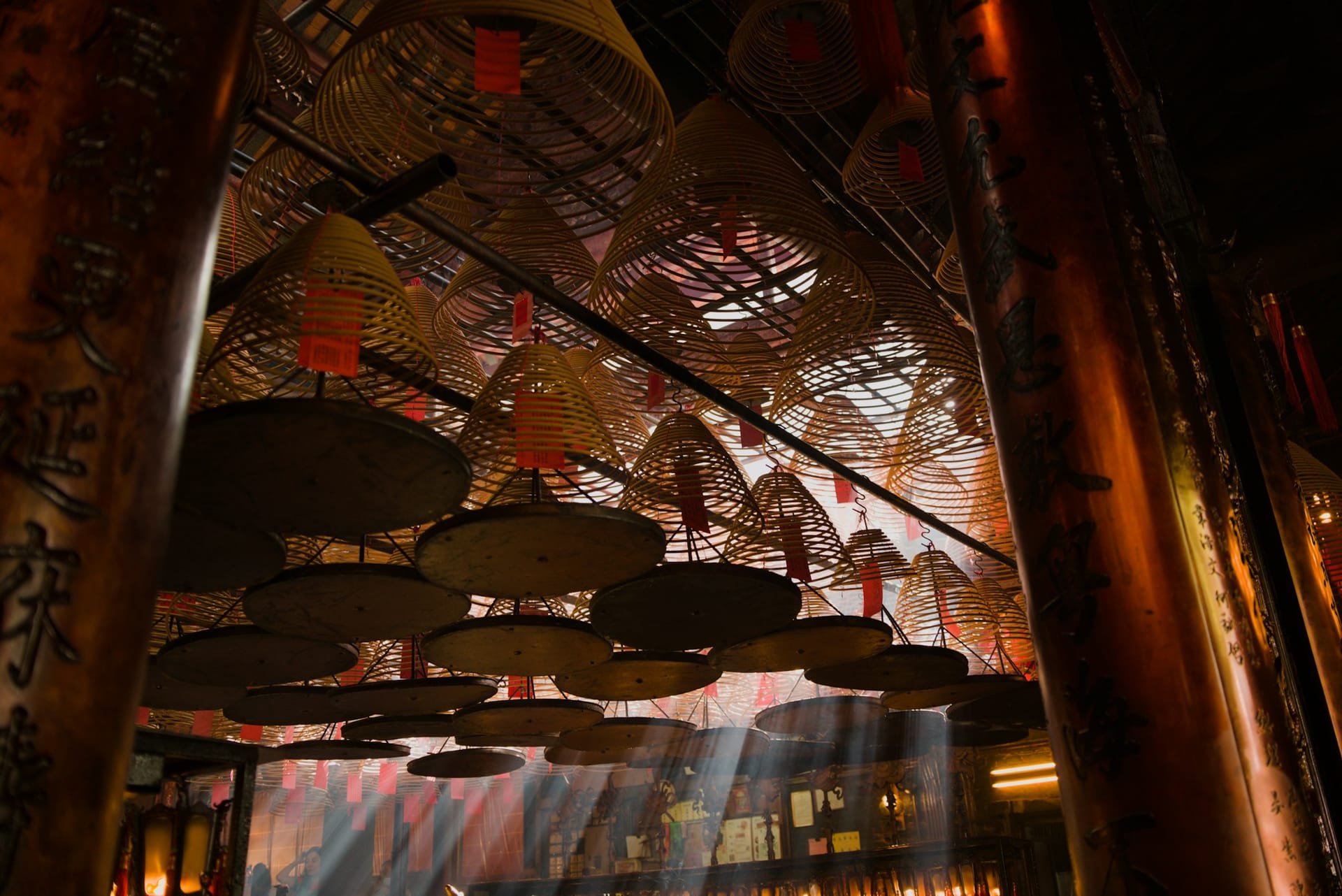
The temple consists of two main halls with side chambers. The central altar holds Tin Hau's statue surrounded by incense coils hanging from the ceiling. Locals come daily to pray, light incense, and make offerings. The atmosphere is quiet except during the goddess's birthday festival in spring (lunar calendar's third month, typically April or May).
Budget 20 to 30 minutes for a visit. Entry is free. Hours run approximately 7 AM to 5 PM daily. The temple sits five minutes on foot from Tin Hau MTR (Exit A3). Turn right on Tin Hau Temple Road and walk east past residential blocks. Look for red pillars and a small courtyard.
Tin Hau Temple works if you're already exploring Causeway Bay or and want a brief cultural detour. It's not a destination temple like Wong Tai Sin or Man Mo. The historic value is legitimate (1747 origins verified by the bell), but the scale is modest and the experience is brief.
What's Actually Inside Tin Hau Temple?
The front hall centers on Tin Hau's altar with her statue flanked by attendant figures. Worshippers place fruit, flowers, and incense as offerings. Large spiral incense coils hang from the ceiling, burning slowly over days or weeks. The smoke creates a hazy atmosphere and distinctive smell.
The side hall holds the 1747 bell, the temple's oldest artifact. Cast bronze with Chinese characters marking the date and donors' names. This bell verifies the temple's early origins and links it to the Tai family who built it. Most visitors miss this hall unless they know to look.
Roof decorations show traditional Lingnan-style ceramics: figures, animals, and scenes from Chinese mythology rendered in glazed shards. These "cut-and-paste" works use broken pottery pieces assembled into relief sculptures. Time and weather have dulled some colors but the craftsmanship remains visible from the courtyard.
Stone tablets and wooden plaques line the walls with calligraphy honoring donors and recording temple renovations. Most text is in Classical Chinese without English translation. The architectural details matter more to specialists than casual visitors.
The temple stays functional, not museumized. Worshippers come throughout the day, though mornings see higher traffic. Visitors are welcome but secondary to religious use. Don't interrupt prayers or block altar access.
Tickets & tours
Live prices and dates from our booking partner. If you book, we may earn a commission at no extra cost to you.
Guided tour of Hong Kong's heritage with tram ride and food tasting
From 85 €Instant confirmationFree cancellationHong Kong audio guide with TravelMate app
From 8 €Instant confirmationHong Kong Tour with Peak Tram, harbour cruise and dim sum dinner
From 85 €Instant confirmationFree cancellationHong Kong night tour with Peak Tram and Symphony of Lights
From 63 €Instant confirmationFree cancellation
Who Was Tin Hau and Why Does She Matter?
Tin Hau (also called Matsu in Fujian dialect) is the Chinese sea goddess protecting fishermen and sailors. Legend says she was a Song Dynasty girl named Lin Moniang who could predict weather and rescue drowning sailors through spiritual powers. After her death, sailors reported seeing her spirit guiding ships through storms.
Hong Kong has over 70 Tin Hau temples because the territory was historically a fishing community. Causeway Bay itself sat at the waterfront in the 18th century before land reclamation pushed the shore eastward. The temple originally stood near the beach where fishing boats launched.
The Hakka clan who built this temple came from Guangdong province and relied on fishing. They constructed the temple to secure safe passage and good catches. Modern Hong Kong has fewer fishermen, but Tin Hau remains culturally significant as Hong Kong's unofficial patron deity.
Her birthday festival draws crowds. Lion dances, opera performances, and processions fill the street outside the temple. If you're in Hong Kong during late April or early May, check the lunar calendar for the exact date (23rd day of the third lunar month).
When Should You Visit Tin Hau Temple?
Weekday mornings between 8 AM and 10 AM see steady worshipper traffic but manageable crowds. Light from the east illuminates the courtyard and roof decorations. The temple feels active without being packed.
Avoid lunch hours (noon to 2 PM) when office workers from nearby buildings stop in briefly, creating temporary congestion. Late afternoons between 3 PM and 5 PM offer quieter conditions as daily worshipper flow tapers off.
The first and fifteenth days of each lunar month bring heavier worshipper numbers as these are traditional prayer days. The temple remains accessible but expect more incense smoke and fuller altar space.
Tin Hau's birthday festival transforms the area. The celebration spans several days around the 23rd day of the third lunar month. Street stalls, performances, and decorations fill Tin Hau Temple Road. This is the most atmospheric time to visit but also the most crowded. Arrive early morning to see preparations before peak crowds hit.
Rain doesn't significantly affect the visit since the temple is covered. Summer humidity makes the incense smoke feel heavier. Winter mornings provide the clearest air and most comfortable touring conditions.
How Do You Get to Tin Hau Temple?
Tin Hau MTR Station (Exit A1 or A3) on the Island Line puts you five minutes away on foot. Exit onto Tin Hau Temple Road and walk east. Pass residential towers on both sides. The temple appears on your left at number 10, marked by red pillars and a small forecourt.
From Causeway Bay's shopping district, walk east along Causeway Bay Road or Electric Road for about 15 minutes. This route takes you through a transitional zone from commercial density to residential neighborhoods, showing how quickly Hong Kong's character shifts.
Multiple bus routes stop near Victoria Park: 2, 8, 19, 81, 102. Alight at stops along Causeway Bay Road or Tin Hau Temple Road and walk the remaining few minutes. The temple sits just east of the park's northeastern corner.
If you're combining this with Victoria Park, enter the park from the west side near Causeway Bay Station and walk through to the eastern exit. Tin Hau Temple is five minutes from the park's eastern edge.
Common Mistakes and How to Avoid Them
- Expecting a large temple complex. Tin Hau Temple is small, roughly 30 by 40 meters. You'll see everything in 20 to 30 minutes. Don't build an hour into your schedule unless you're deeply interested in architectural details or attending a special ceremony.
- Visiting for museum-like exhibits. This is a working temple, not a heritage site with interpretive displays. The 1747 bell and roof decorations are significant but not extensively explained. Bring background knowledge or accept the experience at face value.
- Taking photos of worshippers without permission. People come here for religious practice, not to be photographed. Shoot the architecture and altars freely, but avoid close-ups of individuals praying unless you ask first.
- Wearing inappropriate clothing. While not strictly enforced, shoulders and knees should be covered as a sign of respect. This is standard temple etiquette across Hong Kong. Tank tops and short shorts are technically allowed but discourteous.
- Confusing this with other Tin Hau temples. Hong Kong has over 70 Tin Hau temples. This is the Causeway Bay location built in 1747. Different temples have different histories and scales. Don't assume experiences transfer.
How Does Tin Hau Temple Fit Into a Causeway Bay Route?
Tin Hau Temple works as a morning cultural add-on before shopping. Start at the temple around 8 AM when it opens, spend 20 to 30 minutes, then walk west through to Causeway Bay's retail core. This approach separates quiet cultural time from the commercial energy of Times Square and Hysan Place.
Alternatively, use the temple as a late-afternoon endpoint after shopping. Browse Causeway Bay's malls through the day, then walk east to Tin Hau Temple around 4 PM for a quieter finale before dinner. Several good restaurants operate along Tin Hau Temple Road and Electric Road. For broader context on the area, see .
If you're staying in Causeway Bay hotels, the temple provides a quick morning walk destination. Leave your hotel at 7:30 AM, walk to the temple, spend 30 minutes, then return for breakfast. This routine gives structure to early hours before shops open.
Who Should Visit Tin Hau Temple?
Travelers interested in Hong Kong's religious practices and temple architecture will find value here. The 1747 bell, Lingnan roof decorations, and active worship create an authentic snapshot of Chinese folk religion without commercial overlay.
Photographers looking for atmospheric shots benefit from the incense smoke, hanging coils, and courtyard composition. Morning light works best. The temple isn't photogenic in the Instagram spectacle sense but offers documentary interest.
Visitors staying in Causeway Bay with flexible schedules can easily incorporate this as a 30-minute detour. The proximity to Victoria Park and major shopping areas makes it convenient without requiring dedicated travel time.
History enthusiasts interested in Hong Kong's maritime heritage and Hakka settlement patterns will appreciate the temple's backstory and preserved Qing Dynasty artifacts.
Who Should Skip This?
First-time Hong Kong visitors with limited time should prioritize Victoria Peak, Tsim Sha Tsui Promenade, and Temple Street Night Market over Tin Hau Temple. Those major sights deliver more distinctive Hong Kong experiences.
Travelers seeking grand temple complexes with extensive grounds should visit Wong Tai Sin Temple or Man Mo Temple instead. Those offer larger scale, more elaborate decoration, and more developed visitor infrastructure.
If you're uncomfortable in active religious spaces where your presence is incidental to ongoing worship, this temple will feel awkward. The space prioritizes worshippers, not tourists, and there's no separation between religious and visitor areas.
Families with young children may find the small space and quiet atmosphere constraining. There's nowhere for kids to move around, and the incense smoke can bother sensitive respiratory systems.
Insider Tips
- Find the 1747 bronze bell in the left side hall. Most visitors miss this, but it's the temple's oldest artifact and verifies the construction date.
- Visit at 7-8 AM when the temple opens for the best natural light on the roof decorations and fewer people in the courtyard.
- Check the lunar calendar if you're in Hong Kong during April or May. Tin Hau's birthday (23rd day of 3rd lunar month) brings lion dances and opera performances to the street outside.
- Combine with Victoria Park's morning tai chi sessions (6 AM to 8 AM). Walk through the park first, then continue to the temple.
- Respect that this is a working temple, not a museum. Worshippers have priority. Don't block altar access or photograph people praying without asking.
Who Is Tin Hau Temple For?
- Quick cultural detours
- Temple architecture enthusiasts
- Hong Kong maritime history
- Morning walks in Causeway Bay
- Photographers seeking atmosphere
Nearby Attractions
Other things to see while in Causeway Bay:
- Victoria Park
Victoria Park spreads across 19 hectares in Causeway Bay where locals practice tai chi at dawn, play tennis on public courts, and jog loops around open lawns. Opened in 1957 on reclaimed land, this is Hong Kong Island's largest park. It's functional green space, not scenic parkland, bordered by high-rises and busy roads.
- Victoria Park Swimming Pool
Victoria Park Swimming Pool sits next to Causeway Bay's main park in a glass-fronted building that opened in 2013. Two heated indoor pools operate year-round: a 50-meter competition pool and a multi-purpose pool with diving platforms. This is Hong Kong's municipal facility for serious lap swimmers, not a leisure water park.
Planning a trip? Discover personalized activities with the Nomado app.