Victoria Park: Causeway Bay's Green Space & Tai Chi Spot
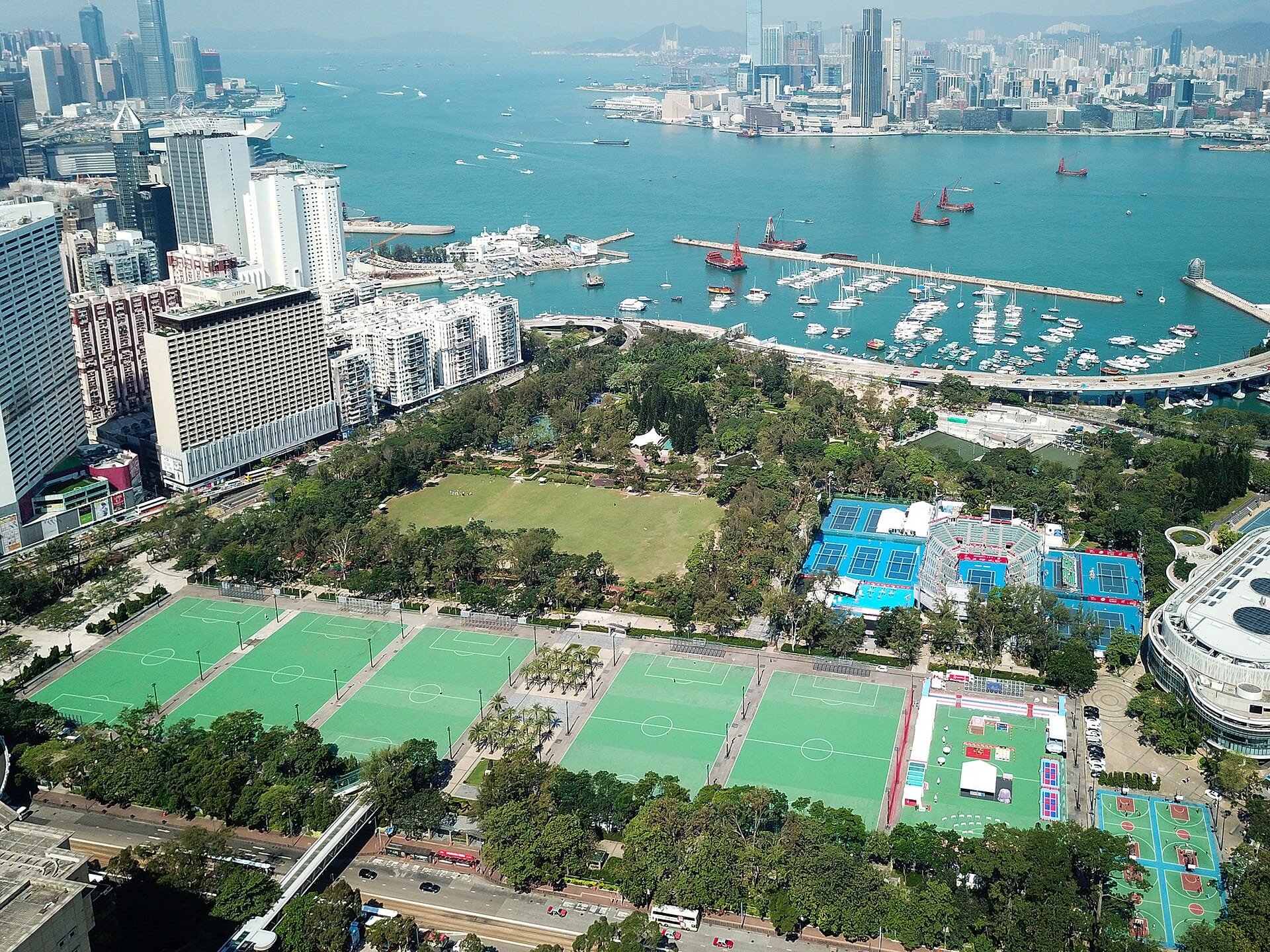
Victoria Park spreads across 19 hectares in Causeway Bay where locals practice tai chi at dawn, play tennis on public courts, and jog loops around open lawns. Opened in 1957 on reclaimed land, this is Hong Kong Island's largest park. It's functional green space, not scenic parkland, bordered by high-rises and busy roads.
Quick Facts
- Location
- Causeway Bay, bordered by Gloucester Rd & Victoria Park Rd
- Getting There
- Tin Hau (Exit A) or Causeway Bay (Exit E) MTR, 5-min walk
- Time Needed
- 30 min-2 hours depending on activity
- Cost
- Free entry (sports facilities may charge)
- Best for
- Morning exercise, green breaks, local life
Quick Snapshot
Victoria Park spreads across 19 hectares in Causeway Bay where locals practice tai chi at dawn, play tennis on public courts, and jog loops around open lawns. Opened in 1957 on reclaimed land, this is Hong Kong Island's largest park. It's functional green space, not scenic parkland, bordered by high-rises and busy roads.
The park contains jogging paths, tennis courts, basketball courts, soccer pitches, a swimming pool complex, playgrounds, and open lawn areas. Facilities are basic but well-maintained. The atmosphere is utilitarian: people come to exercise, not to admire landscaping. Trees provide some shade but the park feels exposed, especially midday.
Budget 30 minutes for a quick walk-through or 60 to 90 minutes if using sports facilities. Entry is free. The park is open 24 hours though lighting is limited after dark. Access from Tin Hau MTR Station (Exit A) or Causeway Bay MTR Station (Exit E) takes about five minutes on foot.
Victoria Park works if you need green space during a Causeway Bay shopping day, want to observe morning tai chi, or require sports facilities (tennis, running track). It's not a tourist attraction. Hong Kong Park near Admiralty offers more landscaping and architecture. For broader area context, see .
What Actually Happens in Victoria Park?
Morning tai chi sessions run from 6 AM to 8 AM daily. Groups of mostly older residents gather on the lawns and paved areas practicing synchronized movements. Some use swords or fans. The activity is informal and decentralized—multiple groups operate simultaneously without coordination. Visitors can watch from paths or benches. Joining requires no permission but understanding the forms helps.
Jogging paths circle the park's perimeter and cut through interior sections. The full loop measures roughly 1.5 kilometers. Surface is paved and flat. Locals run mornings and evenings, particularly weekdays before work and after dinner.
Sports facilities include 14 tennis courts (six floodlit for night play), six basketball courts, and a soccer pitch. Courts require booking through the Leisure and Cultural Services Department. Walk-ins sometimes access courts during off-peak hours, but advance reservation is safer. Fees apply for most facilities.
Playgrounds near the southern edge serve families with younger children. Equipment is standard: swings, slides, climbing structures. Shade is limited, so summer afternoons get hot.
The park hosts seasonal events: Lunar New Year Flower Market in late January or early February, Mid-Autumn Festival lantern displays in September, and occasional concerts or public gatherings. These events transform the space temporarily but occur sporadically.
Tickets & tours
Live prices and dates from our booking partner. If you book, we may earn a commission at no extra cost to you.
Hong Kong audio guide with TravelMate app
From 8 €Instant confirmationHong Kong Tour with Peak Tram, harbour cruise and dim sum dinner
From 85 €Instant confirmationFree cancellationHong Kong night tour with Peak Tram and Symphony of Lights
From 63 €Instant confirmationFree cancellationLantau Cable Car and Big Buddha Guided Tour with Lunch in Hong Kong
From 85 €Instant confirmationFree cancellation
When Should You Visit Victoria Park?
Dawn between 6 AM and 7:30 AM showcases the park's most distinctive activity: mass tai chi practice. This is the optimal time for observing local Hong Kong morning rituals. The air is cooler, the light is softer, and the park feels purposeful.
Weekday afternoons between 2 PM and 5 PM see lighter crowds as most Hong Kongers are working. The park feels emptier, though heat during summer months makes midday uncomfortable. Tree shade helps but doesn't cover the full space.
Avoid weekends and public holidays unless you're comfortable with crowds. Families fill playgrounds, sports courts operate at capacity, and the lawns become packed with picnickers and leisure groups.
October through March offers the most comfortable temperatures for walking or jogging. April through September brings humidity and heat that reduce the appeal of outdoor time, though early mornings remain manageable.
How Do You Get to Victoria Park?
Tin Hau MTR Station (Exit A) on the Island Line places you at the park's eastern edge. Walk west into the park immediately after exiting. This entrance is closest to the swimming pool complex and tennis courts.
Causeway Bay MTR Station (Exit E) serves the park's western side. Walk east through the shopping district toward Victoria Park Road. The entrance is visible across the street. This approach is better if you're coming from Times Square or Hysan Place.
Multiple bus routes stop along Gloucester Road and Causeway Road on the park's southern and northern borders: 2, 8, 19, 25, 81, 102, and others. Entrances puncture the park's perimeter at regular intervals.
The park is walkable from Central via Hennessy Road or Gloucester Road, roughly 30 minutes on foot. This works if you're combining multiple Island-side stops.
Common Mistakes and How to Avoid Them
- Expecting scenic mountain or harbor views. Victoria Park is flat, urban, and surrounded by high-rises. It offers green space and exercise facilities, not picturesque landscapes. Hong Kong Park or Bowen Road provide better scenery.
- Visiting midday during summer. Limited tree cover and Hong Kong's subtropical sun make midday visits uncomfortable from May through September. Mornings or evenings work better.
- Assuming sports facilities are walk-in. Tennis courts and some other facilities require advance booking through LCSD. Don't arrive expecting immediate access without reservation.
- Missing the morning tai chi sessions. If you're visiting specifically to observe local exercise culture, arrive between 6 AM and 8 AM. After 9 AM, most groups have dispersed.
How Does Victoria Park Fit Into a Causeway Bay Day?
Victoria Park works as a morning starting point before shopping. Arrive at 6:30 AM for tai chi observation, walk the jogging paths for 30 minutes, then continue to at the park's eastern edge. Finish by 8:30 AM and head into Causeway Bay for breakfast and shopping as stores open.
Alternatively, use the park as a midday break from shopping density. Spend morning hours in Times Square or Sogo, then walk to Victoria Park around 1 PM for a green respite before continuing with afternoon activities. The adjacent to the park offers indoor exercise if weather is poor.
For hotel guests staying in Causeway Bay, the park provides morning or evening exercise options without traveling across Hong Kong. Jogging loops, tennis courts, and open space for stretching are all accessible within a ten-minute walk from most hotels.
Who Should Visit Victoria Park?
Travelers interested in observing Hong Kong's morning exercise culture should visit for the tai chi sessions. The concentration of practitioners between 6 AM and 8 AM offers an authentic glimpse of local life.
Runners maintaining training routines while traveling will appreciate the jogging paths and flat terrain. The 1.5-kilometer loop is sufficient for basic distance work.
Families with children benefit from the playgrounds and open lawns where kids can run and play away from Hong Kong's dense streets. The eastern section near Tin Hau MTR has the main playground facilities.
Travelers needing a green break during Causeway Bay shopping find the park convenient without requiring travel to Hong Kong Island's more distant hiking trails.
Who Should Skip This?
Tourists prioritizing scenic parks with mountain backdrops or waterfront views should visit Hong Kong Park, Kowloon Park, or hike Dragon's Back instead. Victoria Park is functional urban space, not picturesque landscape.
Travelers with limited Hong Kong time shouldn't allocate priority to Victoria Park. It's green space that serves residents, not a must-see attraction. Victoria Peak and Tsim Sha Tsui Promenade deliver more distinctive experiences.
Visitors seeking tranquil, contemplative nature experiences will find the urban surroundings (traffic noise, high-rises, airplane flight paths) disruptive. Hong Kong's country parks offer actual nature.
If you're not exercising, not observing tai chi, and not providing kids with playground time, the park offers limited value. It's a pass-through space rather than a destination.
Insider Tips
- Arrive by 6:30 AM to watch the morning tai chi sessions—the park's most distinctive local activity and best photographed in soft dawn light.
- Tennis courts require advance booking through LCSD. Don't assume walk-in availability, especially evenings and weekends.
- The jogging path's full perimeter loop is roughly 1.5 kilometers. Most locals run counterclockwise, following the crowd flow.
- Visit Tin Hau Temple near the park's eastern edge after your morning walk. It's a five-minute detour and adds cultural context to the exercise observation.
- October through March offers comfortable outdoor temperatures. Summer visits work best before 9 AM or after 6 PM when heat subsides.
Who Is Victoria Park For?
- Morning tai chi observation
- Jogging and running
- Playground time with children
- Sports facilities (tennis, basketball)
- Green breaks during Causeway Bay shopping
Nearby Attractions
Other things to see while in Causeway Bay:
- Tin Hau Temple
Tin Hau Temple sits on a narrow lane in Causeway Bay where worshippers burn incense to Hong Kong's sea goddess. Built in 1747 by Hakka fishermen, this small temple holds a Qing Dynasty bell and intricate roof decorations. It's a working religious site, not a tourist attraction, five minutes from Victoria Park.
- Victoria Park Swimming Pool
Victoria Park Swimming Pool sits next to Causeway Bay's main park in a glass-fronted building that opened in 2013. Two heated indoor pools operate year-round: a 50-meter competition pool and a multi-purpose pool with diving platforms. This is Hong Kong's municipal facility for serious lap swimmers, not a leisure water park.
Planning a trip? Discover personalized activities with the Nomado app.