Western Market: Edwardian Architecture & Fabric Stalls in Sheung Wan
Western Market occupies a red-brick Edwardian block at the western edge of Central where trams clatter past on Des Voeux Road. Built in 1906 as a produce market, this declared monument now houses fabric merchants, a bus model shop, and Hong Kong dessert chains inside its preserved colonial shell.
Quick Facts
- Location
- 323 Des Voeux Road Central, Sheung Wan, Hong Kong
- Getting There
- Sheung Wan MTR Station (Exit A2), 5-minute walk
- Time Needed
- 30-45 minutes
- Cost
- Free entry (shopping costs vary)
- Best for
- Architecture enthusiasts, quick heritage stops
Quick Snapshot
Western Market occupies a red-brick Edwardian block at the western edge of Central where trams clatter past on Des Voeux Road. Built in 1906 as a produce market, this declared monument now houses fabric merchants, a bus model shop, and Hong Kong dessert chains inside its preserved colonial shell.
The building spans four floors over a compact footprint. Ground level holds Honeymoon Dessert, a KMB scale model shop, and a handful of souvenir stalls. First floor concentrates the fabric merchants selling bolts of silk, cotton, and wedding dress materials. Second floor sits mostly empty except for occasional exhibitions. The architecture is the main draw: striped brick corner towers, arched windows, and cast-iron interior columns that survived the 1991 renovation.
Budget 30 to 45 minutes unless you're seriously shopping for fabric. Entry is free. The building sits five minutes on foot from Sheung Wan MTR (Exit A2), right on the tram line. It's not a destination attraction but works as a quick architectural stop while moving through the neighborhood.
Western Market makes sense if you're already exploring and want a brief heritage detour. Pair it with Man Mo Temple or the antique stalls along Hollywood Road for a longer walk through Hong Kong's older layers. If you're deciding between this and other colonial buildings, the former Central Police Station (Tai Kwun) offers more programming and space.
What Does Western Market Actually Look Like?
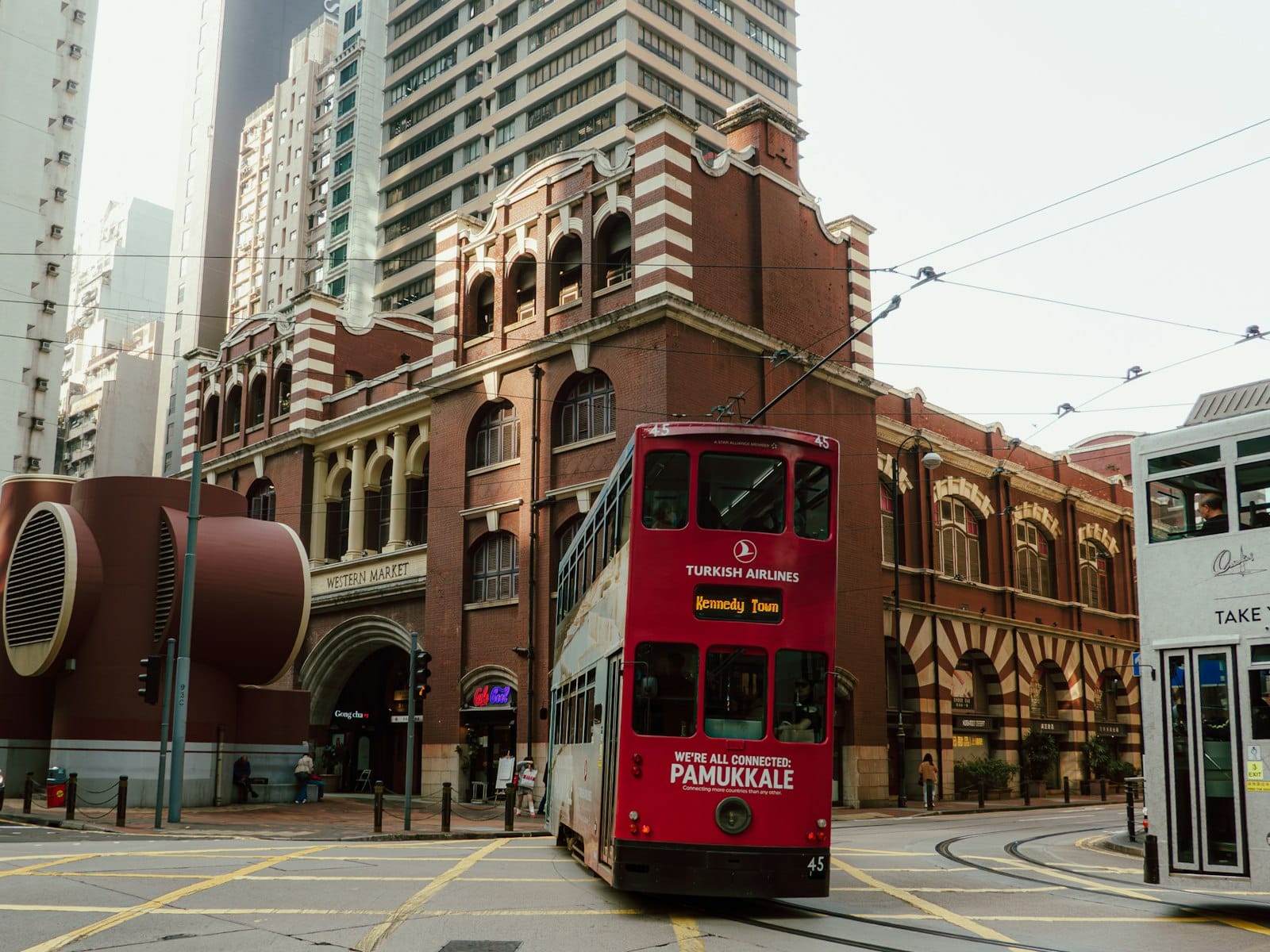
The exterior reads clearly from across Des Voeux Road: red brick laid in alternating courses with white stone banding on the corner towers. The towers anchor each corner and rise an extra story, giving the block its distinctive silhouette. Ground-level arches face the tram tracks. The design follows standard Edwardian municipal architecture, pragmatic rather than ornate.
Inside, the ground floor opens to a central atrium with shops arranged around the perimeter. Cast-iron columns support the upper floors. Natural light filters through from windows set high in the walls. The floor is tiled, the walls painted white, and the overall feel is clean but utilitarian. The 1991 renovation stripped out the original market infrastructure, so what remains is the architectural frame without the historic atmosphere.
First floor is quieter, with fabric shops lining both sides of a central corridor. Bolts of material stack floor to ceiling. Shopkeepers sit behind counters, some working on inventory, others waiting for customers. The space feels more functional than atmospheric, lit by fluorescent fixtures rather than heritage fittings.
Second floor is largely vacant. A few exhibition panels may be mounted near the stairwell, but most of the space sits empty. Windows offer views down to Des Voeux Road and the Macau Ferry Terminal area.
Tickets & tours
Live prices and dates from our booking partner. If you book, we may earn a commission at no extra cost to you.
Hong Kong audio guide with TravelMate app
From 8 €Instant confirmationHong Kong Tour with Peak Tram, harbour cruise and dim sum dinner
From 85 €Instant confirmationFree cancellationHong Kong night tour with Peak Tram and Symphony of Lights
From 63 €Instant confirmationFree cancellationLantau Cable Car and Big Buddha Guided Tour with Lunch in Hong Kong
From 85 €Instant confirmationFree cancellation
What Can You Actually Do at Western Market?
Walk Through for the Architecture
Most visitors come for a quick architectural pass. The building is photogenic from outside, especially if you position yourself across the street near the tram stop to capture the full facade. Inside, the atrium and cast-iron columns provide visual interest, though the space feels more renovated than historic.
Morning light from the east-facing windows creates better interior conditions for photography. Late afternoon offers warmer exterior light on the brick. The building is never crowded enough to obstruct movement or shots.
Browse Fabric Shops on the First Floor
If you're interested in textiles or sewing projects, the first-floor merchants stock a range of fabrics: silk, cotton, linen, synthetics, and specialty materials like embroidered wedding dress fabric. Prices vary widely depending on quality. Most shopkeepers speak enough English to discuss materials and pricing.
This isn't a bargain market. Quality is generally good, but you're paying for convenience and selection in a central location. Local tailors and designers buy here, which suggests reliable sourcing. If you're casually browsing, expect polite but subdued engagement from shop staff.
Check Out the KMB Model Bus Shop
Ground floor near the entrance holds a small shop selling die-cast scale models of Hong Kong's KMB buses. It's niche but distinctive. Models range from vintage double-deckers to current fleet designs. Prices typically sit between HK$100 and HK$500 depending on scale and detail.
For transit enthusiasts or collectors looking for Hong Kong-specific souvenirs, this is one of the few dedicated spots. Stock rotates based on availability.
Grab Dessert at Honeymoon Dessert
Honeymoon Dessert anchors the ground floor with its signature mango-based sweets and traditional Hong Kong dessert soups. It's a chain outlet, not unique to Western Market, but convenient if you want a break. Expect a queue during weekends and early evenings. Prices align with other Hong Kong dessert chains.
When Should You Visit Western Market?
Weekday mornings between 10 AM and noon see the lightest foot traffic. The building opens at 10 AM, so arriving shortly after gives you clear access to photograph the interior and browse without navigating crowds.
Weekends bring more tourists and locals, particularly Saturdays. Honeymoon Dessert queues extend during weekend afternoons, which can congest the ground floor. If you're visiting only for architecture and don't plan to shop or eat, weekend timing matters less.
Late afternoon between 3 PM and 5 PM offers softer exterior light for photography, though shops may be winding down. The building closes at 7 PM daily, giving you a narrower window than many Hong Kong attractions.
Weather doesn't significantly impact the visit since you're primarily indoors, but rainy days see slightly higher indoor foot traffic from people sheltering along tram routes.
How Do You Get to Western Market?
Sheung Wan MTR Station (Exit A2) puts you five minutes away on foot. Exit onto Des Voeux Road Central and walk west. The building sits on the north side of the road at number 323. Look for the red brick facade and tram tracks running directly in front.
If you're walking from Central, head west along Des Voeux Road for about ten minutes. The route is flat and well-lit, passing through commercial blocks before reaching Western Market.
Trams stop directly outside the building on the Des Voeux Road westbound line. Board any westbound tram from Central and get off at the Western Market stop. The ride takes less than ten minutes depending on traffic and number of stops.
Multiple bus routes (1, 5B, 10, 18, 23) stop within a block or two. Check route maps if you're connecting from other Hong Kong districts.
Common Mistakes and How to Avoid Them
- Expecting a traditional wet market atmosphere. Western Market was renovated into a shopping complex in 1991. It's clean, air-conditioned, and retail-focused. If you want authentic Hong Kong market chaos, visit Graham Street Market or Bowrington Road Market instead.
- Allocating more than an hour unless you're shopping. The building is compact. Most architectural and browsing visits finish in 30 to 45 minutes. Don't carve out two hours unless you're seriously buying fabric or meeting someone for dessert.
- Visiting only for shopping deals. Prices aren't necessarily lower than elsewhere in Hong Kong. The value is in selection and convenience, not bargain hunting. Temple Street or Ladies Market offer better haggling opportunities.
- Skipping the exterior photo from across the street. The best perspective of the building comes from the south side of Des Voeux Road near the tram stop. Shooting from inside or too close loses the full facade composition.
How Does Western Market Fit Into a Sheung Wan Walking Route?
Western Market works best as one point on a broader Sheung Wan heritage walk. Start at on Hollywood Road (built 1847, about 15 minutes east on foot), move downhill through the antique and art galleries along Upper Lascar Row, then continue west to Western Market. From there, you can extend to the dried seafood shops on Des Voeux Road West or circle back toward Central through the Possession Street area.
This route covers roughly 2 to 3 kilometers and takes 90 minutes to two hours depending on how long you linger at each stop. The terrain is manageable, with some uphill stretches between Hollywood Road and the waterfront level.
Alternatively, combine Western Market with Central's colonial landmarks: former Central Police Station (Tai Kwun), Flagstaff House Museum of Tea Ware, and the old Supreme Court building. This keeps you in the Central-Sheung Wan corridor and offers architectural variety. For broader context on Hong Kong's heritage sites, see .
Who Should Visit Western Market?
Western Market suits travelers who appreciate colonial architecture and want a quick heritage detour without committing major time. If you're already moving through Sheung Wan or following the tram line west from Central, it's convenient. Photographers looking for less-photographed Hong Kong architecture will find angles here that differ from the skyscraper shots.
Fabric buyers, tailors, and anyone sourcing materials for sewing projects will find practical value on the first floor. The selection is solid and shopkeepers are knowledgeable.
Transit enthusiasts or collectors interested in Hong Kong's bus history should check the KMB model shop. It's niche, but if that appeals to you, it's worth the stop.
Who Should Skip This?
If you're in Hong Kong for only one or two days and prioritizing iconic sights, Western Market doesn't rank. Victoria Peak, Star Ferry, Tsim Sha Tsui Promenade, and Temple Street Night Market deliver more distinctive Hong Kong experiences.
Travelers seeking vibrant market energy should head to Graham Street, Bowrington Road, or Mong Kok's outdoor markets instead. Western Market is calm, orderly, and somewhat sterile compared to Hong Kong's operating wet markets.
If you're uncomfortable with older buildings that feel more functional than atmospheric, the renovated interior may disappoint. The architecture is preserved but the space doesn't evoke much historic character beyond the shell.
Insider Tips
- Shoot the facade from across Des Voeux Road near the tram stop to capture the full building composition with the striped corner towers.
- First-floor fabric shops are quieter on weekday mornings before 11 AM, giving you better access to speak with merchants about materials.
- The KMB model bus shop on the ground floor is one of the few places in Hong Kong selling detailed scale models of local public buses.
- Combine with a Hollywood Road antique walk: head uphill from Western Market to Upper Lascar Row, then east to Man Mo Temple.
- If Honeymoon Dessert has a queue, walk five minutes west on Des Voeux Road to find quieter dessert spots with similar offerings.
Who Is Western Market For?
- Quick architectural stops
- Colonial building photography
- Fabric and textile shopping
- Transit memorabilia collectors
- Sheung Wan heritage walks
Nearby Attractions
Other things to see while in Sheung Wan:
- Man Mo Temple
Man Mo Temple occupies a tight lot on Hollywood Road where giant incense coils hang from the ceiling and worshippers burn offerings to the gods of literature and war. Built between 1847 and 1862 by Chinese merchants, this declared monument survives as Hong Kong's most photographed temple interior. The smoke is thick, the space is small, and tourist groups cycle through constantly.
- Upper Lascar Row (cat Street)
Upper Lascar Row, known locally as Cat Street, is a narrow pedestrian lane in Sheung Wan lined with stalls and shopfronts selling antiques, vintage curios, Mao-era memorabilia, jade pieces, and assorted collectibles. It rewards slow walkers and curious browsers far more than it rewards rushed tourists.
Planning a trip? Discover personalized activities with the Nomado app.