The Second City: Chicago's Comedy Institution in Old Town
Since December 1959, The Second City at 230 W North Ave has been the proving ground for American comedy. From its Old Town stage, it launched the careers of Bill Murray, Tina Fey, and dozens more. This is what a night here actually looks and feels like.
Quick Facts
- Location
- 230 W North Ave, Old Town, Chicago, IL 60614
- Getting There
- CTA Brown/Purple Line: Sedgwick; CTA Bus 22 (Clark) or 36 (Broadway) to North Ave
- Time Needed
- 2–3 hours for a mainstage show; add an hour for dinner or drinks beforehand
- Cost
- Ticket prices vary by show; check secondcity.com for current pricing
- Best for
- Comedy fans, date nights, groups, travelers who want something uniquely Chicago
- Official website
- www.secondcity.com
Why The Second City Still Matters
The Second City opened in Chicago in December 1959 and has been running ever since. That longevity alone would make it historically significant, but what keeps it relevant is the quality of what happens on stage on any given Tuesday night. This is the theatre where improvisational comedy as Americans understand it was codified, tested, and exported to the world. The names who trained here read like a syllabus for modern comedy: John Belushi, Bill Murray, Gilda Radner, Mike Myers, Tina Fey, Stephen Colbert, Steve Carell. The list goes on past the point where listing becomes useful.
None of that history is abstract when you're sitting in the room. The stage is small, the sightlines are good from almost every seat, and the cast is working without a net. Even polished mainstage revues retain that liveness that no streaming service or late-night taping can replicate. You are watching something being invented, even when it has been rehearsed.
💡 Local tip
Book tickets at least a week ahead for weekend mainstage shows. Friday and Saturday performances regularly sell out, especially during summer and the holiday season. Weeknight shows offer the same quality with far less competition for seats.
The Venue: What to Expect When You Arrive
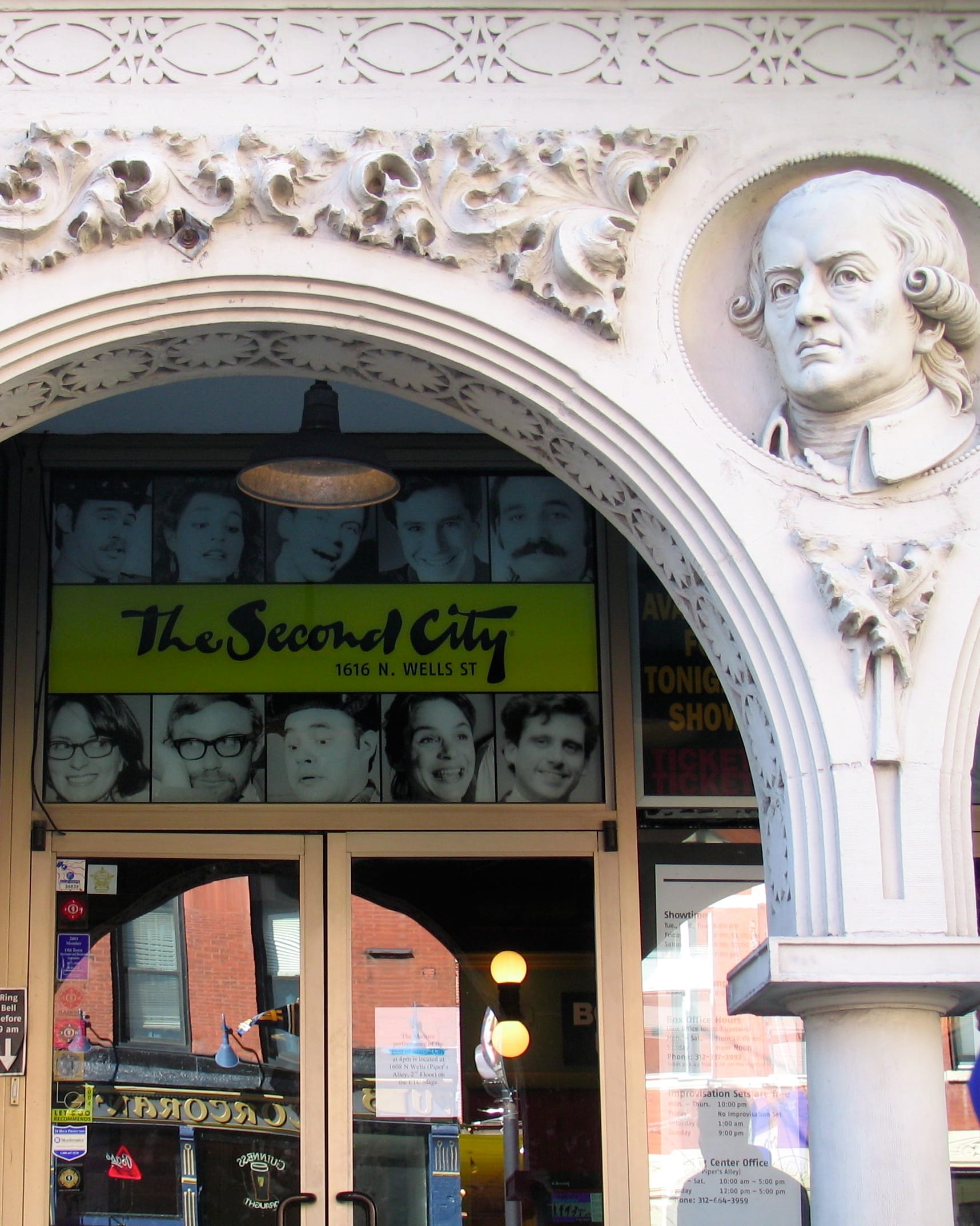
The building sits on the eastern edge of Old Town along North Avenue, a neighborhood that already rewards an early evening stroll. The exterior is unpretentious: no grand marquee or red-carpet approach. Step inside and the lobby has the comfortable, slightly worn-in feeling of a place that has been putting on shows every night for decades. There is a bar, staff who have clearly been asked about parking before, and a general hum of anticipation that builds noticeably in the fifteen minutes before curtain.
The main stage space seats around 300, with tiered seating that keeps the audience close to the performers. Tables are standard in the cabaret sections; check your ticket format before assuming you will have a table for drinks. The e.t.c. stage, a smaller alternative performance space in the same complex, hosts newer ensemble work and is worth investigating if you have a second night in the city.
Arrive at least 20 minutes before showtime. The bar gets crowded quickly before curtain, and latecomers may be held at the door until a natural break in the show.
Tickets & tours
Hand-picked options from our booking partner. Prices are indicative; availability and final rates are confirmed when you complete your booking.
Go City | Chicago All-Inclusive Pass
From 127 €Instant confirmationFree cancellationiFLY Chicago Lincoln Park indoor skydiving experience
From 126 €Instant confirmationFree cancellationiFLY Chicago Rosemont indoor skydiving tickets
From 117 €Instant confirmationFree cancellationChicago lakefront neighbourhood bike tour
From 18 €Instant confirmationFree cancellation
The Shows: Mainstage, e.t.c., and the Late-Night Option
The Second City runs shows seven nights a week across its stages. The mainstage revue is the flagship product: a scripted sketch show built through months of improvisation, refined into a full evening that typically runs around 90 minutes. These revues change periodically, which means if you saw one in a previous visit, there is likely something new. The writing tends to be topical and Chicago-specific in a way that rewards even passing familiarity with local politics and culture, but the craft keeps it accessible to visitors.
After the main show concludes, the performers typically return to the stage for a free improvisational set open to the audience already in the room. This post-show improv is where you occasionally see something truly unexpected. The safety net is fully gone, the cast is energized by the just-finished performance, and the results range from very funny to occasionally transcendent. Staying for it costs nothing and takes about 30 minutes.
ℹ️ Good to know
The free improv set after the mainstage show is not guaranteed at every performance. Confirm with the box office or check the show listing when booking.
The e.t.c. stage programs its own revues on a separate rotation, often featuring ensembles that will become the next mainstage cast. Seeing a show there feels a degree rawer and more experimental than the polished mainstage product. For comedy tourists with two evenings to spend, doing both stages in the same trip is a reasonable plan.
History and Cultural Weight
Before The Second City existed, Chicago already had the Compass Players, a short-lived improv group operating in Hyde Park in the mid-1950s. When that ensemble dissolved, several alumni regrouped to form The Second City, naming it after a condescending 1952 New Yorker essay by A.J. Liebling that characterized Chicago as a provincial second city to New York. The founders turned the slight into a brand.
The company developed a specific methodology: scenes are improvised in workshop, the best material is shaped and repeated, and eventually a revue is written from the strongest results. That process, rather than any single show or cast member, is The Second City's real contribution to American performance. It gave improvisational comedy a theatrical structure and a professional ladder, and it produced generations of performers who carried those techniques into Saturday Night Live, late-night television, and film.
The Old Town neighborhood where the theater lives has its own history as a counterculture hub in the 1960s and a center of Chicago's folk revival. That context matters less to a modern visitor than the proximity to dinner options along Wells Street, but it adds texture to the area for anyone interested in Chicago's neighborhood histories.
Getting There and Getting Around Afterward
The most practical transit option is the CTA Brown or Purple Line to Sedgwick, which puts you a 10-minute walk from the theater. The Brown Line runs frequently through the evening and connects back to the Loop and the Red Line. CTA buses on the 36 and 156 routes also serve the North Avenue corridor directly.
Rideshare pickup after a show can involve a wait: North Avenue is busy post-curtain on weekends, and surge pricing is common. Walking a block or two before requesting a car helps. If you are combining the visit with dinner, Wells Street in Old Town and the broader Lincoln Park and Old Town area has enough options to fill an evening on either side of the show.
⚠️ What to skip
Street parking near the theater on weekend evenings is very limited. If you are driving, budget extra time or use a paid garage rather than circling.
Photography, Atmosphere, and What Changes by Time of Day
Photography inside the performance spaces during shows is not permitted. The lobby and bar area before curtain are fair game, and the building's exterior at night has a warm, inviting glow that photographs cleanly from across the street.
The energy in the lobby shifts noticeably over the course of an evening. Before the show, the crowd tends toward first-timers and visitors comparing notes on how to find their seats. By intermission, the atmosphere is loose and high-energy. After the post-show improv, when the doors finally empty out, the small group that stayed for the full experience often lingers outside discussing what they just watched. It is a recognizably different mood from a concert or a museum visit.
For visitors building a longer evening in the area, the Old Town neighborhood connects naturally southward into Lincoln Park, where you can find the Lincoln Park Zoo and the lakefront. The comedy district of Chicago is not geographically defined the way it is in some cities, but Green Mill Cocktail Lounge in Uptown is the other major live performance institution worth knowing about if the city's performing arts history interests you.
Who Should Skip This
The Second City is sketch and improv comedy aimed at adults. The material is frequently political and socially observational, and it does not soften its edges. Young children will not follow the references and the late showtimes are impractical for family travel. Visitors who prefer tightly structured, passive entertainment rather than live theatrical spontaneity may find the format disorienting.
If you came to Chicago specifically for jazz history, blues bars, or orchestral performance, the theater sits in a different cultural lane. It is not interchangeable with a night at the Chicago Symphony or a set at Kingston Mines. Know which one you are actually after.
For a broader picture of Chicago's performance scene, the Chicago comedy guide covers the city's full landscape of improv theaters, stand-up rooms, and sketch groups beyond Second City alone.
Insider Tips
- The post-show improv set is free and included with your ticket — staying for it is one of the better deals in Chicago entertainment. Most tourists leave at intermission and miss it entirely.
- Weeknight shows on Tuesday through Thursday typically have lower attendance, which means the cast plays to a more intimate room and the energy can feel more experimental.
- If you are booking a large group, call the box office directly rather than booking online — they can advise on table seating arrangements and whether your group size fits the cabaret-style sections.
- The bar opens well before showtime. Arriving 30–40 minutes early lets you get a drink without rushing, find your seat without stress, and occasionally catch cast members in the lobby before curtain.
- Check the e.t.c. stage schedule in addition to the mainstage. Prices are often lower and the work is frequently just as sharp — it is where the next generation of the company is being developed in real time.
Who Is Second City For?
- Comedy fans and anyone who wants to understand where Saturday Night Live actually came from
- Date nights that want something more distinctive than dinner and a movie
- Groups of adults looking for a shared experience that generates conversation afterward
- Return visitors to Chicago who have already covered the major museums and lakefront attractions
- Travelers interested in American cultural history and live performance
Nearby Attractions
Other things to see while in Lincoln Park & Old Town:
- Alfred Caldwell Lily Pool
Tucked inside Lincoln Park, the Alfred Caldwell Lily Pool is a 3-acre National Historic Landmark redesigned in 1936–1938 in the Prairie School style. Admission is free, crowds are thin, and the experience is unlike anything else on Chicago's standard tourist circuit.
- Chicago History Museum
Founded in 1856 as the Chicago Historical Society, the Chicago History Museum is the city's oldest cultural institution. Located at the edge of Lincoln Park, it traces the full arc of Chicago's story, from its earliest Indigenous inhabitants to the Great Fire, the labor movement, and beyond. It rewards curious visitors who want more than skyline photos.
- Green City Market
Green City Market is Chicago's only year-round sustainable farmers' market, drawing top chefs, local farmers, and serious food lovers to Lincoln Park on Wednesdays and Saturdays during the outdoor season. Free to enter at both its outdoor Lincoln Park and indoor winter locations and rich with seasonal produce, artisan goods, and chef demos, it's one of the most authentic food experiences the city offers.
- Kingston Mines
Founded in 1968, Kingston Mines on North Halsted Street is the largest and oldest continuously operating blues club in Chicago. Two stages run simultaneously on weekends, keeping the music going until 4 a.m. This is where the city's blues tradition stays alive on a weekend night.