Lincoln Park Zoo: Chicago's Free Zoo Open Every Day of the Year
One of the oldest zoos in North America, Lincoln Park Zoo has offered free admission since its founding in 1868. Spread across roughly 49 acres on Chicago's North Side lakefront, it houses about 1,100 animals from roughly 200 species — and you don't need a ticket to walk through the gates.
Quick Facts
- Location
- 2400 N. Cannon Dr., Lincoln Park neighborhood, Chicago, IL 60614
- Getting There
- CTA Red Line to Fullerton or Brown/Purple Line to Armitage (~1 mile walk); buses 22, 36, 151, 156 stop within a few blocks of the zoo on Clark Street and along its western edge
- Time Needed
- 2–4 hours for a thorough visit; 90 minutes covers the highlights
- Cost
- Free admission, no tickets required. Parking: first 30 min free, then typically around $35/day (card only, cash not accepted)
- Best for
- Families with young children, budget travelers, and anyone wanting a relaxed morning in a park setting
- Official website
- www.lpzoo.org
What Lincoln Park Zoo Actually Is
Lincoln Park Zoo is a fully accredited, free-admission zoo set inside Lincoln Park, the long green corridor that runs along Chicago's North Side lakefront. Founded in 1868 — when a pair of swans arrived from New York's Central Park as a gift — it is one of the oldest zoos in North America and one of the last remaining free major urban zoos in the United States. There are no ticket booths at the entrance and no wristbands, and at present no timed reservations are required for general daytime admission. You walk in.
The zoo covers roughly 49 acres and holds close to 1,100 animals representing around 200 species. It became an accredited arboretum in 2019, meaning the grounds themselves — the tree canopy, the planted borders, the seasonal gardens — are managed as a living collection alongside the animals. On a clear spring morning, this layering of plants and wildlife gives the place a density of sensory detail that larger, more spread-out zoos sometimes lack.
ℹ️ Good to know
Gates open at 8 a.m. daily. Zoo buildings (including the primate house and large mammal house) open at 10 a.m. and close at 4:30 p.m. Gates close at 5 p.m. The zoo is open 365 days a year, including holidays. Hours may change seasonally or for special events — check lpzoo.org before visiting.
How the Visit Feels at Different Times of Day
The two hours between 8 and 10 a.m. are the most underrated window at Lincoln Park Zoo. The gates are open, the grounds are accessible, and the zoo is quiet enough that you can hear the red-tailed hawks that nest in the nearby tree canopy. Animals are often more active in the cooler morning air, particularly the great apes in the Regenstein Center for African Apes — gorillas and chimpanzees are visibly alert before the heat of midday settles in. The catch: the indoor buildings don't open until 10, so plan to walk the outdoor exhibits first and loop back.
Weekday midmornings between 10 a.m. and noon draw the heaviest stroller traffic — preschool groups and day camp cohorts tend to arrive in this window. Weekends, especially in summer, can feel crowded at the African Journey and Primate House exhibits by 11 a.m. If you arrive at 8 or after 3 p.m. on a weekday, you'll find the zoo noticeably less congested.
Late afternoon carries its own texture. The light through the tree canopy turns golden after 3:30 p.m. in summer, and the Farm-in-the-Zoo (which closes at 4:30 p.m.) tends to clear out quickly. The area around the South Pond, where herons and waterfowl gather, is worth lingering near in the last hour of the day.
Tickets & tours
Hand-picked options from our booking partner. Prices are indicative; availability and final rates are confirmed when you complete your booking.
iFLY Chicago Lincoln Park indoor skydiving experience
From 126 €Instant confirmationFree cancellationGo City | Chicago All-Inclusive Pass
From 127 €Instant confirmationFree cancellationiFLY Chicago Rosemont indoor skydiving tickets
From 117 €Instant confirmationFree cancellationChicago lakefront neighbourhood bike tour
From 18 €Instant confirmationFree cancellation
The Key Exhibits Worth Prioritizing
The Regenstein Center for African Apes is the architectural centerpiece of the zoo, and arguably one of the most thoughtfully designed great ape facilities in the United States. Western lowland gorillas and chimpanzees occupy separate indoor/outdoor habitats with climbing structures that put animals at or above eye level with visitors. The indoor viewing areas have a greenhouse warmth to them year-round, and the viewing glass is positioned close enough that the size difference between an adult gorilla and a human child becomes viscerally apparent.
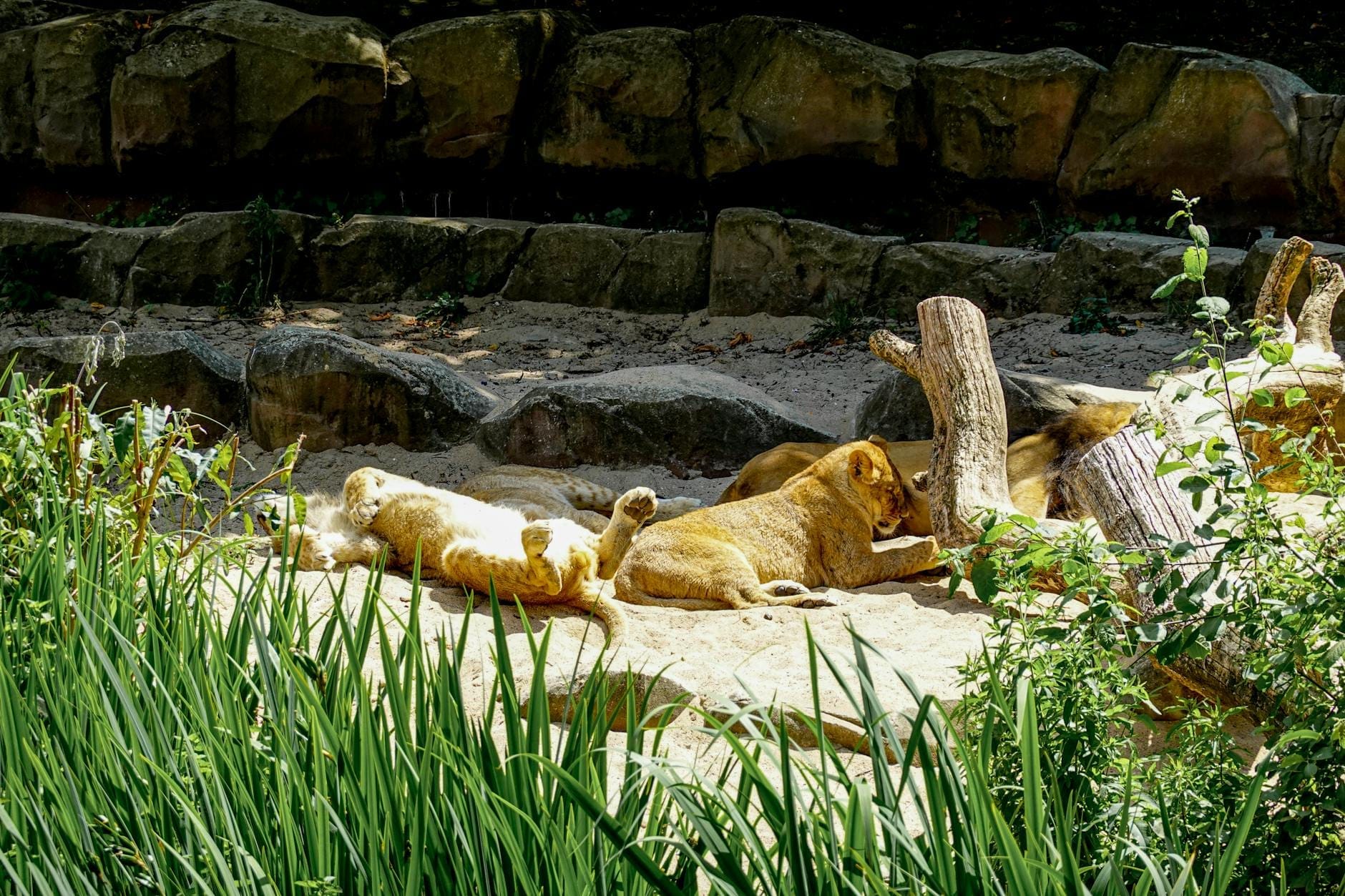
The Kovler Lion House is one of the older buildings on the grounds — its 1912 Beaux-Arts facade is worth pausing at before you go in. Inside, African lions occupy updated habitats. The building retains its original vaulted ceiling, which creates a strange, cathedral-like acoustics whenever a lion vocalizes.
Polar Bear Passage puts visitors into an underwater viewing tunnel beneath the Arctic habitat, where polar bears swim overhead. It draws crowds for good reason. The Farm-in-the-Zoo, located at the southern end of the grounds, is designed for younger children: goats, cows, horses, and chickens in a working-farm setting that feels genuinely different from the wildlife exhibits. It's free, like everything else, and tends to hold kids' attention longer than the larger animal exhibits do.
💡 Local tip
The Regenstein Small Mammal-Reptile House is easy to overlook — it sits slightly off the main path near the north end. Inside, it's dark, slow-paced, and quietly fascinating: naked mole rats, leaf-cutter ants, and a range of reptiles in glass terrariums. It's a good place to duck into on a hot afternoon or a cold day.
Getting There Without a Car
The zoo sits in a genuinely accessible location by Chicago standards. The CTA Red Line stops at Fullerton, roughly a mile west of the zoo's main entrance — walkable in 15–20 minutes through a pleasant residential stretch of Lincoln Park. The Brown and Purple Lines stop at Armitage, a similar walk from the southern end of the grounds. CTA buses 151 and 156 run along Stockton Drive near the western edge of the zoo and get you closer without the walk.
If you're combining the zoo with other North Side stops, it fits naturally into a day that includes Lincoln Park's trails and South Pond or the Lincoln Park Conservatory, which is free and located steps from the zoo's north gate. Divvy bike-share stations are available near multiple zoo entrances for those cycling along the lakefront.
If you're driving, note that parking runs $35–45 per day with the first 30 minutes free. The lot entrance is at Fullerton Parkway and Cannon Drive. Cash is not accepted. For a one- or two-hour visit, the parking cost can feel disproportionate — public transit or ride-share drop-off at the West Gate (Stockton Dr. and Webster Ave.) is the practical alternative.
Seasonal Considerations and Weather
Chicago's climate swings hard between seasons, and Lincoln Park Zoo operates through all of them. Summer (June through August) is peak season: the outdoor exhibits are fully active, the Farm-in-the-Zoo programs run at full capacity, and evening events are scheduled periodically. July highs average around 83°F (28°C), and the zoo has limited shade in some sections — a hat and water bottle matter more than they might seem.
Winter visits are genuinely viable and often undersold. Many indoor exhibits maintain warm temperatures, and cold-weather animals like polar bears tend to be more active in low temperatures. For a broader sense of how Chicago's seasons affect sightseeing decisions, the best time to visit Chicago guide covers the trade-offs in detail. The zoo's signature winter event, ZooLights, typically runs from late November through early January — a free evening light installation that draws large crowds on weekends but is manageable on weekday evenings.
Spring (late April through May) is arguably the most rewarding season for an unhurried visit. The arboretum plantings are in bloom, crowds haven't hit their summer peak, and temperatures are mild enough to walk the entire grounds comfortably. Fall (September through October) offers similar conditions with lower foot traffic than summer.
⚠️ What to skip
On rainy days, the paved paths can handle foot traffic well, but some of the outdoor habitats become less visible as animals retreat to sheltered areas. The indoor facilities — the ape center, lion house, reptile house, and aquatic exhibits — remain fully operational in any weather and are worth having as a backup plan.
Practical Details and Accessibility
The Searle Visitor Center, near the East Gate entrance, is the best first stop for maps and orientation. Staff and volunteers in green polo shirts circulate throughout the grounds and are responsive to questions. For general information or accessibility needs, the zoo's main line is 312-742-2000.
The zoo's paved paths are stroller and wheelchair accessible throughout. The nearby CTA station at Fullerton (Red Line, Brown, and Purple Lines) is ADA accessible; Armitage (Brown/Purple Line) currently is not. Restrooms are located at multiple points across the grounds, including near the Farm-in-the-Zoo and the Regenstein Macaque Forest.
Photography is unrestricted for personal use, and the Regenstein Ape Center offers some of the best close-range animal photography opportunities in the city — no telephoto lens required. For those building a fuller day around the neighborhood, the Lincoln Park and Old Town neighborhood has strong options for lunch and coffee within a short walk of the zoo gates, particularly along Clark Street and Armitage Avenue.
Who Should Reconsider
Lincoln Park Zoo is compact by the standards of major American zoos — 35 acres is not much space compared to institutions like Brookfield Zoo, which covers over 200 acres. Visitors expecting the scale of a full-day destination zoo with large open savannahs, extensive African wildlife, or immersive themed environments may find it underwhelming. The collection is substantial, but the layouts are dense rather than expansive.
For those specifically looking for a larger-scale zoo experience, Brookfield Zoo is about 14 miles west of downtown and offers a very different scale of visit, with paid admission. Lincoln Park Zoo is best appreciated for what it is: a well-maintained, freely accessible urban zoo that works as a 2–3 hour experience rather than an all-day commitment.
Insider Tips
- Arrive at 8 a.m. on a weekday to walk the outdoor grounds before the buildings open at 10. The zoo is at its quietest and the animals — particularly the primates and big cats — are most active in the cooler morning air.
- The Kovler Lion House gets very warm inside in summer, even with ventilation. Visit it early in the day or on cooler afternoons to avoid the stuffiest conditions.
- ZooLights (late November to early January) is free but draws heavy weekend crowds. Tuesday through Thursday evenings offer the same light installations with significantly shorter lines and better photo opportunities.
- The south end of the grounds, near the Farm-in-the-Zoo and the South Pond, is less trafficked than the central exhibits. It's worth looping down there even if the farm itself doesn't interest you — the waterbird activity around the pond is reliably good.
- The zoo's mobile-friendly website (go.lpzoo.org) includes an interactive map and daily animal care talk schedules. The keeper talks run at specific times and locations throughout the day and give context that the exhibit signage alone doesn't provide.
Who Is Lincoln Park Zoo For?
- Families with children under 12 — the Farm-in-the-Zoo and Polar Bear Passage are particularly well-suited to young visitors
- Budget travelers and first-time Chicago visitors who want a worthwhile half-day activity at no cost
- Early risers who want to experience a park-like setting before the city fully wakes up
- Photographers looking for close-range wildlife shots without paying zoo admission
- Visitors combining a North Side day with the lakefront trail, Lincoln Park Conservatory, or nearby dining on Clark Street
Nearby Attractions
Other things to see while in Lincoln Park & Old Town:
- Alfred Caldwell Lily Pool
Tucked inside Lincoln Park, the Alfred Caldwell Lily Pool is a 3-acre National Historic Landmark redesigned in 1936–1938 in the Prairie School style. Admission is free, crowds are thin, and the experience is unlike anything else on Chicago's standard tourist circuit.
- Chicago History Museum
Founded in 1856 as the Chicago Historical Society, the Chicago History Museum is the city's oldest cultural institution. Located at the edge of Lincoln Park, it traces the full arc of Chicago's story, from its earliest Indigenous inhabitants to the Great Fire, the labor movement, and beyond. It rewards curious visitors who want more than skyline photos.
- Green City Market
Green City Market is Chicago's only year-round sustainable farmers' market, drawing top chefs, local farmers, and serious food lovers to Lincoln Park on Wednesdays and Saturdays during the outdoor season. Free to enter at both its outdoor Lincoln Park and indoor winter locations and rich with seasonal produce, artisan goods, and chef demos, it's one of the most authentic food experiences the city offers.
- Kingston Mines
Founded in 1968, Kingston Mines on North Halsted Street is the largest and oldest continuously operating blues club in Chicago. Two stages run simultaneously on weekends, keeping the music going until 4 a.m. This is where the city's blues tradition stays alive on a weekend night.