Lincoln Park, Chicago: Everything You Need to Know Before You Visit
Stretching seven miles along Lake Michigan, Lincoln Park is Chicago's largest public park and one of the most generously stocked urban green spaces in the United States. Entry is free, the zoo is free, and the range of things to do here can absorb a full day without spending a dollar.
Quick Facts
- Location
- North Side lakefront, from roughly Ohio Street Beach north to Kathy Osterman Beach; central reference point: Lincoln Park Zoo, 2001 N. Clark St., Chicago, IL 60614
- Getting There
- CTA Red Line to Fullerton or Belmont; multiple CTA bus routes along Clark St. and Stockton Dr.; the park also connects directly to the Lakefront Trail
- Time Needed
- 2–6 hours depending on which attractions you visit; a full loop of major highlights takes most of a day
- Cost
- Free entry to the park and Lincoln Park Zoo; Lincoln Park Conservatory is free; some special zoo events are ticketed
- Best for
- Families, joggers, cyclists, nature lovers, budget travelers, and anyone who wants significant green space without leaving the city
- Official website
- www.chicagoparkdistrict.com/parks-facilities/lincoln-park
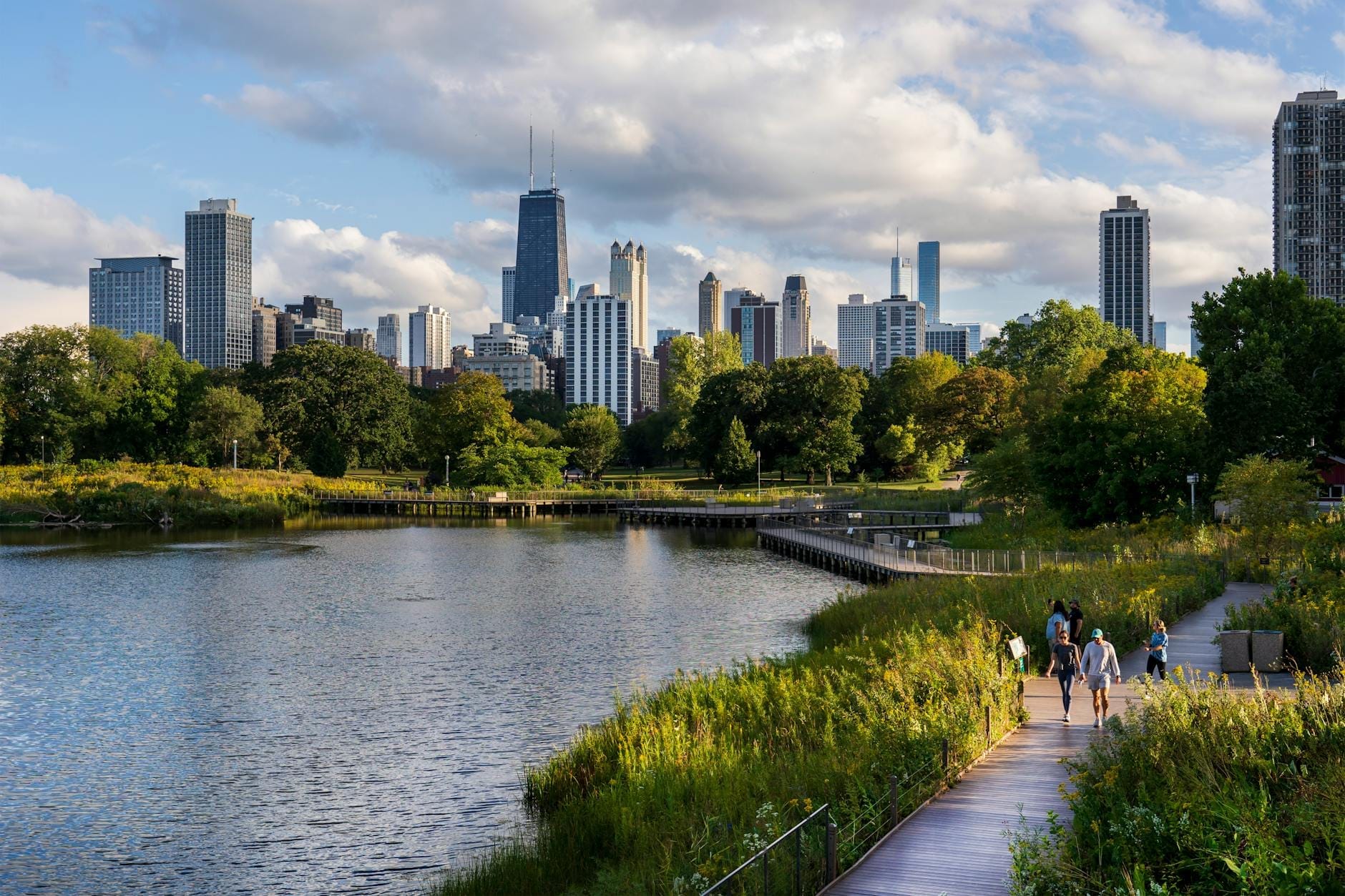
What Lincoln Park Actually Is
Lincoln Park is Chicago's largest park, covering roughly 1,200 acres along the western shore of Lake Michigan on the city's North Side. It runs approximately seven miles from Ohio Street north to Ardmore Avenue, sitting between the lake and a dense residential neighborhood that shares its name. The park is managed by the Chicago Park District and its outdoor areas are generally open daily from 6:00 a.m. to 11:00 p.m., though specific facilities and sections may have different hours.
Calling it just a park undersells what's here. Within its borders you'll find a nationally recognized free zoo, a Victorian-era conservatory, multiple swimming beaches, formal gardens, harbors, six designated nature areas, more than a dozen public monuments, and miles of paved multi-use trails. It functions as the city's backyard for millions of residents and, for visitors, as a genuine alternative to the museum-heavy itinerary of downtown Chicago.
ℹ️ Good to know
Both general admission to Lincoln Park Zoo and entry to the Lincoln Park Conservatory are free. No ticket reservation is required to walk into either. Special ticketed events (such as Zoo Lights in winter) are separate.
A Brief History: From Cemetery to City Park
The land that is now Lincoln Park had a peculiar beginning. Before it was a park, it was Chicago's primary municipal cemetery. In the mid-19th century, thousands of city residents were buried in what was then called Lake Park. As the city grew northward and concerns about sanitation near the shoreline increased, the cemetery was gradually cleared, with most remains relocated to other sites. Some graves were never fully removed, a fact that occasionally surfaces during construction or heavy erosion along the shoreline.
The area was renamed Lincoln Park in 1865, shortly after President Abraham Lincoln's assassination, as a tribute to the recently fallen president. A standing bronze statue of Lincoln by sculptor Augustus Saint-Gaudens, installed in 1887 near the south end of the park, remains one of the most respected presidential monuments in the country. The park grew through the late 19th and early 20th centuries as the city reclaimed land from the lake, which is why the park's footprint is notably wider at its southern end than in its northern stretches.
The Lincoln Park Conservatory, completed in 1895, is one of the oldest surviving structures in the park. Its Victorian glasshouse design houses palms, ferns, tropical plants, and orchids across four large glass houses. It is free to enter and worth at least 20 minutes of your time, particularly on cold or rainy days when the warm humidity inside provides an unexpected contrast to Chicago's weather. For more context on how architecture shaped Chicago's public spaces, the Chicago architecture guide covers the city's built environment in depth.
Tickets & tours
Hand-picked options from our booking partner. Prices are indicative; availability and final rates are confirmed when you complete your booking.
iFLY Chicago Lincoln Park indoor skydiving experience
From 126 €Instant confirmationFree cancellationGo City | Chicago All-Inclusive Pass
From 127 €Instant confirmationFree cancellationiFLY Chicago Rosemont indoor skydiving tickets
From 117 €Instant confirmationFree cancellationChicago lakefront neighbourhood bike tour
From 18 €Instant confirmationFree cancellation
Lincoln Park Zoo: Free, Large, and Worth Your Time
The Lincoln Park Zoo is the centerpiece of the park for most first-time visitors, and the fact that it charges no admission makes it one of the better value propositions in Chicago. The zoo covers about 35 acres within the park and houses around 200 animal species. It is one of the oldest zoos in the United States, founded in 1868, and continues to operate significant conservation programs alongside its public exhibitions.
The zoo is most pleasant on weekday mornings, when the crowds are light and animals tend to be more active before midday heat or visitor noise settles in. On summer weekends, particularly Saturday afternoons, the main path through the zoo fills considerably and the experience becomes more about navigating strollers than observing wildlife. If you have children under ten, the Farm-in-the-Zoo section in the southern portion of the grounds tends to hold attention well. The Regenstein African Journey and the Kovler Gorilla House are the exhibits that tend to draw the longest pauses from adult visitors.
💡 Local tip
Arrive at the zoo before 10:00 a.m. on any day from May through September. The difference in crowd density between 9:30 a.m. and 11:30 a.m. is significant. Many animals are also noticeably more active in the cooler morning hours.
The Lakefront, Beaches, and Trails
Lincoln Park's eastern edge is Lake Michigan, and several designated swimming beaches sit within the park's boundaries. North Avenue Beach, at the park's southern end, is the most developed of these, with lifeguards during summer months, a boat-shaped bathhouse, and consistent crowds on hot days. It has a more social character than beaches further north, with volleyball nets, kayak and paddleboard rentals, and a restaurant in the bathhouse building.
The Lakefront Trail runs the full length of the park along the water and connects Lincoln Park to destinations both north and south. The paved trail is used by cyclists, runners, inline skaters, and walkers, and is one of the genuinely excellent pieces of urban infrastructure in Chicago. On clear summer evenings, the light over the lake from this trail is exceptional. In winter, the same path becomes nearly empty, and the lake takes on a different character entirely, with ice formations along the shore when temperatures drop far enough.
The park's trails are paved and generally wide, making them accessible for wheelchairs and strollers. During peak summer weekends, the trail's busier sections near North Avenue Beach can feel congested, with cyclists and pedestrians occasionally in conflict. There is a dedicated bike lane on most of the Lakefront Trail's length, but enforcement of lane separation is informal.
How Lincoln Park Reads at Different Times of Day
Early mornings, roughly 6:30 to 8:30 a.m., belong to regulars. Dog walkers move through the open meadows, serious runners hold their pace along the lakefront, and the smell of cut grass from overnight maintenance mixes with the slightly metallic air coming off the lake. The park feels genuinely large at this hour in a way it doesn't later in the day.
By mid-morning on weekdays, families with young children arrive, drawn by the zoo. The area around the south zoo entrance on Cannon Drive gets noticeably busy. From around 11:00 a.m. to 2:00 p.m. in summer, the park reaches its peak density, with zoo visitors, beach crowds, and cyclists all sharing the same corridor of land between Fullerton and North Avenue. This is the least pleasant time to visit if quiet or nature observation is your goal.
Late afternoons, especially on weekdays, have a more relaxed quality. The zoo crowds thin after 3:00 p.m. as families head home. The light on the lake in the hour before sunset, particularly from the southern end of the park looking northeast, is the kind of view that makes people understand why Chicagoans are so attached to this shoreline. In autumn, the park's tree canopy turns in earnest through October, and the combination of color and lake backdrop rewards a slower walk through the interior paths rather than staying on the main lakefront trail.
⚠️ What to skip
Winter visits require serious preparation. Temperatures in Lincoln Park regularly drop below freezing from December through February, and wind off Lake Michigan dramatically intensifies the chill. The trails remain open but ice patches form on paved surfaces. The conservatory and zoo remain open in winter and can serve as warm-up stops during a cold-weather visit.
Formal Gardens, Monuments, and What Gets Overlooked
Most visitors concentrate on the zoo and the lakefront and miss several quieter features of the park. The formal gardens near the conservatory, including the French-style parterre garden adjacent to the main glasshouse, are well maintained and largely uncrowded even on busy days. In spring, the tulip displays here are dense and carefully arranged.
The Augustus Saint-Gaudens statue of Lincoln near the park's southern end, formally titled Standing Lincoln, deserves more attention than it typically receives from passing visitors. Cast in bronze and set on a long granite exedra, it was unveiled in 1887 and is considered one of the finest portrait statues in the United States. The Alfred Caldwell Lily Pool is another undervisited feature, tucked away north of the zoo near Fullerton Parkway. Designed by landscape architect Alfred Caldwell in a Prairie-style idiom with native plantings, stone council rings, and a small waterfall, it is a registered Chicago Landmark and on the National Register of Historic Places. Most visitors to Lincoln Park have never heard of it.
The Peggy Notebaert Nature Museum sits at the park's western edge near Fullerton and Cannon Drive. It focuses on local ecology, with a butterfly haven that houses live specimens in a warm greenhouse environment. It charges admission and is best suited for visitors with children or a specific interest in Great Lakes natural history.
Getting There and Getting Around
The CTA Red Line stops at Fullerton and Belmont, both of which put you within a short walk of the zoo's main entrance on Cannon Drive. Several CTA bus routes, including the 22 (Clark) and 151 (Sheridan), run along the park's western and eastern edges respectively. If you're combining Lincoln Park with a broader North Side day, the guide to getting around Chicago covers CTA route planning and transit passes in detail.
Driving to the park is possible but parking is limited and expensive during peak hours. The street parking along Cannon Drive fills quickly on summer weekends. The Chicago Park District operates some pay lots within or adjacent to the park, but transit or cycling is a more practical choice for most visitors coming from downtown.
The park begins roughly one mile north of downtown Chicago, and the Lakefront Trail connects it directly to Grant Park and the Museum Campus to the south, making a self-propelled north-south trip along the water entirely feasible. Divvy bike-share docks are located at multiple points around the park perimeter and inside near the zoo.
Who Might Not Enjoy Lincoln Park
Lincoln Park is an outdoor park. Visitors looking for climate-controlled cultural experiences, focused museum time, or a compact checklist of highlights will find it less satisfying than a destination like the Art Institute of Chicago or the Field Museum. It is also a large park, meaning that unless you plan your route, you may walk a significant distance and feel like you haven't seen the best parts.
On very hot days in July and August, the park's exposed lakefront sections offer little shade, and the combination of humidity and direct sun can make midday walks uncomfortable. Anyone with significant mobility limitations should check the specific accessibility details for each internal attraction before visiting, as while the main paths are paved, the park covers substantial ground.
Insider Tips
- The Alfred Caldwell Lily Pool, just north of the zoo near Fullerton Parkway, is one of the most peaceful spots in the park and almost always uncrowded. It is a registered Chicago Landmark and costs nothing to visit.
- If you're visiting the zoo on a summer weekend, enter from the Fullerton Parkway gate on the north side rather than the main south entrance on Cannon Drive. The crowd dynamics are significantly better and you'll start near the primate and big cat exhibits.
- The Lincoln Park Conservatory is worth entering on any visit, but especially in winter or on rainy days. The palm house is warm and humid and feels completely disconnected from the weather outside. It's free and almost always quiet.
- For the best light photography of the lake, position yourself on the Lakefront Trail just south of North Avenue Beach in the late afternoon. The Chicago skyline to the south frames well against the water in the hour before sunset.
- The park's interior meadows between the zoo and the conservatory are nearly always less crowded than the lakefront. On summer evenings, these areas fill with picnickers and informal recreation and give a much clearer sense of how Chicago residents actually use the park.
Who Is Lincoln Park For?
- Families with young children who want a full day of free activities between the zoo, conservatory, and beach
- Runners and cyclists using the Lakefront Trail as part of a longer lakefront route
- Budget travelers looking for a full day of meaningful experiences without spending money on admission
- Visitors interested in landscape history, public art, and 19th-century urban park design
- Anyone who wants a genuine break from the density of downtown Chicago without leaving the city
Nearby Attractions
Other things to see while in Lincoln Park & Old Town:
- Alfred Caldwell Lily Pool
Tucked inside Lincoln Park, the Alfred Caldwell Lily Pool is a 3-acre National Historic Landmark redesigned in 1936–1938 in the Prairie School style. Admission is free, crowds are thin, and the experience is unlike anything else on Chicago's standard tourist circuit.
- Chicago History Museum
Founded in 1856 as the Chicago Historical Society, the Chicago History Museum is the city's oldest cultural institution. Located at the edge of Lincoln Park, it traces the full arc of Chicago's story, from its earliest Indigenous inhabitants to the Great Fire, the labor movement, and beyond. It rewards curious visitors who want more than skyline photos.
- Green City Market
Green City Market is Chicago's only year-round sustainable farmers' market, drawing top chefs, local farmers, and serious food lovers to Lincoln Park on Wednesdays and Saturdays during the outdoor season. Free to enter at both its outdoor Lincoln Park and indoor winter locations and rich with seasonal produce, artisan goods, and chef demos, it's one of the most authentic food experiences the city offers.
- Kingston Mines
Founded in 1968, Kingston Mines on North Halsted Street is the largest and oldest continuously operating blues club in Chicago. Two stages run simultaneously on weekends, keeping the music going until 4 a.m. This is where the city's blues tradition stays alive on a weekend night.