Kingston Mines: Chicago's Living Blues Institution
Founded in 1968, Kingston Mines on North Halsted Street is the largest and oldest continuously operating blues club in Chicago. Two stages run simultaneously on weekends, keeping the music going until 4 a.m. This is where the city's blues tradition stays alive on a weekend night.
Quick Facts
- Location
- 2548 N Halsted Street, Lincoln Park, Chicago, IL 60614
- Getting There
- CTA Red Line to Fullerton or Armitage; multiple CTA bus routes serve Halsted St
- Time Needed
- 2–4 hours; late arrivals can stay until last call at 4 a.m. on Fridays and Saturdays
- Cost
- Cover charge applies; discounts available for students and seniors. No drink minimum. Verify current rates with the venue.
- Best for
- Blues fans, late-night seekers, music lovers who want two bands for the price of one
- Official website
- kingstonmines.com
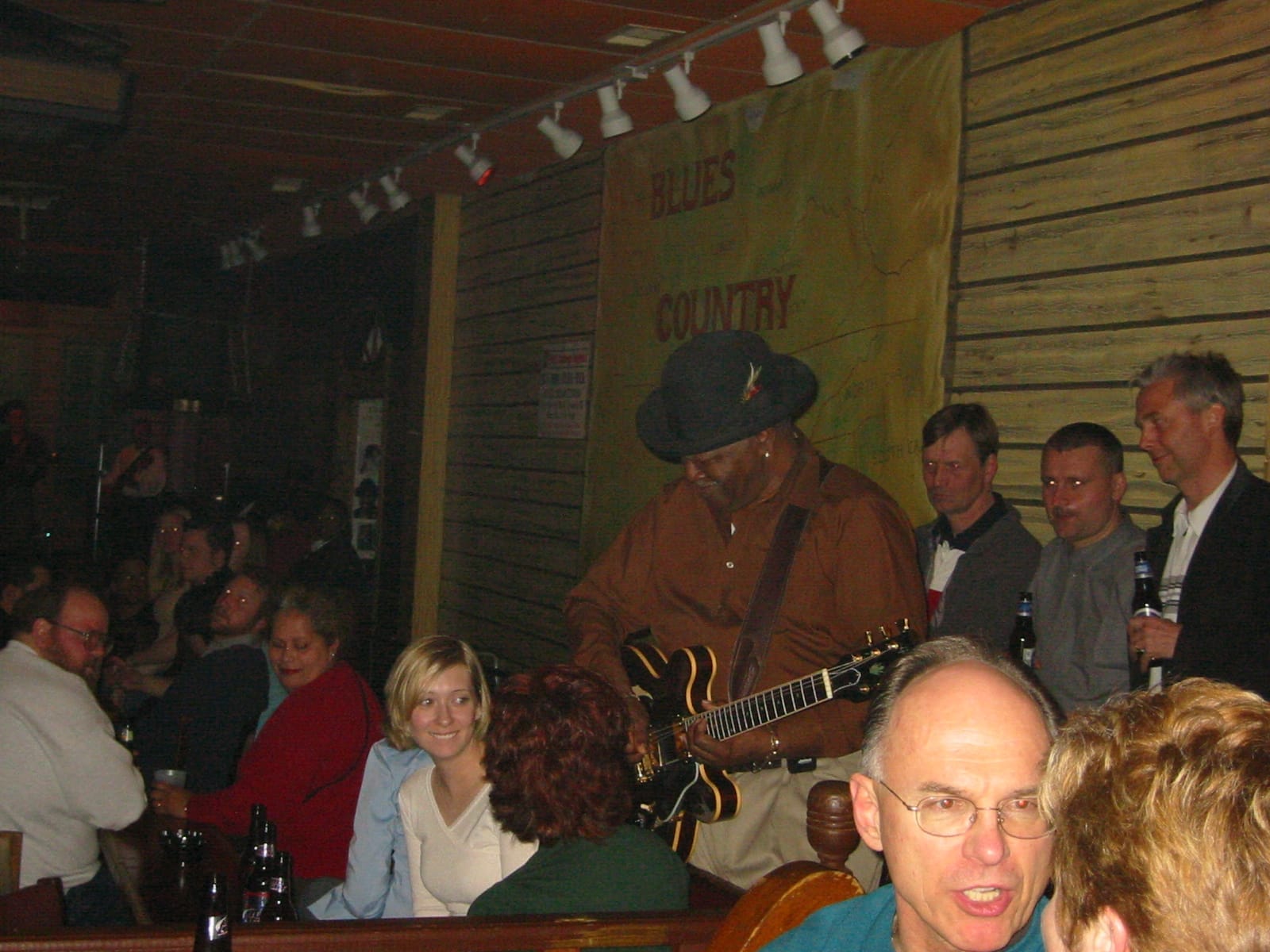
What Kingston Mines Actually Is
Kingston Mines is not a polished supper club or a themed attraction. It is a working blues bar that has been booking live acts on North Halsted Street since 1968, making it the longest continuously operating blues club in Chicago. The room is dark, the floors are worn, the speakers are turned up, and the musicians are the real thing. On a weekend night, two bands play on two separate stages in the same building, alternating sets so the music never stops between roughly 7:30 p.m. and 4 a.m.
The roster over the decades has included Magic Slim, Koko Taylor, Junior Wells, Sugar Blue, Billy Branch, and Joanna Connor. These are not tribute acts or cover bands. Kingston Mines has always booked working blues artists, and the current lineup continues that tradition. If you come on a Thursday or Sunday, you will get a more relaxed crowd and slightly earlier hours. Friday and Saturday are the full experience: two stages firing simultaneously, a packed room, and music running until the early morning.
💡 Local tip
Arrive before 10 p.m. on weekends to get a seat near the main stage without fighting the crowd. After 11 p.m., the room fills and standing becomes the norm.
The Two-Stage Setup: How It Works
The dual-stage format is the defining feature of Kingston Mines and what separates it from nearly every other blues venue in the city. The Main Stage and the North Stage are both inside the same building, with a bar area between them. Bands alternate on staggered schedules so that when one act finishes a set, the other is already 30 minutes into theirs. You can move between the two rooms freely throughout the night.
On a typical Friday or Saturday, the North Stage starts its first set at 9:30 p.m. while the Main Stage fires up at 10:30 p.m. The pattern continues through the night in staggered rotations, with each stage taking its next set while the other rests. The last sets of the night push well past 2 a.m. This structure rewards the patient visitor. Some of the best playing happens after midnight, when the crowd has thinned slightly and the musicians have warmed up fully.
Thursday evenings add a third element: an acoustic set runs from 6:00 to 7:30 p.m. before the amplified stages kick in. This quieter opening hour gives the space a different character, closer to a listening room than a bar. On Sundays, an acoustic set starts at 5:30 p.m., making it the earliest entry point of the week and a good option for travelers who want live blues without a late night.
Tickets & tours
Hand-picked options from our booking partner. Prices are indicative; availability and final rates are confirmed when you complete your booking.
Go City | Chicago All-Inclusive Pass
From 127 €Instant confirmationFree cancellationiFLY Chicago Lincoln Park indoor skydiving experience
From 126 €Instant confirmationFree cancellationiFLY Chicago Rosemont indoor skydiving tickets
From 117 €Instant confirmationFree cancellationChicago lakefront neighbourhood bike tour
From 18 €Instant confirmationFree cancellation
The Atmosphere: What the Room Feels Like
The interior of Kingston Mines is not meant to be photographed for a lifestyle magazine. The ceilings are low, the lighting leans toward neon and stage wash, and the smell is a familiar mixture of spilled beer, worn wood, and the particular warmth that comes from a small room with a lot of people in it. Tables are close together. Conversations happen at volume. The amplification is loud enough that you feel the kick drum in your chest when standing near the stage.
Early in the evening, particularly on Thursdays and Sundays, the room is more subdued. Regulars take their usual seats at the bar, the acoustic performer works through a set without a PA stack behind them, and the place feels more like a neighborhood joint than a destination. As the night advances and the full band sets begin, the character shifts. The crowd becomes younger, louder, and more mixed, drawing both locals who know the club well and tourists who have done their research.
Weekends after 11 p.m. are genuinely crowded. Standing room near the main stage can mean pressing up against strangers. If that is not your preference, the North Stage side tends to offer slightly more breathing room earlier in the night. Both stages have their own bar service, so you do not need to fight your way across the club for a drink.
Historical Context: Why 1968 Matters
Kingston Mines opened in 1968, at a moment when Chicago blues was experiencing a cultural reassessment. The music had moved north from the Mississippi Delta through the Great Migration, taken root in neighborhoods like Bronzeville and Maxwell Street, and become electrified and amplified in the postwar decades by artists like Muddy Waters and Howlin Wolf. By the late 1960s, British rock musicians were name-checking Chicago blues as a primary influence, and a new wave of listeners, many of them college students, were discovering the form.
Kingston Mines emerged from that moment and has outlasted nearly every venue of its era. What keeps it running is not nostalgia but a continued commitment to booking actual blues musicians rather than coasting on its reputation. For context on how Chicago's blues scene developed and which other venues still carry the tradition, the Chicago blues and jazz guide covers the landscape in detail.
The Lincoln Park location reflects a demographic shift that happened in Chicago over the 1970s and 1980s, as the neighborhood gentrified and the club's audience broadened. Kingston Mines adapted without abandoning its core programming. The musicians who play here continue to represent working professionals in a living genre, not archivists performing a historical artifact.
Getting There and Planning Your Visit
Kingston Mines sits at 2548 North Halsted Street in the Lincoln Park neighborhood, one of Chicago's more walkable North Side corridors. The CTA Red Line stops at Fullerton and Armitage, both within walking distance of the club. Multiple CTA bus routes also serve Halsted Street directly. For visitors using ride-hailing apps, drop-off on Halsted is straightforward. Getting around Chicago by transit is easier than most first-time visitors expect, and the North Side is well-served late into the night on weekends.
Hours vary by day. Thursday runs from 6:00 p.m. to 2:00 a.m. Friday and Saturday run from 7:00 p.m. to 4:00 a.m. Sunday runs from 5:30 p.m. to 1:00 a.m. The club is closed Monday through Wednesday. All schedules are subject to change, so confirm directly with the venue before visiting, particularly around holidays.
Cover charges apply, though the exact amount is not fixed publicly on the venue's website. Discounts are available for students and seniors, and other discounted or free entry options may be offered on some nights. There is no drink minimum, which is worth noting because it removes the pressure to keep ordering. You pay to get in, find a spot, and stay as long as the music is playing. Phone ahead or check the official website at kingstonmines.com for current pricing before you go.
ℹ️ Good to know
Accessibility details are not published on the venue's official website. If you have specific mobility or access requirements, call the club directly at +1 773-477-4646 to ask about entry steps, restroom access, and seating options before making the trip.
Photography, Etiquette, and What to Wear
Kingston Mines is not a formal venue and there is no dress code. Jeans, boots, and a layer for the air conditioning are practical. On warm summer nights, the room gets hot despite climate control, so lighter clothing is advisable. The crowd skews casual across all age ranges.
Phone photography during sets is common and generally tolerated. Flash photography aimed directly at performers is not appreciated. If you want to shoot the musicians, use available stage light and shoot from your table rather than pressing up to the stage. The close quarters mean that a camera raised above the crowd blocks sightlines for the people behind you, so keep it brief.
If you are visiting Chicago in summer, Kingston Mines pairs naturally with a weekend day on the lakefront or at one of the city's outdoor festivals before heading north for a late-night show. The Chicago summer guide covers how to structure those kinds of full-day and evening combinations.
Honest Assessment: Is It Worth It?
Kingston Mines earns its reputation without exaggeration. The two-stage format is genuinely rare, the music is consistently of a high standard, and the cover charge buys you access to multiple sets by multiple bands on the same night. For anyone with a real interest in Chicago blues, it is the most reliable venue in the city for experiencing the music in an unvarnished setting.
That said, it is not for everyone. Visitors who are sensitive to loud sound levels, uncomfortable with crowded rooms, or not willing to be out past midnight on a Friday will not have a good time after 10:30 p.m. The room prioritizes the music and the atmosphere over comfort. There are no reserved tables for general admission, the acoustics are bar-room rather than concert-hall, and the drinks are priced accordingly. If you want a quieter introduction to Chicago's music culture, the Green Mill Cocktail Lounge offers a very different but equally historic experience.
For travelers building a broader itinerary around Chicago's cultural attractions, Kingston Mines fits naturally into a Lincoln Park evening that might include dinner in the neighborhood or a walk through Lincoln Park and Old Town before the late sets begin.
Insider Tips
- Thursday nights offer the best combination of access and atmosphere. The crowd is smaller, you can actually get a seat near the stage, and the acoustic opening set from 6:00 to 7:30 p.m. is a genuinely different experience from the amplified sets that follow.
- If you arrive on a Friday or Saturday after 10 p.m. and the Main Stage side is packed, go directly to the North Stage. The sound quality is comparable, the crowd is slightly thinner, and you will still catch full sets on a staggered schedule.
- The no-drink-minimum policy means you can nurse one beer for an hour without pressure from staff. Take advantage of it, especially if you plan to stay for multiple sets.
- Sunday's 5:30 p.m. acoustic set is the only slot in the week where Kingston Mines functions almost like a listening room. Arrive early, get a table, and you will have a very different experience from the weekend late-night crowd.
- Students should ask about current discount or free entry policies when calling ahead. The club has historically offered reduced or no-cost entry for college students on certain nights, but verify this directly rather than assuming it applies.
Who Is Kingston Mines For?
- Blues enthusiasts who want to hear working musicians in an uncompromised setting
- Night owls comfortable staying out until 2 a.m. or later on weekends
- Travelers who want to experience two live bands in a single evening without buying two tickets
- Music history fans interested in venues with documented roots in Chicago's post-1960s blues scene
- Solo travelers looking for a sociable, low-pressure bar setting built around live music rather than conversation
Nearby Attractions
Other things to see while in Lincoln Park & Old Town:
- Alfred Caldwell Lily Pool
Tucked inside Lincoln Park, the Alfred Caldwell Lily Pool is a 3-acre National Historic Landmark redesigned in 1936–1938 in the Prairie School style. Admission is free, crowds are thin, and the experience is unlike anything else on Chicago's standard tourist circuit.
- Chicago History Museum
Founded in 1856 as the Chicago Historical Society, the Chicago History Museum is the city's oldest cultural institution. Located at the edge of Lincoln Park, it traces the full arc of Chicago's story, from its earliest Indigenous inhabitants to the Great Fire, the labor movement, and beyond. It rewards curious visitors who want more than skyline photos.
- Green City Market
Green City Market is Chicago's only year-round sustainable farmers' market, drawing top chefs, local farmers, and serious food lovers to Lincoln Park on Wednesdays and Saturdays during the outdoor season. Free to enter at both its outdoor Lincoln Park and indoor winter locations and rich with seasonal produce, artisan goods, and chef demos, it's one of the most authentic food experiences the city offers.
- Lincoln Park
Stretching seven miles along Lake Michigan, Lincoln Park is Chicago's largest public park and one of the most generously stocked urban green spaces in the United States. Entry is free, the zoo is free, and the range of things to do here can absorb a full day without spending a dollar.