Green Mill Cocktail Lounge: Chicago's Living Jazz Landmark
Dating back to 1907 and listed on the National Register of Historic Places as part of the Uptown Square Historic District, the Green Mill Cocktail Lounge in Chicago's Uptown neighborhood is one of the country's most atmospheric jazz bars. Live music plays seven nights a week inside an interior that looks almost exactly as it did during Prohibition. Cash only, no reservations.
Quick Facts
- Location
- 4802 N. Broadway St, Uptown, Chicago, IL 60640
- Getting There
- CTA Red Line to Wilson station; on-site parking lot available
- Time Needed
- 2–3 hours minimum; many visitors stay for multiple sets
- Cost
- Cover charge varies by night and performer; cash only, no card payments accepted
- Best for
- Jazz lovers, history enthusiasts, late-night atmosphere seekers
- Official website
- greenmilljazz.com
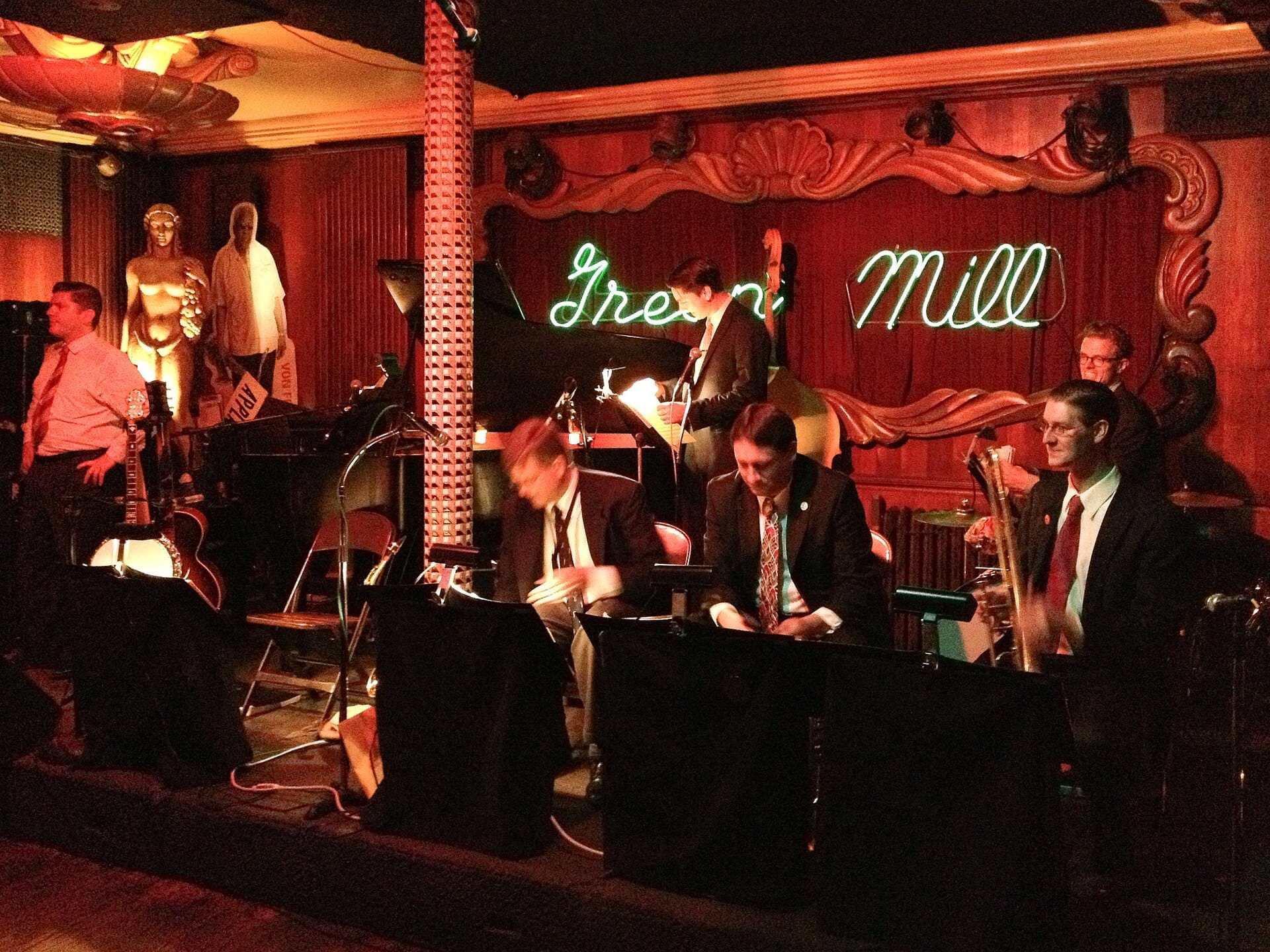
What the Green Mill Actually Is
The Green Mill Cocktail Lounge is a jazz bar and cocktail lounge at 4802 N. Broadway Ave in Chicago's Uptown neighborhood, and it has its origins on this corner in 1907. That is not a marketing claim. The original entertainment venue was completed in 1914, and the current configuration of the room dates to 1935. The bar is listed on the National Register of Historic Places as part of the Uptown Square Historic District, designated in 2000. By any reasonable measure, this is one of the oldest continuously operating bars in Chicago, and it may be the city's most intact Prohibition-era interior.
What makes the Green Mill different from other historic venues that trade on their age is that the room still functions exactly as intended. Live music plays seven nights a week, with bands scheduled nightly. Bartenders shake cocktails. People sit in the curved booths that line the walls and actually watch the bands. The history is not preserved in amber; it is alive and slightly smoky.
⚠️ What to skip
The Green Mill accepts cash only and does not take reservations. Bring enough cash for cover, drinks, and tip. The ATM nearest to the venue is not always reliable, so plan ahead.
The Room: What You See and Feel When You Walk In
The first thing that strikes most visitors is how intact the interior is. The Green Mill has the curved, low-lit booths along the perimeter walls, a long mahogany bar running down one side, and a small bandstand near the back. The ceiling fixtures are original. The walls are dark wood and mirrored panels that catch the amber light from the bar. On a busy Friday night, the room smells like old wood, cocktail bitters, and the faint trace of decades of cigarette smoke absorbed into surfaces that no cleaning will fully remove. It smells like a bar that has been a bar for over a century.
During the early part of the evening, before 9 pm, the room is quiet enough that you can get a seat at the bar or in one of the booths and take stock of the details. Look at the paneling behind the bar. Note the tunnel entrance, partly visible near the back of the room, which reportedly connected to the Aragon Ballroom across the street during the Prohibition years and is associated with the lounge's documented connection to organized crime figures of that era. The booth closest to the stage is traditionally left open for the ghost of Al Capone, a small theatrical tradition that regular patrons maintain with notable seriousness.
After 9 pm, the room fills quickly. The booth seating goes first. The bar stools go next. By 10 pm on a Friday or Saturday, there is standing room only near the back. The acoustic of the room is genuinely good for jazz: intimate enough that you hear the upright bass clearly without amplification overwhelming the space. This is a small room that rewards arriving before the music starts.
Tickets & tours
Hand-picked options from our booking partner. Prices are indicative; availability and final rates are confirmed when you complete your booking.
Millennium Park self-guided walking audio tour in Chicago
From 7 €Instant confirmationFree cancellationGo City | Chicago All-Inclusive Pass
From 127 €Instant confirmationFree cancellationiFLY Chicago Lincoln Park indoor skydiving experience
From 126 €Instant confirmationFree cancellationiFLY Chicago Rosemont indoor skydiving tickets
From 117 €Instant confirmationFree cancellation
Historical Context: From Beer Garden to Mob Haunt to Historic Landmark
The site began as Pop Morse's Roadhouse in 1907, a bar and beer garden on what was then the northern edge of a rapidly developing city. The current building on this corner was completed in 1914. The venue evolved through several configurations during the early twentieth century, developing into the Green Mill Gardens. The Cocktail Lounge configuration that visitors see today dates to 1935, in the years after Prohibition's repeal.
During Prohibition, the Green Mill was one of Chicago's busiest speakeasies. It has well-documented connections to organized crime figures of that period, and the physical evidence of that era, including the tunnel structure, is still visible in the building. This is not a fabricated backstory for tourist appeal. The lounge is part of a documented chapter in Chicago's urban history during the 1920s and 1930s.
For travelers interested in the broader context of Chicago's criminal history during this period, the Chicago gangster history guide provides background on the city's Prohibition-era landscape and the neighborhoods where these stories played out.
Jazz singer Joe E. Lewis performed at the Green Mill during its peak years, and his story, involving a violent dispute with the venue's management when he tried to leave for another club, became one of the most cited examples of the dangers performers faced when mob-affiliated venues controlled the entertainment business. The room these events happened in has not been substantially altered.
The Music: Seven Nights a Week, Bands on at 8 pm
Bands typically take the stage around 8 pm and play through to midnight. The calendar runs across jazz sub-genres, with different acts most nights. Sunday through Thursday is generally the quieter end of the week; weekends bring larger crowds and often the better-known local acts. Check the calendar on the official site before you visit, since the genre and style shift noticeably depending on who is booked.
The third Sunday of every month is Uptown Poetry Slam, a long-running event that predates the current national poetry slam culture and helped establish the format. Doors open at 2 pm on those Sundays, earlier than the standard 4 pm opening. If you are in Chicago on the right Sunday, this is worth planning around: the combination of spoken word performance and the physical setting of the room creates something that does not happen anywhere else in the city.
💡 Local tip
To guarantee a seat for weekend music, arrive by 7:30 pm and claim a booth or bar stool before the band starts. Once the room fills after 9 pm, you will be standing for the rest of the night.
The Green Mill fits naturally into any Chicago jazz and blues itinerary. The Chicago blues and jazz guide covers the broader landscape of live music venues across the city, from the South Side to the North Side, with context for understanding where the Green Mill sits in that tradition.
Practical Walkthrough: Hours, Getting There, What to Expect
The Green Mill is open Sunday through Thursday from 4:00 pm to 1:11 am and Friday from 4:00 pm to 2:00 am; on Saturday, the bar opens at 1:00 pm and closes at 2:00 am. On Uptown Poetry Slam Sundays, doors open at 2:00 pm. These hours are consistent year-round.
Cover charges are not published in advance and vary by night and performer. Check the calendar at greenmilljazz.com or call the venue at +1 773-878-5552 to confirm what a particular evening costs. Bring more cash than you think you need: drinks, cover, and tip in USD, no cards accepted.
The venue is at 4802 N. Broadway Ave in Uptown. The CTA Red Line stops at Wilson, both within walking distance of the lounge. There is also a parking lot on site for those arriving by car. The Uptown neighborhood at night is lively but worth basic urban awareness; check current safety guidance before visiting any Chicago neighborhood late at night.
Uptown is one of Chicago's most historically layered neighborhoods, sitting just south of Andersonville. For a fuller picture of the area, the Andersonville and Uptown neighborhood guide covers the surrounding streets, dining options, and other points of interest worth combining with a visit to the Green Mill.
ℹ️ Good to know
Accessibility information is not published on the official website. If you have specific mobility, hearing, or other access requirements, contact the venue directly at +1 773-878-5552 or greenmill@comcast.net before visiting.
Photography and the Atmosphere at Different Times
The Green Mill is photogenic in the way that truly old things are: not because it is staged, but because the room has accumulated visual depth. The amber light, the curved booths, the mirrored panels behind the bar, and the aged woodwork all photograph well with a wide-aperture lens in low light. The best window for photography without disrupting other visitors is the hour after opening before the music begins, roughly 4 to 7 pm on weekdays.
Once the band is playing, photographing performers is possible from the bar area but avoid using flash. The sight lines from the bar stools on the right side of the room are generally the best for both watching and photographing the stage. Be aware that the room is genuinely dark: phone cameras struggle after 9 pm unless you are near one of the bar lights.
If you want the experience without the weekend crowd, Tuesday and Wednesday evenings offer the full program with noticeably fewer people. The music is the same caliber. The room is easier to navigate. And the bartenders have more time for conversation, which often produces better insights into the history of the place than any written guide.
Who Should Skip the Green Mill
Visitors who need a predictable, ticketed experience with guaranteed seating will find the Green Mill frustrating. There are no reservations, no assigned seats, and no online ticket purchase. If you arrive late on a Friday night, you will stand. The cash-only policy is a hard limit: there is no card reader and no exceptions. Travelers who are unwilling or unable to carry cash should not visit.
The room is also not suited to visitors with significant mobility limitations without prior confirmation from the venue, since no accessibility information is published. Parents hoping to bring younger children should note this is a late-night bar: the atmosphere, hours, and setting are squarely adult. This is not an attraction that scales down to family programming.
For families looking for live entertainment options in Chicago, the Chicago with kids guide covers age-appropriate activities across the city.
Insider Tips
- The third Sunday of every month is Uptown Poetry Slam, with doors at 2 pm. This event has a different energy from the music nights and is worth specifically planning around if your visit overlaps.
- Weekday evenings, particularly Tuesday and Wednesday, offer the same live music program with significantly smaller crowds. If you want a booth and a clear view of the stage, this is the practical choice.
- Bring more cash than you plan to spend. The cover charge, a cocktail or two, and a proper tip for the bartender adds up quickly. The ATM situation in the immediate area is unreliable.
- Arrive before 7:30 pm if you want seated viewing on a Friday or Saturday. The room transitions from manageable to standing-room-only within 30 minutes of the band starting.
- The booth closest to the stage is traditionally kept open for Capone's ghost. Regulars notice if tourists camp there. Sit at the bar or in the booths along the side wall and you will fit in immediately.
Who Is Green Mill Cocktail Lounge For?
- Jazz and blues enthusiasts who want a genuinely historic venue still functioning at its original purpose
- History travelers interested in Prohibition-era Chicago and organized crime connections that are physically present in the room
- Night owls and late-night visitors who want atmosphere, live music, and well-made cocktails past midnight
- Spoken word and poetry fans visiting on the third Sunday of the month for Uptown Poetry Slam
- Solo travelers and couples looking for an intimate, unhurried evening with serious music
Nearby Attractions
Other things to see while in Andersonville & Uptown:
- Andersonville Shopping District
Stretching along N. Clark Street between roughly 4800 and 5800 North, the Andersonville Shopping District is Chicago's most coherent neighborhood shopping strip. No chains, no admission fees, just a walkable lineup of independent boutiques, bookshops, vintage dealers, and specialty food stores set inside early-20th-century storefronts.
- Aragon Ballroom
Opened in 1926 as a glamorous dance hall, the Aragon Ballroom at 1106 W Lawrence Ave has outlasted trends, fads, and entire musical eras to remain one of Chicago's most storied live music venues. With a capacity of up to about 4,900 and a Moorish interior that belongs in a different century, it rewards any music fan willing to make the trip to Uptown.
- Argyle Street (Little Vietnam)
Argyle Street in Chicago's Uptown neighborhood is the heart of the city's Vietnamese and Southeast Asian community. Free to explore, rich in food, history, and everyday neighborhood character, it rewards curious visitors with some of the most affordable and authentic eating in Chicago.