Andersonville Shopping District: Chicago's Independent Retail Corridor
Stretching along N. Clark Street between roughly 4800 and 5800 North, the Andersonville Shopping District is Chicago's most coherent neighborhood shopping strip. No chains, no admission fees, just a walkable lineup of independent boutiques, bookshops, vintage dealers, and specialty food stores set inside early-20th-century storefronts.
Quick Facts
- Location
- 5200–5800 N Clark St, Andersonville, Chicago, IL
- Getting There
- CTA Red Line to Berwyn or Bryn Mawr, then walk west; or CTA Bus 22 (Clark)
- Time Needed
- 2–4 hours for a full stroll with stops
- Cost
- Free to walk; individual purchases in USD
- Best for
- Independent retail, vintage hunting, neighborhood atmosphere, LGBTQ+ travelers
- Official website
- andersonville.org
What Andersonville Actually Is
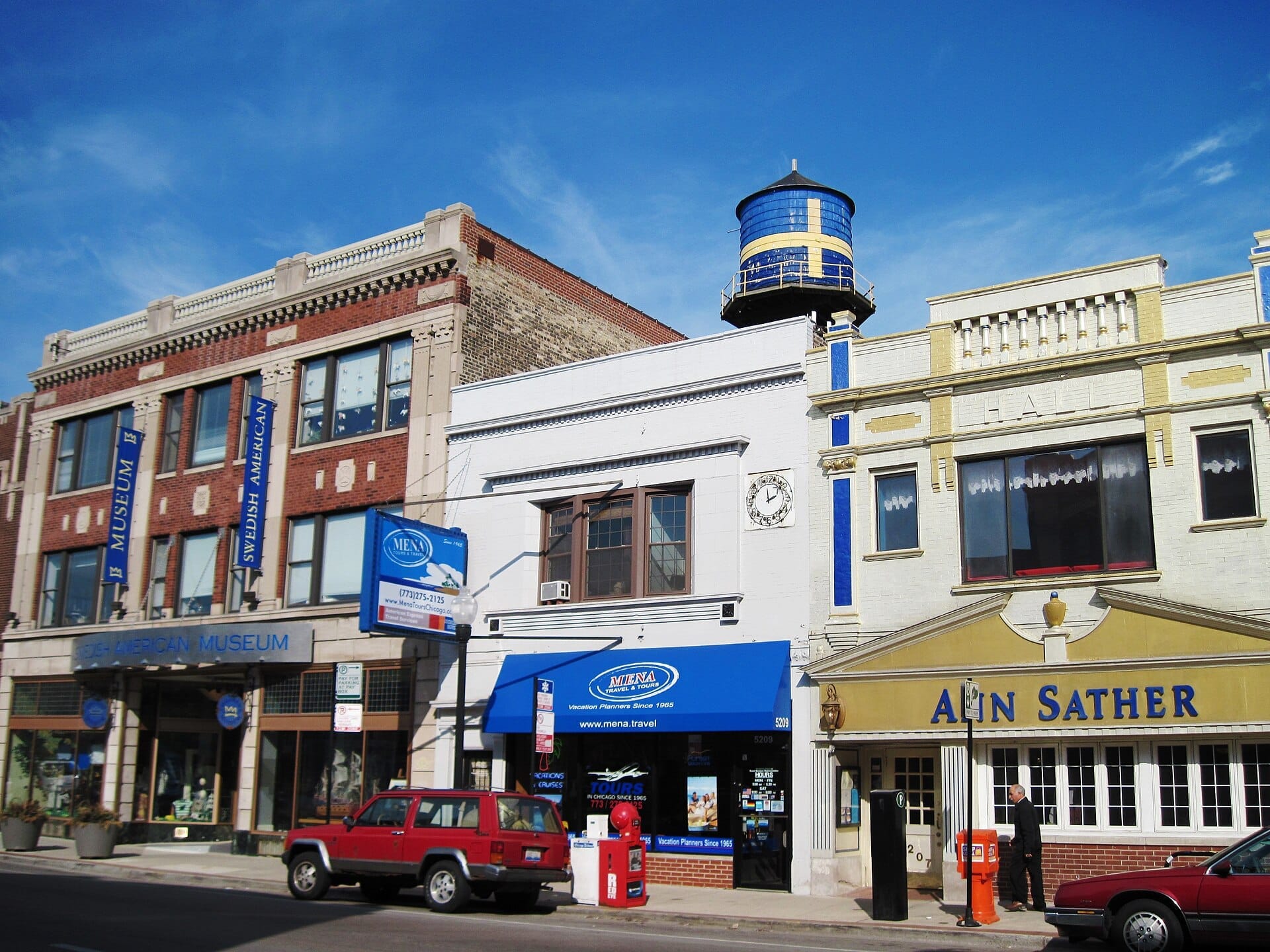
The Andersonville Commercial Historic District is a federally recognized stretch of N. Clark Street added to the U.S. National Register of Historic Places on March 9, 2010. The designation reflects the physical integrity of the buildings as much as the cultural story behind them: most storefronts date to the early 20th century, built during the neighborhood's peak as one of Chicago's most concentrated Swedish American communities. The ornamental brickwork, pressed-metal cornices, and low-rise scale have survived largely intact, giving the street a coherence you rarely find in commercial corridors that have been redeveloped one parcel at a time.
What you find inside those buildings today is very different from what the Swedish immigrants stocked. Andersonville is now home to independent bookstores, LGBTQ+-owned boutiques, feminist gift shops, vintage clothing dealers, Scandinavian specialty food importers (a small nod to the past), and a dense cluster of cafes and wine bars. The Andersonville Galleria, a multi-vendor indoor market, anchors the middle of the strip. It is open Monday through Saturday 11:00–19:00 and Sunday 11:00–18:00, making it a reliable first stop on most days.
💡 Local tip
The Andersonville Galleria (5247 N Clark St) is the easiest place to get oriented. Dozens of independent vendors occupy the space — jewelry makers, art print sellers, vintage dealers — so you can gauge quickly whether the neighborhood's aesthetic matches your taste before committing to the full walk.
The Walk: Block by Block
The commercial strip runs about a mile from the 5200 block up to around 5800 North. There is no formal start point, but arriving from the south at around 4900 N Clark puts you at the denser, slightly more polished end of the corridor. Storefronts here sit at sidewalk level with no setbacks, so window browsing is effortless. The buildings are two and three stories, keeping sunlight on the pavement for most of the day, which makes afternoon visits noticeably more pleasant than comparable indoor malls.
Moving north, the retail thins slightly around 5400 North before picking back up near the 5500 block, where several of the neighborhood's longer-running independent shops have settled. The transition feels gradual rather than abrupt, and it is worth walking the full length rather than stopping at the first cluster of shops. Side streets off Clark, particularly Berwyn and Farragut, have residential character that reveals what makes Andersonville function as a genuine neighborhood rather than a curated retail zone.
For travelers building a full North Side day, Andersonville pairs well with a visit to Argyle Street's Vietnamese and Southeast Asian corridor, which sits about six blocks south and offers a completely different sensory register.
Tickets & tours
Hand-picked options from our booking partner. Prices are indicative; availability and final rates are confirmed when you complete your booking.
Go City | Chicago All-Inclusive Pass
From 127 €Instant confirmationFree cancellationiFLY Chicago Lincoln Park indoor skydiving experience
From 126 €Instant confirmationFree cancellationiFLY Chicago Rosemont indoor skydiving tickets
From 117 €Instant confirmationFree cancellationChicago lakefront neighbourhood bike tour
From 18 €Instant confirmationFree cancellation
Time of Day: How the Street Changes
On weekday mornings before 11:00, Clark Street is quiet enough that you can photograph the storefronts without pedestrians crossing the frame. The Swedish Bakery legacy still surfaces in a few cafes that open early, and the smell of coffee from the neighborhood's independent shops drifts onto the sidewalk from around 8:00 onward. Most retail does not open until 11:00, so this window is more useful for architecture appreciation and breakfast than for shopping.
Weekend afternoons between roughly 13:00 and 16:00 bring the heaviest foot traffic. The sidewalk on Clark gets genuinely crowded in this window during warm months, particularly on Saturdays in May through September. If you want to browse without pressure or actually speak to shop owners, weekday afternoons are significantly better. Many of the independent retailers have one or two staff members who know the stock deeply and are easy to talk to when the store is not full.
Early evening on weekdays has a different energy: locals stopping in after work, cafe tables filling up, and the Galleria making its final run before closing at 19:00. It is a good time to transition from shopping into one of the neighborhood's restaurants or wine bars without doubling back.
History and Neighborhood Identity
Andersonville is named after a Swedish immigrant family, and by the early 20th century the neighborhood had become one of the largest Swedish American enclaves in the United States. The commercial corridor on Clark Street served that community with specialty grocers, newspapers, and social clubs. Much of that specific cultural infrastructure has faded, but the Swedish American Museum (5211 N Clark St) remains and provides actual depth on that history for visitors who want more than a walking vibe.
From the 1970s onward, the neighborhood became an important address for Chicago's LGBTQ+ community, particularly lesbian-owned businesses. That identity remains visible today in the signage, the merchandise in several shops, and the general atmosphere, though the neighborhood has diversified considerably. It is consistently cited as one of the more welcoming areas of the city for LGBTQ+ travelers.
The broader Andersonville and Uptown area rewards longer exploration. The Andersonville-Uptown neighborhood guide covers the surrounding blocks in more detail, including the Aragon Ballroom and the cultural mix along Broadway.
Getting There and Getting Around
The CTA Red Line is the most direct transit option. The Berwyn stop puts you near the heart of the commercial strip with a short westward walk on Berwyn Avenue to Clark Street. The Bryn Mawr stop works well if you want to start at the northern end. Bus 22 (Clark) runs the length of the corridor and connects directly to downtown, but the ride takes longer than the Red Line depending on traffic.
Street parking on Clark and the surrounding residential streets exists but is unreliable on weekends. The neighborhood is not designed around car access, and the blocks between the Red Line and Clark Street are flat and short, making transit the straightforward choice. If you are coming from another North Side neighborhood, cycling along the side streets is practical.
ℹ️ Good to know
Metra Union Pacific North Line serves nearby Ravenswood and Rogers Park stations; neither is as convenient as the CTA Red Line for reaching the commercial district. Stick to the Red Line or the 22 bus.
What to Bring and Practical Notes
Andersonville is an outdoor walking street, so Chicago's weather is a direct factor. Summer afternoons are warm and the walk is entirely manageable in light clothing. In winter, the exposed sidewalk on Clark can be genuinely cold, and several shops have no airlock entry, meaning you feel the temperature the moment you open the door. Layering and a bag for purchases are both sensible. The Galleria provides a warm indoor base for cold-weather visits.
Photography is straightforward here. The early-20th-century facades photograph well in morning light from the east side of Clark Street. The Galleria's interior has variable artificial lighting that works better with a phone camera in automatic mode than with flash. Individual shop owners are generally relaxed about photography inside their spaces, but it is worth asking before photographing merchandise closely.
Accessibility across the district varies by business. The sidewalks along Clark Street are standard Chicago city sidewalks and generally curb-cut at intersections. Individual storefronts, particularly in older buildings, may have single steps at entry. The Galleria is step-free at ground level. Anyone with specific mobility requirements should contact individual shops in advance, as there is no centralized accessibility information for the district as a whole.
⚠️ What to skip
A handful of shops in Andersonville are cash-preferred or cash-only, a holdover from when the neighborhood had fewer card-processing terminals. It is worth carrying at least $20–40 in cash, particularly if you plan to browse the Galleria's smaller independent vendors.
Honest Assessment: Who This Is For and Who Should Skip It
Andersonville's shopping district works best for travelers who find genuine interest in independent retail, are comfortable browsing without a clear goal, and want to see a Chicago neighborhood that functions as a real community rather than a tourism construct. The absence of chain stores is not a marketing claim — it is noticeable and shapes the entire experience. You will not find a Starbucks on this stretch of Clark.
Travelers on tight itineraries focused on major landmarks should probably skip it or allocate it as a half-morning addition on a longer trip rather than a destination in itself. The district does not have a single showpiece attraction. Its value is cumulative and depends on being in the mood to wander. If you are checking items off a list, the time is better spent elsewhere.
For a broader overview of Chicago's independent retail options across multiple neighborhoods, the Chicago shopping guide provides useful neighborhood-by-neighborhood comparisons. Andersonville consistently ranks well against Wicker Park and Lincoln Square for density of independent stores per block.
Insider Tips
- The Swedish American Museum at 5211 N Clark Street charges admission and is often overlooked by visitors treating Andersonville purely as a shopping destination. The permanent collection on Swedish immigration to Chicago is compact but genuinely informative and takes about 45 minutes.
- If you arrive on a weekday before the Galleria opens at 11:00, the stretch of Clark between Berwyn and Foster has several cafes with street-facing windows that are excellent for coffee and watching the neighborhood come to life before the retail day starts.
- Parking enforcement on residential side streets is strict on weekday mornings due to street cleaning schedules. If you drive, check the posted signs carefully — the time windows are specific and the tickets are not cheap.
- Several of Andersonville's vintage shops receive new stock on Tuesdays and Wednesdays, making mid-week visits better for finding recently acquired pieces before weekend browsers pick through them.
- The stretch of Clark north of Foster (around 5500 N) has lower foot traffic and a slightly more local feel than the blocks closer to Berwyn. Shops there tend to be quieter and staff have more time to talk about what they carry.
Who Is Andersonville Shopping District For?
- Independent retail enthusiasts looking for boutiques with no chain-store overlap
- LGBTQ+ travelers seeking a welcoming, community-rooted neighborhood
- Architecture walkers interested in intact early-20th-century commercial streetscapes
- Visitors wanting a North Side half-day away from downtown crowds
- Vintage and antique hunters who prefer browsing over curated tourist markets
Nearby Attractions
Other things to see while in Andersonville & Uptown:
- Aragon Ballroom
Opened in 1926 as a glamorous dance hall, the Aragon Ballroom at 1106 W Lawrence Ave has outlasted trends, fads, and entire musical eras to remain one of Chicago's most storied live music venues. With a capacity of up to about 4,900 and a Moorish interior that belongs in a different century, it rewards any music fan willing to make the trip to Uptown.
- Argyle Street (Little Vietnam)
Argyle Street in Chicago's Uptown neighborhood is the heart of the city's Vietnamese and Southeast Asian community. Free to explore, rich in food, history, and everyday neighborhood character, it rewards curious visitors with some of the most affordable and authentic eating in Chicago.
- Green Mill Cocktail Lounge
Dating back to 1907 and listed on the National Register of Historic Places as part of the Uptown Square Historic District, the Green Mill Cocktail Lounge in Chicago's Uptown neighborhood is one of the country's most atmospheric jazz bars. Live music plays seven nights a week inside an interior that looks almost exactly as it did during Prohibition. Cash only, no reservations.