Argyle Street (Little Vietnam): Chicago's Southeast Asian Culinary and Cultural Hub
Argyle Street in Chicago's Uptown neighborhood is the heart of the city's Vietnamese and Southeast Asian community. Free to explore, rich in food, history, and everyday neighborhood character, it rewards curious visitors with some of the most affordable and authentic eating in Chicago.
Quick Facts
- Location
- West Argyle Street & N Broadway, Uptown, Chicago
- Getting There
- CTA Red Line — Argyle station (approx. 35 min from the Loop)
- Time Needed
- 1.5 to 3 hours for a thorough visit; longer if you linger over a meal
- Cost
- Free to explore; food and shopping paid individually in USD
- Best for
- Food lovers, budget travelers, cultural explorers, photographers
- Official website
- exploreuptown.org/asia-on-argyle
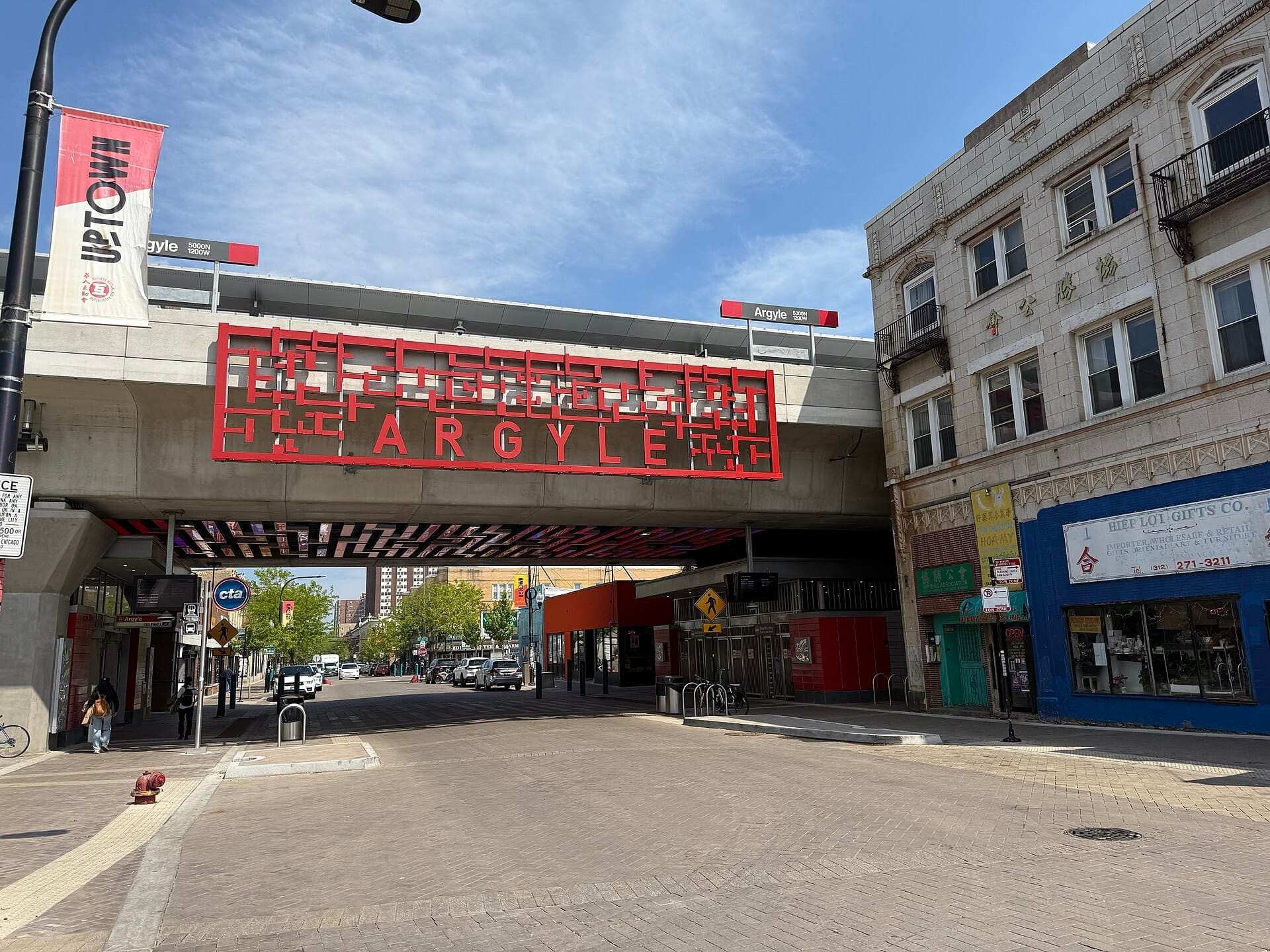
What Is Argyle Street?
Argyle Street is a short commercial strip in Chicago's Uptown neighborhood that has evolved into the city's primary Vietnamese and Southeast Asian district. Officially designated the West Argyle Street Historic District, it goes by several informal names: Little Vietnam, Little Saigon, Asia on Argyle, and even New Chinatown, the last a nod to its original 1970s planning origins. None of those labels fully captures it. On a typical afternoon, you might pass a Vietnamese bakery, a Thai grocery stacked with fresh galangal and kaffir lime leaves, a Chinese herbal medicine shop, and a Korean-owned beauty supply, all within a single block.
The district is anchored by the Argyle CTA Red Line station, which has a distinctive Asian-inspired pagoda-style roof that functions as an informal gateway. From the moment you descend the station stairs, the character of the street is unmistakable: hand-lettered signs in Vietnamese and Chinese, the smell of broth simmering in open restaurant kitchens, and the low hum of conversation in languages other than English.
💡 Local tip
The street is free to walk and explore. Come hungry. Lunch is the best time to experience the restaurants at full speed, with steam tables running and kitchens at their most active.
History: From Planned Chinatown to Little Saigon
The story of Argyle Street reflects a bigger chapter in Chicago's immigrant history. In the 1970s, city planners and community development groups designated the Argyle corridor as a prospective second Chinatown, hoping to replicate the density and commercial success of the original Chinatown on the South Side. That plan evolved in a different direction entirely.
As the 1970s progressed and especially following the end of the Vietnam War in 1975, large numbers of Vietnamese refugees resettled in American cities. Chicago received a significant share of that population, and many chose Uptown, an already diverse and relatively affordable North Side neighborhood. Vietnamese-owned restaurants, grocery stores, and service businesses began to cluster on and around Argyle Street, gradually redefining its identity. By the 1980s and 1990s, the district had become Little Saigon in the eyes of both residents and visitors.
Today the community is layered: Vietnamese businesses remain the core, but you will also find Cambodian, Thai, Chinese, Lao, and other Southeast and East Asian establishments. The neighborhood surrounding the strip is similarly mixed, with long-term Asian immigrant families living alongside newer arrivals and a younger gentrifying demographic in the broader Uptown area.
Tickets & tours
Hand-picked options from our booking partner. Prices are indicative; availability and final rates are confirmed when you complete your booking.
Go City | Chicago All-Inclusive Pass
From 127 €Instant confirmationFree cancellationiFLY Chicago Lincoln Park indoor skydiving experience
From 126 €Instant confirmationFree cancellationiFLY Chicago Rosemont indoor skydiving tickets
From 117 €Instant confirmationFree cancellationChicago lakefront neighbourhood bike tour
From 18 €Instant confirmationFree cancellation
What You Will Find on the Street
The commercial action is concentrated on West Argyle Street between Sheridan Road to the west and Broadway to the east, with a few additional businesses extending onto Broadway. The block is compact enough to walk end to end in under ten minutes, but most visitors slow down considerably.
Food is the main draw. Pho restaurants are the flagship attraction: large bowls of clear or slightly cloudy beef or chicken broth, served with thin rice noodles, fresh herbs, bean sprouts, lime, and your choice of protein. Prices are lower than nearly anywhere else in Chicago for a sit-down meal. Beyond pho, you will find banh mi sandwich shops (look for crusty French baguettes filled with Vietnamese cold cuts, pickled daikon, cucumber, and cilantro), bubble tea cafes, dim sum, and Chinese roast duck hanging in shop windows.
The grocery stores here are worth exploring even if you are not cooking. Shops stock fresh produce you will not find in mainstream supermarkets, including rau muong (water spinach), fresh turmeric root, lemongrass bundles, whole durian in season, and a wide variety of Vietnamese sauces and condiments. The smells inside these stores are their own kind of sensory experience.
Argyle Street sits within the broader Andersonville-Uptown area, a neighborhood known for its cultural layers. For more on the surrounding district and what else it offers, see our guide to Andersonville and Uptown.
How the Street Changes Through the Day
Early morning, roughly before 9am, the street is quiet. A few bakeries may be open, with steamed buns or banh mi rolls fresh from the oven. The grocers are restocking, and the sidewalks are largely empty. This is a good time to photograph the architecture and signage without crowds.
By late morning the restaurants begin to fill. Lunch is the busiest and arguably the best time to visit. Kitchens are at peak energy, portions tend to be generous, and the street has a focused, neighborhood-business character rather than a tourist-attraction feel. Tables at the most popular pho spots fill quickly, so arrive by 11:30am on weekends if you do not want to wait.
Afternoons between 2pm and 5pm are noticeably slower. Some smaller shops close for a mid-afternoon break. This is a good window for grocery browsing and picking up supplies without being jostled. Evenings bring a second wave of diners, and some restaurants stay busy until 9 or 10pm. Weekend evenings in particular can be lively, with family groups taking up the larger tables.
⚠️ What to skip
Individual restaurant and shop hours vary widely and are not always updated online. If you are making a special trip for a specific restaurant, call ahead or check for a sign in the window confirming current hours before you travel.
Getting There and Getting Around
The most straightforward way to reach Argyle Street is the CTA Red Line. Board at any downtown station (State/Lake, Lake, Monroe, Jackson) and ride northbound to the Argyle stop, approximately 35 minutes from the Loop. The station drops you directly onto the main commercial block.
Bus options include CTA routes along Broadway and Sheridan Road, which connect the area to the broader North Side. Driving is possible but street parking on Argyle itself is limited, and the surrounding residential blocks can be competitive on weekends. The Red Line is the practical choice for most visitors.
If you are planning a broader North Side itinerary that includes Argyle Street, consider how it connects with other stops. A guide to Chicago's neighborhoods can help you sequence stops efficiently.
Photography and Sensory Details
Argyle Street is visually dense. Signage layers English, Vietnamese, and Chinese characters. Shop fronts are painted in bright reds and greens. The pagoda-roofed Red Line station provides a strong visual anchor for photographs, particularly from the street level looking up at the elevated tracks.
Inside the grocery stores, the lighting is often warm and slightly dim, which suits close-up photography of produce and packaged goods. Ask before photographing inside any shop or restaurant. Most owners are welcoming, but courtesy matters in a neighborhood where tourism is not the primary purpose of daily commerce.
The sensory peak of a visit is a bowl of pho eaten at one of the Formica-topped tables inside one of the older restaurants. The broth carries the smell of star anise, clove, and charred ginger. The fresh herbs on the side plate add a green, slightly grassy counterpoint. It is the kind of meal that costs under fifteen dollars and stays with you.
Who Should Visit and Who Might Skip It
Argyle Street rewards travelers who are interested in neighborhoods as they actually function, not as curated experiences. The street is not polished. It does not have a visitor center or a souvenir shop designed for tourists. What it has is authenticity: businesses serving a real community, food priced for locals, and a cultural texture that has developed over decades rather than being installed for effect.
Visitors who are primarily looking for Chicago's architectural and lakefront highlights may find this a detour rather than a destination. But for anyone interested in Chicago's immigrant history, Southeast Asian food, or the kind of neighborhood exploration described in Chicago's broader food culture, Argyle Street is worth the Red Line ride.
Travelers who need fully accessible routes should check the current status of the Argyle Red Line station with the CTA directly before visiting, as elevator availability at elevated train stations can change. The street itself is flat and walkable.
ℹ️ Good to know
Argyle Street is one of the more budget-friendly food destinations in Chicago. A full meal at a sit-down pho restaurant will typically cost less than most Loop or River North options for comparable portions.
For travelers building a full day around affordable and culturally rich eating across the city, the Chicago on a budget guide pairs naturally with a visit here.
Insider Tips
- The bubble tea shops on and near Argyle often have longer menus than their signage suggests. Ask about seasonal drinks or specials not listed on the main board.
- The Vietnamese grocery stores stock prepared foods like spring rolls, sticky rice with mung bean, and steamed desserts near the checkout area. These make excellent and very affordable snacks to eat while walking the block.
- If you visit on a weekend morning, a few bakeries open early with fresh banh mi and steamed buns. Arriving before the lunch crowd means shorter waits and a quieter version of the street.
- The blocks immediately south of Argyle on Winthrop and Kenmore Avenues are largely residential and reveal the neighborhood's lived-in character. A short walk there after eating gives a better sense of the broader community than the commercial strip alone.
- Cash is accepted everywhere and preferred at many smaller restaurants and grocery stores. Some older establishments do not take cards, or charge a fee for card use. Bring small bills.
Who Is Argyle Street (Little Vietnam) For?
- Food travelers seeking authentic and affordable Vietnamese and Southeast Asian cuisine
- Budget-conscious visitors who want a full sit-down meal for under $15
- Photographers interested in street-level urban culture and multilingual signage
- Travelers curious about Chicago's immigrant history and neighborhood evolution
- Anyone building a North Side day that covers multiple culturally distinct neighborhoods
Nearby Attractions
Other things to see while in Andersonville & Uptown:
- Andersonville Shopping District
Stretching along N. Clark Street between roughly 4800 and 5800 North, the Andersonville Shopping District is Chicago's most coherent neighborhood shopping strip. No chains, no admission fees, just a walkable lineup of independent boutiques, bookshops, vintage dealers, and specialty food stores set inside early-20th-century storefronts.
- Aragon Ballroom
Opened in 1926 as a glamorous dance hall, the Aragon Ballroom at 1106 W Lawrence Ave has outlasted trends, fads, and entire musical eras to remain one of Chicago's most storied live music venues. With a capacity of up to about 4,900 and a Moorish interior that belongs in a different century, it rewards any music fan willing to make the trip to Uptown.
- Green Mill Cocktail Lounge
Dating back to 1907 and listed on the National Register of Historic Places as part of the Uptown Square Historic District, the Green Mill Cocktail Lounge in Chicago's Uptown neighborhood is one of the country's most atmospheric jazz bars. Live music plays seven nights a week inside an interior that looks almost exactly as it did during Prohibition. Cash only, no reservations.