Shopping in Chicago: The Complete Guide to Best Areas, Malls & Markets
Chicago is one of the great shopping cities of North America, with options ranging from luxury flagships on Oak Street to independent boutiques in Andersonville and massive outlet malls near O'Hare. This guide breaks down every major district, what you'll actually find there, and how to get around without wasting a day.
Plan and book this trip
Tools from our partner Travelpayouts help you compare flights and hotels. If you book through them, we may earn a commission at no extra cost to you.
Flights
Hotels map
TL;DR
- Shopping in Chicago spans six distinct zones: the Magnificent Mile, Gold Coast, the Loop, Lincoln Park, Wicker Park/Bucktown, and Andersonville — each with a different character and price point.
- The Magnificent Mile has three indoor malls (Water Tower Place, 900 North Michigan, The Shops at North Bridge) plus ~460 stores along North Michigan Avenue — see the Magnificent Mile neighborhood guide for full context.
- Oak Street in the Gold Coast is Chicago's luxury corridor — think Hermès, Giorgio Armani, and Harry Winston within a few walkable blocks.
- Fashion Outlets of Chicago (Rosemont) and Woodfield Mall (Schaumburg) are the best outlet and suburban mall options, but both require a trip outside the city proper.
- All the main downtown shopping districts are reachable by CTA 'L' — check the getting around Chicago guide before you plan your route.
The Magnificent Mile: Chicago's Premier Shopping Street
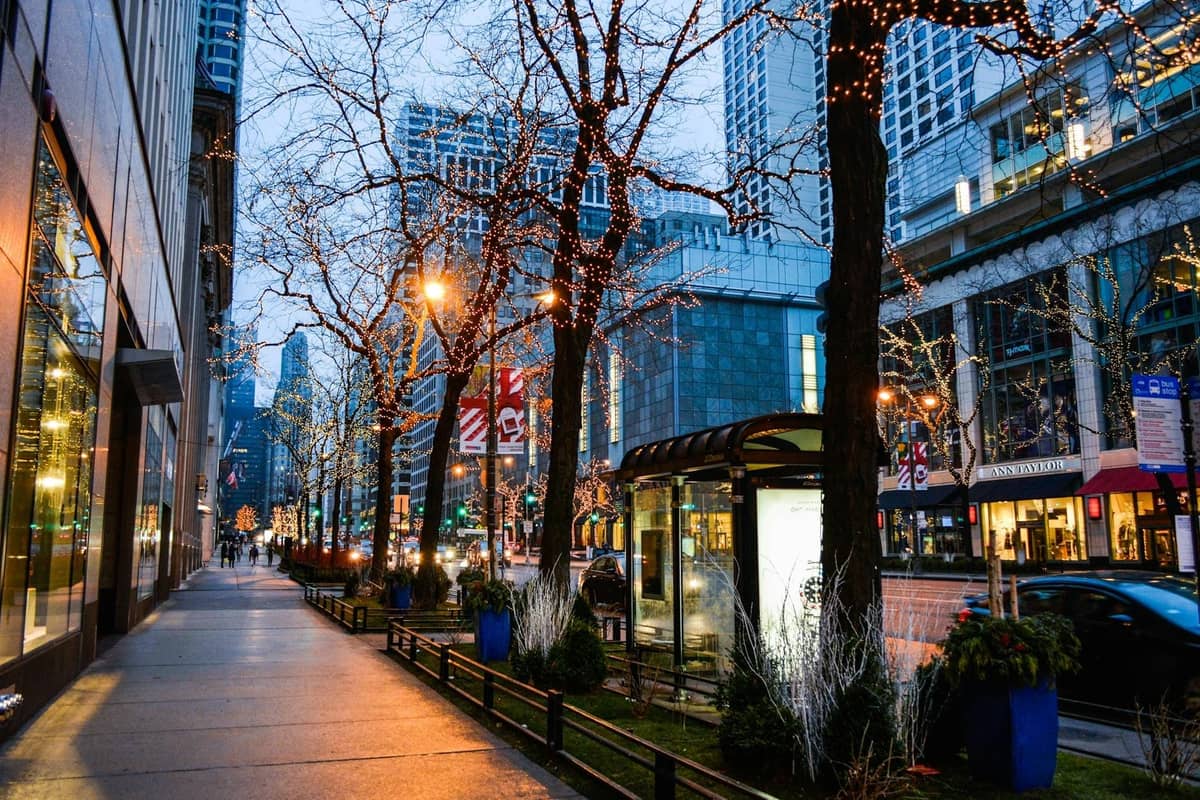
North Michigan Avenue between the Chicago River and Oak Street is known as the Magnificent Mile, and it earns the name. The district contains roughly 460 stores, 275 restaurants, and 60 hotels, making it one of the densest retail corridors in the country. The street itself is an experience — wide sidewalks, landmark architecture, and a parade of flagship stores from Apple and Zara to Burberry and Louis Vuitton. It's genuinely impressive the first time, though repeat visitors often find it interchangeable with upscale shopping streets in other major cities.
What sets the Mag Mile apart from a standard shopping street is the trio of indoor vertical malls embedded within it. Water Tower Place at 835 N. Michigan Ave is the most accessible: seven floors that were formerly anchored by Macy's and American Girl Place, with a Ritz-Carlton above and a mix of mid-range and specialty retailers throughout. 900 North Michigan Shops at — as the address suggests — 900 N. Michigan Ave positions itself as the luxury option, with Bloomingdale's as the anchor and brands like Gucci and J.Crew sharing floors alongside the Four Seasons Hotel and an Equinox gym. The Shops at North Bridge (520 N. Michigan Ave) adds a four-story indoor center plus a large Nordstrom with in-house dining. Each mall has its own character; don't assume they're identical.
💡 Local tip
CTA access to the Mag Mile is straightforward: take the Red Line to Grand/State and walk one block east, or use the Chicago/State stop for the southern end near the river. The stretch between those two stops covers the entire Mile on foot in about 20 minutes at a browsing pace.
Crowds on the Mag Mile peak on weekends from June through August and again in November and December, when the holiday decorations draw visitors in their own right. For a more manageable experience, weekday mornings are notably calmer. Most stores open around 10:00 and close between 20:00 and 21:00 on weekdays, with adjusted hours on Sundays (typically 11:00–18:00). Flagship stores often keep extended hours during the holiday season — check individual store websites before planning a specific visit.
Oak Street and the Gold Coast: Chicago's Luxury Shopping District
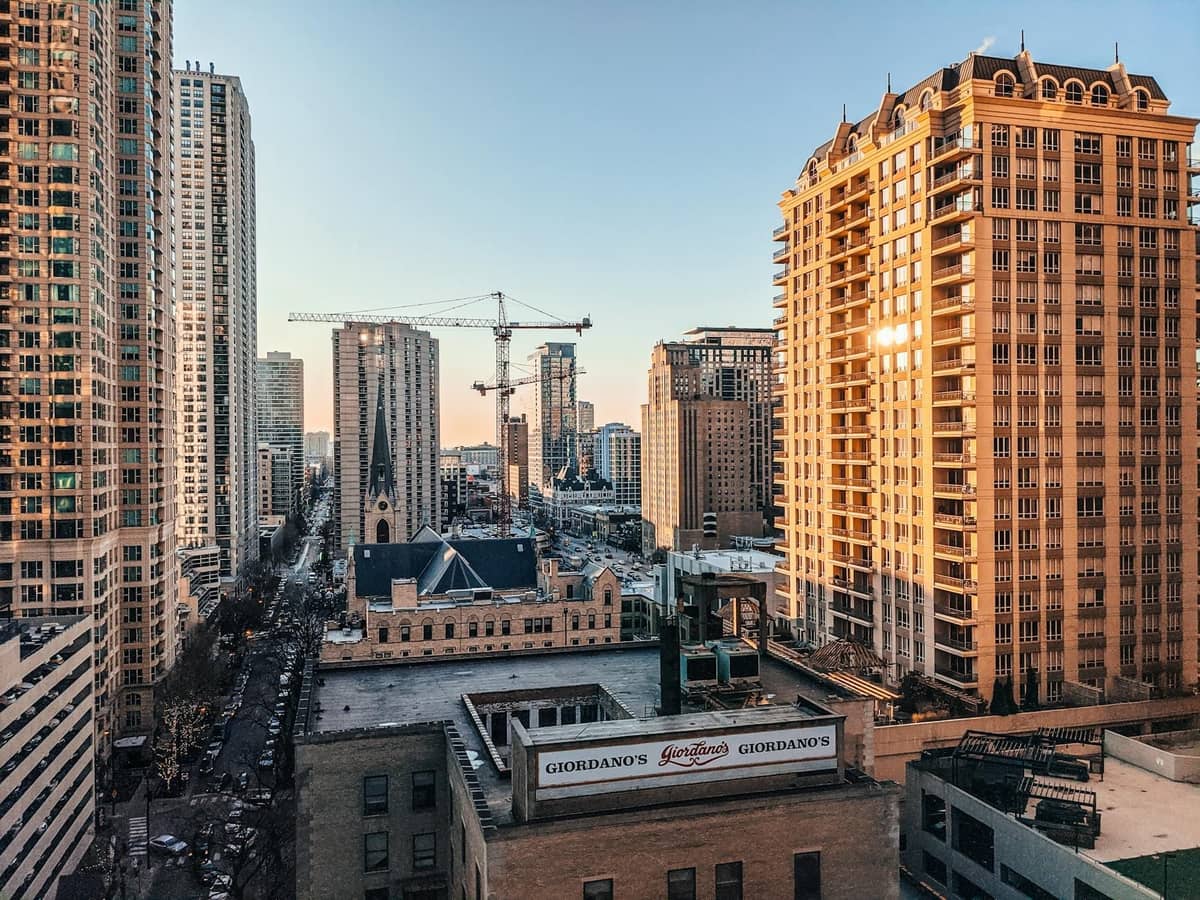
One block north of the Magnificent Mile's upper end, Oak Street between Michigan Avenue and Rush Street operates as Chicago's equivalent of Rodeo Drive. It's a short strip — less than half a mile — but the concentration of luxury labels is serious: Giorgio Armani, Hermès, Escada, Prada, and jewelers including Buccellati and Harry Winston are all within walking distance of each other. The Gold Coast neighborhood as a whole has a different atmosphere from the Mag Mile — quieter, less tourist-heavy, and with fewer chain restaurants interrupting the retail blocks.
Oak Street is worth visiting even if you're not buying. The architecture and storefronts are well-maintained, and the street connects naturally to the north end of the Mag Mile, so it's easy to fold into a longer shopping day. Be realistic about what you're walking into: prices are what you'd expect from European luxury brands in a premium American location, with no particular Chicago discount. This is not the place to find deals.
⚠️ What to skip
The Magnificent Mile and Oak Street together are the most tourist-concentrated shopping areas in Chicago. If you're looking for local character, independent stores, or anything other than national and international chains, you'll need to head to the neighborhoods described below.
State Street and the Loop: Historic Retail in Downtown Chicago
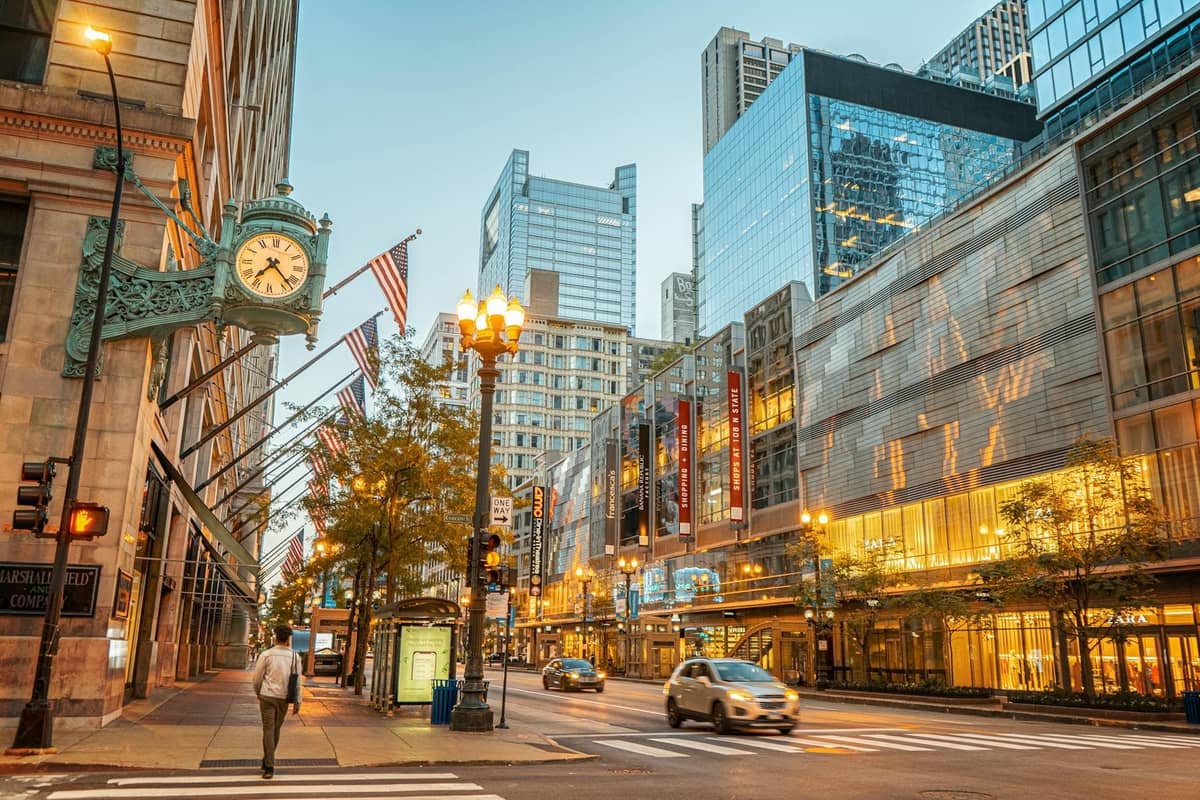
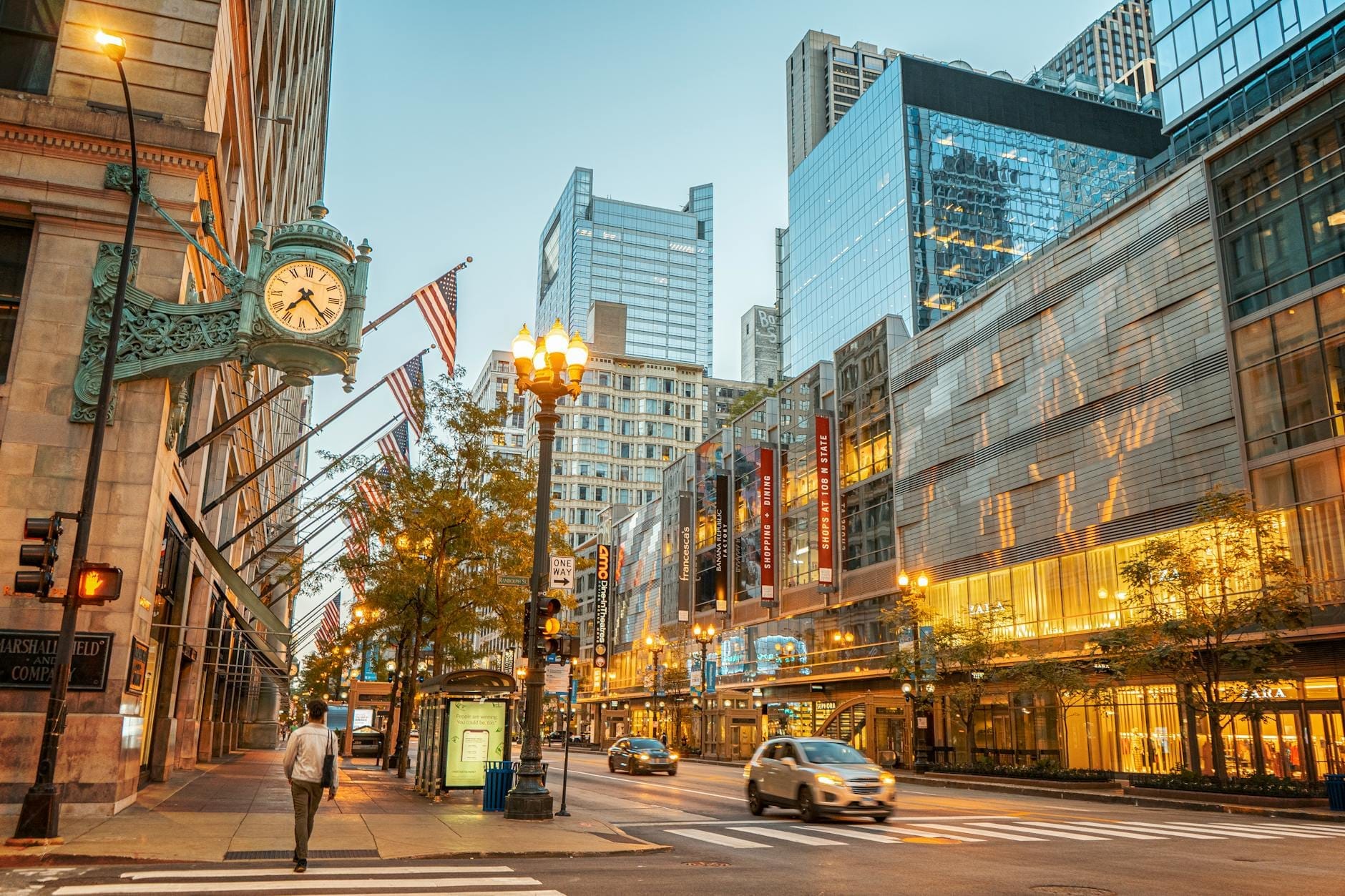
State Street's retail history runs deep — this was once the most important shopping street in the Midwest, anchored by Marshall Field's (now Macy's) and Carson Pirie Scott. Today it's a mix of fast fashion, specialty retailers, and that landmark Macy's between Randolph and Congress. It's not glamorous, but it's practical and very accessible from the Loop's transit hub. If you're already downtown for the museums or architecture and need to pick something up, State Street works. As a destination in itself, it doesn't compete with what the neighborhoods offer.
The Loop's retail scene extends beyond State Street in small ways — the Merchandise Mart across the river has design showrooms (primarily trade-only, but worth knowing about), and the Pedway system connects several underground shops useful in winter. Don't plan a serious shopping day around the Loop alone, but don't overlook State Street if you're in the area.
Lincoln Park, Wicker Park, and Andersonville: The Neighborhood Shopping Districts
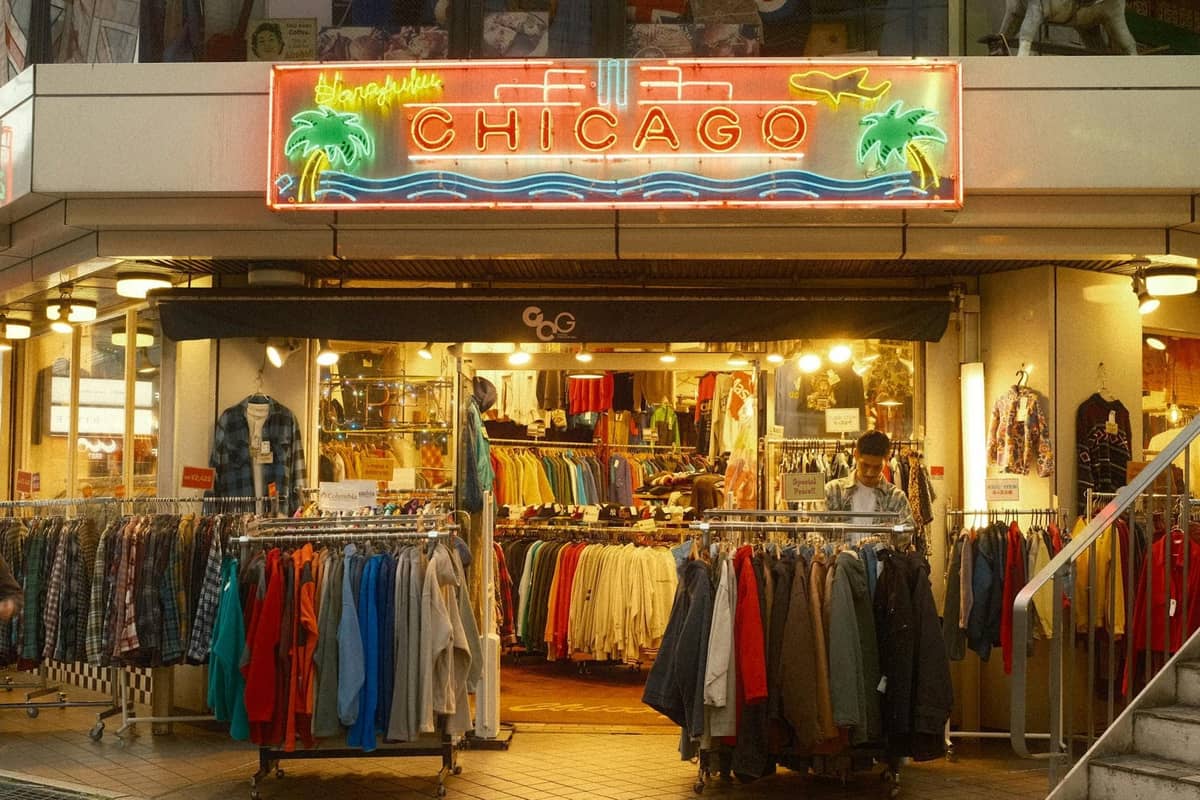
For shopping that feels distinctly Chicago rather than generic American mall, the neighborhoods are where the real character lives. Three in particular stand out for visitors who want independent boutiques, vintage stores, and locally owned shops.
Lincoln Park has two distinct retail zones. The Clybourn Corridor (accessible via the North/Clybourn Red Line stop) concentrates national home goods and furniture brands — think West Elm, Pottery Barn, and REI — with useful on-site parking if you're driving. The Armitage-Halsted-Webster triangle a few blocks east is a different story: high-end clothing boutiques, handmade accessories, and children's specialty shops in a historic low-rise streetscape. This area is one of the more pleasant walking shopping experiences in the city. Lincoln Park and Old Town together make a full afternoon easily.
Wicker Park and Bucktown, centered on the intersection of Damen, Milwaukee, and Division (Blue Line to Damen), mix independent boutiques with chains like Urban Outfitters and Free People, plus a strong selection of vintage stores and record shops. The ratio of independent to chain is better here than almost anywhere else in the city at a similar scale. It's the kind of area where you can find something genuinely unexpected. The Wicker Park, Bucktown, and Logan Square corridor has expanded the options further west, with Logan Square adding its own set of smaller shops along Milwaukee Avenue.
Andersonville on Clark Street on the North Side is Chicago's most underrated shopping neighborhood. The Andersonville shopping district focuses on locally owned stores: handcrafted gifts, vintage clothing, contemporary women's fashion, and specialty shops that reflect the neighborhood's Swedish heritage and diverse residential character. It's less crowded than Wicker Park, more browsable, and the store owners tend to be present and knowledgeable. Take the Red Line to Berwyn or Bryn Mawr and walk west to Clark Street.
- Magnificent Mile 460+ stores, three indoor malls, flagship chains and luxury labels — best for one-stop convenience and major brand shopping.
- Oak Street / Gold Coast Chicago's luxury strip: Hermès, Armani, Prada, and high-end jewelers in a compact, walkable half-mile.
- State Street / The Loop Historic retail corridor anchored by Macy's; practical for downtown visitors, not a destination on its own.
- Lincoln Park (Armitage-Halsted-Webster) Boutiques, upscale clothing, and children's specialty shops in a well-kept historic neighborhood streetscape.
- Wicker Park / Bucktown Best mix of independent boutiques, vintage stores, and record shops in the city — Blue Line to Damen.
- Andersonville Locally owned shops, handcrafted goods, and vintage clothing on Clark Street — the city's most underrated shopping neighborhood.
Markets, Art, and Specialty Shopping
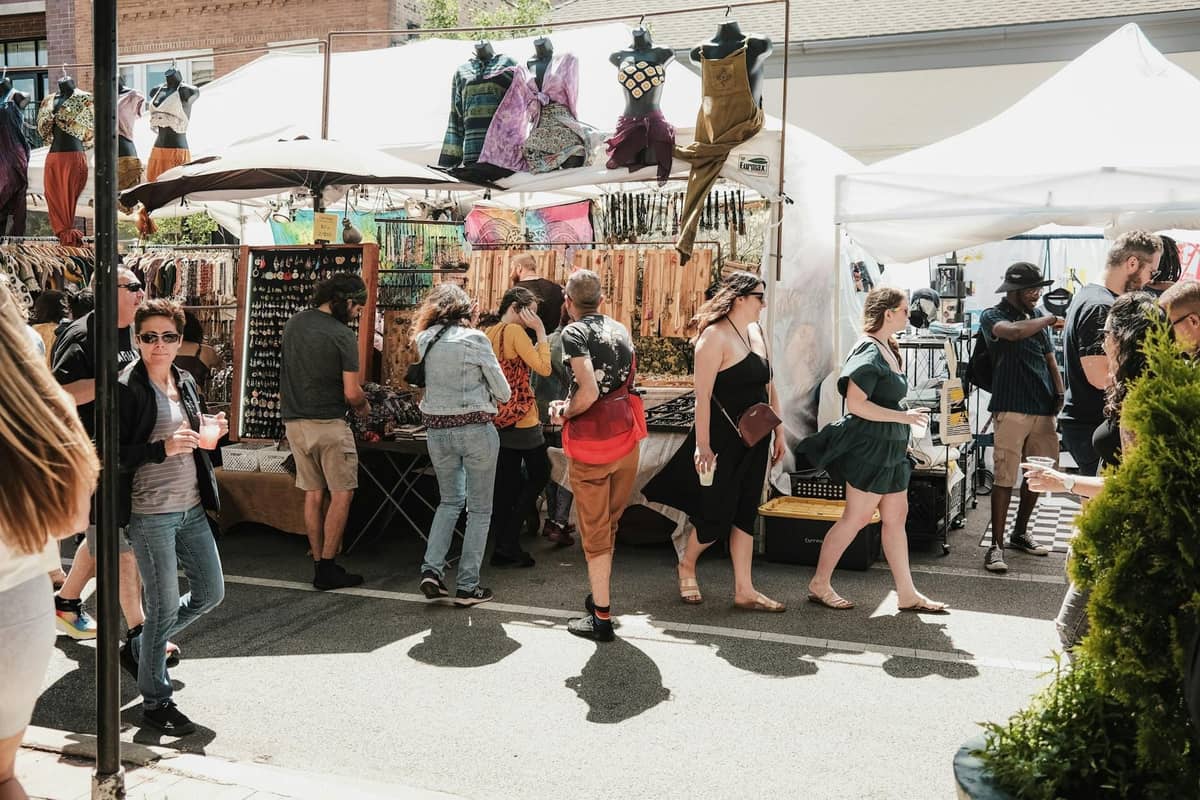
Chicago's market scene is smaller than cities like New York or London, but a few options are worth building time around. The Maxwell Street Market on Maxwell Street between Halsted and Union (one Sunday per month, May–October, roughly 10:00–15:00) is the city's longest-running outdoor market, with a mix of produce, clothing, tools, and collectibles. It's not a curated artisan market — the inventory is unpredictable and the atmosphere is chaotic in the best sense — but it's one of the more authentically Chicago experiences on a Sunday morning.
The River North Gallery District is one of the largest concentrations of contemporary art galleries outside Manhattan. If buying art is on your radar — or even just looking — the stretch of Superior, Huron, and Erie Streets northwest of Michigan Avenue is worth an hour or two on a Saturday afternoon when most galleries are open. River North runs a regular Gallery Night event; check the River North Business Association for current dates.
For holiday-specific shopping, the Christkindlmarket Chicago in Daley Plaza (late November through December 24) is a genuine German-style Christmas market with imported ornaments, food, and gifts. It's touristy, yes, but the quality of the imported goods is higher than most American holiday markets. Chicago's Christmas guide has more detail on seasonal events around the same period.
Outlet Malls and Suburban Shopping Centers
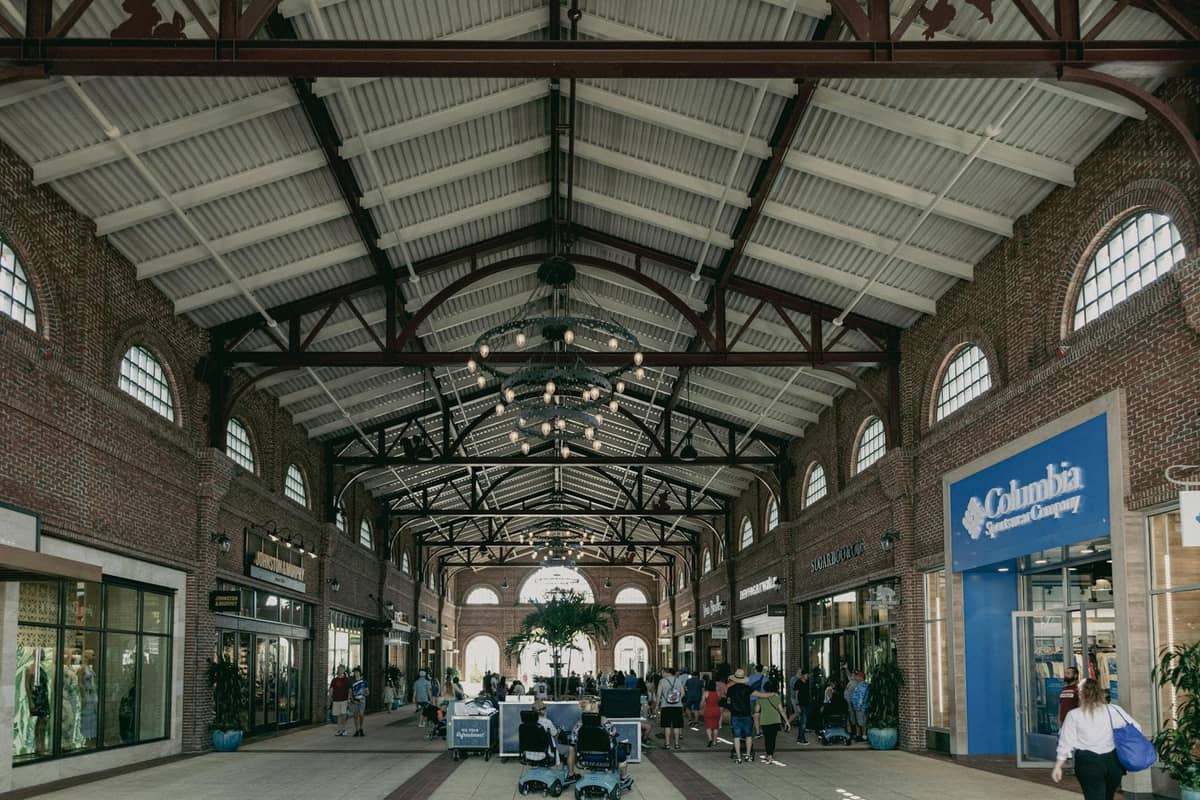
Outlets and large-format suburban malls are not walkable from downtown. That's important to understand before planning your day. Both major options require transit or a car, and neither is a quick side trip.
Fashion Outlets of Chicago in Rosemont, adjacent to O'Hare International Airport, is the most accessible outlet option. It has around 130 stores including Bloomingdale's Outlet, Saks OFF 5TH, and other designer outlets. Typical hours are Monday through Saturday 10:00–21:00 and Sunday 11:00–19:00, but verify on the official site before visiting. The Blue Line runs to Rosemont station, and the mall is about a 10-minute walk or a free shuttle from there. If you're already flying through O'Hare, stopping here on the way in or out is genuinely convenient.
Woodfield Mall in Schaumburg, about 28 miles northwest of downtown, is one of the largest malls in the United States with nearly 300 shops and restaurants. Typical hours are Monday through Thursday 10:00–20:00, Friday and Saturday 10:00–21:00, and Sunday noon–18:00 — but confirm before making the trip. Driving is the practical option; public transit is possible via Metra’s Union Pacific Northwest Line to Arlington Park or Schaumburg with bus connections but involves a connection and considerable time. Woodfield is best suited to visitors with a car and a specific shopping agenda, not a casual detour.
✨ Pro tip
If you're flying out of O'Hare and have a few hours before your flight, Fashion Outlets of Chicago is one of the more useful airport-adjacent activities in any American city. Leave your larger bags at the airport's bag storage and take the Blue Line to Rosemont. Two to three hours is enough to cover the outlet properly.
- Fashion Outlets of Chicago (Rosemont): ~130 stores, Blue Line accessible, best for designer outlet shopping near O'Hare
- Woodfield Mall (Schaumburg): ~300 stores, best reached by car, suits visitors with a specific shopping list
- Both extend hours during the holiday season (late November through December) — always verify current hours on official websites before visiting
Practical Tips for Shopping in Chicago
Illinois sales tax applies to most retail purchases in Chicago, and the combined city and state rate is among the higher ones in the country — currently 10.25% on general merchandise in the city of Chicago, though it varies by category and municipality. Factor this into any budget calculations, particularly for big-ticket items.
For transit logistics, the CTA 'L' covers most of the major shopping areas efficiently. The Red Line handles the Mag Mile (Grand stop), Armitage-Halsted (Armitage stop), Andersonville (Berwyn or Bryn Mawr), and Wrigleyville. The Blue Line serves Wicker Park and Bucktown (Damen stop) and connects to Fashion Outlets of Chicago (Rosemont stop). The full Chicago transit guide explains fare structures and the Ventra card system in detail.
If your Chicago trip is budget-focused, note that the neighborhood shopping districts — particularly Andersonville and Wicker Park — have a much higher proportion of affordable and mid-range options than the Mag Mile or Oak Street. For more on spending strategically, the Chicago on a budget guide covers free and low-cost activities across the city. And if you're combining shopping with other activities, the Chicago neighborhoods guide gives a fuller picture of what each area offers beyond retail.
ℹ️ Good to know
Most stores on the Magnificent Mile and in the major malls accept all major credit and debit cards. Contactless payment is widely available. Smaller boutiques in Andersonville and Wicker Park may be cash-preferred or have a minimum spend for card payments — it's worth carrying some cash when shopping in independent neighborhood stores.
FAQ
What is the best shopping area in Chicago?
It depends on what you're looking for. For flagship brands and convenience, the Magnificent Mile (North Michigan Avenue) is the obvious choice with 460+ stores and three indoor malls. For luxury labels, Oak Street in the Gold Coast has the highest concentration of designer boutiques. For independent stores and local character, Andersonville on Clark Street and the Wicker Park/Bucktown area around Damen Avenue are the strongest options.
Is there an outlet mall near Chicago?
Yes. Fashion Outlets of Chicago in Rosemont is the most accessible, located adjacent to O'Hare Airport with around 130 stores including Saks OFF 5TH, Bloomingdale's Outlet, and Nordstrom Rack. It's reachable via the CTA Blue Line to Rosemont station. Woodfield Mall in Schaumburg is larger (nearly 300 stores) but requires a car or significant public transit effort.
What are Chicago's best malls?
The three main in-city malls are all on the Magnificent Mile: Water Tower Place (anchored by Macy's and American Girl), 900 North Michigan Shops (luxury-focused, anchored by Bloomingdale's), and The Shops at North Bridge (with a large Nordstrom). For outlet shopping, Fashion Outlets of Chicago near O'Hare is the top pick.
How do I get to the Magnificent Mile by public transit?
Take the CTA Red Line to the Grand/State stop and walk one block east to Michigan Avenue. That puts you at the southern end of the Mag Mile. For the northern end near Water Tower Place and 900 North Michigan, the Chicago/State stop is slightly more convenient. The journey from downtown Loop stations takes around 5-10 minutes.
Is shopping in Chicago expensive?
Chicago's combined sales tax on general merchandise is around 10.25%, which is higher than many U.S. cities, so factor that into your budget. The Magnificent Mile and Oak Street skew toward mid-range to luxury pricing. For more affordable shopping, the neighborhood districts — particularly Andersonville, Wicker Park, and parts of Lincoln Park — have a wider range of price points, including vintage and second-hand options.