Maxwell Street Market: Chicago's Most Historic Open-Air Bazaar
Maxwell Street Market is one of Chicago's oldest and most historically significant open-air markets, rooted in a 19th-century immigrant trading tradition that also helped birth the Chicago blues. Today it operates on select Sundays from May through October at Maxwell and Halsted Streets, offering a free mix of vendors, live music, and street food.
Quick Facts
- Location
- Maxwell St at Halsted St, Near West Side (Maxwell St at Halsted St, Near West Side)
- Getting There
- CTA Blue Line to UIC-Halsted; multiple CTA bus routes serve the area. Check the CTA Trip Planner for current options.
- Time Needed
- 1.5–3 hours depending on browsing pace
- Cost
- Free admission; budget extra for food and vendor purchases
- Best for
- History lovers, bargain hunters, street food fans, blues enthusiasts
- Official website
- maxwellstreetfoundation.org/history/the-market
What Is Maxwell Street Market?
Maxwell Street Market is more than a Sunday flea market. It is a surviving fragment of Chicago's immigrant commercial history, a place that once covered more than nine square blocks and was widely considered the largest open-air market in the United States. Today, the market operates on one Sunday per month between May and October at the corner of Maxwell and Halsted Streets on the Near West Side, free to enter and open to anyone who walks up.
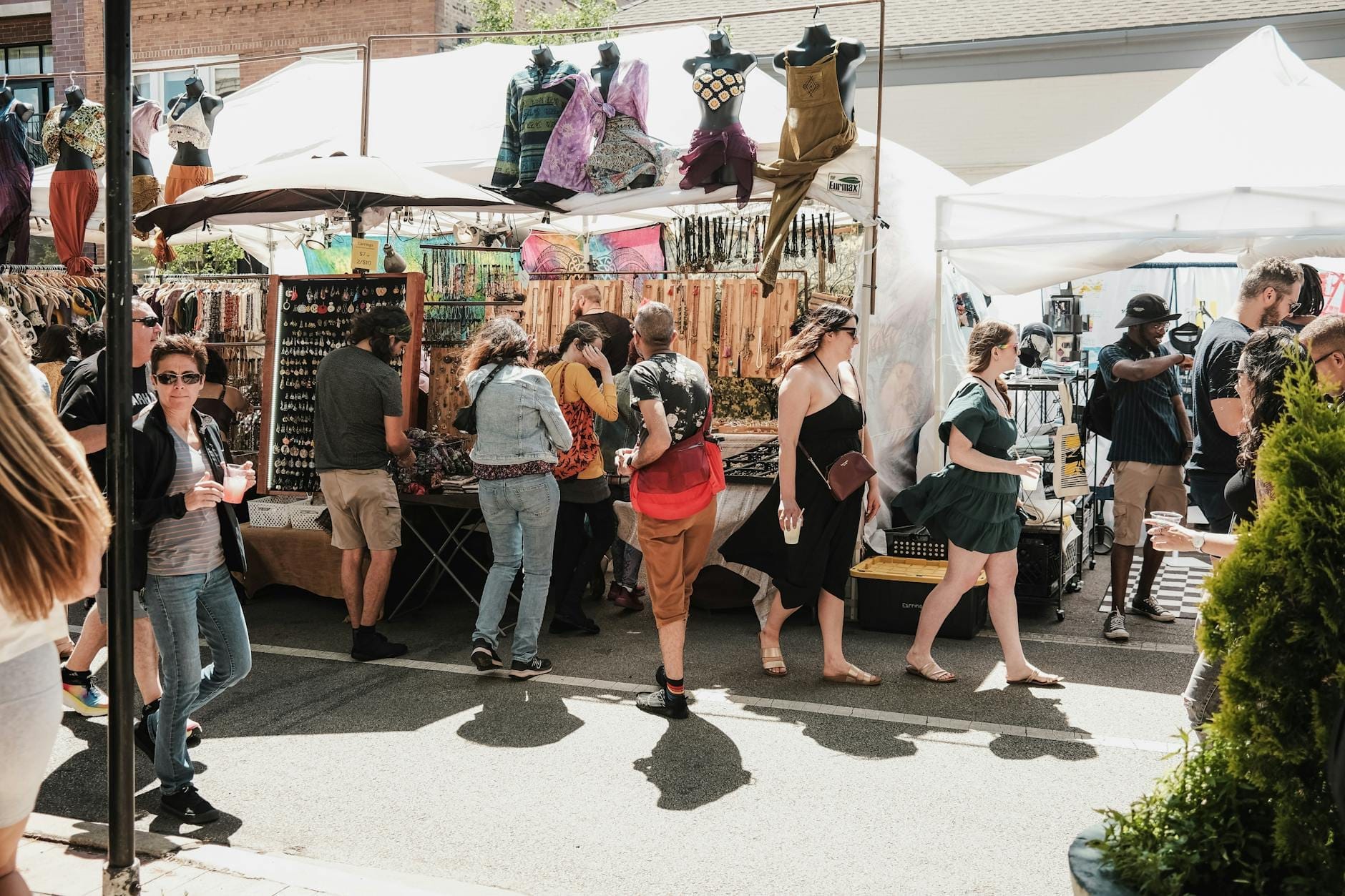
The current format is modest compared to its peak, but the DNA of the original bazaar is still present: vendors spread goods across folding tables and blankets, the smell of grilled onions and Mexican street corn drifts down the block, and live blues or gospel music often punctuates the background noise. For visitors who want to understand Chicago as a city shaped by waves of immigration, labor, and reinvention, this market offers texture that no museum exhibit fully replicates. If you are building a broader trip around the city's history and culture, the things to do in Chicago guide provides useful context for fitting Maxwell Street into a larger itinerary.
ℹ️ Good to know
Schedule note: Since 2024, the market runs one Sunday per month, May through October. Dates vary each year. Confirm the current schedule at the City of Chicago's Department of Cultural Affairs and Special Events page or the Maxwell Street Foundation website before making a trip specifically for the market.
A History Worth Knowing Before You Arrive
An impromptu outdoor market took root on Maxwell Street in the late 19th century, established largely by Eastern European Jewish immigrants who had settled in the surrounding blocks. Pushcart vendors selling clothing, household goods, food, and salvaged materials created a chaotic but functional economy for newcomers with little capital and no access to formal retail channels. The City of Chicago gave the market official recognition in October 1912, codifying what had already become a major commercial and social institution for the Near West Side.
At its height, the market stretched across roughly nine city blocks, drawing customers from across Chicago and beyond. As Jewish residents gradually relocated to other neighborhoods through the mid-20th century, waves of African-American migrants arriving from the South during the Great Migration transformed the cultural character of the area. It was in this environment that the Chicago blues took shape. Street musicians, many newly arrived from Mississippi and the Delta, set up on Maxwell Street corners with electric guitars plugged into small amplifiers, playing for tips from market crowds. Muddy Waters, Little Walter, and other foundational figures in electric blues history were part of this scene.
The market's original blocks were heavily disrupted beginning in the 1990s when the University of Illinois Chicago expanded its campus footprint through the area, demolishing buildings that had stood for nearly a century. The market relocated and contracted significantly. What remains today is a continuation maintained through advocacy by the Maxwell Street Foundation and the City's cultural affairs department, preserving the name, the corner, and the spirit of the original institution even if the scale is nothing like what it once was.
Tickets & tours
Hand-picked options from our booking partner. Prices are indicative; availability and final rates are confirmed when you complete your booking.
Go City | Chicago All-Inclusive Pass
From 127 €Instant confirmationFree cancellationiFLY Chicago Lincoln Park indoor skydiving experience
From 126 €Instant confirmationFree cancellationiFLY Chicago Rosemont indoor skydiving tickets
From 117 €Instant confirmationFree cancellationChicago lakefront neighbourhood bike tour
From 18 €Instant confirmationFree cancellation
What the Market Looks and Feels Like
Arrive on a market Sunday morning and the scene builds gradually. By mid-morning, vendors are set up along the street with a mix of goods that would be familiar to anyone who has browsed a traditional flea market: used tools, electronics, clothing, bootleg DVDs, vintage housewares, fresh produce, and handmade crafts. The range is genuinely eclectic, and prices are negotiable at most stalls. Bring cash. Not every vendor takes cards, and the ones who do may charge slightly more.
The food presence is one of the market's strongest draws. Tamales, elotes (Mexican street corn), tacos, and grilled sausages are common, and the smells reach you before you reach the vendors. This reflects the neighborhood's present-day demographics: the Near West Side and adjacent University Village are home to a significant Mexican-American community, and the food culture at the market mirrors that. Early arrivals get the widest selection and shortest lines; by late morning, the most popular food stalls have queues.
Live music is not guaranteed at every market date but is common enough to expect. When it does appear, it tends to involve blues, gospel, or R&B, performed by working musicians who set up at the edge of the market space. The sound is raw and close, nothing like a concert setup: an amplifier, a microphone, and a musician playing for a shifting crowd. This is one of the few places in Chicago where you can experience something resembling the original Maxwell Street performance tradition, and it is worth lingering for. If the blues history of Chicago interests you, the Chicago blues and jazz guide gives broader context for exploring that legacy across the city.
Best Time to Visit and What to Expect by Time of Day
The market runs from approximately mid-morning through early afternoon on its designated Sundays. Arriving early, around when vendors are still arranging their stalls, gives you the calmest experience and first pick of goods. The atmosphere at this hour is more conversational: vendors are willing to chat, crowds are manageable, and the street itself is easy to navigate.
Late morning into midday is when foot traffic peaks. The market is not enormous in its current form, so it can feel genuinely crowded during this window, particularly around the food stalls. For photography, midday light on an open street can be harsh, but the human activity is richest during this period. If you are there for the social spectacle rather than bargain hunting, this is the window to be in the middle of it.
💡 Local tip
Practical tip: The market is outdoors on city pavement with no shade structures. In July and August, Chicago temperatures regularly reach the high 20s Celsius (low-to-mid 80s Fahrenheit). Wear sunscreen, bring water, and consider a hat. Comfortable shoes with closed toes are better than sandals if you plan to browse thoroughly.
Season matters significantly. May and October market days can be cool, sometimes uncomfortably so in the morning, with temperatures potentially in the low 10s Celsius (50s Fahrenheit). Layers are sensible for those months. June through September offers the most reliable weather window, though summer Sundays in Chicago carry the possibility of afternoon thunderstorms. Check the forecast before going.
Getting There and Navigating the Area
The CTA Blue Line stops at UIC-Halsted, which puts you within easy walking distance of the market at Maxwell and Halsted Streets. From the station, walk south on Halsted to Maxwell Street. Multiple CTA bus routes also serve the Near West Side; use the CTA's trip planner to confirm current routing from wherever you are staying.
Driving is possible, and street parking is generally available in the surrounding blocks on a Sunday morning, though it fills up as the market gets busy. Ride-hailing services (Uber and Lyft both operate throughout Chicago) are a straightforward option if you want door-to-door convenience.
The market site itself is on level city streets and paved surfaces, which makes it accessible for wheelchairs and strollers. Crowding at peak hours can narrow the effective walking space between stalls, so if mobility is a concern, earlier arrival is recommended.
The surrounding neighborhood is worth a brief exploration. The Near West Side sits close to Little Italy and University Village, and the West Loop and Fulton Market district is a short distance west, offering some of Chicago's best restaurants if you want to extend the morning into lunch or early afternoon.
Honest Assessment: Who This Is For and Who Might Be Disappointed
Maxwell Street Market rewards visitors who come with genuine curiosity about Chicago's social history and an appreciation for informal, unpolished street culture. It is not a curated artisan market with craft vendors and specialty food trucks. The goods are eclectic and not always high quality. If you are looking for a polished shopping experience, Green City Market in Lincoln Park offers a more organized farmers and artisan market format.
The market's limited schedule, one Sunday per month in the warm season, means timing your visit requires planning. If your Chicago trip falls between October and April, or simply on the wrong Sunday, the market will not be running. Visitors who build a day around it and find it closed due to a schedule conflict or weather cancellation will be frustrated. Always verify the current year's dates through the City of Chicago's Department of Cultural Affairs and Special Events or the Maxwell Street Foundation.
For travelers interested in the broader sweep of Chicago's cultural and architectural history, pairing Maxwell Street with nearby attractions deepens the experience considerably. The Hull-House Museum, Jane Addams' settlement house, is a short distance away and provides direct historical context for the immigrant communities that created the original Maxwell Street Market. Together, the two sites form a powerful half-day portrait of late 19th and early 20th-century immigrant Chicago.
⚠️ What to skip
Overhype check: Some travel descriptions still reference Maxwell Street Market using language that evokes its mid-20th century scale. The current market is a fraction of its historic size. The experience is worthwhile, but manage expectations: this is a neighborhood market with historical resonance, not a vast bazaar.
Photography and Documentation
The market is a strong subject for street photography. The combination of vendor displays, food stalls, musicians, and the mix of people browsing creates a layered scene. Early morning light, before the sun rises too high, gives warmer tones on an east-west street. Ask permission before photographing individuals at close range, particularly musicians who are working for tips. Most vendors and performers are accustomed to cameras and are generally relaxed about it, but a respectful approach goes further than an entitled one.
The surrounding streetscape retains traces of the older neighborhood fabric in places, and the UIC campus boundary is visible from the market area, giving a visual reminder of the forces that reshaped Maxwell Street in the 1990s. Documenting that contrast, the historic corner against the institutional buildings that replaced so much of what was there, is a worthwhile exercise for anyone interested in urban history.
Insider Tips
- Bring small bills and cash. Many vendors price items cheaply and do not have change for large denominations, and card readers are not universal.
- The tamale and elote vendors tend to be at the market regardless of which Sunday you attend. These are genuinely good and representative of the neighborhood's present-day culture. Eat before you browse or you will lose focus quickly.
- If you hear live music, stop and listen for a few minutes rather than walking past. The musicians are often experienced players who chose this format intentionally. Leaving a dollar or two in the tip jar is expected.
- Confirm the specific market date well in advance for the year you are visiting. The one-Sunday-per-month schedule means missing it is easy, and there is no equivalent event the following week.
- Combine the visit with Hull-House Museum, which is within walking distance and provides direct historical context for the immigrant communities that built Maxwell Street. The museum is free or low-cost and does not require much time to appreciate.
Who Is Maxwell Street Market For?
- Chicago history enthusiasts who want to see and experience a living piece of the city's immigrant and blues heritage
- Budget-conscious travelers looking for an entirely free outing with optional spending on food and goods
- Street food lovers, particularly those interested in Chicago's Mexican-American culinary traditions
- Photographers and documentarians interested in urban street scenes and social history
- Blues music fans who want to connect with a place that directly shaped the development of electric Chicago blues
Nearby Attractions
Combine your visit with:
- Bahá'í House of Worship
The Bahá'í House of Worship in Wilmette, Illinois, is one of the most architecturally singular buildings in North America. Free to enter, open daily, and reachable by CTA from downtown Chicago, it rewards visitors with a 135-foot lace-like dome, meditative silence, and an unusual kind of spiritual calm that transcends denomination.
- Brookfield Zoo Chicago
Brookfield Zoo Chicago is one of the largest and most historically significant zoos in the United States, covering 216 acres about 14 miles west of downtown. With more than 511 species, landmark indoor exhibits, and a genuine conservation mission, it rewards a full day of exploration. But it takes planning to get the most out of it.
- Chicago Air and Water Show
Every August, the Chicago Air and Water Show transforms the lakefront into a grandstand for one of the most spectacular free public events in the United States. Fighter jets, military demonstrations, and precision flying teams perform over Lake Michigan while hundreds of thousands of spectators line the shore from Fullerton to Oak Street.
- Chicago Botanic Garden
A living museum spread across 385 acres and nine islands north of Chicago, the Chicago Botanic Garden offers 27 gardens, four natural areas, and six miles of lake shoreline in Glencoe, Illinois. Whether you visit for a single seasonal bloom or spend a full day exploring Japanese landscapes and native prairies, this guide covers everything you need to plan a worthwhile trip.