Chicago Botanic Garden: What to Expect Before You Go
A living museum spread across 385 acres and nine islands north of Chicago, the Chicago Botanic Garden offers 27 gardens, four natural areas, and six miles of lake shoreline in Glencoe, Illinois. Whether you visit for a single seasonal bloom or spend a full day exploring Japanese landscapes and native prairies, this guide covers everything you need to plan a worthwhile trip.
Quick Facts
- Location
- 1000 Lake Cook Rd, Glencoe, IL 60022 — about 20 miles north of downtown Chicago
- Getting There
- Metra Union Pacific North Line to Braeside station, then a .8-mile walk to the Garden entrance
- Time Needed
- 3–5 hours for a thorough visit; a full day if attending seasonal exhibits
- Cost
- Per-person admission fee applies; parking fees may vary. Check the official site for current rates. Check the official site for current rates.
- Best for
- Nature lovers, families, photographers, garden design enthusiasts, and anyone needing a calm escape from the city
- Official website
- www.chicagobotanic.org
What the Chicago Botanic Garden Actually Is
The Chicago Botanic Garden is not a city park you wander through in half an hour. It is a 385-acre living museum operated by the Chicago Horticultural Society on land owned by the Forest Preserve District of Cook County — a public-private partnership that has shaped this site into one of the most visited botanic gardens in the United States. Spread across nine islands with six miles of lake shoreline in Glencoe, Illinois, the property holds 27 gardens and four natural areas. The scale is genuinely surprising to first-time visitors who expect something compact.
The garden sits about 20 miles north of downtown Chicago, making it technically a suburban destination. That distance filters out casual foot traffic, which keeps the atmosphere noticeably calmer than the lakefront parks closer to the city. You will hear birds here. In some corners, you will hear almost nothing else.
ℹ️ Good to know
Garden hours vary by season. As of May 2026, general public hours are 10 a.m. to 7 p.m. daily, with members-only access from 8 to 10 a.m. Always confirm current hours at chicagobotanic.org before traveling, especially in winter months when schedules tighten considerably.
Getting There: Your Realistic Options
Most visitors arrive by car. Parking fees vary, which is straightforward and reasonable given the size of the property. If you are coming from downtown Chicago, take I-94 North or US-41 North and allow 35 to 50 minutes depending on traffic.
By Metra, take the Union Pacific North Line from Ogilvie Transportation Center in the Loop toward Kenosha and exit at Braeside station. The Garden is about .8 mile walk from the station, and the route is manageable in good weather, though not all visitors find it convenient with young children or in extreme cold. Check current Metra schedules at metra.com before your trip, as train frequency varies by day of week.
Ride-hailing via Uber or Lyft is a practical option from the North Shore suburbs or from Braeside station if you prefer not to walk. The Garden does not have a CTA 'L' stop in its vicinity, so transit visitors should budget time for the Metra leg.
💡 Local tip
If you drive, arrive at opening time on weekdays. Weekend lots fill up quickly during peak bloom season (late May through June) and during special events like Butterflies & Blooms or the Model Railroad Garden season.
Tickets & tours
Hand-picked options from our booking partner. Prices are indicative; availability and final rates are confirmed when you complete your booking.
Go City | Chicago All-Inclusive Pass
From 127 €Instant confirmationFree cancellationiFLY Chicago Lincoln Park indoor skydiving experience
From 126 €Instant confirmationFree cancellationiFLY Chicago Rosemont indoor skydiving tickets
From 117 €Instant confirmationFree cancellationChicago lakefront neighbourhood bike tour
From 18 €Instant confirmationFree cancellation
How the Experience Changes by Season
The Garden is genuinely worth visiting in every season, but the character of each visit shifts dramatically. Spring, roughly mid-April through early June, is the most photographed season: thousands of tulips, daffodils, and crabapple trees create dense color across the main island gardens. The smell along the rose garden paths in late May is one of those sensory details that stays with you.
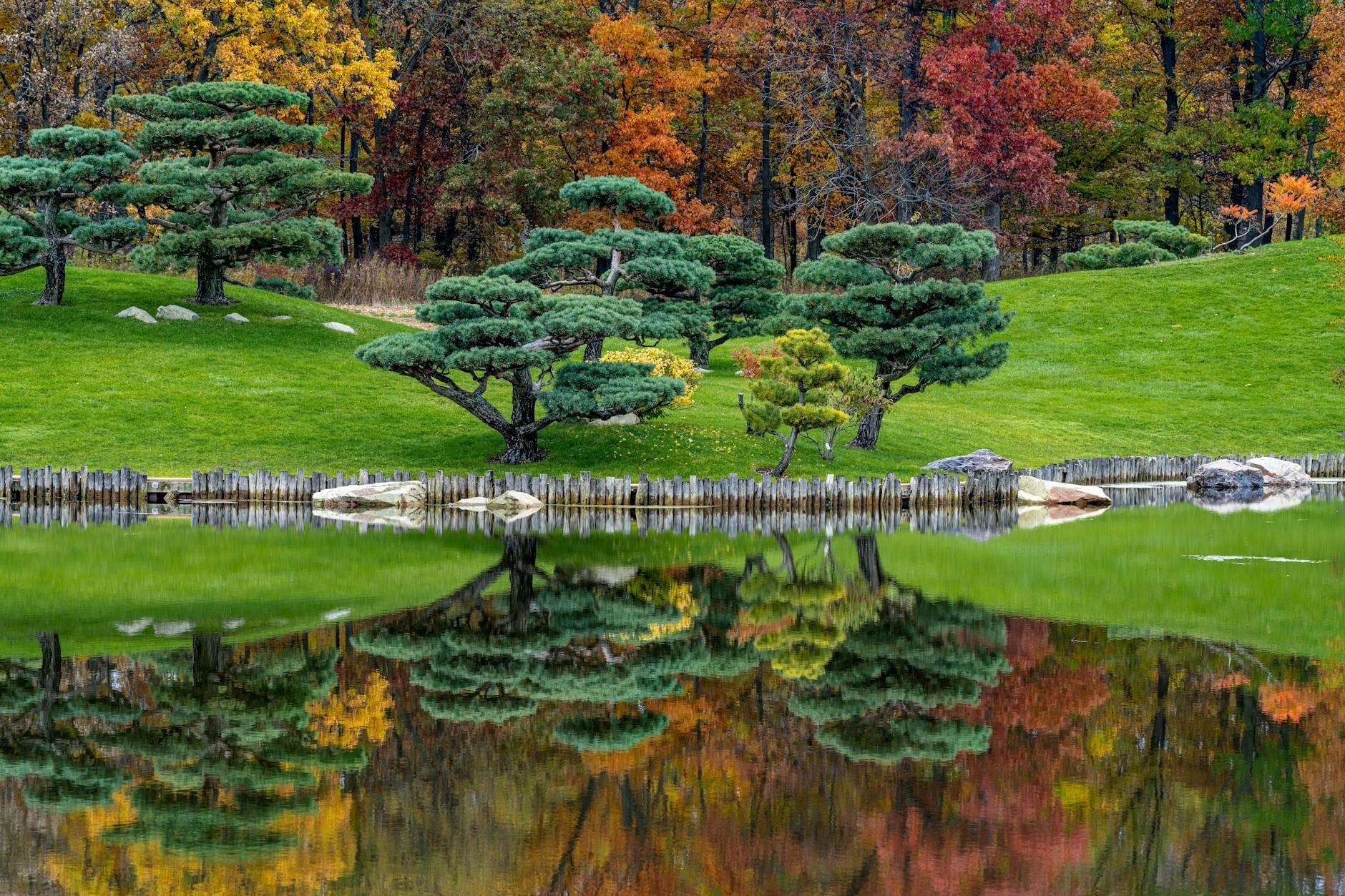
Summer brings the full canopy into leaf, which transforms the Japanese garden into something deeply shaded and cool even on hot days. The Elizabeth Hubert Malott Japanese Garden, designed by Dr. Koichi Kawana and dedicated in 1982, is one of the Garden’s signature landscapes. Three islands, a dry garden, a tea house, and a zigzag bridge over a koi pond make this section feel removed from the rest of the property. Summer afternoon light filters through the maple canopy here in a way that stops people mid-stride.
Autumn is underrated. The native prairie and meadow sections show warm russet and gold that rival anything in the formal gardens. Crowds are thinner after Labor Day, and the quality of the light in September and October is exceptional for photography. November brings a quieter mood, but the Garden stays open and the bare bones of the landscape reveal its design logic.
Winter is the hardest sell but has its own rewards. The Regenstein Center and other indoor spaces keep green things growing, and winter light displays draws visitors back for a very different atmosphere. If you visit in January or February, layer appropriately: the open island paths offer no shelter from winter wind across the open grounds.
For broader seasonal planning across the city, the best time to visit Chicago guide covers how the Garden fits into a larger travel calendar.
The Grounds: A Practical Walkthrough
The property is large enough that attempting to see everything in one visit is a mistake. First-time visitors often spend too long in the formal English walled garden near the entrance and run out of energy before reaching the Japanese garden or the native habitat areas at the far end of the property. A tram tour is available seasonally and offers a panoramic overview before you commit your feet to a direction.
The main gardens visible from the entrance include the Esplanade, the Rose Garden, and the Heritage Garden. These are the most maintained and the most photographed. They are best appreciated in morning light, before the families with strollers arrive in numbers. The crowd pattern on a Saturday in June follows a clear arc: sparse before 10:30 a.m., dense from noon to 3 p.m., lighter again by late afternoon as families depart before dinner.
Beyond the central gardens, the Regenstein Fruit and Vegetable Garden is a working kitchen garden that demonstrates food production methods ranging from raised beds to espaliered fruit trees against warm masonry walls. The Sensory Garden, designed to be experienced through touch and smell as well as sight, is worth seeking out. These secondary sections reward the curious visitor who moves away from the main paths.
The four natural areas — including wetlands, prairie, woodland, and savanna habitats — occupy the quieter edges of the property. These are not manicured. They are ecological restoration zones that the Garden manages alongside its formal collections, and they show what this landscape looked like before European settlement. Interpretive signs throughout are genuinely informative rather than generic.
💡 Local tip
Wear comfortable, flat-soled shoes. The main paths are paved and smooth, but the natural area trails are unpaved and can be muddy in early spring or after rain. A light jacket is useful even in summer, as the lake shoreline generates cool breezes in the afternoon.
Photography and Seasonal Exhibits
The Chicago Botanic Garden is one of the best photography destinations in the greater Chicago area, and it attracts serious plant photographers alongside casual visitors. Early morning access is available to members from 8 to 10 a.m. daily, which means the best light for photography coincides with the least crowded window. Non-members who want the best shots should aim to arrive at 10 a.m. sharp when the gates open to the public.
The Japanese garden is reliably the most photogenic section in all seasons, but the bulb garden in April and the dahlia collection in late August through September each have their dedicated following. The Model Railroad Garden, a seasonal outdoor exhibit featuring trains running through miniature landscapes, is a perennial draw for families and detail-oriented visitors.
Seasonal special exhibits like Butterflies and Blooms operate on their own schedules and may require advance tickets during peak periods. Check the Garden's event calendar before your visit if these are part of your plan.
Food, Accessibility, and On-Site Logistics
The Garden View Café opens at 8 a.m. and serves hot food until 2 p.m., with grab-and-go options available until close (as of the May 2026 schedule). The food is serviceable rather than remarkable: sandwiches, salads, and seasonal specials. On busy weekend days the cafe line can be long at noon, so eating before 11:30 a.m. or after 2 p.m. is the practical choice.
The Garden Shop closes at 5 p.m., earlier than the Garden itself, so plan your purchase before late afternoon. The selection of plants, seeds, and garden books is better than most institutional gift shops.
Accessibility is solid. Most main paths are paved and accessible, restrooms across the property are accessible, and the tram tour provides an option for visitors who cannot walk the full grounds. Wheelchairs and mobility assistance are available; contact the Garden in advance if you have specific needs.
Families planning a full Chicago visit may find the Chicago with kids guide useful for pairing the Garden with other family-friendly destinations nearby.
An Honest Assessment: Who This Is For and Who Might Pass
The Chicago Botanic Garden delivers genuine value for nature-oriented travelers, garden design enthusiasts, photographers, and families looking for a full outdoor day that is not primarily athletic. It is also a legitimate destination for anyone burned out on urban museums and wanting something slower and quieter.
It is not the right choice for visitors on a tight one- or two-day schedule who have not yet seen Millennium Park, the Art Institute, or the lakefront. The distance from downtown makes it a real time commitment: figure on about 35 to 50 minutes each way by car or Metra, plus a minimum of three hours on the grounds. That is a half-day excursion minimum.
Visitors trying to fit many attractions into a short trip should consult the Chicago one-day itinerary to calibrate priorities before committing to the Garden as a primary stop.
Travelers who find botanical gardens aesthetically pleasant but intellectually thin may be surprised here. The interpretive program is detailed, the ecology work is genuine, and the Japanese garden alone merits serious attention. The Garden asks something of the visitor who pays attention, and it rewards that attention accordingly.
Insider Tips
- Members get exclusive 8–10 a.m. access before the general public arrives. If you plan to visit more than once in a year, membership frequently pays for itself in admission savings and grants you the best light and fewest crowds for photography.
- The Malott Japanese Garden is at its absolute peak in mid-November when the maples turn. Most visitors have left for the season and the crowds shrink dramatically, but the color can match anything the Garden shows in spring.
- Parking fills fastest near the main Gateway Center entrance. On busy weekends, the overflow lots closer to the Garden's northern edges are less stressful and still close to the natural area trails.
- The grab-and-go section of the Garden View Cafe operates until 7 p.m. while the hot food line closes at 2 p.m. If you arrive mid-afternoon, skip the cafe queue and pick up something cold to eat near the lakeside benches rather than standing in line.
- Ask at the information desk for the current bloom map. Staff update it regularly and it will redirect you to whichever section is at peak color that specific week, which changes faster than any published schedule can track.
Who Is Chicago Botanic Garden For?
- Nature and garden photography enthusiasts, especially those with early morning flexibility
- Families with children who need space, outdoor exhibits, and sensory variety beyond a single museum gallery
- Travelers extending their Chicago trip into the North Shore suburbs with a full day to spend outdoors
- Garden design students or enthusiasts who want to study both formal European and Japanese landscape traditions in one property
- Anyone seeking a genuine half-day retreat from the density and noise of central Chicago
Nearby Attractions
Combine your visit with:
- Bahá'í House of Worship
The Bahá'í House of Worship in Wilmette, Illinois, is one of the most architecturally singular buildings in North America. Free to enter, open daily, and reachable by CTA from downtown Chicago, it rewards visitors with a 135-foot lace-like dome, meditative silence, and an unusual kind of spiritual calm that transcends denomination.
- Brookfield Zoo Chicago
Brookfield Zoo Chicago is one of the largest and most historically significant zoos in the United States, covering 216 acres about 14 miles west of downtown. With more than 511 species, landmark indoor exhibits, and a genuine conservation mission, it rewards a full day of exploration. But it takes planning to get the most out of it.
- Chicago Air and Water Show
Every August, the Chicago Air and Water Show transforms the lakefront into a grandstand for one of the most spectacular free public events in the United States. Fighter jets, military demonstrations, and precision flying teams perform over Lake Michigan while hundreds of thousands of spectators line the shore from Fullerton to Oak Street.
- Devon Avenue (Little India)
Devon Avenue is Chicago's most culturally layered commercial street, stretching through the West Ridge neighborhood on the city's far north side. Its core South Asian mile, running roughly between Ridge Boulevard and Kedzie Avenue, packs in sari boutiques, Bollywood music shops, halal butchers, sweet shops, and some of the best Indian and Pakistani food in the Midwest. There is no ticket to buy and no itinerary to follow — the experience is entirely your own.