Brookfield Zoo Chicago: What to Expect, How to Get There, and Whether It's Worth Your Time
Brookfield Zoo Chicago is one of the largest and most historically significant zoos in the United States, covering 216 acres about 14 miles west of downtown. With more than 511 species, landmark indoor exhibits, and a genuine conservation mission, it rewards a full day of exploration. But it takes planning to get the most out of it.
Quick Facts
- Location
- 3300 Golf Road, Brookfield, IL 60513 — about 14 miles west of downtown Chicago
- Getting There
- Metra BNSF Line to Zoo Stop (Hollywood Station), then a 2-block walk northeast
- Time Needed
- 4 to 6 hours for a full visit; 2 to 3 hours for a highlights circuit
- Cost
- General admission varies; Free Days offered Jan–Feb (check current schedule). Parking from $17. Some attractions ticketed separately.
- Best for
- Families with kids, wildlife enthusiasts, and day-trippers looking to escape downtown
- Official website
- www.brookfieldzoo.org
What Brookfield Zoo Chicago Actually Is
Brookfield Zoo Chicago, officially the Chicago Zoological Park, sits in the suburb of Brookfield on 216 acres (87 ha) of landscaped grounds. It houses approximately 511 species of animals, making it one of the largest collections in North America. Unlike many urban zoos that feel compressed, Brookfield spreads out. You will walk. You will need comfortable shoes and a rough plan.
The zoo is operated by the Chicago Zoological Society and sits on land acquired by the Forest Preserve District of Cook County in 1919 for zoological purposes; the Chicago Zoological Society was established in 1921, and the zoo opened in 1934. From the start, it made a deliberate choice to use moats and natural barriers instead of cages, a progressive design philosophy that was unusual at the time and remains part of its identity.
Brookfield has several firsts to its name: it was the first zoo in America to exhibit giant pandas, it built one of the nation’s first fully indoor dolphin exhibits in 1960, and its Tropic World habitat, which opened in 1982, was one of the earliest fully indoor rainforest simulations in any zoo and was among the largest indoor zoo exhibits when it debuted. These aren't just trivia points. They reflect an institution that has historically pushed the format forward. If you're also considering the free-entry option closer to the city, see our comparison of Lincoln Park Zoo, which is a very different experience in scale and atmosphere.
💡 Local tip
Free Days run roughly from early January through late February, when general admission is waived. Parking and separately ticketed attractions still charge fees. Check the official calendar at brookfieldzoo.org before your trip, as specific dates and exclusions change each year.
Getting There: Your Realistic Options
Brookfield Zoo is not in Chicago. It's in Brookfield, Illinois, a western suburb. That distinction matters for planning. The simplest public transit route is the Metra BNSF Line from Union Station or Ogilvie Transportation Center in the Loop, heading west toward Aurora. Get off at Zoo Stop (Hollywood Station), then walk about two blocks northeast to the entrance. The ride takes roughly 20 to 30 minutes from downtown depending on your departure point, and Metra trains are clean, reliable, and far less stressful than driving on the Eisenhower Expressway.
If you're driving, the zoo is accessed via First Avenue between Ogden Avenue and 31st Street. From downtown Chicago, take the Eisenhower Expressway (I-290) or the Stevenson Expressway (I-55) west to First Avenue. Signage guides you from there. Parking is currently $17 for the Main Entrance lot and $20 at the North Gate, with members paying a reduced rate of $7. On busy summer weekends, the lots fill up, and arriving after 11 a.m. means a longer walk from overflow parking.
Pace Bus Route 331 stops just outside the South Gate, which is useful if you're arriving from a Metra station in a different direction. Rideshare drop-off works fine, though pickup on a busy afternoon can take a few minutes, as the surrounding streets are not designed for heavy app-based traffic.
ℹ️ Good to know
The South Gate and Main Gate are both valid entrances, but most transit-based visitors end up at the Main Gate. The two gates are not adjacent, so know which one matches your transport arrival point before you walk.
Tickets & tours
Hand-picked options from our booking partner. Prices are indicative; availability and final rates are confirmed when you complete your booking.
Go City | Chicago All-Inclusive Pass
From 127 €Instant confirmationFree cancellationiFLY Chicago Lincoln Park indoor skydiving experience
From 126 €Instant confirmationFree cancellationiFLY Chicago Rosemont indoor skydiving tickets
From 117 €Instant confirmationFree cancellationChicago lakefront neighbourhood bike tour
From 18 €Instant confirmationFree cancellation
The Experience: Morning vs. Afternoon
Opening time is currently 10 a.m. daily, with the exception of Thanksgiving Day and Christmas Day when the zoo is closed. The gates open, and within the first 30 minutes the grounds feel genuinely uncrowded. Animal activity is often highest in the morning: the big cats pace more, the African animals are alert before the heat builds, and the indoor rainforest habitat carries the sound of bird calls before competing crowds dull the acoustic effect. If you have children under ten, arriving at opening is not just a nice idea. It's the difference between an engaging visit and a stressful one.
By midday, particularly in summer, the zoo becomes noticeably busier. School groups move in organized clusters. Strollers collect near the food stands. The African savanna area can feel exposed and hot without much shade. By 1 p.m. on a July Saturday, the main pathways around Hamill Family Wild Encounters and the Australia area feel dense with foot traffic. Some animals also retreat from view in the heat, which is worth knowing if you've traveled specifically to see certain species.
Arriving at 10 a.m. and leaving by 2 p.m. captures the best of both worlds: you see active animals, avoid peak crowds, and leave before the mid-afternoon lull. If you can't do a morning visit, late afternoon on a weekday is the second-best window. Weekday visits in spring and fall offer the most relaxed experience overall.
Key Exhibits Worth Planning Around
Tropic World is the centerpiece indoor exhibit and deserves time. It simulates three separate rainforest environments, African, Asian, and South American, under a single enormous glass-and-steel structure. The air is warm and humid the moment you step in, carrying the scent of vegetation and soil. Gorillas, gibbons, and spider monkeys move through multi-story habitats designed to allow natural behavior. Even on a grey winter day, this exhibit makes the trip worthwhile.
Dolphin Discovery is the zoo's dolphin presentation program. Tickets are sold separately (around $8 for adults, $4 for children ages 3 to 11 as of recent listings, though prices change). The show runs at 11:30 a.m. daily with closure dates during parts of the year. Book or buy tickets early in your visit because capacity is limited. This is one of the few ticketed add-ons that most visitors feel is genuinely worth the extra cost.
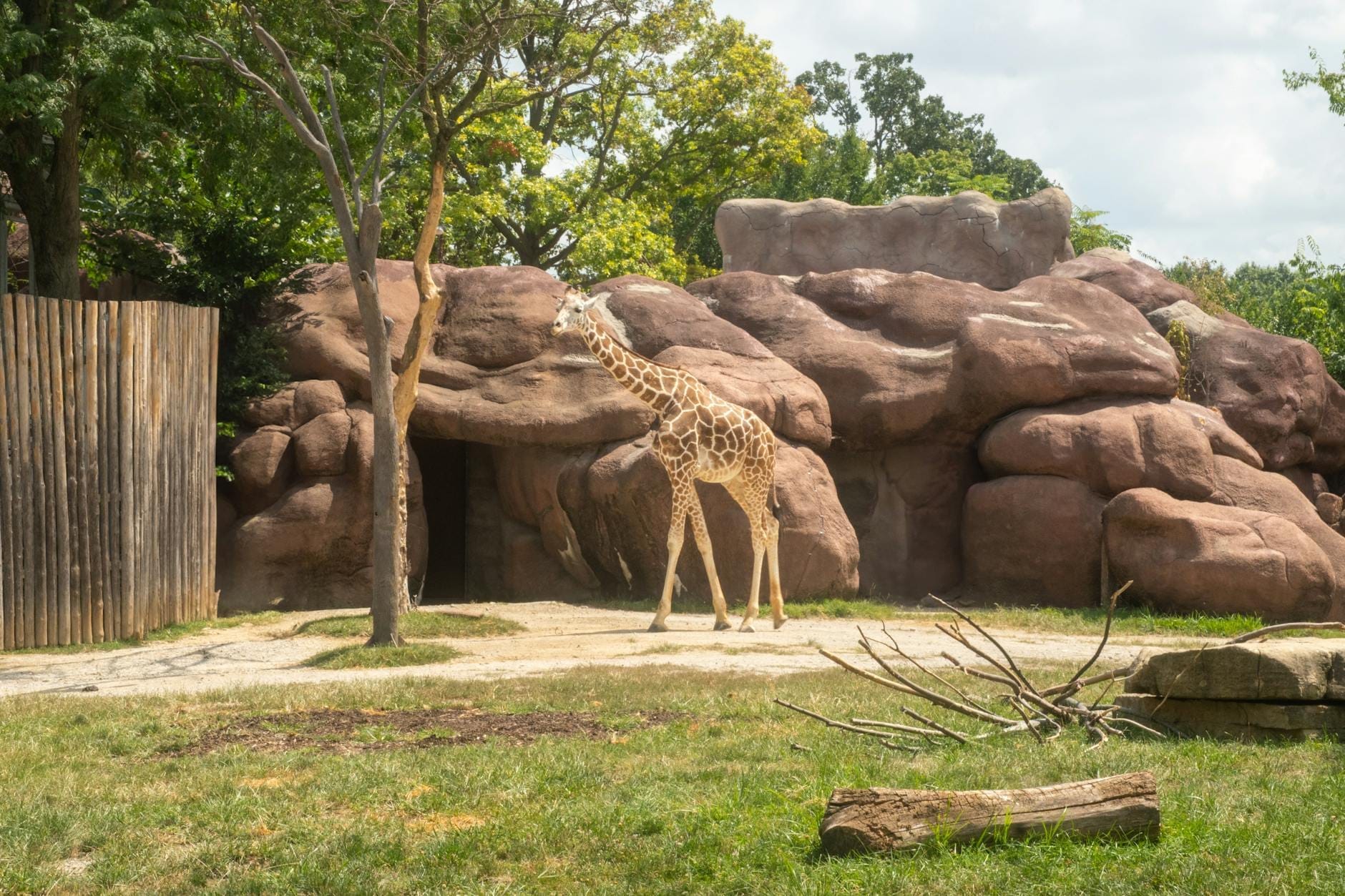
The Habitat Africa exhibits split into two zones: The Savanna and The Forest. The savanna section has giraffes, zebras, and warthogs in a spacious enclosure with good sightlines. The forest section is denser and focused on okapis, an animal that most visitors have never seen outside of a photograph. Hamill Family Wild Encounters, the animal contact area, works on a timed entry system and gets busy quickly, so stop there early in the day if it's a priority.
The 7 Seas Panorama is worth noting as a historical artifact of the zoo's design ambition. Built in 1960 as one of the first fully enclosed dolphin exhibits in the United States, it has since been updated and now also features sea lions and Pacific white-sided dolphins in a naturalistic setting. The building itself reflects mid-century zoo architecture, with a curved canopy roofline that reads differently against a winter sky than it does in summer.
Practical Walkthrough and Logistics
The zoo grounds cover 216 acres, and the internal circuit is longer than it looks on the map. Pick up a physical map at the gate, or screenshot the digital version from the website in advance, as cell coverage can be inconsistent in some of the more densely treed areas. The main path forms a loose loop, but shortcut paths cut across the interior. The Motor Safari tram operates seasonally and connects the major exhibit areas for an additional fee, which is a reasonable option for visitors with young children or limited mobility.
Food options inside the zoo are standard theme-park fare: quick-service counters, hot dogs, burgers, pizza, and seasonal items. Nothing is remarkable. Bringing a packed lunch or snacks is allowed and saves both money and time. Picnic areas are available near the South Gate. There are no restaurants nearby within easy walking distance of the zoo entrances, so if you're arriving by transit, plan to eat inside.
Accessibility is taken seriously here. The flat, paved pathways and wide lanes make the zoo navigable for strollers and wheelchairs. Motorized scooters and manual wheelchairs are available for rental at the main entrance. The zoo publishes accessibility details in its visit planning section, and specific parking lots offer reduced distances to entrances for visitors with accessibility needs.
⚠️ What to skip
Current posted hours are 10:00 a.m. to 4:00 p.m. That closing time is earlier than many visitors expect. If you arrive after noon, you realistically have four hours at most. Larger families or anyone wanting to see multiple indoor exhibits should arrive as close to opening as possible.
Photography, Seasons, and When to Skip It
Photography conditions are best in morning light, particularly in the outdoor enclosures on the east-facing sides of the zoo. The African savanna–style habitats and the Australia exhibit both have natural light angles that work well between 10 and 11 a.m. The indoor exhibits like Tropic World require patience: the glass on the gorilla viewing area creates glare, and long lenses perform better here than phone cameras. A polarizing filter helps.
Winter visits between January and February are quiet and cheap, especially on Free Days. The zoo looks different under bare trees, and the indoor habitats gain appeal when it's cold outside. Summer brings the fullest experience but also the largest crowds. If you're building a broader Chicago itinerary and want to compare the weather trade-offs for different seasons, the guide on the best time to visit Chicago provides useful seasonal context.
Who should skip Brookfield Zoo? Travelers with fewer than six hours total in Chicago and a list of downtown landmarks to cover. The round trip from the Loop takes roughly an hour by transit, and the zoo itself needs at least three to four hours to feel satisfying. If your time is genuinely tight, Lincoln Park Zoo is free, central, and smaller. Brookfield rewards unhurried visitors who treat it as their primary destination for the day.
Visitors primarily interested in a day of architecture, history, or culture will find more per square foot at downtown institutions. The Field Museum on Museum Campus covers natural history at a depth that complements rather than duplicates what Brookfield offers. The two make a logical pairing across different days of a longer trip.
Insider Tips
- The Metra BNSF line is the smoothest way to arrive, but the return journey has gaps between trains of 30 to 60 minutes depending on the time of day. Check the outbound schedule before you enter the zoo so you know your exit window.
- Dolphin Discovery has limited seating and sells out on busy weekends. Buy tickets as soon as you arrive, even before you start walking the exhibits.
- Free Days in winter are real, but check the specific dates each year. The zoo typically excludes certain days within the free window. Don't assume the whole January-February period is free without confirming.
- The South Gate entrance is noticeably less crowded than the Main Gate even at peak times. If you're arriving by Pace Bus or driving in from the south, using it saves time and avoids the main entry bottleneck.
- The zoo's indoor exhibits make it a reasonable rainy-day destination. Tropic World, the Aquatic Building, and the Seven Seas together provide several hours of covered viewing without setting foot outside.
Who Is Brookfield Zoo Chicago For?
- Families with children of any age, especially those who want more space and variety than a single-exhibit attraction provides
- Day-trippers who want a full day out of the downtown core without leaving the metro area
- Wildlife and conservation enthusiasts interested in one of the historically significant zoological collections in the US
- Winter visitors looking for affordable, low-crowd options during the Free Days period
- Photographers seeking naturalistic animal enclosures with open-air and indoor shooting conditions
Nearby Attractions
Combine your visit with:
- Bahá'í House of Worship
The Bahá'í House of Worship in Wilmette, Illinois, is one of the most architecturally singular buildings in North America. Free to enter, open daily, and reachable by CTA from downtown Chicago, it rewards visitors with a 135-foot lace-like dome, meditative silence, and an unusual kind of spiritual calm that transcends denomination.
- Chicago Air and Water Show
Every August, the Chicago Air and Water Show transforms the lakefront into a grandstand for one of the most spectacular free public events in the United States. Fighter jets, military demonstrations, and precision flying teams perform over Lake Michigan while hundreds of thousands of spectators line the shore from Fullerton to Oak Street.
- Chicago Botanic Garden
A living museum spread across 385 acres and nine islands north of Chicago, the Chicago Botanic Garden offers 27 gardens, four natural areas, and six miles of lake shoreline in Glencoe, Illinois. Whether you visit for a single seasonal bloom or spend a full day exploring Japanese landscapes and native prairies, this guide covers everything you need to plan a worthwhile trip.
- Devon Avenue (Little India)
Devon Avenue is Chicago's most culturally layered commercial street, stretching through the West Ridge neighborhood on the city's far north side. Its core South Asian mile, running roughly between Ridge Boulevard and Kedzie Avenue, packs in sari boutiques, Bollywood music shops, halal butchers, sweet shops, and some of the best Indian and Pakistani food in the Midwest. There is no ticket to buy and no itinerary to follow — the experience is entirely your own.