Devon Avenue: Chicago's Little India and International Marketplace
Devon Avenue is Chicago's most culturally layered commercial street, stretching through the West Ridge neighborhood on the city's far north side. Its core South Asian mile, running roughly between Ridge Boulevard and Kedzie Avenue, packs in sari boutiques, Bollywood music shops, halal butchers, sweet shops, and some of the best Indian and Pakistani food in the Midwest. There is no ticket to buy and no itinerary to follow — the experience is entirely your own.
Quick Facts
- Location
- Devon Avenue, West Ridge (West Rogers Park), Chicago's Far North Side — designated 6400 N in the city grid
- Getting There
- Red Line to Loyola, then CTA bus heading west along Devon Ave (route 155 Devon); the South Asian corridor is several stops from the Red Line end
- Time Needed
- 2 to 4 hours for a relaxed walk, shopping, and a meal; a full afternoon if you plan to eat multiple courses or browse fabric stores seriously
- Cost
- Free to walk; budget around $15–30 per person for a restaurant meal, less for street snacks and sweets
- Best for
- Food explorers, South Asian diaspora visitors, shoppers looking for saris and spices, families, anyone curious about how immigrant communities shape a city
What Devon Avenue Actually Is
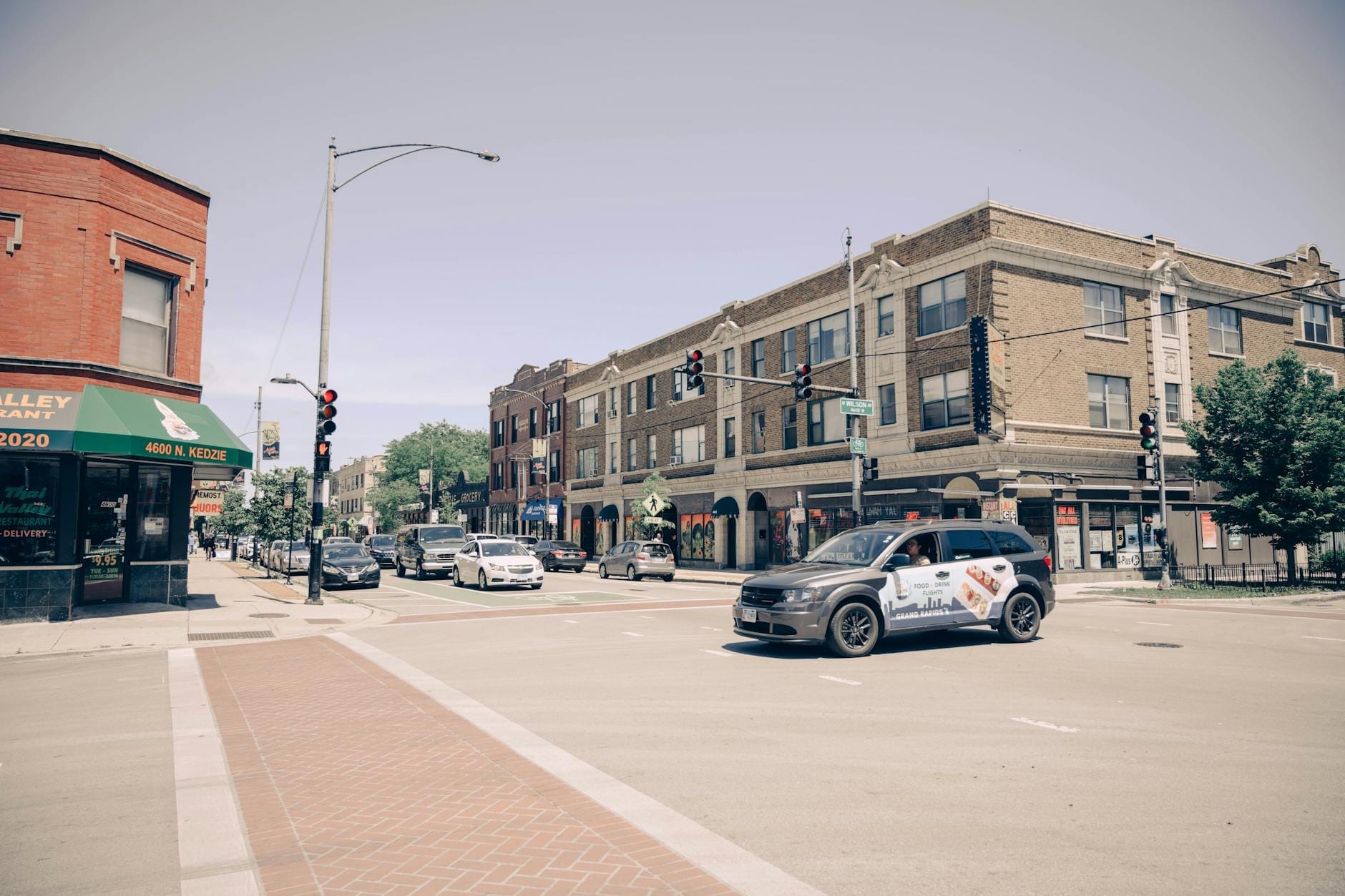
Devon Avenue is a public street, not a managed attraction. It runs east to west across the entire north side of Chicago — starting near Lake Michigan by Loyola University and extending about 11 miles west until it merges with Higgins Road just east of O'Hare International Airport. But when Chicagoans say 'Devon,' they almost always mean the one-mile-ish stretch between Ridge Boulevard and Kedzie Avenue in the West Ridge community area, also called West Rogers Park.
That concentrated stretch is where South Asian immigration reshaped a commercial corridor that had previously served Chicago's Jewish community. Starting in the late 1970s, Indian and Pakistani businesses began opening alongside delis and kosher grocers. Today you find sari showrooms next to Jewish bakeries, Pakistani restaurants steps from Middle Eastern produce stores, and Hindi film soundtracks drifting out of storefronts that also carry Urdu-language paperbacks. The block-by-block variety is the point.
ℹ️ Good to know
The street is free to walk at any hour — there is no gate, no ticket, and no tour required. Individual businesses keep their own hours, so midday on weekdays is quieter for service, while weekends bring more foot traffic and fully stocked sweet shops.
A Street That Rewrote Itself: The History Behind the Name
The street was originally called Church Street before being renamed Devon Avenue in the 1880s, reportedly after a commuter town outside Philadelphia. For much of the early and mid-20th century, it served as the commercial spine of one of Chicago's largest Jewish neighborhoods — a place to pick up smoked fish, buy furniture on credit, and catch a movie at the local theater.
As the Jewish community moved further north and into the suburbs in the postwar decades, the commercial character of Devon shifted. South Asian immigration to Chicago accelerated through the 1970s and 1980s, and Devon Avenue became the natural gathering point — first for businesses serving the community's practical needs, then for restaurants, jewelers, and cultural institutions. The stretch earned the informal title of 'Chicago's Little India,' though that label slightly undercounts the Pakistani, Bangladeshi, Afghan, and other South and Central Asian businesses that share the same blocks.
The historical layering is still visible. Kosher signage coexists with Urdu script. A few storefronts carry goods that could satisfy both a South Asian grandmother and a longtime Jewish resident. This is not a theme park version of multiculturalism — it is what actually happened when successive waves of immigrants used the same street to build community.
Tickets & tours
Hand-picked options from our booking partner. Prices are indicative; availability and final rates are confirmed when you complete your booking.
Go City | Chicago All-Inclusive Pass
From 127 €Instant confirmationFree cancellationiFLY Chicago Lincoln Park indoor skydiving experience
From 126 €Instant confirmationFree cancellationiFLY Chicago Rosemont indoor skydiving tickets
From 117 €Instant confirmationFree cancellationChicago lakefront neighbourhood bike tour
From 18 €Instant confirmationFree cancellation
Walking the Strip: What You See, Smell, and Hear
Arrive around noon on a Saturday and the sensory information hits immediately. The smell of cardamom and rose water from sweet shops mixes with cumin from a nearby spice vendor. Bollywood soundtracks bleed through open doorways. Plastic crates of fresh fenugreek and karela are stacked on the sidewalk outside produce stands, their earthy, slightly bitter smell cutting through everything else.
Sari and salwar kameez shops take up a disproportionate share of the storefronts. Step inside the larger ones and the walls are stacked floor to ceiling with bolts of silk, chiffon, and synthetic blends in colors — hot pink, peacock blue, marigold — that have no equivalent in an average American clothing store. Staff at many of these shops are accustomed to browsers and will show fabric without pressure to buy, though bargaining is not generally expected.
Sweet shops (mithai shops) deserve serious attention even if you have no intention of buying. The glass cases display barfi, gulab jamun, jalebi, and ladoos — often made fresh that morning. A small box of mixed sweets costs a few dollars and makes an excellent mid-walk snack. The texture of good barfi, dense and faintly grainy with dried milk, is specific enough that it is worth trying even for visitors unfamiliar with the genre.
Spice and grocery stores are worth at least a slow pass. The bulk bins carry dried lentils in a dozen varieties, fenugreek seeds, black salt, and freeze-dried mango powder that you will not find in a standard Chicago supermarket. If you are traveling with checked luggage, these shops are genuinely useful for stocking up on ingredients at prices far below what specialty stores charge elsewhere in the city.
Food on Devon: The Real Draw
The restaurant options on Devon span Indian (with regional distinctions — Punjabi, Gujarati, South Indian), Pakistani, Afghan, and a few Middle Eastern spots. For visitors making the trip primarily to eat, Devon is one of Chicago's strongest bets for South Asian food, with quality well above what you typically find in tourist-facing neighborhoods. If you are planning a broader Chicago food exploration, the Chicago food guide provides useful context for how Devon fits alongside other dining corridors.
Lunch is the strategic meal here. Many restaurants offer lunch buffets on weekends, and the quality-to-cost ratio is strong. Arrive before 1 p.m. to avoid the post-prayer Friday crowd and to find the buffet replenished rather than sitting. For dinner, the street gets livelier but individual dishes can take longer to arrive and the room fills with family celebrations, which is its own kind of entertainment.
A few practical notes: most Devon restaurants are cash-friendly and many are BYOB. Halal certification is common and visibly displayed; vegetarian options are extensive at most spots. Do not skip the lassi — mango or salted versions served in tall glasses are the correct beverage for a warm afternoon on the strip.
💡 Local tip
If you want to eat well without committing to a full sit-down meal, the combination of samosas from a sweet shop, a mango lassi from a juice counter, and a box of mithai to take home costs under $15 and covers the main sensory highlights of the street.
Time of Day: How the Experience Shifts
Weekday mornings are quiet in a way that actually has its advantages. Shop owners are stocking shelves, deliveries are being made, and the produce stands show their freshest inventory. If you want to browse fabric without competition for staff attention or photograph the street without crowds, a Tuesday or Wednesday morning visit between 10 a.m. and noon is ideal.
Weekend afternoons, particularly Saturday from noon to 4 p.m., are the peak. Families shop together; children run ahead into sweet shops; parking on side streets fills up quickly. The energy is genuinely festive and the restaurants are at full tilt. This is the best time to absorb the full character of the street, but it requires patience at crossings and in lines.
After 5 p.m. on weekends, the crowd shifts. Restaurants fill for dinner, jewelers stay open late, and the sweet shops sell off remaining inventory at a slight discount close to closing. The lighting changes too — neon signs in Hindi and Urdu script glow against the dark, and the street has a different, more intimate quality than it does in bright afternoon sun.
Winter visits are entirely viable. Devon is an indoor-oriented experience — the shops are heated, the restaurants warm, and a cold day eliminates the weekend crowd peak. The street decorates substantially for Diwali (typically October or November), and for Eid, certain businesses stay open unusually late and some blocks host informal outdoor celebrations.
Getting There and Getting Around
Devon Avenue is on Chicago's far north side and requires some effort to reach from downtown. The most straightforward transit route is the Red Line north to the Loyola stop, then a CTA bus west along Devon — the 155 Devon bus runs the length of the street. From the Loop, expect the full transit journey to take 45 minutes to an hour each way. For broader transit context across the city, the getting around Chicago guide covers CTA fare structures and route logic.
Driving is possible but street parking on Devon itself is competitive on weekends. Side streets north and south of Devon typically have available spots within a one or two block walk. Rideshare drop-off works well — ask to be left at Devon and Rockwell or Devon and Western, which puts you near the middle of the active stretch rather than one end.
The sidewalks on Devon are standard city concrete, generally passable but uneven in places. Most shops have at least one step at the entrance, and some older storefronts have narrow aisles. Wheelchair users should expect variability rather than consistent accessibility. Indian Boundary Park, a short distance from the strip, has paved paths and accessible outdoor space if you want to take a break.
⚠️ What to skip
Devon Avenue is not a compact attraction you can see in 30 minutes. The active stretch is roughly a mile long, and serious shopping or a sit-down meal easily doubles your time. Do not combine this with a long list of other far-north attractions if you are based downtown — the transit time makes it a half-day commitment at minimum.
Who Should Skip This, and an Honest Assessment
Devon Avenue is not a polished tourist destination. There are no interpretive signs, no visitor center, and no curated experience. The street exists for the community that shops and eats here, and visitors are welcome but not the primary audience. Travelers who need everything explained, who are uncomfortable with dense sensory environments, or who are primarily interested in Chicago's architectural landmarks or lakefront will find their time better spent elsewhere. Chicago's neighborhoods guide can help you match your interests to the right area.
The food is the strongest argument for making the trip. If South Asian cooking is not to your taste, the shopping alone is unlikely to justify the commute from downtown. The sari shops and spice stores are excellent if you know what you are looking for, but browsing them without context can feel overwhelming rather than illuminating.
Families with children generally do well here. The sweet shops are an immediate hit, the sensory variety keeps kids engaged, and several restaurants are genuinely welcoming to groups with young children. The open street format also means there is no need to keep children quiet or contained.
Insider Tips
- Sweet shops often have a back counter or a posted price list in Urdu or Hindi with better deals than the display case prices. Ask what is freshest that day rather than pointing at the first tray you see — the answer will usually lead you to something made that morning.
- The stretch west of Western Avenue (past the core South Asian blocks) transitions into Assyrian and Middle Eastern shops. If you continue walking, you enter an entirely different culinary zone with excellent Iraqi and Persian groceries — worth the extra five minutes if you are interested in Middle Eastern ingredients.
- Devon is significantly less crowded in the hour before shops close on weekdays. If you can time a visit for around 6 p.m. on a Thursday, you often get unhurried conversations with shop owners who are willing to explain what they sell and why it matters.
- Many of the fabric shops will sew simple alterations or even custom salwar kameez on short timelines if you are staying in Chicago for several days. Ask directly — it is not always advertised but it is commonly available.
- For Diwali, Devon transforms more than any other Chicago street for the holiday. The sweet shops expand their offerings, jewelers set up window displays, and some evenings include informal lighting ceremonies on the street. If your travel dates overlap with Diwali, this is the best place in Chicago to experience it.
Who Is Devon Avenue (Little India) For?
- Food travelers who want serious South Asian cooking outside a downtown restaurant context
- Shoppers looking for saris, salwar kameez, South Asian jewelry, or spices at community-facing prices
- Visitors interested in how immigrant neighborhoods actually function, as opposed to sanitized cultural districts
- Families with children who respond well to sensory-rich environments and do not need museum-style structure
- Budget travelers — a full afternoon on Devon, including a meal and snacks, costs far less than most Chicago attraction days
Nearby Attractions
Combine your visit with:
- Bahá'í House of Worship
The Bahá'í House of Worship in Wilmette, Illinois, is one of the most architecturally singular buildings in North America. Free to enter, open daily, and reachable by CTA from downtown Chicago, it rewards visitors with a 135-foot lace-like dome, meditative silence, and an unusual kind of spiritual calm that transcends denomination.
- Brookfield Zoo Chicago
Brookfield Zoo Chicago is one of the largest and most historically significant zoos in the United States, covering 216 acres about 14 miles west of downtown. With more than 511 species, landmark indoor exhibits, and a genuine conservation mission, it rewards a full day of exploration. But it takes planning to get the most out of it.
- Chicago Air and Water Show
Every August, the Chicago Air and Water Show transforms the lakefront into a grandstand for one of the most spectacular free public events in the United States. Fighter jets, military demonstrations, and precision flying teams perform over Lake Michigan while hundreds of thousands of spectators line the shore from Fullerton to Oak Street.
- Chicago Botanic Garden
A living museum spread across 385 acres and nine islands north of Chicago, the Chicago Botanic Garden offers 27 gardens, four natural areas, and six miles of lake shoreline in Glencoe, Illinois. Whether you visit for a single seasonal bloom or spend a full day exploring Japanese landscapes and native prairies, this guide covers everything you need to plan a worthwhile trip.