Jane Addams Hull-House Museum: Chicago's Landmark of Social Reform
The Jane Addams Hull-House Museum preserves the two surviving buildings of the legendary settlement house founded in 1889 by Jane Addams and Ellen Gates Starr. Free to enter and open limited days each week, it offers a rare, intimate look at the people and ideas that reshaped American social policy — all housed in the original rooms where that work happened.
Quick Facts
- Location
- 800 South Halsted St., Chicago, IL 60607 (Near West Side / UIC campus)
- Getting There
- Blue Line to UIC-Halsted station; CTA buses 8 and 60 stop nearby
- Time Needed
- 1 to 1.5 hours is enough for most visitors
- Cost
- Free and open to the public
- Best for
- History lovers, social justice advocates, architecture enthusiasts, students
- Official website
- www.hullhousemuseum.org
What the Jane Addams Hull-House Museum Actually Is
Most people arrive expecting a standard house museum with period furniture and velvet ropes. The Jane Addams Hull-House Museum is something more specific and more interesting than that. It is one of the few places in the United States where you can stand in rooms that directly generated landmark social legislation: child labor laws, the eight-hour workday, workers' compensation, and much of what Americans now take for granted as the social safety net.
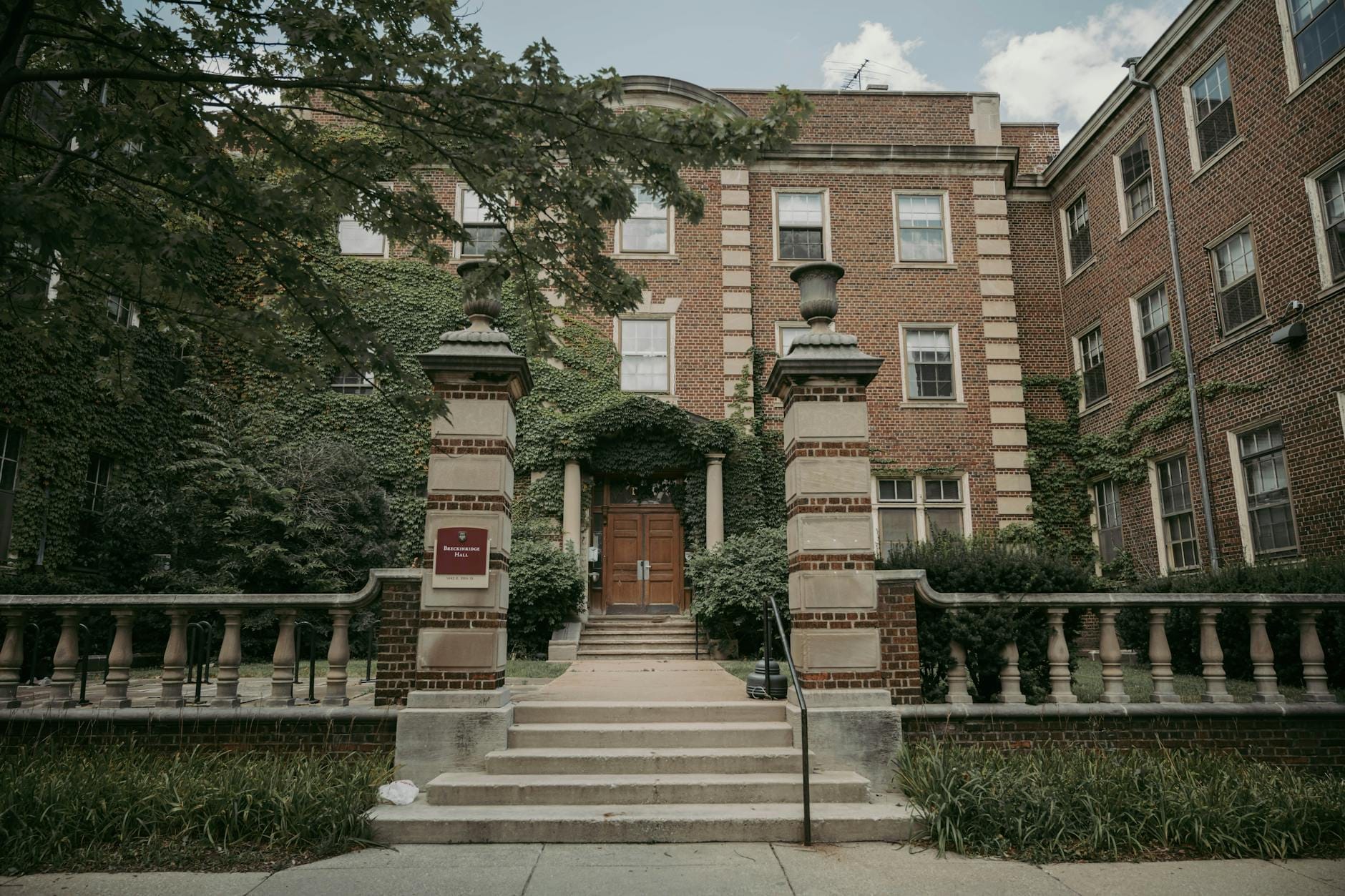
The museum occupies two of the original buildings that survived when the University of Illinois at Chicago campus was constructed in the 1960s: the 1856 Hull mansion itself and the Residents' Dining Hall. At its peak in 1911, the Hull-House complex stretched across thirteen buildings on the Near West Side, serving thousands of immigrants from Italy, Greece, Poland, Russia, and elsewhere every week. What remains is modest in scale but dense in meaning.
The museum sits on what is now the UIC campus, which gives the surrounding area a collegiate feel on weekdays. It is not a tourist corridor, and you will not find souvenir shops or tour buses outside. That is part of what makes it compelling. For more context on Chicago's social and architectural history, the Chicago History Museum and the Chicago architecture guide are natural complements.
The History: Why This Place Matters
Jane Addams and Ellen Gates Starr founded Hull-House in 1889, moving into the former country estate of Charles J. Hull at the intersection of Halsted and Polk streets. The neighborhood was then one of Chicago's most densely packed immigrant quarters, and Addams's idea, borrowed from the English settlement house model she encountered in London, was straightforward: educated middle-class women would live alongside working-class immigrants, share skills and resources, and advocate collectively for better conditions.
The results exceeded anything her contemporaries imagined. From Hull-House came the first juvenile court law in the United States, leadership that shaped the U.S. Children's Bureau, and foundational research into the relationship between poverty and disease. Florence Kelley, a Hull-House resident, became one of the most effective labor reformers in American history. Julia Lathrop, another resident, became the first woman to head a federal agency. Addams herself was awarded the Nobel Peace Prize in 1931.
When the University of Illinois decided to build its Chicago campus here in the early 1960s, a protracted and ultimately unsuccessful fight to save the neighborhood played out, led in part by community advocates and Mayor Richard J. Daley's political machinery. Most of the Hull-House complex was demolished. The two surviving buildings were designated a National Historic Landmark in 1967 and became a public museum run by UIC.
Tickets & tours
Hand-picked options from our booking partner. Prices are indicative; availability and final rates are confirmed when you complete your booking.
Go City | Chicago All-Inclusive Pass
From 127 €Instant confirmationFree cancellationiFLY Chicago Lincoln Park indoor skydiving experience
From 126 €Instant confirmationFree cancellationiFLY Chicago Rosemont indoor skydiving tickets
From 117 €Instant confirmationFree cancellationChicago lakefront neighbourhood bike tour
From 18 €Instant confirmationFree cancellation
What You Will See Inside
The Hull mansion's ground floor has been restored to approximate its appearance during Addams's residence. The rooms are not lavish. Addams believed that conspicuous comfort would undercut the mission, and the spaces reflect that. The dining room table where residents gathered each evening to debate policy, strategy, and philosophy is still there, worn and real in a way that museum replicas never quite manage. Display cases and wall texts fill in context, and they are written with more intellectual rigor than you typically find at house museums.
Rotating exhibitions in the Residents' Dining Hall are where the museum stretches its interpretive ambitions. Past exhibitions have examined the Hull-House Labor Museum, the settlement's role in early civil rights advocacy, and the displacement caused by the UIC campus construction. These shows connect directly to contemporary debates about urban development, immigration, and labor, and the museum does not shy away from those connections.
💡 Local tip
Check the museum's website before you visit to see what is currently showing in the Dining Hall. The rotating exhibitions vary widely in subject and depth, and knowing what is up will help you budget your time.
The second floor of the Hull mansion contains the octagon room, which served as Addams's personal study, and additional spaces used by residents and visitors. These upper rooms give a clearer sense of the building's original domestic scale before settlement activities consumed every corner of it.
How the Experience Changes by Time of Day
The museum opens at 10:00 a.m. on weekdays and at 12:00 p.m. on Sundays. and the early hours, especially on weekdays, are genuinely quiet. Foot traffic from the UIC campus builds around midday, and you may share the building with student groups or classes. Mornings offer the cleanest experience of the space: natural light falls into the restored parlor from east-facing windows, the wood floors creak with each step, and the smell of old timber and archival materials is present but not overwhelming.
Sundays can draw more general visitors than weekdays, particularly in good weather. The museum is closed on Mondays, Tuesdays, and Saturdays, which catches some people off guard. If you are building an itinerary around a Saturday stay in Chicago, note that the museum will not be an option that day.
⚠️ What to skip
The museum is closed Mondays and Saturdays. Hours are Wednesday through Friday, 10:00 a.m. to 4:00 p.m., and Sunday, 12:00 p.m. to 4:00 p.m. Confirm current hours at hullhousemuseum.org before visiting, as academic calendar closures can affect access.
Getting There and Practical Navigation
The Blue Line 'L' train stops at UIC-Halsted, which puts you less than a five-minute walk from the museum entrance at 800 South Halsted Street. From downtown, that journey takes about 10–15 minutes. CTA bus routes 8 (Halsted) and 60 (Blue Island/26th) also serve the area. Rideshare is straightforward — the address is unambiguous and drop-off is directly in front.
Driving is possible, and the UIC campus has parking structures nearby, though street parking on Halsted is limited. The Near West Side location means the museum is not far from the West Loop, and combining a visit with a meal in that area is an easy half-day plan.
If you are spending more time in Chicago's west and south sides, the National Museum of Mexican Art in Pilsen and the DuSable Black History Museum offer complementary perspectives on the city's history and are reachable the same day with planning.
Who This Museum Is and Is Not For
Visitors who engage most deeply with Hull-House tend to share an interest in either American political history, labor and immigration history, or women's history. The museum rewards reading — wall texts are substantial and the interpretive approach is academic in the best sense: precise, sourced, and genuinely illuminating rather than simplified.
Travelers who prefer sensory spectacle, grand architectural interiors, or hands-on interactive experiences will find this too quiet. The buildings are not large, the decoration is intentionally understated, and there is no audio guide or multimedia experience of the sort major museums offer. That restraint is a deliberate institutional choice, not a failure of resources.
Families with young children can visit — admission is free and staff are welcoming — but there is limited programming specifically designed for small children. Older students, particularly those studying American history, political science, or sociology, are likely to find the visit more productive than almost any classroom.
For travelers building a full Chicago itinerary, the Chicago one-day itinerary and the guide to free things in Chicago both offer useful frameworks for fitting Hull-House into a broader visit.
Photography and Practical Tips
Photography is generally permitted in the public gallery spaces. Natural light inside the Hull mansion is relatively low, particularly on overcast days, so if you want sharp images without flash, a phone with a strong low-light mode or a camera with a fast lens will serve you better than a basic point-and-shoot. The exterior of the Hull mansion photographs well in morning light, when the facade faces east.
The museum has restrooms, and the small gift area near the entrance carries books and materials related to Hull-House and Jane Addams that are not easily found elsewhere. There is no cafe on-site. The West Loop, a short drive or rideshare away, has abundant options for coffee and food before or after.
Insider Tips
- The staff at Hull-House are often researchers, educators, or graduate students with deep knowledge of the site. If you ask a specific question, you are likely to get a genuinely informed answer rather than a scripted one. Ask about the Labor Museum, which once operated within the settlement and demonstrated traditional crafts from immigrant homelands.
- The Residents' Dining Hall entrance is separate from the Hull mansion entrance. First-time visitors sometimes miss one of the two buildings entirely. Walk through both — the Dining Hall holds the rotating exhibition and is typically less crowded than the mansion.
- If you visit during the UIC academic year, guided tours are sometimes available through university programming. Check the museum website in advance, as these provide access to interpretive detail that self-guided visits do not.
- The neighborhood outside the museum has changed significantly since the 1960s redevelopment. Walking one block in any direction reveals the edge of the UIC campus and gives a clear sense of the scale of what was demolished. That context makes the museum's own history feel more concrete.
- The museum occasionally hosts public events, lectures, and community programs tied to its social justice mission. These are often free and open to the public — the events calendar on the official website is worth checking if your visit dates are flexible.
Who Is Jane Addams Hull-House Museum For?
- Travelers interested in American progressive history, labor rights, and women's suffrage
- Students and academics in history, sociology, political science, or urban studies
- Budget travelers: free admission, easy transit access, and a full hour of genuine content
- Architecture enthusiasts curious about pre-fire Chicago residential construction and the contrast between the 1856 Hull mansion and the surrounding UIC campus
- Anyone who wants to understand Chicago's Near West Side and immigrant history beyond the standard tourist circuit
Nearby Attractions
Combine your visit with:
- Bahá'í House of Worship
The Bahá'í House of Worship in Wilmette, Illinois, is one of the most architecturally singular buildings in North America. Free to enter, open daily, and reachable by CTA from downtown Chicago, it rewards visitors with a 135-foot lace-like dome, meditative silence, and an unusual kind of spiritual calm that transcends denomination.
- Brookfield Zoo Chicago
Brookfield Zoo Chicago is one of the largest and most historically significant zoos in the United States, covering 216 acres about 14 miles west of downtown. With more than 511 species, landmark indoor exhibits, and a genuine conservation mission, it rewards a full day of exploration. But it takes planning to get the most out of it.
- Chicago Air and Water Show
Every August, the Chicago Air and Water Show transforms the lakefront into a grandstand for one of the most spectacular free public events in the United States. Fighter jets, military demonstrations, and precision flying teams perform over Lake Michigan while hundreds of thousands of spectators line the shore from Fullerton to Oak Street.
- Chicago Botanic Garden
A living museum spread across 385 acres and nine islands north of Chicago, the Chicago Botanic Garden offers 27 gardens, four natural areas, and six miles of lake shoreline in Glencoe, Illinois. Whether you visit for a single seasonal bloom or spend a full day exploring Japanese landscapes and native prairies, this guide covers everything you need to plan a worthwhile trip.