National Museum of Mexican Art: Chicago's Free Window into 3,600 Years of Mexican Culture
Located in Chicago's Pilsen neighborhood, the National Museum of Mexican Art holds more than 22,000 works spanning ancient pre-Columbian objects to contemporary painting and printmaking. Admission is completely free, making it one of the most accessible and rewarding cultural stops in the city.
Quick Facts
- Location
- 1852 W. 19th Street, Pilsen, Chicago, IL 60608
- Getting There
- CTA Pink Line to 18th Street station, then a short walk south
- Time Needed
- 1.5 to 3 hours
- Cost
- Free admission for all visitors
- Best for
- Art lovers, history seekers, families, and anyone curious about Mexican and Mexican-American culture
- Official website
- nationalmuseumofmexicanart.org
What the National Museum of Mexican Art Actually Is
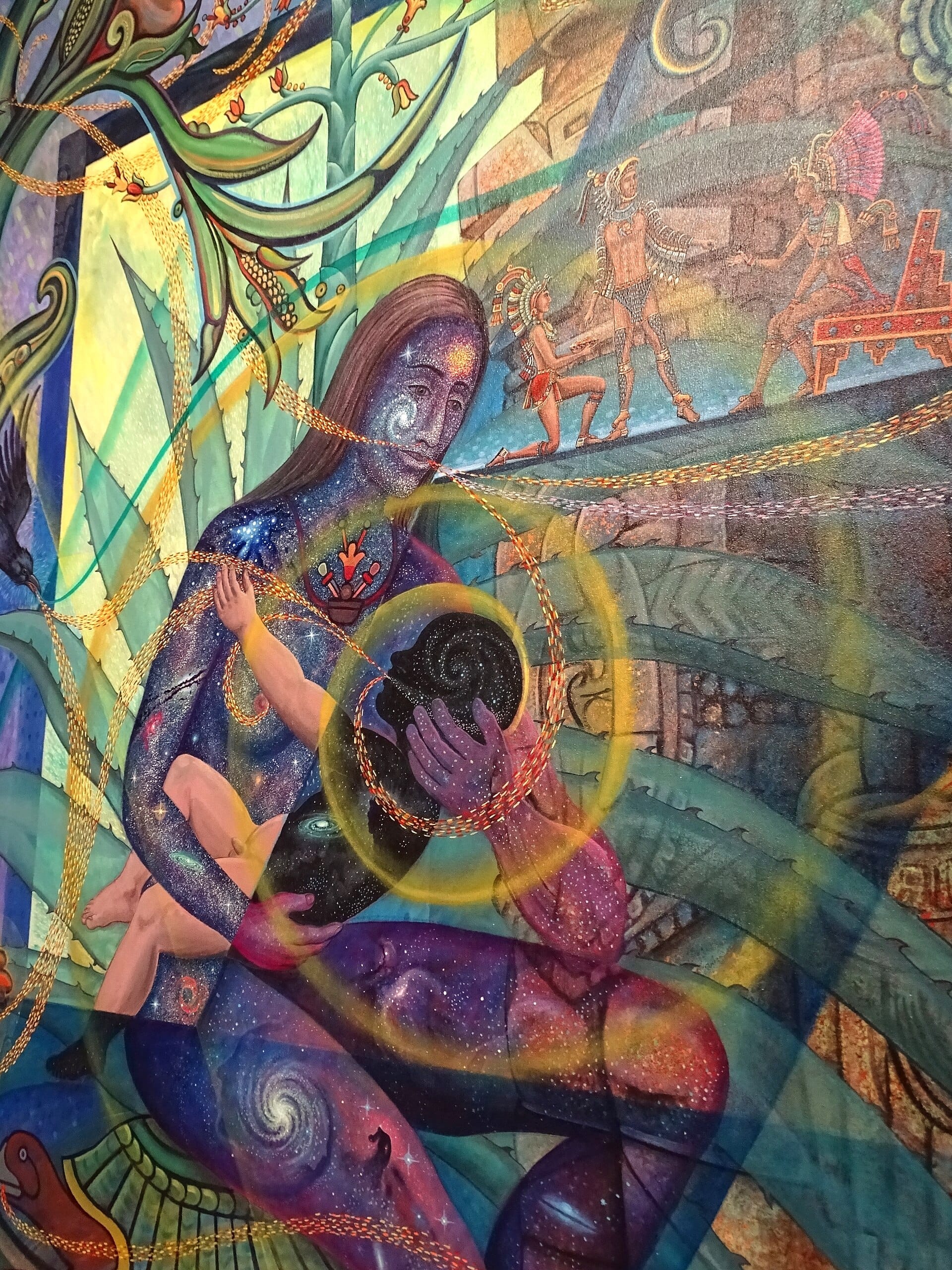
The National Museum of Mexican Art is not a regional community gallery or a temporary exhibition space. It is one of the most substantive Mexican art museums in the United States, holding a permanent collection of more than 22,000 works that spans 3,600 years of creativity, from ancient objects rooted in pre-Columbian Mexico to contemporary paintings, prints, textiles, and video works made today. That breadth is rare anywhere in the world, let alone in a free-entry museum in a residential Chicago neighborhood.
The museum was founded in 1982 as the Mexican Fine Arts Center Museum, a grassroots effort launched by Carlos Tortolero and a small group of community members determined to give Mexican and Mexican-American culture a permanent, authoritative home in Chicago. In 2006, the institution adopted its current name, signaling its ambition to serve not just one neighborhood but the entire Mexican diaspora in the United States. Today it describes itself as a 'first-voice' institution, meaning that its programming, curatorial decisions, and community relationships are shaped by Mexican and Mexican-American perspectives rather than interpreted from the outside.
💡 Local tip
The museum generally closes at 5:00 pm and does not maintain regularly scheduled evening hours such as a monthly late-night opening. This 'Late Wednesday' schedule is the best time for working visitors or anyone who wants the galleries with thinner crowds and softer afternoon light coming through the clerestory windows.
The Collection: What You Will Actually See
Walking into the permanent collection feels less like entering a conventional art museum and more like stepping into a long, carefully assembled argument about the continuity of Mexican identity across millennia. The galleries are organized thematically and chronologically, moving from ceramic vessels and stone carvings that predate the Aztec empire through colonial-era religious art, nineteenth-century painting, muralist-period works, Day of the Dead objects, printmaking, photography, and installation art.
The Day of the Dead holdings deserve particular attention. The museum has assembled one of the most comprehensive collections of Día de los Muertos material culture in any institution outside Mexico, including ofrendas, papel picado, sugar skulls, and altar textiles. These objects are not displayed as curiosities but as living cultural practice, with substantial interpretive text that explains their spiritual and social context. The annual Día de los Muertos exhibition, which the museum has mounted every year since its founding, consistently draws significant crowds in late October and early November.
Prints and works on paper constitute another strength. The museum holds a deep collection of twentieth-century Mexican graphic art, including works connected to the Taller de Gráfica Popular, the politically engaged printmaking collective that produced bold, large-format woodcuts and lithographs between the 1930s and the 1970s. These pieces look arresting on the gallery walls and give visitors a vivid sense of how art functioned as political communication in mid-century Mexico.
The contemporary galleries rotate regularly, so repeat visits are genuinely rewarding. The museum is also a useful companion to a broader study of Mexican-American art in Chicago. If you want fuller context for the neighborhood surrounding it, the Pilsen murals that cover building facades within a few blocks of the museum represent a second, outdoor layer of the same visual culture.
Tickets & tours
Hand-picked options from our booking partner. Prices are indicative; availability and final rates are confirmed when you complete your booking.
Go City | Chicago All-Inclusive Pass
From 127 €Instant confirmationFree cancellationArt Institute of Chicago tickets and self-guided audio tour
From 49 €Instant confirmationArt Institute of Chicago Guided Tour with Skip-the-Line Tickets
From 63 €Instant confirmationFree cancellationThe Art Institute of Chicago: private skip-the-line tour
From 124 €Instant confirmationFree cancellation
Visiting by Time of Day
The museum opens at 10:00 am Tuesday through Sunday and closes at 5:00 pm. Mornings on weekdays are the quietest, particularly between 10:00 am and noon. The galleries are large enough that even a modest number of visitors can feel spacious, but school groups arrive in organized tours most frequently on Tuesday and Wednesday mornings, so if you prefer near-silence, Thursday or Friday mornings are consistently calm.
Natural light enters the main exhibition wing through high clerestory windows, creating a warm, diffused glow in the permanent collection galleries during mid-morning hours. By early afternoon the light shifts, and some of the more intensely colored textiles and paintings read differently. Neither is objectively better, but the morning light is softer on the older ceramic and stone objects.
Weekend afternoons bring families and a noticeably more social atmosphere. The museum's courtyard, facing 19th Street, is a gathering point on warm days. Late afternoons on weekends can feel full but rarely overwhelmed, partly because admission is free and visitors tend to arrive in a steady stream rather than in ticket-timed waves.
Getting There and Navigating Pilsen
The most reliable way to reach the museum on public transit is the CTA Pink Line to the 18th Street station. From there, walk south on Damen Avenue and then west on 19th Street, a walk of roughly five to eight minutes. The route passes several of Pilsen's most photographed murals, so the approach is itself part of the experience.
If you are driving, the museum operates the Ray Castro Parking Lot and Plaza on the east side of the building, open during museum hours and for select events; when in operation, published rates have been around US$3 per hour. Street parking on 19th Street and surrounding blocks is available but limited on weekends. Rideshare drop-off directly in front of the museum on 19th Street is straightforward.
Pilsen sits roughly two miles southwest of the Loop. If you are planning a full day on Chicago's South Side, the museum pairs naturally with a walk through the neighborhood's gallery district on 18th Street and, further afield, with the DuSable Black History Museum or the institutions on Museum Campus. See the Chicago neighborhoods guide for help structuring a multi-stop itinerary.
ℹ️ Good to know
The museum is closed on Mondays and on major holidays including New Year's Day, Thanksgiving, and Christmas Day. Always confirm hours on the museum's website before traveling, particularly around federal holidays.
Accessibility and Practical Logistics
All galleries and the museum shop are located on the main floor, making the building fully wheelchair accessible without any ramp navigation between sections. The single-level layout also makes the museum unusually easy to manage with strollers, a rare advantage in a city where many institutions require elevator access between collection floors.
Sensory bags are available free of charge from the front desk and include fidgets, ear defenders, sunglasses, and an activity sheet. These can also be requested in advance via email, which is worth doing if you are visiting with a child or adult who has sensory sensitivities. The relatively calm acoustic environment of the galleries, combined with the sensory bag option, makes this one of the more considered museum experiences for neurodiverse visitors in Chicago.
There is no coat check listed on the museum's visitor information, so plan accordingly in winter. The shop near the entrance carries art books, prints, and objects related to the collection, and the quality of the selection is consistently higher than in most gift shops of this size.
Historical and Cultural Significance
Pilsen has been a Mexican and Mexican-American neighborhood since the 1950s and 1960s, when the community that had previously concentrated in the Near West Side moved southwest following urban renewal displacement. By the 1970s, Pilsen had become the cultural center of Mexican Chicago, and the founding of the museum in 1982 formalized that identity with a permanent institution. The choice to keep admission permanently free was not incidental; it was a deliberate statement that this collection belonged to the community it documented, not only to visitors who could afford a ticket.
The museum's position as a 'first-voice' institution gives its curatorial voice a distinctive authority. Exhibitions are not designed to explain Mexican culture to an outside audience as much as they are designed to present it on its own terms, with depth and specificity. That orientation is felt in the interpretive text, which is consistently bilingual in English and Spanish, and in the range of artists represented, many of whom have little visibility in mainstream Chicago museum programming. For travelers already interested in Chicago's art landscape, the best museums in Chicago guide provides useful context on where this institution fits relative to the Art Institute and other major collections.
The annual Día de los Muertos programming is the museum's most publicly visible event and draws visitors from well beyond Pilsen. The ofrenda installed in the main hall during this period is typically a large-scale community collaboration, and the atmosphere shifts noticeably from the quieter months. If this is a priority, plan your visit for late October or the first two weeks of November, but expect crowds.
Photography and What to Bring
Photography for personal use is generally permitted in the permanent collection galleries without flash. Temporary exhibitions may have different restrictions indicated by signage at the entrance to each gallery space. The main hall and the courtyard entrance are the most photogenic architectural moments in the building.
Bring comfortable shoes, as the main floor is larger than it appears from outside. A light layer is useful year-round since the climate control in the galleries can feel cool relative to Chicago summers. In winter, the museum's indoor environment is a genuine refuge from the cold, and the free admission makes it a low-pressure stop on a day when outdoor plans are disrupted by weather.
Chicago winters can be severe. If you are visiting between November and March, the Chicago in winter guide has practical advice on layering and planning indoor-heavy itineraries.
Insider Tips
- First Wednesdays until 8:00 pm: the extended hours are the least-known visitor advantage the museum offers. The galleries thin out noticeably after 5:30 pm, giving you an unusually contemplative viewing experience for a free urban museum.
- Walk to the museum from the 18th Street Pink Line stop via Damen Avenue rather than taking a rideshare directly to the door. The five-minute walk passes some of Pilsen's most impressive outdoor murals and gives you an immediate sense of why the museum exists in this specific neighborhood.
- The museum shop carries a selection of prints and art books that are not widely available elsewhere in Chicago, including exhibition catalogs from past shows and work by artists in the permanent collection. It is worth budgeting fifteen minutes here.
- Sensory bags are available free at the front desk but are not prominently advertised. If you are visiting with a child or an adult who benefits from sensory support tools, ask at the desk as soon as you arrive rather than at the end of your visit.
- The Day of the Dead exhibition typically opens in mid-October. If you want to see the community ofrenda in the main hall before the largest crowds arrive, aim for a weekday morning in the last week of October rather than the first two weeks of November when foot traffic peaks.
Who Is National Museum of Mexican Art For?
- Art and design enthusiasts who want depth beyond the mainstream Chicago museum circuit
- Travelers with an interest in Mexican history, pre-Columbian objects, or the muralist movement
- Families with children who benefit from accessible single-floor layouts and sensory-friendly provisions
- Budget travelers, since the museum is entirely free and pairs with the free outdoor mural experience in Pilsen
- Visitors during late October and early November who want to experience authentic Día de los Muertos programming
Nearby Attractions
Other things to see while in Pilsen & Little Village:
- Pilsen Street Art & Murals
Stretching along 16th Street from the Chicago River toward Western Avenue, the Pilsen murals form one of the most significant public art corridors in the United States. Rooted in Mexican-American activism since the late 1960s, these hundreds of free, outdoor works range from monumental historical epics to contemporary statements on identity and community.
- Thalia Hall
Built in 1892 and designated a Chicago Landmark, Thalia Hall is one of the city's most architecturally striking live music venues. Tucked into Pilsen, it pairs a Prague Opera House-inspired interior with an adventurous indie and alternative booking calendar that draws serious music fans from across Chicago.