Thalia Hall: Pilsen's 1892 Concert Hall Where History and Live Music Collide
Built in 1892 and designated a Chicago Landmark, Thalia Hall is one of the city's most architecturally striking live music venues. Tucked into Pilsen, it pairs a Prague Opera House-inspired interior with an adventurous indie and alternative booking calendar that draws serious music fans from across Chicago.
Quick Facts
- Location
- 1215-25 W 18th St, Pilsen, Chicago, IL 60608 (corner of W 18th St & S Allport St)
- Getting There
- CTA Pink Line – 18th Street station (~10-minute walk); multiple CTA bus routes on 18th St
- Time Needed
- 2–4 hours for a show; 20–30 minutes if visiting for the bar or architecture alone
- Cost
- Ticket prices vary by event (USD); no fixed entry fee. Check thaliahallchicago.com for current shows
- Best for
- Live music lovers, architecture enthusiasts, Pilsen neighborhood explorers
- Official website
- www.thaliahallchicago.com
What Thalia Hall Actually Is
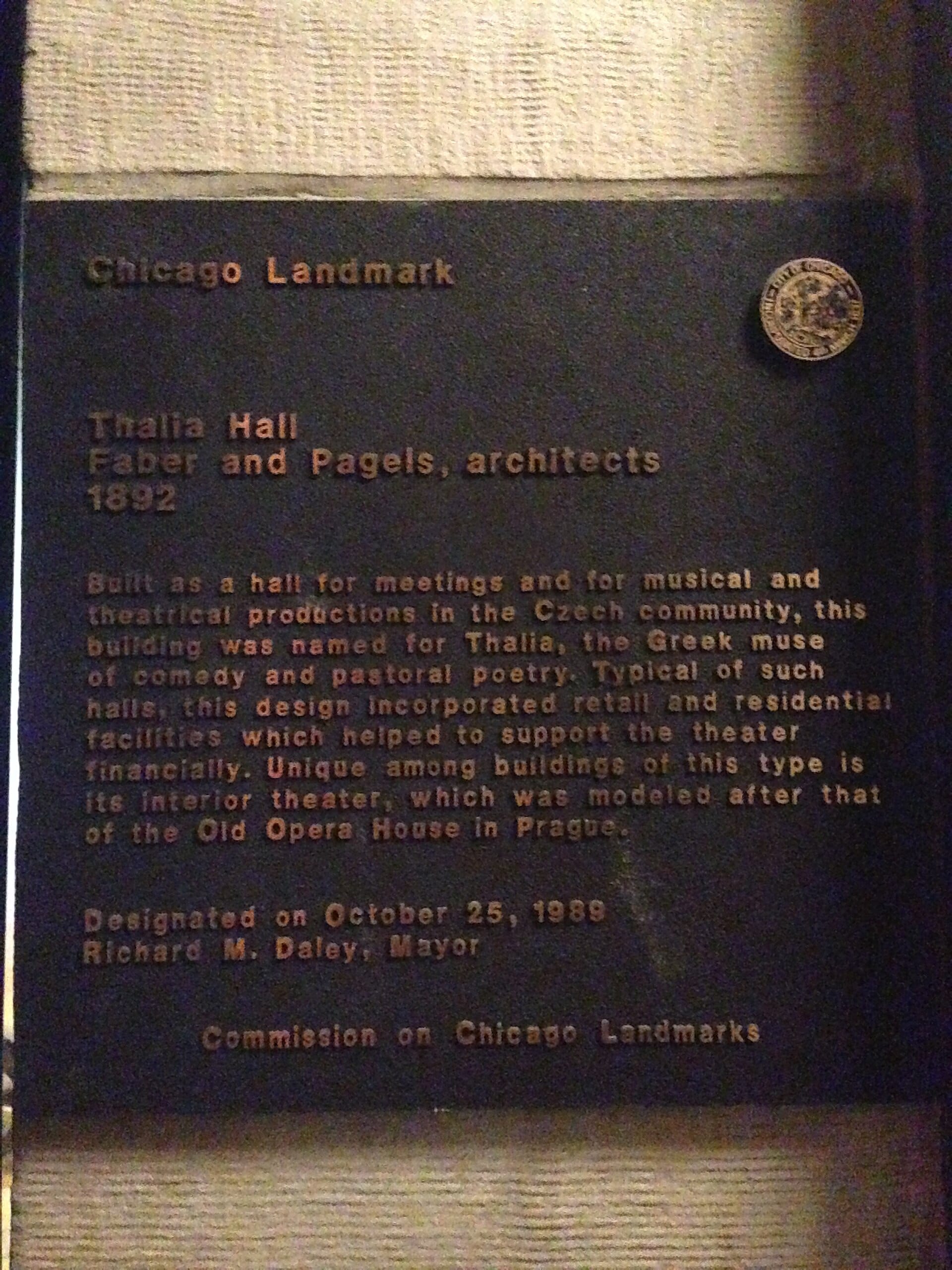
Thalia Hall is not a typical concert venue dropped into a neighborhood for maximum revenue. It is a working piece of Chicago history: a Romanesque Revival building completed in 1892, commissioned by saloonkeeper John Dusek, and designed by architects Frederick Faber and William Pagels to serve as a mixed-use community hub for Pilsen's then-predominantly Bohemian immigrant population. The building combined commercial storefronts, residential housing, and a public performance hall in one structure, a practical arrangement that mirrored how immigrant neighborhoods organized civic life in late 19th-century Chicago.
The city of Chicago designated Thalia Hall a Chicago Landmark on October 25, 1989, recognizing its architectural integrity and historical significance. After decades of varied use and periods of decline, the venue was carefully restored and reopened as a live music hall and bar, reclaiming its original purpose without gutting the character that made it worth saving in the first place.
ℹ️ Good to know
Thalia Hall operates exclusively as an event venue. Hours and bar service are tied to show schedules — the doors open at the time listed for each event, and there is no daytime general admission. Always check the event calendar at thaliahallchicago.com before visiting.
The Architecture: A Prague Opera House in Pilsen, Chicago
The most immediately striking thing about Thalia Hall's interior is that it doesn't look like a Chicago bar or a converted warehouse. The main performance hall was modeled after the Prague State Opera House, and the resemblance to a proper European opera theater is specific enough to stop first-time visitors mid-sentence. Horseshoe-shaped balconies curve around the room, ornate plasterwork frames the ceiling, and the sightlines from nearly every vantage point are genuinely good — a rarity in venues this old.
On the exterior, the building presents a red brick and terra cotta facade with the arched windows and decorative detailing characteristic of Romanesque Revival construction. Standing at the corner of 18th Street and Allport, it looks both monumental and slightly unexpected — substantial architecture in a neighborhood where the surrounding blocks are mostly two-flats and storefronts. That contrast is part of what makes it worth visiting even if you have no interest in whatever band is playing.
Visitors with a serious interest in Chicago's architectural heritage should know that Thalia Hall fits into a broader story of the city's late 19th-century building boom. For context on that broader tradition, the Chicago architecture guide covers the city's defining buildings and styles across neighborhoods.
Tickets & tours
Hand-picked options from our booking partner. Prices are indicative; availability and final rates are confirmed when you complete your booking.
Go City | Chicago All-Inclusive Pass
From 127 €Instant confirmationFree cancellationiFLY Chicago Lincoln Park indoor skydiving experience
From 126 €Instant confirmationFree cancellationiFLY Chicago Rosemont indoor skydiving tickets
From 117 €Instant confirmationFree cancellationChicago lakefront neighbourhood bike tour
From 18 €Instant confirmationFree cancellation
The Experience: What a Show Night Actually Feels Like
Arriving at Thalia Hall before doors open means standing on an Allport Street block that can feel quieter than you might expect for a major venue. There are no towering marquee signs or corporate branding. The building simply sits there, solid and unhurried, its brick facade lit by streetlights. A small queue forms early for popular shows, and the crowd tends to skew toward music-focused attendees rather than a generic nightlife crowd, which sets a particular tone from the start.
Once inside, the ground floor bar area occupies what would have been the original commercial storefront space. The pressed tin ceilings, dark wood bar, and period details create an atmosphere that feels earned rather than manufactured. The smell of old wood and draft beer is genuine. The bar is open from doors time on any show night, and it draws a mix of pre-show drinkers and neighborhood regulars who may not be attending the concert at all.
Moving upstairs into the main hall, the acoustic properties of the space become apparent quickly. The room has a natural warmth that many modern venues spend considerable money trying to replicate. Most shows on the main floor are standing room only unless specifically advertised as seated, so be prepared to be on your feet for two to three hours. The balcony level, when accessible, offers elevated sightlines and a slightly more relaxed atmosphere if standing isn't an option.
💡 Local tip
If you need seated accommodation or have mobility considerations, check the specific event listing in advance. The main floor is general standing; balcony availability varies by show. ASL interpretation can be arranged by emailing info@thaliahallchicago.com ahead of time.
The Programming: What Kind of Music Books Here
Thalia Hall's booking calendar is one of its strongest arguments for a visit. The venue sits in a productive middle ground: large enough to attract established independent and alternative acts, small enough that you're never far from the stage. Capacity keeps the experience intimate in a way that 2,000-seat theaters cannot replicate.
The programming leans toward indie rock, folk, electronic, and experimental music, with occasional jazz, classical crossover, and comedy bookings. This is not a venue focused on mainstream pop or legacy rock tours. The audience it attracts tends to take music seriously, which affects the energy of the room in ways that are difficult to quantify but easy to notice once you've been to a few shows here.
Chicago has a deep live music culture extending well beyond the most-photographed venues. If you're building a music-focused itinerary, the Chicago blues and jazz guide covers the city's foundational music traditions, while Thalia Hall represents its contemporary independent music scene.
Getting There and the Surrounding Neighborhood
The CTA Pink Line stops at 18th Street station, which puts you about a 10-minute walk from Thalia Hall's front door. The walk along 18th Street from the station passes through the commercial heart of Pilsen, with murals, taquerias, bakeries, and the kind of street-level detail that makes the neighborhood worth arriving early to explore. The Pink Line connects to the Loop in under 15 minutes, making the venue straightforwardly accessible from downtown.
Pilsen itself is one of Chicago's most visually distinctive neighborhoods, with a concentration of large-scale murals that make the surrounding streets worth walking before or after a show. The Pilsen murals and the National Museum of Mexican Art are both within reasonable walking distance and pair naturally with a Thalia Hall evening if you arrive with enough daylight.
Street parking is available in the surrounding blocks but can fill up on busy show nights. Rideshare dropoff directly on Allport Street is the most straightforward option if you're not taking the train. The neighborhood is generally well-lit and active on evenings with shows, though it's worth being aware of your surroundings when walking back to transit late at night, as you would in any urban neighborhood.
💡 Local tip
Plan to arrive in Pilsen at least an hour before doors open. The 18th Street corridor between the Pink Line station and Thalia Hall has enough good food and coffee options to make early arrival worthwhile, not just logistically necessary.
Photography, Practical Details, and Who Should Skip This
The interior of Thalia Hall photographs beautifully, particularly the balconies and plasterwork ceiling. Before a show begins, when the hall is lit at full brightness and the crowd is still sparse, you have the clearest views of the architectural detail. Once the show starts, photography policies vary by artist and event, so check the specific show listing or ask staff at the door. Smoking and vaping are prohibited throughout the building and can result in ejection without refund.
Who should skip Thalia Hall: anyone expecting a seated, stadium-style concert experience will be disappointed by the standing main floor. If you have no interest in the specific artist or show on a given night and are hoping to drop in as a tourist attraction, the building's interior is not accessible unless an event is scheduled. There is no daytime general admission period. The venue rewards visitors who engage with it on its own terms, which means buying a ticket to something and committing to the experience.
If your primary interest is Chicago architecture and you're looking for landmark buildings you can access during the day, the Chicago Cultural Center and other Loop-area landmarks offer daytime access with no ticket required.
Insider Tips
- The upstairs balcony is worth positioning yourself for on sold-out shows. It offers cleaner sightlines than the packed main floor and a direct view of the plasterwork ceiling that most standing attendees never look up to notice.
- The bar on the ground floor operates independently from the show upstairs to some degree. On nights with a popular headliner, the downstairs area is noticeably less crowded than the main hall, making it a good place to decompress between sets or catch the opener's sound while staying comfortable.
- Tickets for in-demand shows sell out well in advance. The venue's capacity is intentionally limited, which is part of what makes it special — but it also means checking the calendar weeks ahead for artists you care about, not days.
- Arriving via the Pink Line and walking along 18th Street rather than taking a rideshare directly gives you a much better read on the neighborhood's character. The block between the station and the venue tells you more about Pilsen than any summary can.
- If you need an ASL interpreter, email info@thaliahallchicago.com well before the event date. The venue offers this service but requires advance notice to arrange it properly.
Who Is Thalia Hall For?
- Music enthusiasts who follow independent, alternative, and experimental artists on mid-sized touring circuits
- Architecture and preservation buffs interested in Chicago's 19th-century Romanesque Revival buildings in their original neighborhood context
- Travelers spending time in Pilsen who want an evening anchor that reflects the neighborhood's cultural depth rather than its tourist-facing surface
- Couples or small groups looking for a genuinely atmospheric night out that doesn't feel generic or corporate
- Chicago locals and visitors building a multi-stop evening in Pilsen around dinner, murals, and a show
Nearby Attractions
Other things to see while in Pilsen & Little Village:
- National Museum of Mexican Art
Located in Chicago's Pilsen neighborhood, the National Museum of Mexican Art holds more than 22,000 works spanning ancient pre-Columbian objects to contemporary painting and printmaking. Admission is completely free, making it one of the most accessible and rewarding cultural stops in the city.
- Pilsen Street Art & Murals
Stretching along 16th Street from the Chicago River toward Western Avenue, the Pilsen murals form one of the most significant public art corridors in the United States. Rooted in Mexican-American activism since the late 1960s, these hundreds of free, outdoor works range from monumental historical epics to contemporary statements on identity and community.