Pilsen Street Art & Murals: Chicago's Most Concentrated Outdoor Art Corridor
Stretching along 16th Street from the Chicago River toward Western Avenue, the Pilsen murals form one of the most significant public art corridors in the United States. Rooted in Mexican-American activism since the late 1960s, these hundreds of free, outdoor works range from monumental historical epics to contemporary statements on identity and community.
Quick Facts
- Location
- 16th Street corridor, Pilsen neighborhood, Lower West Side, Chicago, IL 60608
- Getting There
- CTA Pink Line: 18th Street station. CTA Bus: Route 21 (Cermak) or Route 60 (Blue Island/26th)
- Time Needed
- 1.5 to 3 hours for a self-guided walk; longer with cafe stops or museum visit
- Cost
- Free to view; guided tours vary by organizer
- Best for
- Art lovers, photographers, cultural history enthusiasts, solo explorers
What the Pilsen Murals Actually Are
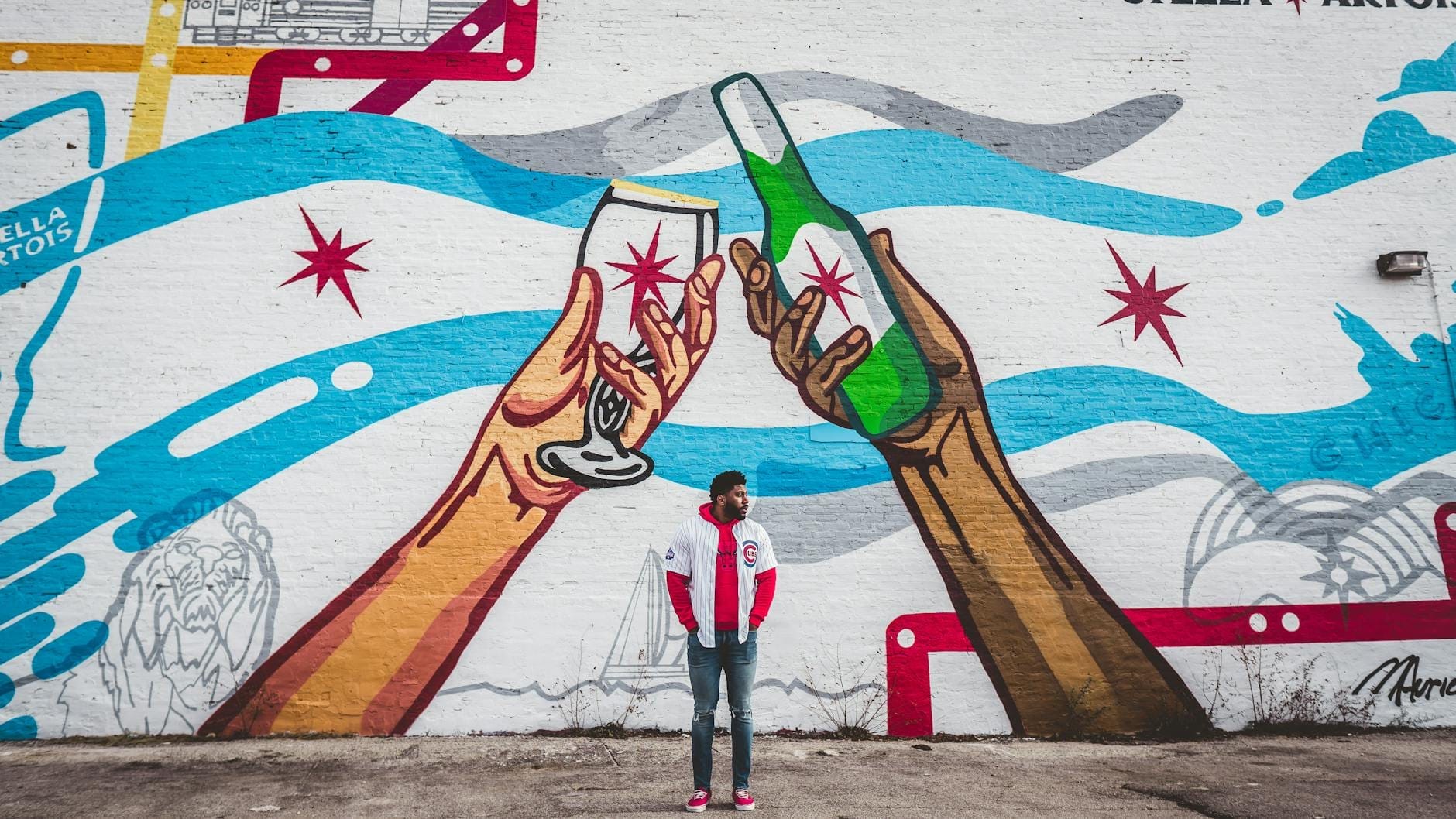
The Pilsen street art and murals are not a single monument or ticketed attraction. They are hundreds of individual public works spread across an entire neighborhood, painted on the sides of apartment buildings, storefronts, viaducts, and garage doors. The primary corridor runs along 16th Street from the Chicago River west toward Western Avenue, with significant clusters also on 18th Street near the National Museum of Mexican Art. Some walls stretch three stories tall. Others wrap around corners or fill an entire block-length facade.
The tradition here is old by the standards of American street art. The mural movement in Pilsen began in the late 1960s, when artists including Mario Castillo, Ray Patlan, and Marcos Raya began painting walls with imagery that challenged the Vietnam War and asserted Mexican-American cultural identity in a neighborhood that had recently transitioned from Eastern European to predominantly Mexican and Mexican-American. That founding impulse, community ownership of public space, still defines what you see walking these blocks today.
💡 Local tip
The free Neighborhood Mural Walk Guide published by the National Museum of Mexican Art is the most reliable starting point for a self-guided visit. Download or pick up a copy at the museum before you walk.
The Walk: What to Expect Block by Block
Most visitors begin near the National Museum of Mexican Art at 1852 W 19th Street and work their way north and east toward 16th Street. This approach lets you anchor the visual experience in cultural context before you start walking. The museum itself is free and occupies a converted park building inside Harrison Park. Even if you spend only twenty minutes inside, the permanent collection of Mexican and Mexican-American art gives the outdoor murals a frame of reference.
On 16th Street itself, the density of murals increases as you move east from Halsted. The walls are rarely static. Local artists repaint, update, and add new works regularly, so the specific image you see in any photograph from two years ago may have been replaced or built upon. This is not a museum with permanent displays. It is a living canvas, and that means some works are rough and unfinished, some are faded, and some are genuinely stunning. Expect all of it.
The viaducts along the railroad embankment on 16th Street are a focal point. The underpasses concentrate the most ambitious and historically significant works: large-scale paintings depicting Aztec mythology, scenes from Mexican revolutionary history, portraits of community figures, and more recent works addressing gentrification and immigration. The scale under these concrete structures is difficult to photograph well but remarkable in person.
If you extend your walk into the alleys between 16th and 18th Streets, you will find smaller, often more experimental pieces tucked away from the main street. The Pilsen and Little Village neighborhood rewards slow walking. Plan at least 90 minutes just for the core corridor, and leave room for the detours.
Tickets & tours
Hand-picked options from our booking partner. Prices are indicative; availability and final rates are confirmed when you complete your booking.
Go City | Chicago All-Inclusive Pass
From 127 €Instant confirmationFree cancellationiFLY Chicago Lincoln Park indoor skydiving experience
From 126 €Instant confirmationFree cancellationiFLY Chicago Rosemont indoor skydiving tickets
From 117 €Instant confirmationFree cancellationChicago lakefront neighbourhood bike tour
From 18 €Instant confirmationFree cancellation
Time of Day and Light: When to Visit
The murals are accessible at any hour since they are painted on public-facing exterior walls with no gates or entry points. That said, the experience changes substantially depending on when you arrive.
Mid-morning on weekdays, roughly 9am to noon, offers the clearest conditions for photography and unhurried walking. Foot traffic is light, the 16th Street sidewalks are quiet except for local residents and the occasional delivery, and the angle of morning light catches the texture and color in the east-facing walls particularly well. Late afternoon provides warmer, golden-hour light on west-facing walls, which suits the viaduct murals facing that direction.
Weekend afternoons bring more visitors, which can be energizing but also means you share the sidewalks. Saturday morning farmers markets at the National Museum of Mexican Art (check current schedules, as programming changes seasonally) add life to the area around 19th Street. Summer evenings on 18th Street, the neighborhood's main commercial corridor, are lively with restaurant foot traffic spilling out from taquerias and new cafes. This is not always ideal for focused mural-viewing but gives the neighborhood visit a different texture.
⚠️ What to skip
Avoid very early mornings before sunrise or late nights for photography. Some blocks between the viaducts are poorly lit after dark, and walking alone with camera equipment draws unnecessary attention. Stick to daylight hours.
Historical and Cultural Context
Understanding why Pilsen has so many murals requires a short detour into neighborhood history. Pilsen, named by Czech and Bohemian immigrants in the 19th century, became a predominantly Mexican-American community through the mid-20th century as those earlier populations moved to suburbs and new arrivals from Mexico settled in the affordable housing stock near the stockyards and rail yards. The neighborhood's identity was contested, as it often is in working-class urban communities, and the mural movement from the late 1960s onward was partly a declaration: this space belongs to us.
The University of Notre Dame's Latinx Murals of Pilsen project has documented hundreds of these works with scholarly essays, artist interviews, and maps. The documentation reveals a tradition far more organized and intentional than the spontaneous street art seen in many other cities. Many Pilsen murals were commissioned by local organizations, businesses, or community groups. Artists like Marcos Raya and Ray Patlan worked in dialogue with the community over decades, not as visiting artists dropping in for a week.
Today, Pilsen faces intense gentrification pressure from adjacent neighborhoods like the West Loop, and some murals directly address this tension. You will see paintings that comment on displacement, rising rents, and the erasure of Mexican-American presence from neighborhoods where the community has lived for generations. These are not decorative. They are arguments painted on walls.
Practical Walk Guide: Getting There and Getting Around
The CTA Pink Line is the most direct public transit option. The 18th Street station drops you one block from the heart of the mural district and directly onto a commercial strip lined with Mexican bakeries, restaurants, and small shops. From downtown, the Pink Line ride from the Loop takes roughly 15 to 20 minutes. The station itself features some public art on its platforms and walls.
The walk is entirely flat, which makes it physically accessible for most visitors, but the route is long if you try to cover all of 16th Street from end to end. A focused walk from the National Museum of Mexican Art to the 16th Street viaducts and back covers about 1.5 to 2 miles. Wear comfortable shoes. The sidewalks are generally in decent condition but not uniformly smooth, and some sections where murals extend into alleys involve uneven ground.
For visitors with mobility considerations, the National Museum of Mexican Art offers a Neighborhood Mural Walk Guide and other resources that can help visitors plan routes mindful of curb cuts and uneven surfaces. Starting there gives you both an orientation resource and restroom access before you head out. Beyond the museum, publicly accessible restrooms are limited, so plan accordingly, particularly if you are walking with children or for an extended period.
💡 Local tip
Park on a side street off 18th Street if you drive. Street parking is generally available mid-week but fills up on weekends near the restaurant corridor. Do not park in front of murals on private driveways or alleys, where towing is enforced.
Photography Tips and Sensory Notes
The murals under the viaducts on 16th Street are the most technically challenging to photograph. The light is uneven, with bright daylight at the mouth of the underpass and deep shadow toward the center. A wide-angle lens and exposure bracketing, or simply shooting in RAW and adjusting later, handles this better than trying to expose for both ends at once. Many of the viaduct works are so large that a single frame cannot capture them. Walk close and photograph sections, then step back for an establishing shot.
The neighborhood smells like most working urban neighborhoods: diesel from the freight rail, the sweetness of pan dulce from bakeries on 18th Street, exhaust from the commercial strip on Halsted. On warm mornings you might catch the smell of carnitas from a street cart setting up near the viaducts. The soundscape is similarly layered: freight trains on the elevated tracks overhead, Spanish conversations from open doors, corridos from a car stereo, the clatter of a tortilleria.
If you want to connect the mural walk to a broader Pilsen experience, the National Museum of Mexican Art at 1852 W 19th St is free to enter and provides critical context for everything you see on the street. Combining both in a single half-day itinerary is the most coherent way to approach Pilsen as a cultural destination.
Who Should Reconsider This Visit
Pilsen's murals require walking, patience, and some tolerance for an imperfect urban environment. This is not a curated gallery experience. Some walls are brilliant; others are faded, tagged over, or simply unfinished. If you are expecting manicured presentation, labeled plaques on every artwork, and a clean narrative arc, you will find the experience frustrating. The absence of a central entry point, a guided audio tour, or uniform signage is deliberate. The murals exist in the neighborhood, not for the visitor.
In winter, the walk is physically uncomfortable. Chicago's Lower West Side does not have the shelter or warmth of an indoor attraction, and the wind along 16th Street in January or February is unpleasant. The murals themselves are visible year-round, and photographically interesting with snow on the ground, but it is a short trip in cold weather compared to a leisurely summer walk.
Insider Tips
- Download the University of Notre Dame's Latinx Murals of Pilsen map (hue.crc.nd.edu/pilsen) before you arrive. It catalogs individual works with GPS coordinates, artist names, and dates, far more detail than any tourist app.
- The alley running roughly parallel to 16th Street between Halsted and Loomis holds smaller, less-photographed works that many visitors miss entirely. Enter from a side street and walk slowly.
- If you visit on a Saturday when the Green City Market or a neighborhood event is active near the museum, you may be able to talk to artists directly. Pilsen has a working artist community, not just commemorative walls.
- The viaduct murals change as new layers are added over older ones. If a specific work you saw in an online photo is gone, that is normal. Look for what replaced it rather than being disappointed.
- Combine the mural walk with lunch on 18th Street, the main commercial strip. 5 Rabanitos, Carnitas Uruapan, and Cafe Jumping Bean are neighborhood institutions that have operated long enough to appear in the murals themselves.
Who Is Pilsen Street Art & Murals For?
- Photography enthusiasts looking for large-scale, high-contrast subjects in natural light
- Travelers interested in Chicano and Mexican-American cultural history
- Solo walkers who prefer self-guided exploration over ticketed tours
- Anyone combining a Pilsen itinerary with a visit to the National Museum of Mexican Art
- Visitors on a tight budget who want a full half-day cultural experience at no cost
Nearby Attractions
Other things to see while in Pilsen & Little Village:
- National Museum of Mexican Art
Located in Chicago's Pilsen neighborhood, the National Museum of Mexican Art holds more than 22,000 works spanning ancient pre-Columbian objects to contemporary painting and printmaking. Admission is completely free, making it one of the most accessible and rewarding cultural stops in the city.
- Thalia Hall
Built in 1892 and designated a Chicago Landmark, Thalia Hall is one of the city's most architecturally striking live music venues. Tucked into Pilsen, it pairs a Prague Opera House-inspired interior with an adventurous indie and alternative booking calendar that draws serious music fans from across Chicago.