Christkindlmarket Chicago: The Loop's German Holiday Market Explained
Every November and December, Daley Plaza in the Loop transforms into one of the most authentic German-style Christmas markets outside Europe. Christkindlmarket Chicago has drawn over a million visitors annually since its 1996 debut, with imported goods, mulled wine, and the distinctive red-and-white vendor stalls that define the original Nuremberg tradition.
Quick Facts
- Location
- Daley Plaza, 50 W Washington St, Chicago, IL 60602 (The Loop)
- Getting There
- CTA 'L': Clark/Lake (Brown, Orange, Pink, Green lines) or Washington/Wabash (Brown, Green, Orange, Pink, Purple lines) or Lake (Red line) and Washington (Blue line)
- Time Needed
- 1.5 to 3 hours depending on shopping and crowds
- Cost
- Free general admission; individual food, drink, and purchases paid separately
- Best for
- Holiday shoppers, first-time winter visitors, families, couples, European Christmas market fans
- Official website
- www.christkindlmarket.com
What Christkindlmarket Chicago Actually Is
Christkindlmarket Chicago is a seasonal German-style Christmas market held annually at Daley Plaza in the heart of the Loop. First organized in 1996 as part of an effort to strengthen trade ties between the United States and Germany, it has grown into one of the largest and most recognized events of its kind in North America, drawing more than one million visitors each season.
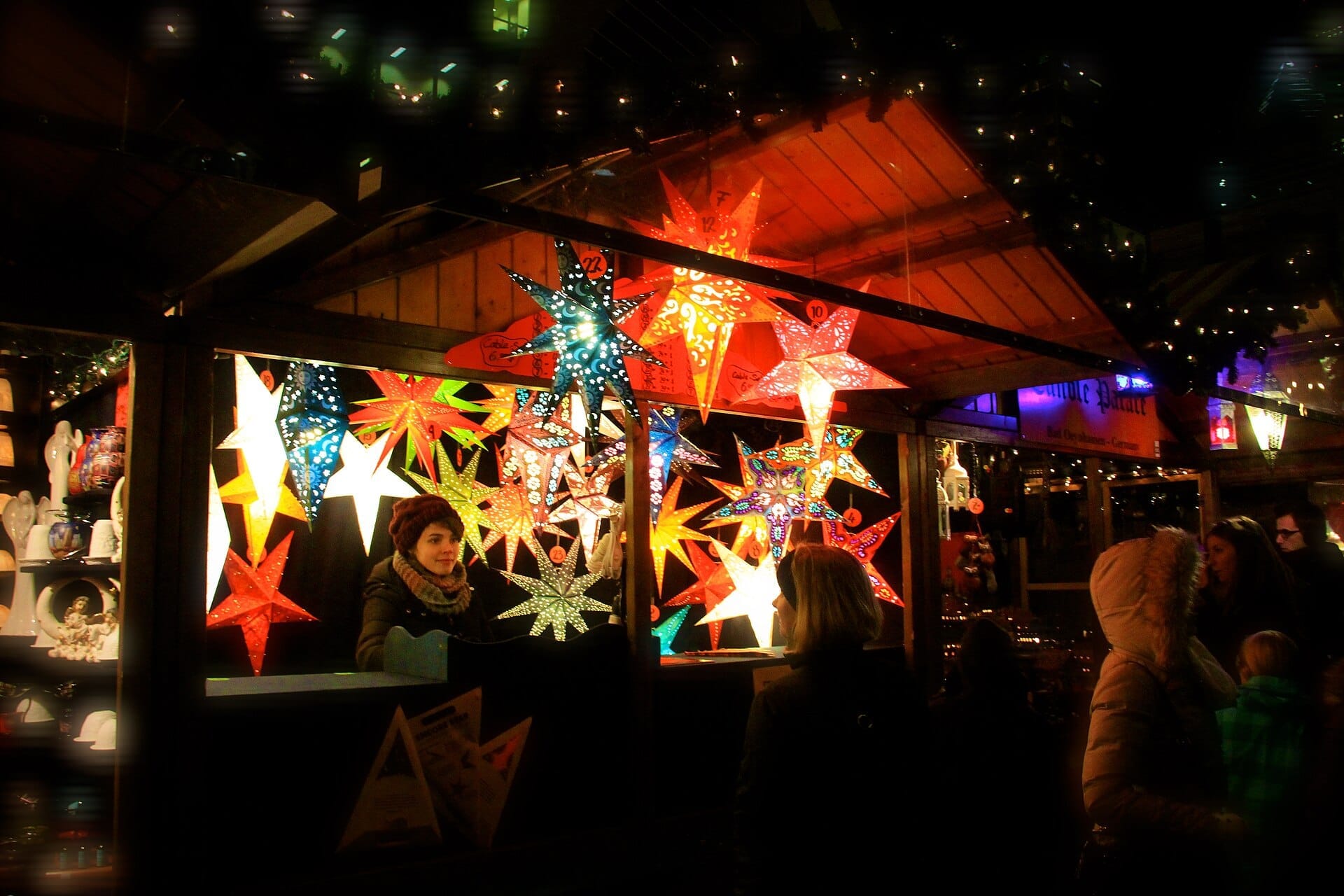
The market takes its cues directly from the Christkindlesmarkt in Nuremberg, Germany, one of the most famous Christmas markets in Europe. The vendor stalls are built in a consistent red-and-white wood style, the product categories lean toward handcrafted ornaments, wooden toys, nutcrackers, and imported German foods, and the whole setup is deliberately kept closer to the European original than to a generic American holiday fair.
The market runs exclusively during the holiday season, typically from late November through Christmas Eve. It does not operate year-round. For context on when to plan a Chicago winter trip around events like this, the Chicago Christmas guide covers seasonal programming across the city, including related events in other neighborhoods.
ℹ️ Good to know
General admission to Christkindlmarket Chicago is free. You walk in without a ticket. Budget instead for what you eat, drink, and buy inside — costs can add up quickly.
The Physical Experience: What You See, Smell, and Navigate
Daley Plaza is a wide civic square dominated by a monumental Picasso sculpture at its north end. During the market's run, the open concrete space fills with rows of compact wooden stalls, string lights overhead, and a large decorated Christmas tree as a focal point. The scale is manageable rather than overwhelming — you can walk the full market in under thirty minutes if you move purposefully, but most visitors loop back multiple times.
The smell hits you before the stalls do. Glühwein (spiced mulled wine) and roasted nuts are sold from heated carts and produce an aroma that carries half a block. Once inside, you pick up layers of cinnamon, chocolate, and frying oil from the bratwurst stands. It is one of the more sensory-rich food environments in Chicago during winter.
The stalls themselves vary in what they sell: some focus entirely on Christmas ornaments and glass decorations imported from Germany, others carry wooden figurines, nutcrackers, incense smokers, and carved nativity figures. Food and drink stalls are interspersed throughout. The walkways between stalls are narrow enough that navigation slows considerably during peak evening hours on weekends.
💡 Local tip
Glühwein is typically served in a collectible Christkindlmarket mug that you pay a deposit on. You can return it for a refund or keep it as a souvenir. It has become one of the market's signature keepsakes.
Tickets & tours
Hand-picked options from our booking partner. Prices are indicative; availability and final rates are confirmed when you complete your booking.
Go City | Chicago All-Inclusive Pass
From 127 €Instant confirmationFree cancellationiFLY Chicago Lincoln Park indoor skydiving experience
From 126 €Instant confirmationFree cancellationiFLY Chicago Rosemont indoor skydiving tickets
From 117 €Instant confirmationFree cancellationChicago lakefront neighbourhood bike tour
From 18 €Instant confirmationFree cancellation
How the Experience Changes by Time of Day
Weekday midday visits offer the most relaxed conditions. Office workers from the surrounding Loop buildings come and go quickly, the stall operators have more time to talk, and the walkways stay navigable. If you want to examine ornaments carefully or have a conversation with a vendor about where their goods come from, this is when to go.
Late afternoon on weekdays sees the market shift noticeably. Foot traffic increases as the workday ends, the lights become more prominent as daylight fades, and the atmosphere takes on the quality most associated with the market in photos and memory. The cold, the glow of string lights, the steam rising from warm drinks — it reads differently than the daytime version, and most visitors find it more atmospheric.
Friday and Saturday evenings from roughly 5 PM onward are the most crowded periods. The narrow aisles between stalls can become genuinely difficult to move through, especially in the weeks immediately before Christmas. This is not a comfortable time for people with mobility considerations or for anyone trying to browse methodically. However, the energy is high, the market feels fully alive, and if you want the most festive version of the experience, that is when it happens.
⚠️ What to skip
Weekend evenings in the final two weeks before Christmas can bring extremely dense crowds. If you have stroller or wheelchair access needs, weekday mornings are significantly easier to navigate.
History and Cultural Context
The market was conceptualized in 1995 as a vehicle to promote trade between the U.S. and Germany and held its first edition in 1996. The choice to base it on the Nuremberg model was deliberate: Nuremberg's Christkindlesmarkt, documented as far back as the 17th century, is among the oldest and most replicated Christmas markets in Europe, and the Chicago organizers maintained strict stylistic guidelines to preserve that identity rather than adapt it into something more generic.
Over nearly three decades the market has expanded from a single site to multiple locations across the Chicago area. For the current season, organizers typically operate at three sites: the flagship at Daley Plaza, a second location in Aurora, and a third in Wrigleyville. The Loop location remains the original and most established, with the most extensive vendor selection and the strongest logistical infrastructure.
Daley Plaza itself adds a layer of civic history. The Picasso sculpture installed there in 1967 was a gift from Pablo Picasso to the city of Chicago and remains one of the most recognized pieces of public art in the Loop. The plaza regularly hosts public events and protests throughout the year, giving it a character that goes beyond a simple market venue. For broader context on the Loop as a neighborhood, the Loop neighborhood guide covers the full range of what surrounds the market.
Food, Drink, and Shopping: What to Actually Buy
The food and drink program is built around German and German-adjacent Central European staples. Bratwurst and other sausages served in rolls are a constant, alongside potato pancakes (Reibekuchen), Schneeballen (fried pastry balls dusted in powdered sugar), strudel, and various baked goods. For drinks, glühwein in both red and white versions is the default choice, with beer and hot chocolate also available.
Imported goods from German artisans tend to include mouth-blown glass ornaments, hand-carved wooden figures from the Erzgebirge region, pewter items, and Steiff plush toys. Not everything is imported — some stalls sell locally made goods or products with only a loose connection to German craft traditions — but the market has maintained a higher standard of authenticity than most comparable events in the U.S.
Budget considerations: food and drink run at the higher end of festival pricing. A glühwein with the deposit mug, a bratwurst, and a pastry will typically add up to $25 to $35 per person without retail purchases. The market is genuinely enjoyable on a tight budget if you focus on the atmosphere and pick one or two items rather than grazing broadly. For visitors managing costs across a full Chicago trip, the Chicago on a budget guide has useful framing for this.
Getting There and Practical Logistics
Daley Plaza sits in the center of the Loop at 50 W Washington Street. It is one of the most transit-accessible locations in Chicago. The Clark/Lake CTA station (served by the Brown, Orange, Pink, and Green lines) is approximately a two-minute walk from the plaza. Nearby stations beyond Clark/Lake include Washington/Wabash for the Loop lines, Lake on the Red Line, and Washington on the Blue Line, all a short walk from the plaza. Multiple bus routes on Washington Street, Clark Street, and LaSalle Street also serve the immediate area.
Driving to the market is not recommended. Parking in the Loop is expensive and scarce during evening peak hours in December, and loading or dropping off on Washington Street is complicated by event crowds. Rideshare drop-off works better — designate a pickup spot a block or two away from the plaza for the return trip, as congestion directly around Daley Plaza can delay pickups significantly on busy nights.
If you are combining the market with other Loop attractions, the Millennium Park is roughly a ten-minute walk east, and the Chicago Cultural Center is one block away on Michigan Avenue — both worth combining into a single afternoon or evening Loop itinerary in the winter months.
What to wear: dress for actual Chicago winter conditions. December temperatures in Chicago average between 20 and 35°F (-6 to 2°C), and standing or moving slowly through an outdoor market amplifies the cold significantly more than walking briskly. Insulated boots, a windproof outer layer, gloves, and a hat are practical requirements rather than optional additions. The glühwein helps, but only temporarily.
💡 Local tip
Hand warmers tucked into gloves make a noticeable difference during long browsing sessions. The stalls themselves have no interior heating — you are outside the entire time.
Photography and Practical Notes
The market photographs well in the blue hour window — roughly 4:30 to 5:30 PM in December — when ambient sky light balances the warm stall lighting without requiring flash or very high ISO. By full dark the contrast between lit stalls and black sky is sharp and less forgiving. A wide lens works better here than a telephoto given the tight spaces. Smartphone cameras in portrait or night mode handle the conditions well for casual photography.
The Picasso sculpture at the north end of the plaza and the Christmas tree near the market entrance are the two most photographed elements. Both are accessible, and neither requires maneuvering into crowds to get a clean shot during off-peak hours.
For visitors building a broader winter photography or sightseeing itinerary, the Chicago views and viewpoints guide covers the best spots across the city during the holiday season and beyond.
Insider Tips
- Visit on a weekday between 11 AM and 2 PM for the calmest conditions, most attentive vendors, and easiest access to popular stalls. The market is a completely different experience from a Friday evening.
- The collectible glühwein mug design changes each year. If you have visited in previous years and want the current season's design, ask a vendor to show it before committing — some years the design is noticeably more distinctive than others.
- The market officially closes on Christmas Eve, and the final few days often see significant markdowns on glass ornaments and breakable goods that vendors don't want to ship back. If you want decorations rather than food, visiting December 22 to 24 can yield better prices.
- Combine a market visit with the Chicago Cultural Center one block east on Randolph Street, which typically has free holiday programming and its Tiffany glass domes lit to full effect in the winter months — no admission required.
- If the Daley Plaza crowds feel excessive, the Wrigleyville location of Christkindlmarket offers the same vendor categories in a less congested setting. It draws a more local, neighborhood crowd than the Loop flagship.
Who Is Christkindlmarket Chicago For?
- Travelers visiting Chicago specifically for the winter holiday atmosphere
- Shoppers looking for imported German ornaments, crafts, and gifts unavailable at standard retail
- Families with children old enough to walk and engage with the stalls (toddlers in strollers are difficult during peak hours)
- Couples looking for an atmospheric evening outing that doesn't require advance tickets or reservations
- First-time visitors to Chicago in December who want a concentrated sample of the city's winter culture
Nearby Attractions
Other things to see while in The Loop:
- Art Institute of Chicago
One of the largest and most visited art museums in the United States, the Art Institute of Chicago anchors the eastern edge of the Loop with a collection of over 300,000 works spanning 5,000 years. From Georges Seurat's pointillist masterpiece to Grant Wood's American Gothic, the highlights alone demand the better part of a day.
- Buckingham Fountain
The Clarence Buckingham Memorial Fountain is one of the largest decorative fountains in the world, sitting at the heart of Grant Park since 1927. Free to visit during its seasonal run from spring through mid-October, it puts on hourly water displays and a nightly illuminated show that draws crowds from across the city.
- Chicago Architecture Center
Housed in Mies van der Rohe's One Illinois Center on the Chicago River, the Chicago Architecture Center packs nearly 10,000 square feet of exhibition space, a landmark scale model of the city, and access to some of the country's most informative architecture tours. It's the most comprehensive entry point into understanding what makes Chicago's skyline one of the world's most significant.
- Chicago Architecture Foundation River Cruise
The Chicago Architecture Center River Cruise aboard Chicago's First Lady is the most authoritative way to read the city's skyline. In 90 minutes, trained docents walk you through more than 40 landmark buildings across all three branches of the Chicago River, connecting architectural styles to the human decisions that shaped them.