Chicago Architecture Center: Architecture, Models, and the City's Best River Views
Housed in Mies van der Rohe's One Illinois Center on the Chicago River, the Chicago Architecture Center packs nearly 10,000 square feet of exhibition space, a landmark scale model of the city, and access to some of the country's most informative architecture tours. It's the most comprehensive entry point into understanding what makes Chicago's skyline one of the world's most significant.
Quick Facts
- Location
- 111 E. Wacker Drive, The Loop, Chicago, IL 60601
- Getting There
- CTA 'L' Red Line — Lake; Brown, Green, Orange, Pink, Purple Lines — State/Lake or Washington/Wabash stations
- Time Needed
- 1–2 hours for the center; 2–3 hours if adding an architecture river cruise
- Cost
- Center admission: $14 adults, $11 students with ID, free for children under 5 and CAC members. River cruise tickets from about $57 for the Chicago Architecture Center River Cruise aboard First Lady.
- Best for
- Architecture enthusiasts, design students, curious travelers wanting context for Chicago's skyline
- Official website
- www.architecture.org
What the Chicago Architecture Center Actually Is
The Chicago Architecture Center (CAC) is a nonprofit cultural and educational organization dedicated to showcasing the architecture and urban design that makes Chicago one of the world's most studied built environments. Founded in 1966 as the Chicago Architecture Foundation, it relocated in August 2018 to its current expanded home inside Mies van der Rohe's One Illinois Center at 111 E. Wacker Drive, right on the bank of the Chicago River. The move gave the CAC nearly 10,000 square feet of exhibition space and a location that makes perfect sense: you can stand at the windows and look directly at the skyline you've just been reading about.
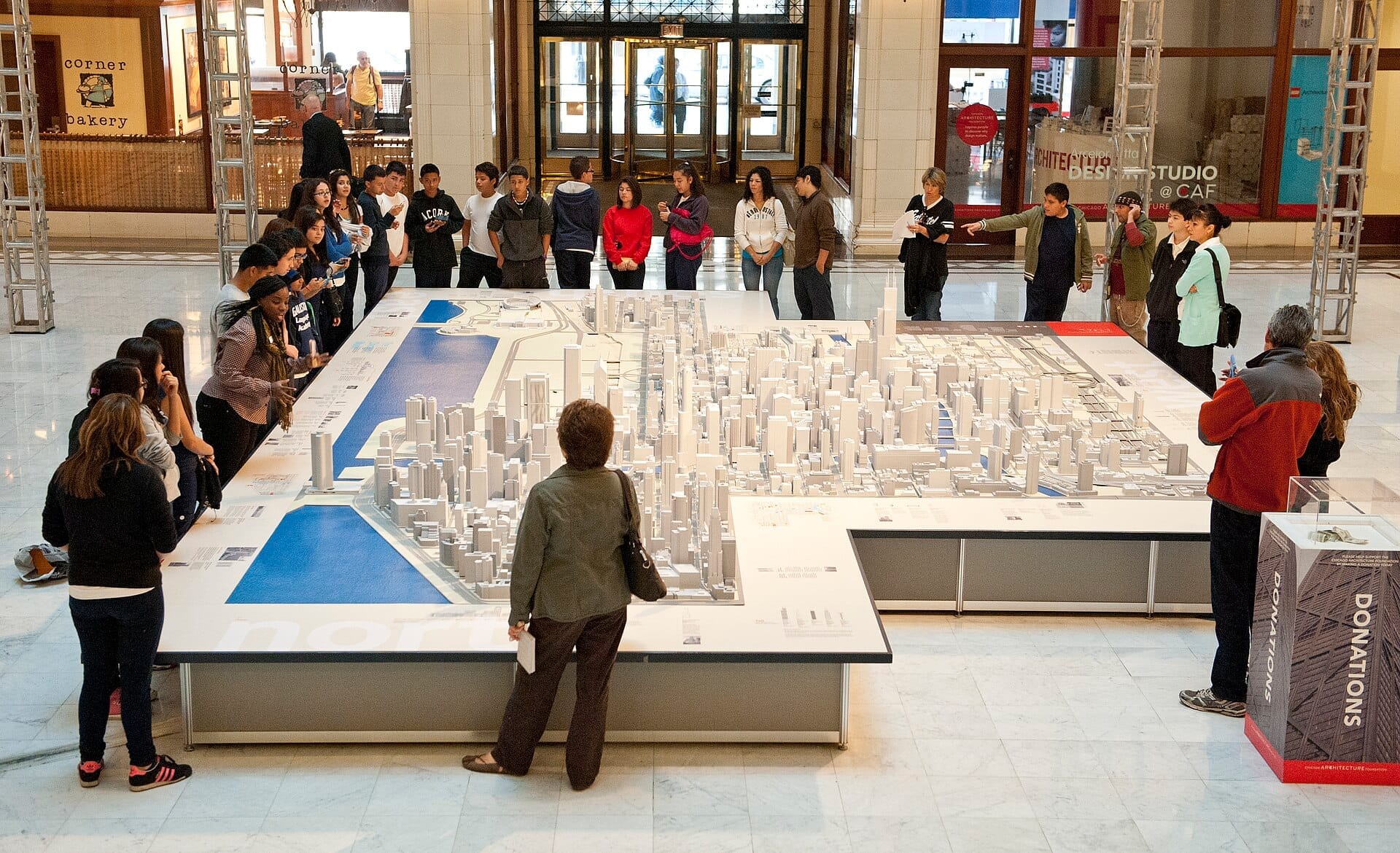
This is not a dusty archive or a purely academic institution. The center is designed to be accessible to anyone with even a passing curiosity about cities. The permanent exhibitions use oversized models, interactive touchscreens, and cinematic displays to explain architectural movements, building technologies, and urban planning decisions in plain language. The flagship feature is a scale model of Chicago containing more than 4,250 miniature buildings, one of the largest of its kind anywhere.
💡 Local tip
The CAC is generally open 10:00–17:00 but is currently closed on Tuesdays and Wednesdays, with last entry one hour before closing (hours can vary by season and day). It is closed on Thanksgiving, Christmas, and New Year's Day, and closes early at 15:00 on the eves of those holidays. Always confirm hours at architecture.org before visiting.
The Scale Model: The Best Reason to Walk In
The centerpiece of the exhibition floor is the Chicago architectural scale model, and it earns its reputation. More than 4,250 individual buildings are represented across a sprawling tabletop-sized display, with the density of the Loop rendered in extraordinary detail. Alongside the model, interactive touchscreens let visitors call up information on individual buildings: who designed them, when they were built, what structural innovation they represent. The cinematic backdrop framing the model shifts to simulate the city at different times of day, which sounds gimmicky but actually helps visitors understand how context changes perception of the skyline.
The model is genuinely useful, not just decorative. If you are about to take an architecture river cruise or spend a day walking through the Loop, spending twenty minutes with this model first will sharpen your eye considerably. You leave knowing the approximate location and relative scale of the buildings you are about to encounter at street level.
The CAC's riverfront location also means that on a clear day the floor-to-ceiling windows offer direct views of the river corridor, the Michigan Avenue Bridge, and a slice of the actual skyline. It is a rare instance where a museum's view reinforces its subject matter. If you are planning a deeper dive into the architecture, the Chicago Architecture Center River Cruise departs from a dock at 112 E. Wacker Drive, just steps from the front door.
Tickets & tours
Hand-picked options from our booking partner. Prices are indicative; availability and final rates are confirmed when you complete your booking.
Architecture cruise on the Chicago River from Michigan Ave
From 39 €Instant confirmationFree cancellationChicago's River and Lake architecture speedboat cruise
From 37 €Instant confirmation90-min architecture boat tour on the Chicago river
From 32 €Free cancellationChicago city center walking audio tour
From 5 €Instant confirmation
Tours: The CAC's Real Strength
The center admission gives you access to the exhibitions, but the CAC's deeper value lies in its tour program, one of the most extensive architecture tour offerings of any city in the world. River cruises are the most popular option, running along the Chicago River and pointing out buildings from the water level, which is genuinely the best vantage point for understanding scale and facade design. Walking tours cover specific neighborhoods, building types, architectural periods, and the work of individual architects. Specialty tours address topics like structural engineering, interior architecture, and adaptive reuse.
Tour prices begin at $35 for adults. If you are visiting primarily to take a tour, the center admission may be included depending on the tour type, so check the CAC website when booking. For serious architecture enthusiasts, a membership starting at $75 includes free center admission and discounts on tours, which adds up quickly if you plan to take more than one.
ℹ️ Good to know
The architecture river cruise sells out frequently in summer. Book online in advance rather than walking up to the dock, particularly on weekends between June and September.
Visiting the Exhibition Floors: What to Expect
The 10,000-square-foot exhibition space is spread across a riverfront floor inside the commercial tower at One Illinois Center. When you walk in, the spatial layout is clear: the scale model and its interactive stations occupy the central and most prominent area, while additional exhibition panels and displays line the walls, covering topics from the Chicago Fire of 1871 and its role in reshaping the city's building codes, to the emergence of the modern skyscraper, to current debates in urban sustainability and design.
Morning visitors, particularly on weekdays, will find the space relatively uncrowded. By midday in summer, group visits and tour gatherings can make the model area feel tight. The lighting is warm and even throughout, which helps with reading the model details, though it does make photography of the miniature buildings slightly flat. For better photographs of the model, overcast days or visits before 11:00 are preferable, when the exhibition staff are still setting up and foot traffic is low.
The gift shop near the entrance carries a thoughtful selection of architecture books, design objects, and Chicago-specific publications that go well beyond typical tourist merchandise. It is worth browsing even if you are not buying. The Loop district surrounding the CAC has plenty to explore on foot before or after your visit: the Chicago Riverwalk runs along the south bank of the river and connects several riverside plazas within easy walking distance.
Getting There and Practical Logistics
The CAC sits at 111 E. Wacker Drive, near the corner of Michigan Avenue and Wacker Drive in the heart of the Loop. By CTA 'L', the most convenient stops are State/Lake or Washington/Wabash on the elevated lines, both within a five-minute walk. The Brown, Green, Orange, Pink, and Purple Lines stop at State/Lake and Washington/Wabash, while the Red Line’s nearest station is Lake on the State Street subway, and the Blue Line’s nearest station is Clark/Lake. From either station, walk east along Wacker toward Michigan Avenue and the river entrance is clearly visible.
If you are driving, the garage at 111 E. Wacker Drive offers discounted parking for CAC guests, up to four hours, with validation available at the center's box office or the First Lady River Cruise box office. In practice, driving into the Loop during business hours involves significant congestion and expense, and the transit options are fast enough that they are the better choice for most visitors.
The CAC sits directly within the Loop neighborhood, which means it is surrounded by other significant architectural landmarks. The Wrigley Building, Tribune Tower, and the main Chicago Riverwalk corridor are all within a short walk, making it natural to pair a CAC visit with a self-guided walking tour of the surrounding blocks.
⚠️ What to skip
The building entrance and riverside area can be exposed to wind coming off the Chicago River, particularly in colder months. In winter, temperatures along the waterfront feel significantly colder than elsewhere in the city. Bring an extra layer if visiting between November and March.
Historical Context: Why This City, Why This Institution
Chicago's architecture is not incidentally interesting. It is historically central to the development of modern building as a discipline. The destruction caused by the Great Chicago Fire of October 1871 forced rapid reconstruction across a dense city, creating conditions for architectural experimentation. The decade that followed saw Chicago architects including William Le Baron Jenney, Louis Sullivan, and Daniel Burnham produce buildings that established the structural and aesthetic logic of the modern skyscraper. The city became a laboratory for ideas about how to build tall, how to use steel and glass, and how to design at urban scale.
The CAC was founded in 1966 precisely to make this architectural heritage legible to the public. For over five decades it has produced tours, publications, and educational programs aimed at bringing Chicago's built environment out of the domain of specialists and into general cultural conversation. The 2018 move to One Illinois Center was itself a statement: the building, designed by Mies van der Rohe and completed in 1970, is a canonical example of the International Style that Chicago helped define. Housing an architecture education center inside a Mies building was not accidental.
For visitors who want to continue exploring Chicago's architectural legacy beyond the CAC, the Chicago architecture guide covers the broader landscape of significant buildings and districts across the city.
Honest Assessment: Who Gets the Most From This Visit
The CAC is at its best for visitors who are genuinely curious about cities and buildings, even at a casual level. You do not need to arrive with architectural knowledge. The exhibitions are written accessibly and the scale model is immediately engaging regardless of background. For architecture students, design professionals, or anyone who already has a working understanding of the subject, the exhibitions may feel introductory, but the tour program more than compensates.
Visitors who are primarily interested in panoramic views of Chicago's skyline may find the center's views pleasant but not the most spectacular available. The observation decks at Willis Tower and 360 CHICAGO offer more dramatic perspectives. The CAC is about understanding the skyline rather than simply photographing it from above.
Young children can engage with the scale model and some interactive elements, but the exhibition content is written for adults and older teens. Families with children who have shorter attention spans may prefer to visit primarily for the river cruise experience and spend less time with the exhibitions. The Chicago with kids guide covers additional options for family-friendly architecture experiences across the city.
Insider Tips
- If you plan to take both a river cruise and spend time in the exhibitions, buy a combined ticket online in advance. Booking separately at the door during peak season can mean the cruise you want is sold out by the time you finish in the center.
- The CAC's gift shop carries discounted architecture books that are hard to find elsewhere in the city. The selection rotates, but titles on Chicago's building history and Louis Sullivan's ornamental work regularly appear at prices below what bookshops charge.
- For the best experience with the scale model, crouch slightly to eye level with the miniature skyline. The perspectival effect makes the model dramatically more convincing and gives you a sense of scale that looking straight down does not.
- The CAC offers a range of specialty walking tours that do not appear prominently on the main tour booking page. Searching for tours by neighborhood rather than by type surfaces options like interior architecture tours and building lobby walks that most visitors miss.
- Parking validation is available at the center but only covers up to four hours. If you are combining a CAC visit with a river cruise and an exhibition walk, time yourself carefully or expect to pay full parking rates for the additional time.
Who Is Chicago Architecture Center For?
- Architecture enthusiasts and design students wanting expert-led context for Chicago's skyline
- First-time visitors to Chicago seeking an orientation to the city's built environment before exploring on foot
- Travelers planning to take the architecture river cruise who want to maximize the experience with pre-tour context
- Adults and older teens with an interest in urban history, city planning, or American cultural history
- Visitors on repeat trips to Chicago who want to go deeper than the standard tourist circuit
Nearby Attractions
Other things to see while in The Loop:
- Art Institute of Chicago
One of the largest and most visited art museums in the United States, the Art Institute of Chicago anchors the eastern edge of the Loop with a collection of over 300,000 works spanning 5,000 years. From Georges Seurat's pointillist masterpiece to Grant Wood's American Gothic, the highlights alone demand the better part of a day.
- Buckingham Fountain
The Clarence Buckingham Memorial Fountain is one of the largest decorative fountains in the world, sitting at the heart of Grant Park since 1927. Free to visit during its seasonal run from spring through mid-October, it puts on hourly water displays and a nightly illuminated show that draws crowds from across the city.
- Chicago Architecture Foundation River Cruise
The Chicago Architecture Center River Cruise aboard Chicago's First Lady is the most authoritative way to read the city's skyline. In 90 minutes, trained docents walk you through more than 40 landmark buildings across all three branches of the Chicago River, connecting architectural styles to the human decisions that shaped them.
- Chicago Blues Festival
Held each June in Millennium Park, the Chicago Blues Festival is the largest free blues festival in the world. Spread across multiple outdoor stages in the Loop, it draws tens of thousands of listeners for three days of core performances rooted in one of America's most influential musical traditions.