Lincoln Park Conservatory: Chicago's Free Victorian Greenhouse Worth Knowing About
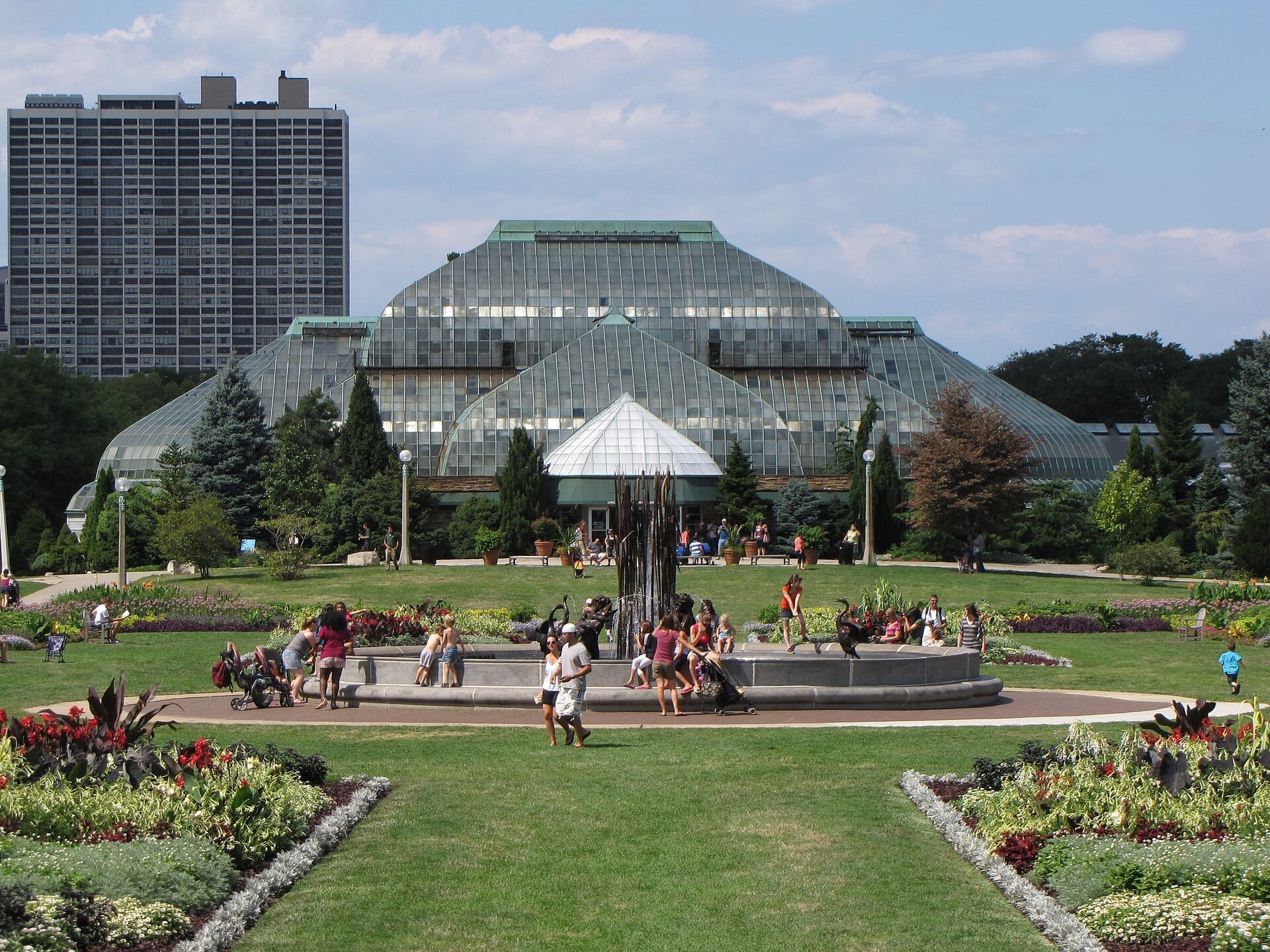
Built between 1890 and 1895, the Lincoln Park Conservatory is a free-entry Victorian glasshouse in Chicago's North Side park system, organized into four distinct display rooms. It offers a genuine botanical experience without the crowds of more heavily promoted attractions, though timed-entry tickets are required in advance.
Quick Facts
- Location
- 2391 N. Stockton Drive, Chicago, IL 60614 (Lincoln Park, North Side)
- Getting There
- CTA Red Line to Fullerton, then a 10-15 min walk east through the park; or CTA Bus 151 along North Lake Shore Drive
- Time Needed
- 45–90 minutes for a relaxed visit through all four rooms
- Cost
- Free (suggested donation: $10 adults, $5 children). Timed-entry ticket required — reserve free tickets up to four weeks ahead at lincolnparkconservancy.org
- Best for
- Plant lovers, cold-weather escapes, photographers, families with young children, and anyone wanting quiet after the zoo crowds
- Official website
- www.lincolnparkconservancy.org/projects/conservatory-garden
What the Lincoln Park Conservatory Actually Is
The Lincoln Park Conservatory is a Victorian-era glasshouse complex at the southern end of Lincoln Park, a short walk from the zoo. Constructed between 1890 and 1895 and designed by architect Joseph Lyman Silsbee in collaboration with M.E. Bell, the structure replaced a smaller greenhouse dating to the 1870s. It covers roughly three acres and is organized into four interconnected display rooms: the Palm House, the Fern Room, the Orchid House, and the Show House. Each has a distinct climate, feel, and plant palette.
Admission is free, with a suggested donation of $10 per adult and $5 per child. What catches most first-time visitors off guard is the timed-entry ticket requirement: you need to reserve a free ticket in advance through the Lincoln Park Conservancy website, up to four weeks out. Same-day availability exists on quieter weekdays, but weekend slots fill faster than you might expect. Ticket sales end at 4:20 pm, and there is absolutely no entry after 4:30 pm, so arriving late is not an option.
💡 Local tip
Book your free timed-entry ticket at lincolnparkconservancy.org before you leave home. Saturday morning slots in spring can disappear days in advance. Timed-entry tickets are offered for entry from 10:00–16:00, Wednesday through Sunday.
The Four Rooms: What You'll Actually See
The Palm House
This is the first room most visitors enter, and the contrast with Chicago's often frigid outdoors is immediate and physical. The air is noticeably warmer and carries a faint earthy sweetness, somewhere between damp soil and cut vegetation. Palms rise toward the vaulted glass ceiling — some reaching heights that feel genuinely outsized for an interior space. The diffused light filtering through the iron-framed glass panels gives the room a soft, slightly overcast quality even on bright days, which makes it particularly good for photography without harsh shadows.
The Palm House is the architectural centerpiece of the conservatory and the room that reads most clearly as a Victorian showpiece. The geometry of the ironwork overhead, the scale of the central palms, and the sound of the space, which absorbs sound differently than any outdoor or conventional indoor environment, makes it worth spending ten minutes simply standing still.
The Fern Room
The Fern Room is denser, cooler in feeling if not in temperature, and has a more primordial atmosphere. Ferns of varying sizes crowd the path, and the light feels greener, filtered through layered foliage rather than bare glass. It is a room that rewards slow movement. Children tend to respond well to it, particularly younger ones who find the scale of some specimens unexpectedly large.
One practical note: there are steps up and down when entering and exiting the Fern Room. The conservatory is described as partially ADA accessible, but this section specifically may present difficulty for visitors with mobility impairments or strollers. Worth factoring into your planning.
The Orchid House and Show House
The Orchid House is smaller and more concentrated than the others. Depending on the season and what is in bloom, it can be the most visually striking room or the most understated. Orchids cycle through bloom periods, so what you see varies considerably by when you visit. Spring and late winter tend to produce the most color here. The Show House hosts rotating seasonal flower shows, which the Conservancy programs throughout the year. These add significant visual payoff when timed well, and very little when the room is in transition between displays.
Tickets & tours
Hand-picked options from our booking partner. Prices are indicative; availability and final rates are confirmed when you complete your booking.
iFLY Chicago Lincoln Park indoor skydiving experience
From 126 €Instant confirmationFree cancellationGo City | Chicago All-Inclusive Pass
From 127 €Instant confirmationFree cancellationiFLY Chicago Rosemont indoor skydiving tickets
From 117 €Instant confirmationFree cancellationChicago lakefront neighbourhood bike tour
From 18 €Instant confirmationFree cancellation
When to Visit: Time of Day and Season
Weekday mornings, particularly Wednesday and Thursday between 10:00 and noon, are the quietest. The conservatory feels genuinely calm at those times: a handful of other visitors, the occasional school group, and a quality of attention that is hard to find at most free attractions in a major city. Weekend afternoons, especially in spring and around the annual flower shows, draw larger numbers and the experience shifts accordingly.
Winter is arguably the most compelling time to come. When Chicago temperatures drop below zero and the streets outside have that grey, scoured look of a January morning, stepping into the Palm House is a sharp sensory reset. The warmth is real, the greenery is real, and the contrast with conditions outside makes both feel more intense. Summer visits are pleasant but the differential between indoors and outdoors is smaller and the outdoor Lincoln Park grounds are competing for your attention.
The conservatory is open Wednesday through Sunday, 10:00 to 17:00, and closed on Mondays and Tuesdays. If you're planning a longer day in the neighborhood, it pairs naturally with Lincoln Park Zoo and the Alfred Caldwell Lily Pool, both within easy walking distance along Stockton Drive.
Historical and Architectural Context
The conservatory was built during a period when Chicago was actively constructing civic infrastructure on a large scale, partly driven by the ambitions surrounding the 1893 World's Columbian Exposition. The iron-and-glass greenhouse form was a prestige architectural gesture in the late Victorian era, and the Lincoln Park Conservatory follows in a tradition established by the Crystal Palace in London and replicated across American and European cities as symbols of civic cultivation and botanical knowledge.
Joseph Lyman Silsbee, the architect, is better known in Chicago as an early employer of Frank Lloyd Wright and Louis Sullivan. The conservatory predates most of what made Silsbee architecturally famous, but the structural logic is clear: maximize light penetration, support large plant specimens at scale, and create an interior that feels removed from the city outside. More than 130 years later, the building still does what it was designed to do.
The conservatory sits within a broader park system that has considerable architectural and landscape interest of its own. If Victorian-era architecture and Chicago's civic building history appeal to you, the Chicago architecture guide covers the wider context well.
Getting There and Getting Around
The most reliable public transit option is the CTA Red Line to Fullerton station, followed by a 10 to 15 minute walk west and north through the park along Fullerton Parkway and then Stockton Drive. The walk itself is pleasant in good weather and passes through open parkland. CTA Bus 151 runs along North Lake Shore Drive and stops closer to the conservatory entrance, which is useful in bad weather or with young children.
The address is 2391 N. Stockton Drive. Street parking in the surrounding park area exists but is inconsistent and not something to rely on at peak times. Ride-hailing drop-off works well and the Stockton Drive approach is straightforward for drivers.
Pets and emotional support animals are not permitted inside the conservatory. Service animals are a separate category; confirm with the Conservancy if this applies to your visit.
⚠️ What to skip
The Fern Room has steps at entry and exit. If you use a wheelchair or are visiting with a stroller, check with the Lincoln Park Conservancy directly before your visit about accessible routing through the building.
Photography and Practical Notes
The conservatory is genuinely photogenic, but the lighting conditions require some adjustment in expectations. The glass panels produce diffused natural light that is beautiful for plant detail shots but can make white balance inconsistent across rooms. The Palm House photographs best in morning light when sun angles are lower. The Fern Room is darker and benefits from slightly increased ISO or a wider aperture if you're shooting without flash. Flash photography is not explicitly prohibited but would be disruptive in a quiet space.
For plant enthusiasts who want to identify specific specimens, signage within the rooms is present but selective. The staff and volunteers are knowledgeable and approachable if you have specific questions about what you're looking at.
Lincoln Park as a whole is worth more than a conservatory visit if time allows. The park itself stretches along the lakefront and connects to the Lakefront Trail, one of Chicago's most useful and scenic walking and cycling corridors.
Honest Assessment: Is It Worth Your Time?
The Lincoln Park Conservatory is a quiet, well-maintained, free attraction that rewards visitors who approach it on its own terms. It is not a botanical garden in the comprehensive sense, and if you are looking for the scale or breadth of a place like the Chicago Botanic Garden, this will feel modest by comparison. The four rooms take 45 to 90 minutes at an unhurried pace. There is no cafe, no gift shop to speak of, and no audioguide.
What it offers is something harder to find downtown: genuine botanical atmosphere, a Victorian structure that has survived intact, and enough calm to actually absorb what you're looking at. For visitors who are building a Lincoln Park afternoon around the zoo and the surrounding green space, it is a logical and rewarding addition rather than a detour.
If your Chicago trip is short and heavily focused on major institutions, you might deprioritize this in favor of the Garfield Park Conservatory, which is significantly larger in scale, or fit it into a broader family day in Chicago that already centers on Lincoln Park.
ℹ️ Good to know
Who should skip this: Visitors with only one or two days in Chicago who need to prioritize major institutions. Travelers who find botanical spaces unengaging. Anyone with significant mobility limitations should verify accessibility details before visiting, given the steps in the Fern Room.
Insider Tips
- Book your timed-entry ticket the moment you finalize your itinerary. Weekend slots in March and April, when flower shows typically run, sell out days ahead even though the ticket itself is free.
- The conservatory is one of the warmest places in Chicago on a cold day, and unlike indoor shopping destinations it costs nothing to enter. If you are visiting in January or February and need a genuine break from the cold, this is one of the better options on the North Side.
- The Show House seasonal displays are not always publicized widely on general travel sites. Check the Lincoln Park Conservancy's events calendar specifically before your visit to see whether a flower show is running — it significantly changes the visual experience of that room.
- Visit the Alfred Caldwell Lily Pool immediately after. It is a short walk from the conservatory, free to enter, and almost nobody who visits the conservatory walks over to see it. The contrast between the enclosed Victorian glasshouse and the open Prairie-style landscape design is striking.
- Morning light before noon produces the best photography in the Palm House. By early afternoon, overhead light flattens the canopy and the diffusion through the glass becomes less interesting.
Who Is Lincoln Park Conservatory For?
- Plant enthusiasts and anyone with a serious interest in Victorian horticultural architecture
- Travelers visiting Chicago in winter who want a free, warm, genuinely beautiful indoor space
- Families with young children spending a half-day at Lincoln Park Zoo and looking for a calm follow-up
- Photographers looking for diffused natural light and botanical subjects without crowds
- Solo travelers and couples who want an unhurried, quiet experience away from the downtown tourist core
Nearby Attractions
Other things to see while in Lincoln Park & Old Town:
- Alfred Caldwell Lily Pool
Tucked inside Lincoln Park, the Alfred Caldwell Lily Pool is a 3-acre National Historic Landmark redesigned in 1936–1938 in the Prairie School style. Admission is free, crowds are thin, and the experience is unlike anything else on Chicago's standard tourist circuit.
- Chicago History Museum
Founded in 1856 as the Chicago Historical Society, the Chicago History Museum is the city's oldest cultural institution. Located at the edge of Lincoln Park, it traces the full arc of Chicago's story, from its earliest Indigenous inhabitants to the Great Fire, the labor movement, and beyond. It rewards curious visitors who want more than skyline photos.
- Green City Market
Green City Market is Chicago's only year-round sustainable farmers' market, drawing top chefs, local farmers, and serious food lovers to Lincoln Park on Wednesdays and Saturdays during the outdoor season. Free to enter at both its outdoor Lincoln Park and indoor winter locations and rich with seasonal produce, artisan goods, and chef demos, it's one of the most authentic food experiences the city offers.
- Kingston Mines
Founded in 1968, Kingston Mines on North Halsted Street is the largest and oldest continuously operating blues club in Chicago. Two stages run simultaneously on weekends, keeping the music going until 4 a.m. This is where the city's blues tradition stays alive on a weekend night.