Garfield Park Conservatory: Chicago's Landmark of Living Botany
Garfield Park Conservatory is one of the largest public conservatories in the United States, offering roughly 1.6–2 acres of glass-enclosed tropical rooms, ancient cycads, and soaring palm canopies. Free for all visitors and deeply rooted in West Side history, it rewards visitors who seek something far beyond the typical tourist circuit.
Quick Facts
- Location
- 300 N Central Park Ave, Chicago, IL 60624 (Garfield Park, West Side)
- Getting There
- CTA Green Line: Conservatory–Central Park Drive station (steps away). Free parking lot just south of the conservatory; a Divvy bike-share station is typically available nearby on Central Park Ave.
- Time Needed
- 1.5–2.5 hours for the glasshouses; add an hour if exploring outdoor gardens
- Cost
- Free to visit for all guests (suggested donation around $10 for adults and $5 for youth). Timed-entry reservations are currently required.
- Best for
- Botany enthusiasts, architecture lovers, families, winter warmth-seekers, photographers
- Official website
- garfieldconservatory.org
What Garfield Park Conservatory Actually Is
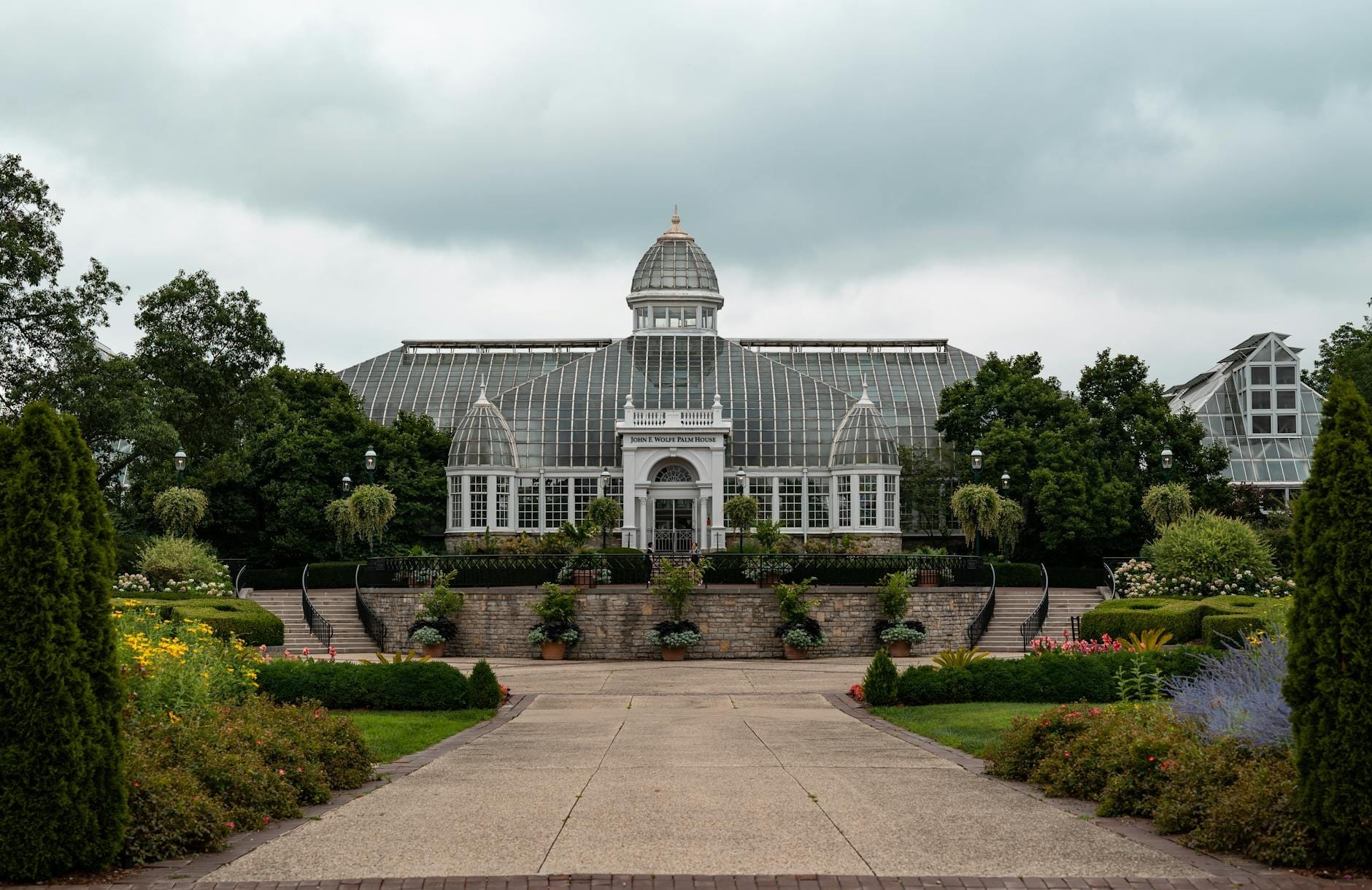
The Garfield Park Conservatory is, by greenhouse floor space, one of the largest public conservatories in the United States, covering approximately 1.6–2 acres of glass-enclosed growing rooms and extensive outdoor gardens. Opened in 1908 and designed by landscape architect Jens Jensen, the complex was conceived not as a conventional botanical collection but as what Jensen called "landscape art under glass." The philosophy matters: the interior rooms are shaped to feel like natural landscapes, not laboratory showcases. You walk through a Fern Room that mimics a tropical forest floor, past palm trees that touch a glass ceiling nearly 50 feet high, and alongside cycad specimens that have been living for more than 200 years.
Both the conservatory and Garfield Park itself are listed on the National Register of Historic Places. The park was originally laid out by William LeBaron Jenney, better known as a pioneer of the steel-frame skyscraper, which gives the grounds an unusual pedigree connecting horticulture and architectural history in the same city block.
ℹ️ Good to know
Advance reservations are required for entry. Book via the official site before your visit. Admission is free for all visitors, with a suggested donation of about $10 (adults) or $5 (youth).
The Rooms: What You'll See Inside
The conservatory is organized into a series of distinct glasshouse rooms, each maintaining its own microclimate. The Palm House sets the tone immediately: entering it from a Chicago winter is a near-physical shock. The air is thick and warm, carrying the faint sweetness of tropical growth. Palms arch overhead, and the light through the glass panels falls in soft, diffuse sheets that shift with cloud cover. Early morning visits on weekdays, when the building is not yet crowded, feel genuinely quiet despite the urban surroundings.
The Fern Room is arguably the most atmospheric space in the building. Jensen designed it to evoke a prehistoric fern forest, and the low-light, high-humidity interior still reads that way. Tree ferns from tropical regions tower over ground-level specimens, and the mossy textures underfoot and on the stonework give the room an age it actually has earned. Note that this room is not wheelchair accessible due to the uneven terrain and descending ramps.
The Aroid House focuses on philodendrons, elephant ears, and plants from the Araceae family. The Cactus and Succulent House provides a textural contrast: dry, spiny, and surprisingly beautiful in strong afternoon light when shadows sharpen along ridged cactus columns. The Show House hosts rotating seasonal exhibitions, including a popular spring flower show and a winter holiday display. Checking the current exhibition calendar before your visit is worthwhile.
Tickets & tours
Hand-picked options from our booking partner. Prices are indicative; availability and final rates are confirmed when you complete your booking.
Go City | Chicago All-Inclusive Pass
From 127 €Instant confirmationFree cancellationiFLY Chicago Lincoln Park indoor skydiving experience
From 126 €Instant confirmationFree cancellationiFLY Chicago Rosemont indoor skydiving tickets
From 117 €Instant confirmationFree cancellationChicago lakefront neighbourhood bike tour
From 18 €Instant confirmationFree cancellation
How the Experience Changes by Time and Season
Wednesday evenings are the conservatory's extended hours day, with closing at 8:00 PM (last entry at 7:15 PM). This is the best option for anyone who wants to experience the glasshouses in lower natural light, when the artificial ambient lighting creates a genuinely different mood inside the Palm House. Weekday mornings from Thursday to Sunday offer the quietest crowds; weekend afternoons, particularly on cold days between November and March, draw Chicago families seeking warmth and something to do with children, so expect more noise and foot traffic.
In winter, the contrast between the frigid West Side streets and the tropical interior makes the visit feel almost surreal. In spring, the outdoor gardens begin to emerge alongside the seasonal show inside, and the combination of interior and exterior spaces rewards a longer visit. Summer brings full garden activity: 10 acres of exterior beds and plantings that are easy to underestimate when planning time. Autumn, when outdoor color is at its peak, is an overlooked season for a visit here.
💡 Local tip
Winter visits (November through February) are when the conservatory earns its reputation as an escape. The Palm House reaches tropical humidity levels that are genuinely warming after a walk from the Green Line stop. Dress in layers you can remove at the entrance.
Getting There and Planning Your Visit
The CTA Green Line stops at the Conservatory–Central Park Drive station, which places you directly adjacent to the building. Travel time from downtown Loop stations is roughly 20–25 minutes. If you are coming from the North Side or connecting through Midtown, the Green Line is the straightforward option. There is a free visitor parking lot just south of the conservatory entrance for those arriving by car, as well as a Divvy bike-share station nearby on Central Park Ave.
The conservatory is closed Monday and Tuesday. Hours are Wednesday 10:00 AM to 8:00 PM, and Thursday through Sunday 10:00 AM to 5:00 PM, with the last entry generally 30–45 minutes before closing. School field trips occupy the building from 9:30 AM on weekday mornings; if you are visiting on a Thursday or Friday before noon, you may encounter groups of children cycling through the rooms.
The conservatory sits within Garfield Park on Chicago's West Side, a neighborhood that is not one of the city's primary tourist corridors. If you are planning a broader West Side itinerary, pairing this visit with the nearby DuSable Black History Museum or combining it with a deeper look at Chicago's architectural traditions covered in the Chicago architecture guide makes sense logistically.
Photography and Practical Details
Photography is permitted throughout the conservatory for personal, non-commercial use. The Fern Room presents the most challenging lighting conditions: it is dim and green-cast, and handheld shots at slower shutter speeds are necessary unless you bring a fast prime lens. The Palm House works better for photography in the hour after opening, when the low ambient light inside contrasts with the morning sky above the glass. The Cactus House in afternoon light, with deep side-lighting on the plants, photographs well even with a phone camera.
For commercial photography or video shoots, contact the conservatory directly in advance. Tripods may require prior arrangement.
Accessibility is good through most of the building. Wheelchair users and visitors who cannot manage stairs may enter via the north or south ramps at the main entrance on Central Park Ave. A small number of wheelchairs are available on a first-come, first-served basis at the front desk. The Fern Room is the one significant exception: its terrain is not accessible by wheelchair. For specific accommodation needs, contact the conservatory at least 24 hours ahead at 773-638-1766 or visitors@garfieldpark.org.
Historical and Cultural Significance
Jens Jensen, who designed the conservatory, was one of the founders of the Prairie-style landscape movement in American design, a philosophy that emphasized native plants, naturalistic arrangement, and the idea that designed space should feel continuous with the broader landscape. His work at Garfield Park preceded and influenced later projects across Chicago and the Midwest. The conservatory is considered one of his most complete surviving works.
The cycad collection deserves mention on its own terms. Cycads are among the oldest plant lineages on earth, predating flowering plants by hundreds of millions of years. Several specimens in the collection are documented at over 200 years old, meaning they were growing before the city of Chicago was incorporated in 1837. That kind of temporal depth is unusual in any public institution.
If the Garfield Park Conservatory sparks a broader interest in Chicago's green spaces, the Lincoln Park Conservatory on the North Side offers a useful point of comparison, and the Chicago lakefront guide covers the city's most extensive network of public parks and trails.
Who Should Reconsider This Visit
Visitors primarily interested in Chicago's skyline, architecture tours, or downtown attractions will find the conservatory geographically removed from those circuits. The West Side location requires a purposeful trip. Travelers on a tight one-day itinerary packed with Loop landmarks should weigh the travel time honestly against the experience. Those with severe botanical allergies or humidity sensitivities may find the Palm and Fern rooms physically uncomfortable. The conservatory is not an entertainment venue and offers no dining on-site, so it works best as a deliberate, unhurried stop rather than a quick checkbox.
Insider Tips
- Book your timed-entry reservation as soon as you know your travel dates. Weekend slots, especially during the spring flower show and winter holiday exhibition, fill days in advance.
- Wednesday evening visits (open until 8:00 PM) offer a completely different atmospheric quality. The glasshouses after sunset, lit from within against a dark sky, look unlike anything you will see during daytime hours.
- The 200-year-old cycads are scattered across multiple rooms. Ask staff at the front desk which specimens are the oldest; they are not all prominently labeled, and some of the most significant ones are easy to walk past.
- Combine your visit with a walk through the surrounding Garfield Park grounds, especially in late spring and summer. The outdoor gardens are frequently overlooked by visitors who exit after the glasshouses.
- If you are a Chicago resident visiting for the first time, bring a piece of mail or a government-issued ID showing a Chicago address to confirm residency at booking. Admission itself is free, with suggested donations, so you will mainly use your ID to confirm eligibility for any resident-focused programs or specials that may apply.
Who Is Garfield Park Conservatory For?
- Plant and botany enthusiasts who want depth beyond a casual garden visit
- Families with children looking for an engaging, all-weather indoor experience
- Architecture and design history travelers interested in Jens Jensen's Prairie-style landscape work
- Photographers seeking unusual interior lighting conditions and exotic plant textures
- Winter visitors who want a genuine warm-weather escape without leaving the city
Nearby Attractions
Combine your visit with:
- Bahá'í House of Worship
The Bahá'í House of Worship in Wilmette, Illinois, is one of the most architecturally singular buildings in North America. Free to enter, open daily, and reachable by CTA from downtown Chicago, it rewards visitors with a 135-foot lace-like dome, meditative silence, and an unusual kind of spiritual calm that transcends denomination.
- Brookfield Zoo Chicago
Brookfield Zoo Chicago is one of the largest and most historically significant zoos in the United States, covering 216 acres about 14 miles west of downtown. With more than 511 species, landmark indoor exhibits, and a genuine conservation mission, it rewards a full day of exploration. But it takes planning to get the most out of it.
- Chicago Air and Water Show
Every August, the Chicago Air and Water Show transforms the lakefront into a grandstand for one of the most spectacular free public events in the United States. Fighter jets, military demonstrations, and precision flying teams perform over Lake Michigan while hundreds of thousands of spectators line the shore from Fullerton to Oak Street.
- Chicago Botanic Garden
A living museum spread across 385 acres and nine islands north of Chicago, the Chicago Botanic Garden offers 27 gardens, four natural areas, and six miles of lake shoreline in Glencoe, Illinois. Whether you visit for a single seasonal bloom or spend a full day exploring Japanese landscapes and native prairies, this guide covers everything you need to plan a worthwhile trip.