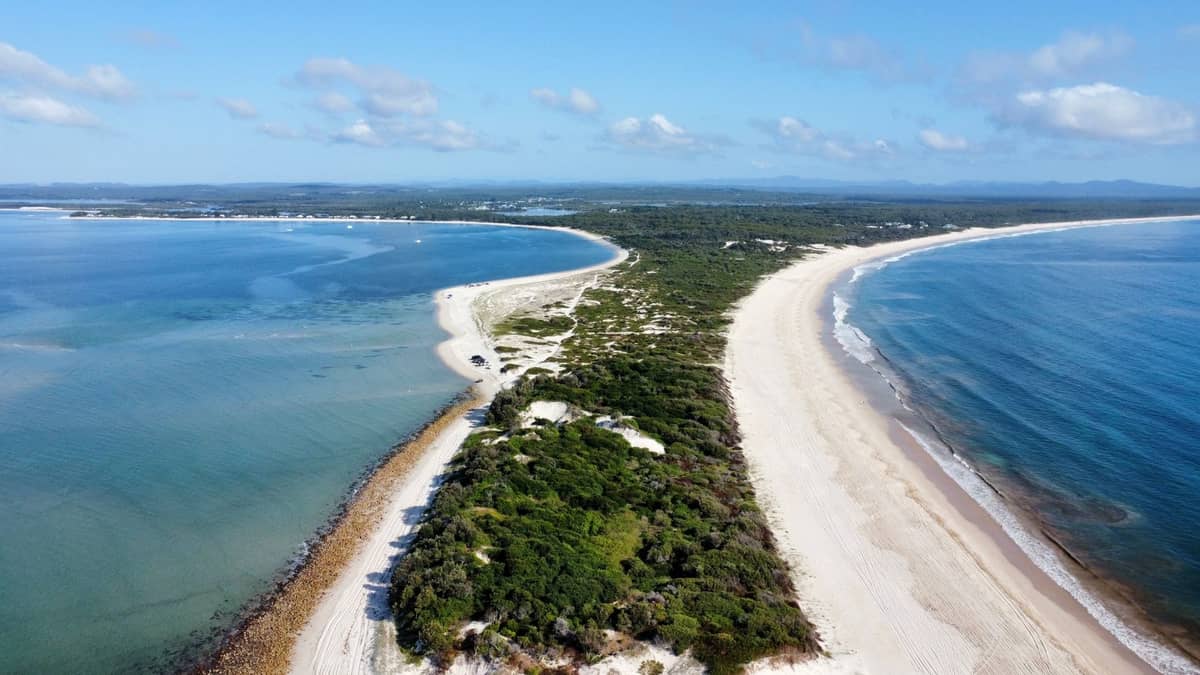
North Stradbroke Island, known to its Traditional Owners as Minjerribah, is a large sand island in Moreton Bay about 30 kilometres from Brisbane's CBD. It offers surf beaches, freshwater lakes, national park walking trails, and three distinct settlements, all within an easy ferry ride of the mainland.
North Stradbroke Island sits in Moreton Bay like a world apart from Brisbane, yet it takes less than an hour to reach from the city. Known to the Quandamooka people as Minjerribah, this is one of the largest sand islands in the world, shaped by surf-pounded ocean beaches on its eastern side and calm, mangrove-fringed shores to the west. Whether you come for a weekend of surfing at Point Lookout, a slow afternoon by Brown Lake, or a serious multi-day nature escape, Minjerribah delivers a coastal Queensland experience that the Gold Coast crowds rarely find.
Orientation
North Stradbroke Island lies in Moreton Bay, east of the Cleveland suburb on Brisbane's bayside fringe. The island stretches roughly 38 kilometres from north to south and up to 11 kilometres wide at its broadest point. Three settlements define daily life here: Dunwich on the western shore, where the ferry docks and most practical services cluster; Amity Point at the northern tip, a quiet fishing village; and Point Lookout on the northeastern headland, the island's social and tourism hub.
The island is surrounded by Moreton Bay Marine Park, which limits certain activities on the water and protects the dolphins, dugongs, turtles and humpback whales that move through these waters seasonally. Naree Budjong Djara National Park covers parts of the island, preserving freshwater lakes, heathlands and eucalypt forests that give the island its character beyond the beach.
For travellers building a broader Moreton Bay itinerary, it helps to understand how Minjerribah fits the map. Moreton Island lies to the north and is a separate, less-developed island accessible by different ferry services from Brisbane. North Stradbroke is bigger, more accessible, and more set up for multi-day visits with accommodation, restaurants and sealed roads connecting the main settlements.
Character and Atmosphere
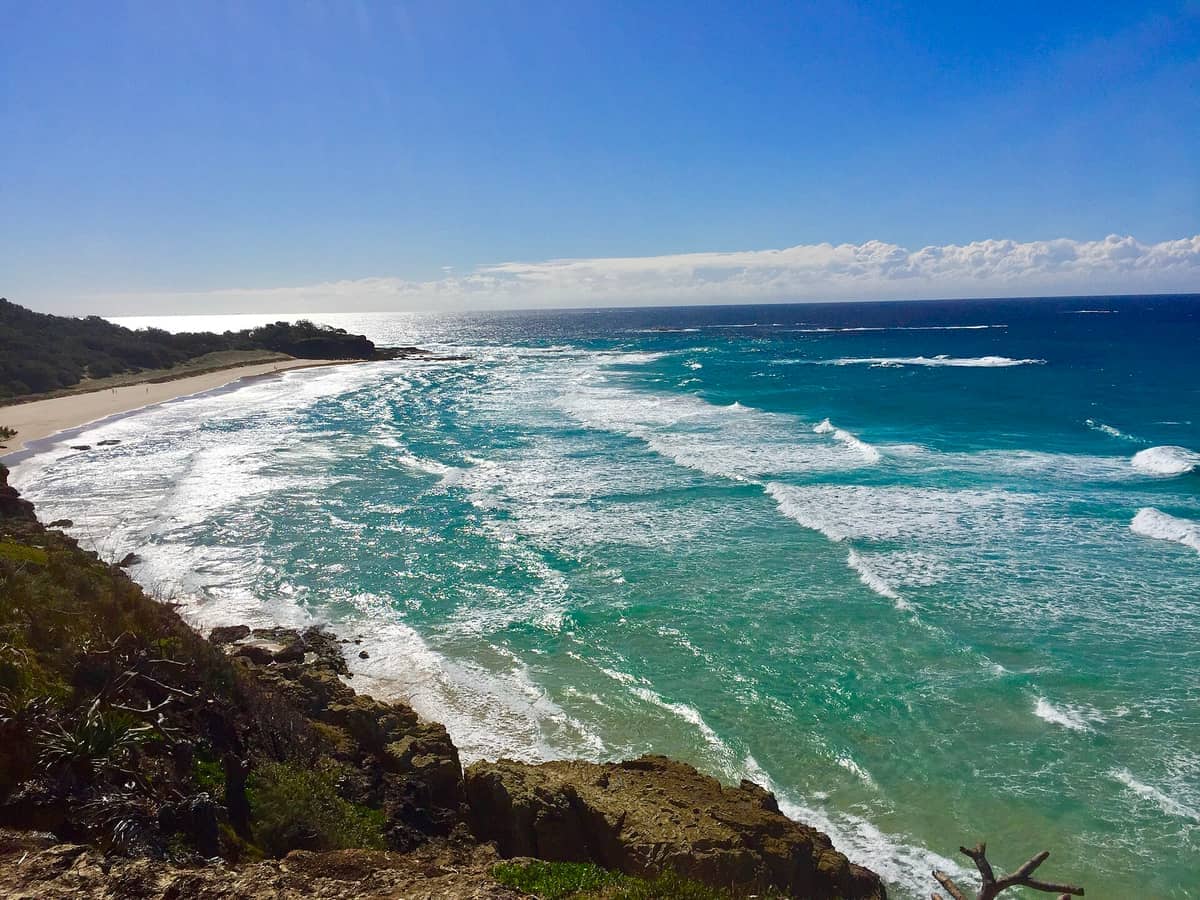
The island's rhythm is shaped almost entirely by the natural world. Mornings at Point Lookout arrive with a low golden light that hits the headland cliffs before spreading across Cylinder Beach, where early surfers are usually already reading the swell. The air at this hour carries salt and something faintly eucalyptic from the scrub behind the dunes. Shops open without urgency. Cafes fill slowly. The pace is genuinely unhurried, not performatively so.
By midday in summer, the eastern beaches are warm and busy with families, campers and day-trippers who have caught the morning ferry. Point Lookout's main strip picks up, with board hire shops active and lunch spots filling tables that spill toward the views. The contrast with Brisbane's CBD, visible on clear days as a low shimmer across the bay, is remarkable given how close you actually are. Afternoons bring long shadows on the headland boardwalk and, between June and November, the high likelihood of watching humpback whales breach from the lookout above Deadman's Beach.
Dunwich operates at a different register entirely. This is where locals get their groceries, pick up parcels from the post office, and gather at the pub. It is not a tourist precinct; it is a town that happens to receive ferry traffic. Walking from the terminal south toward the smaller beaches on the western shore, the streets are residential, lined with fibro houses and frangipani trees. After dark, Point Lookout quiets quickly. There are a handful of bars and restaurants but no nightlife scene to speak of. The island's draw at night is the sky: far enough from Brisbane's light pollution that on clear evenings the Milky Way is genuinely visible.
ℹ️ Good to know
Minjerribah is the traditional home of the Quandamooka people, who have lived on this island for at least 20,000 years. The island's two freshwater lakes, Brown Lake (Bummiera) and Blue Lake (Kaboora), hold deep cultural significance. Visitors are encouraged to treat these places with corresponding respect.
What to See and Do
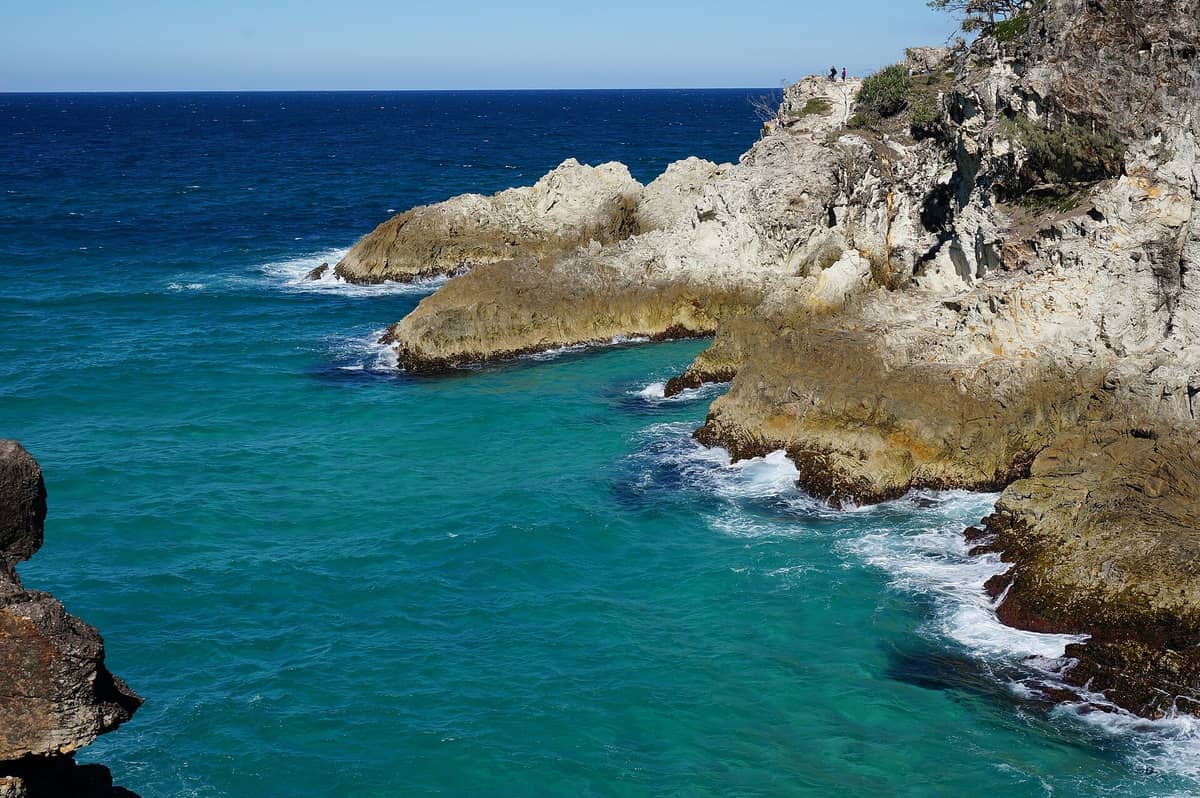
The island's single most compelling activity is simply walking the North Gorge Walk, a 1.2-kilometre return trail along the headland at Point Lookout. The path follows the cliff edge above a series of rocky gorges where the ocean pushes through gaps in the rock with considerable force, particularly after a swell. The walk takes about 45 minutes at a relaxed pace and is suitable for most fitness levels, though the uneven sandstone surface demands sensible footwear.
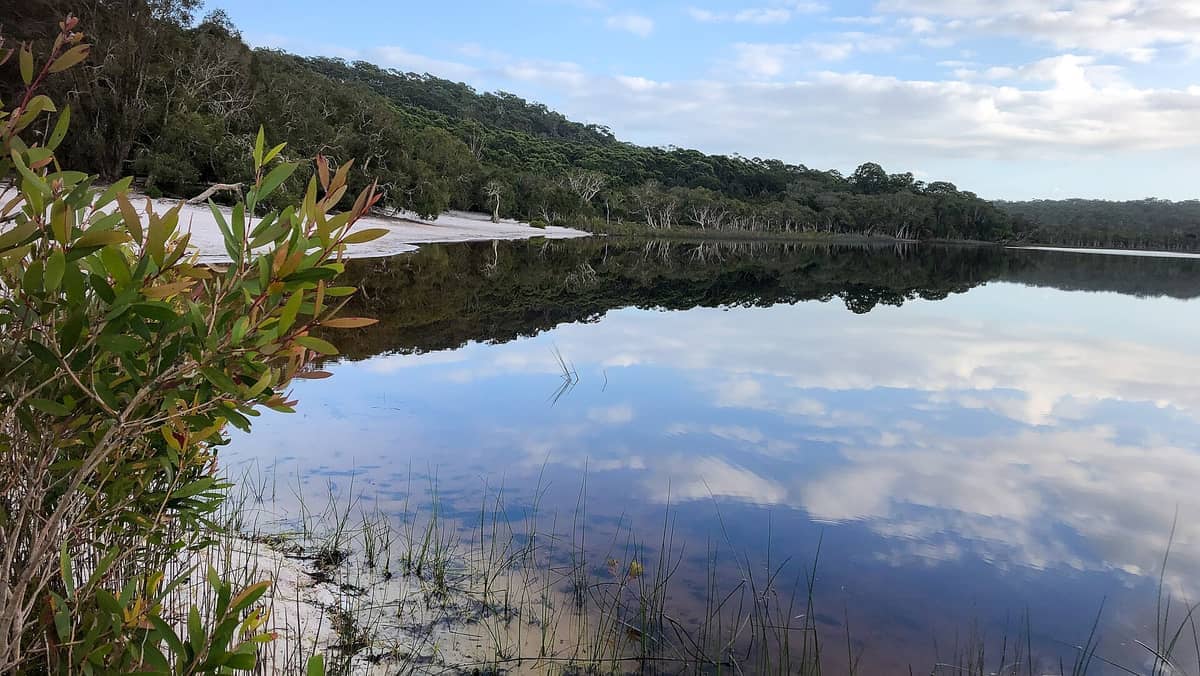
Brown Lake, known as Bummiera, sits about nine kilometres by road from Dunwich and is one of the more unusual swimming spots in southeast Queensland. Its amber water is stained by tannins from surrounding teatree vegetation, creating a naturally acidic, clear-to-the-bottom lake that is both safe to swim in and strikingly beautiful in afternoon light. Brown Lake has basic facilities and a small sandy beach. Blue Lake (Kaboora), deeper in the national park, is reached by a longer walk and remains culturally protected; swimming is not permitted.
Cylinder Beach: the main patrolled surf beach at Point Lookout, suitable for families and beginner surfers
Main Beach: a long, exposed stretch north of Point Lookout with stronger surf and fewer crowds
Deadman's Beach: a sheltered cove below the headland lookout, good for whale watching between June and November
Naree Budjong Djara National Park: heathland, wallabies, and freshwater ecosystems in the island's interior
Amity Point: a calm western beach ideal for swimming, kayaking and spotting dolphins in the late afternoon
Surfing and board hire at Point Lookout, suitable for all levels
Wildlife is not incidental here; it is central to the experience. Wallabies graze roadside at dawn and dusk. Koalas occupy the eucalypts in and around the national park. Between June and November, humpback whales migrate through Moreton Bay and the passage east of the headland is one of the better onshore whale-watching positions in the state. The Brisbane wildlife guide provides useful context for what you might see in and around the bay.
⚠️ What to skip
Several beaches on North Stradbroke Island are unpatrolled. Always check the current beach conditions before swimming. At patrolled beaches like Cylinder Beach, swim only between the red and yellow flags. The Redland City Council occasionally issues swimming closures following water-quality monitoring, so check current advisories before you arrive.
Eating and Drinking
The food scene on Minjerribah is concentrated almost entirely at Point Lookout, with a modest spread of cafes, a couple of restaurants, a bakery and a pub. Expectations should be calibrated to island scale: the quality is generally solid, the choice is limited, and the prices reflect both the captive market and the cost of shipping supplies across the bay. That said, eating fish and chips on the headland with a view over Cylinder Beach is one of those simple pleasures that requires no further justification.
Point Lookout's main strip near the beach has cafes that open early enough to catch the sunrise crowd. Coffee is reliably good, which matters when you have spent the night camping or in basic accommodation. Breakfast options lean toward the standard Australian cafe format: eggs, toast, smashed avocado, smoothies. Lunch can be as simple as takeaway from a bakery or fish and chips from a beachside shop. For dinner, options are few enough that booking is advisable on weekends and during school holiday periods.
Dunwich has a supermarket and a handful of takeaway options, which matters if you are self-catering or camping. If you are staying for more than a day, bringing some provisions from the mainland is a practical choice, both for cost and variety. The island does not have a significant drinking culture, and the pub at Dunwich has the easy-going, unpretentious character you would expect from a local bar serving a small permanent community.
💡 Local tip
If you are visiting on a day trip, pack food and water from the mainland. Point Lookout has enough options, but Amity Point and the national park areas have almost nothing. Stock up before you leave Dunwich ferry terminal.
Getting There and Around
The standard route from Brisbane to North Stradbroke Island involves taking a train from Brisbane CBD to Cleveland station, then a ferry from Cleveland ferry terminal to Dunwich. The train runs on the Beenleigh and Cleveland lines, with Cleveland at the eastern end of the Cleveland line. The journey from the city takes roughly 50 minutes by train. SeaLink operates the main passenger and vehicle ferry service, with the crossing from Cleveland to Dunwich taking approximately 50 minutes for the regular ferry, or around 25 minutes by the faster water taxi service. Combined Translink go card fares apply for the train leg; the ferry requires a separate ticket.
Vehicle ferries also operate for those who want to bring a car or four-wheel drive, which is useful for accessing remote beach areas and the southern parts of the island. Four-wheel-drive vehicles can reach some beach and inland tracks that are inaccessible by regular car, though permits may be required for certain areas. Confirm current track conditions with the Queensland Parks and Wildlife Service before attempting any off-road driving.
Once on the island, Stradbroke Buses run a route network connecting Dunwich ferry terminal, Amity Point and Point Lookout, timing services to coincide with ferry arrivals and departures. The bus is a practical option for day-trippers who do not bring a vehicle. Cycling is possible on sealed roads between the settlements, though the distances and the Queensland heat make this a more committed option. Taxis and hire vehicles are available on the island. For detailed transport planning within Brisbane and surrounds, the getting around Brisbane guide covers Translink connections and fare structures.
From Brisbane's CBD, the total journey to Point Lookout by public transport (train plus ferry plus bus) takes roughly two to two and a half hours each way. This makes it a long but entirely achievable day trip, and a comfortable multi-night destination. The North Stradbroke Island guide covers itinerary planning in more detail.
Where to Stay
Accommodation on Minjerribah is deliberately modest and relatively limited in quantity, which suits the island's character. Point Lookout is the most practical base for most visitors: it is where the beaches, restaurants and activities concentrate, and it puts you within walking distance of the headland lookouts and the North Gorge Walk. Options here include holiday apartments and rental houses, a surf club with basic rooms, and a small number of guesthouses.
Camping is the accommodation of choice for a significant portion of visitors, and Several well-positioned campgrounds operate within the Minjerribah Recreation Area near Naree Budjong Djara National Park. Sites near Cylinder Beach and at Adder Rock campground provide beachside access with basic amenities. Booking through Minjerribah Camping is essential, particularly for school holidays and long weekends, when sites fill weeks in advance.
Amity Point suits visitors looking for a quieter experience with calm water access, though its accommodation options are slim. Dunwich offers some practical self-contained options that work well if you have a vehicle and want to explore the whole island. For a broader overview of accommodation choices across the Brisbane region and how day-trip destinations factor into where to base yourself, the where to stay in Brisbane guide provides useful comparisons.
Practical Considerations
North Stradbroke Island is a serious natural environment, and the practical requirements differ from a city trip. Sun protection is not optional: the island's beaches are fully exposed, the reflection off white sand amplifies UV levels, and even overcast Queensland days carry significant radiation. SPF 50+ sunscreen, hats and UV-rated rashguards are standard kit for beach time.
Mobile coverage exists across the main settlements but is limited or absent in parts of the national park interior. ATMs are available at Dunwich, but the island's cashflow infrastructure is thin enough that carrying some cash is sensible, particularly for smaller operators. The island sits firmly within the best day trips from Brisbane category, but it rewards a longer stay: the light changes the beaches completely between morning and late afternoon, and the quieter hours after the day-trip ferry crowds return to Cleveland reveal the island's more genuine character.
The best time to visit aligns broadly with southeast Queensland's milder season. May through September brings cleaner swells for surfing, cooler temperatures for walking, and the bonus of whale migration season from June onward. Summer months (December through February) are hot, humid and popular with school holiday crowds; conditions at the beach are excellent but accommodation and ferries book out early. For climate context relevant to the whole region, the best time to visit Brisbane guide provides seasonal detail.
TL;DR
North Stradbroke Island (Minjerribah) is a large sand island in Moreton Bay, roughly two to two and a half hours from Brisbane CBD by train, ferry and bus, making it both a long day trip and a natural multi-night destination.
The main draw is natural: surf beaches, a protected headland walk, freshwater lakes, whale watching from June to November, and national park wildlife including wallabies and koalas.
Point Lookout is the best base for most visitors, with the island's main beaches, cafes, restaurants and the North Gorge Walk all walkable from the headland strip.
Food and accommodation are limited and island-priced; camping is the most atmospheric and affordable option but requires advance booking through Queensland Parks and Wildlife Service.
This destination suits nature-focused travellers, surfers, families willing to travel for emptier beaches, and anyone wanting a genuine contrast to Brisbane's urban tempo. It is not suited to travellers expecting resort infrastructure or a diverse food and nightlife scene.
Three days is enough time to get a genuine feel for Brisbane, from its riverside precincts and cultural institutions to its inner-city neighbourhoods and wildlife encounters. This itinerary is structured for first-time visitors but specific enough to be useful for repeat travellers who want to go deeper.
Brisbane is not a beach city in the way Sydney or the Gold Coast are, but the ocean is closer than most visitors expect. This guide covers the best beaches near Brisbane, from the patrolled surf beaches of North Stradbroke Island to the pristine sands of Moreton Island, plus practical advice on getting there, staying safe, and timing your visit.
Brisbane delivers more than its size suggests for museums, with major institutions offering free general admission alongside world-class rotating exhibitions. This guide covers the city's best museums across art, natural history, maritime heritage, civic history, and science.
Brisbane's subtropical climate means it's worth visiting year-round, but the best time to go depends on your priorities. This guide breaks down every season by weather, crowds, costs, and events so you can plan smarter.
Brisbane rewards those who look up, out, and across. From the sweeping 180-degree panorama at Mount Coot-tha to the cliff-edge views at Kangaroo Point, this guide covers the city's finest vantage points for sunrise, sunset, and everything in between.
Brisbane is the city that inspired Bluey, and you can experience it two ways: the official Bluey's World immersive attraction at Hamilton, and the real parks, beaches and streets that appear throughout the show. This guide covers both, with practical booking advice, neighbourhood-by-neighbourhood locations, and practical tips for making the most of a Bluey-themed Brisbane day.
Everything you need to navigate Brisbane Airport (BNE) from landing to your hotel. This guide covers terminal layouts, all transport options to the CBD, inter-terminal transfers, parking, and practical tips that save time and money.
Brisbane runs a packed events calendar year-round, from the flagship Brisbane Festival in September to free outdoor markets, sports finals, and cultural celebrations. This guide breaks down the key events by season, what they actually involve, and how to plan around them.
Brisbane rewards couples with a surprisingly rich mix of romantic settings: dramatic river views, heritage precincts, lush gardens, and waterfront bars. Whether you're planning a weekend away or looking for a special evening out, this guide covers the best the city has to offer.
Brisbane's history stretches from Indigenous Country to colonial settlement, two World Wars, and a postwar boom that shaped the city you see today. This guide covers the heritage buildings, war memorials, colonial-era homes, and cultural institutions that tell that story best.
Brisbane delivers more than its size suggests for outdoor walking. Whether you want a quick riverside stroll through the CBD, a serious bushland hike, or a dramatic coastal walk on a nearby island, the city and its surrounds deliver. This guide covers the best hikes and walks near Brisbane, organised by type and difficulty.
Brisbane's live music scene delivers more than its size suggests, from intimate indie rooms in Fortitude Valley to outdoor amphitheatres on the river. This guide covers the best venues by genre and neighbourhood, how to get tickets, what to budget, and how to get home safely after the show.
Brisbane's market scene is more varied than most visitors expect, with options spread across the week, not just weekends. This guide covers the best markets in Brisbane, including what to buy, when to go, and what to skip.
Brisbane's nightlife has matured considerably over the past decade. From the bar-packed streets of Fortitude Valley to riverside cocktail spots and indie live music rooms, this guide covers the best precincts, practical logistics, and practical advice for a great night out in Brisbane.
Brisbane is one of Australia's more affordable capital cities, and with a few smart moves, you can stretch your dollar significantly. This guide covers free attractions, cheap transport, budget-friendly food, and practical advice on where not to waste your money.
The Brisbane River is the city's spine, and knowing how to use it makes a trip here dramatically better. This guide covers the best walks, viewpoints, precincts, and experiences along the river, from the CBD to New Farm and beyond.
Brisbane's shopping scene spans a central mall, design-focused precincts, riverside markets, and neighbourhood strips worth exploring on foot. This guide breaks down where to go, what to expect, and how to avoid wasting time on the wrong options.
Brisbane delivers more than its size suggests as a sports city. From NRL and A-League to cricket and basketball, this guide covers every major team, venue, and match-day logistics you need to plan a great live sports experience in Brisbane.
The Gold Coast is 80 kilometres south of Brisbane and one of the most popular day trips in Queensland. This guide covers every realistic way to get there, what to do once you arrive, how much to budget, and the practical trade-offs between driving, taking the train, and joining a tour.
Brisbane rewards walkers with a compact city centre, riverside paths, and 24 official heritage trails maintained by Brisbane City Council. This guide covers the best self-guided walking routes, how long each takes, what you'll actually see, and when to go.
Brisbane sits at the edge of some of Australia's most accessible wildlife habitat, and you don't need to travel far to encounter koalas, kangaroos, dolphins, and migratory shorebirds. This guide covers the best sanctuaries, nature reserves, wetlands, and island escapes for seeing native animals in and around the city.
Brisbane is one of Australia's most family-friendly cities, with free beaches, world-class wildlife sanctuaries, hands-on museums, and outdoor adventures within easy reach of the CBD. This guide covers the best activities for families visiting Brisbane, from toddler-friendly parks to day trips that will captivate older kids.
Brisbane sits at the centre of one of Australia's most diverse regions for day tripping. Within two hours you can be snorkelling around shipwrecks, watching humpback whales from a headland, or wandering a rainforest. This guide breaks down the top day trips from Brisbane with realistic transport options, costs, and the practical trade-offs most guides skip.
Brisbane rewards budget-conscious travellers more than most Australian cities. From a free inner-city beach and world-class art galleries to riverside walks, koala encounters, and sweeping city lookouts, there's an enormous amount to do here without opening your wallet.
Brisbane has one of Australia's most practical urban transport networks, covering trains, buses, ferries, and the CityCat river service. This guide breaks down fares, payment methods, routes, and practical advice on when to ditch public transit and grab a rideshare instead.
Brisbane divides opinion. Some travelers find it a sunny, walkable city with genuine character and easy access to outstanding day trips. Others pass through and wonder what the fuss is about. This guide cuts through both the hype and the skepticism to give you a clear picture of what Brisbane actually offers, who it suits, and when to go.
Moreton Island sits just 40 kilometres off the Brisbane coast, but it feels worlds away. This guide covers how to get there, what to do with your time, realistic costs, and the practical details that most guides leave out.
North Stradbroke Island (Minjerribah) sits just 30 km from Brisbane but feels like a different world. This guide covers how to get there, how to get around, what to do, and what the glossy tourism brochures leave out.
Brisbane delivers more than its size suggests for a city of its size. This guide covers the best things to do in Brisbane across every budget and interest, from South Bank's cultural precinct and the river's CityCat ferries to day trips, wildlife encounters, and the city's underrated food scene.
Brisbane's food scene delivers more than its size suggests. This guide covers the regional specialties, best neighbourhoods for dining, market food experiences, and practical tips to help you eat well across every budget in Queensland's capital.
Choosing where to stay in Brisbane shapes your entire trip. This guide breaks down every major neighbourhood by budget, vibe, and proximity to attractions, so you can book with confidence rather than guesswork.