Where to Stay in Brisbane: The Complete Neighbourhood Guide
Choosing where to stay in Brisbane shapes your entire trip. This guide breaks down every major neighbourhood by budget, vibe, and proximity to attractions, so you can book with confidence rather than guesswork.
Tickets & tours
Live prices and dates from our booking partner. If you book, we may earn a commission at no extra cost to you.
TL;DR
- Brisbane's average hotel rate runs around A$209 per night for a double room, with September being the priciest month and January the cheapest.
- The CBD and South Bank are the most convenient base for first-timers; Fortitude Valley suits nightlife seekers; New Farm and Kangaroo Point appeal to those wanting a quieter, residential feel.
- Brisbane Airport (BNE) sits about 15 km from the CBD. The Airtrain costs A$23.30 per adult and takes around 20 minutes to city stations including Central and Roma Street.
- If you need a Brisbane airport hotel, the options near BNE are genuinely practical for early departures or late arrivals, but offer little in terms of local character.
- Read our best time to visit Brisbane guide before booking: seasonal timing affects both hotel prices and what you can actually do.
How to Choose Your Base in Brisbane
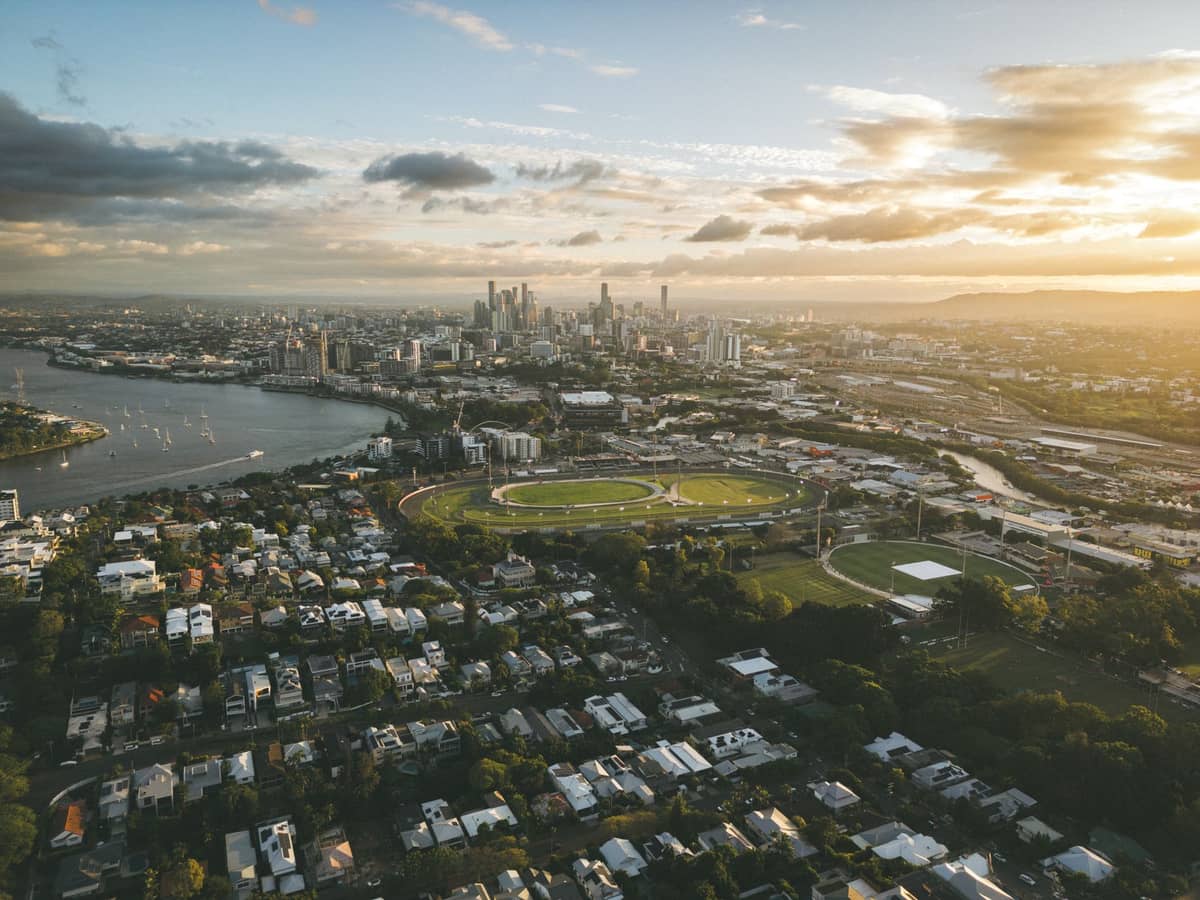
Brisbane is a spread-out city covering roughly 1,342 km², and the neighbourhood you choose matters more than most visitors expect. Unlike a compact European capital, staying in the wrong part of Brisbane can mean expensive taxi rides or slow bus journeys just to reach the places you actually want to see. The good news is that the city's key districts each have a distinct personality, and most are well-connected by TransLink trains, buses, and the CityCat ferry service on the Brisbane River.
Think first about why you're visiting. Families with kids tend to do best basing near South Bank, which puts Streets Beach, the Queensland Museum, and the Gallery of Modern Art all within a short walk. Couples looking for restaurant variety and weekend nightlife gravitate toward Fortitude Valley or New Farm. Business travellers rarely have a choice, and the CBD is where most conference hotels sit. Budget travellers often find better value in West End, which has the character of a neighbourhood rather than a hotel district.
💡 Local tip
Brisbane's TransLink Go Card works across trains, buses, and ferries, making it easy to stay in a quieter neighbourhood and still reach the CBD or South Bank quickly. Load it at convenience stores or airport machines on arrival.
Brisbane CBD: Convenience at a Price
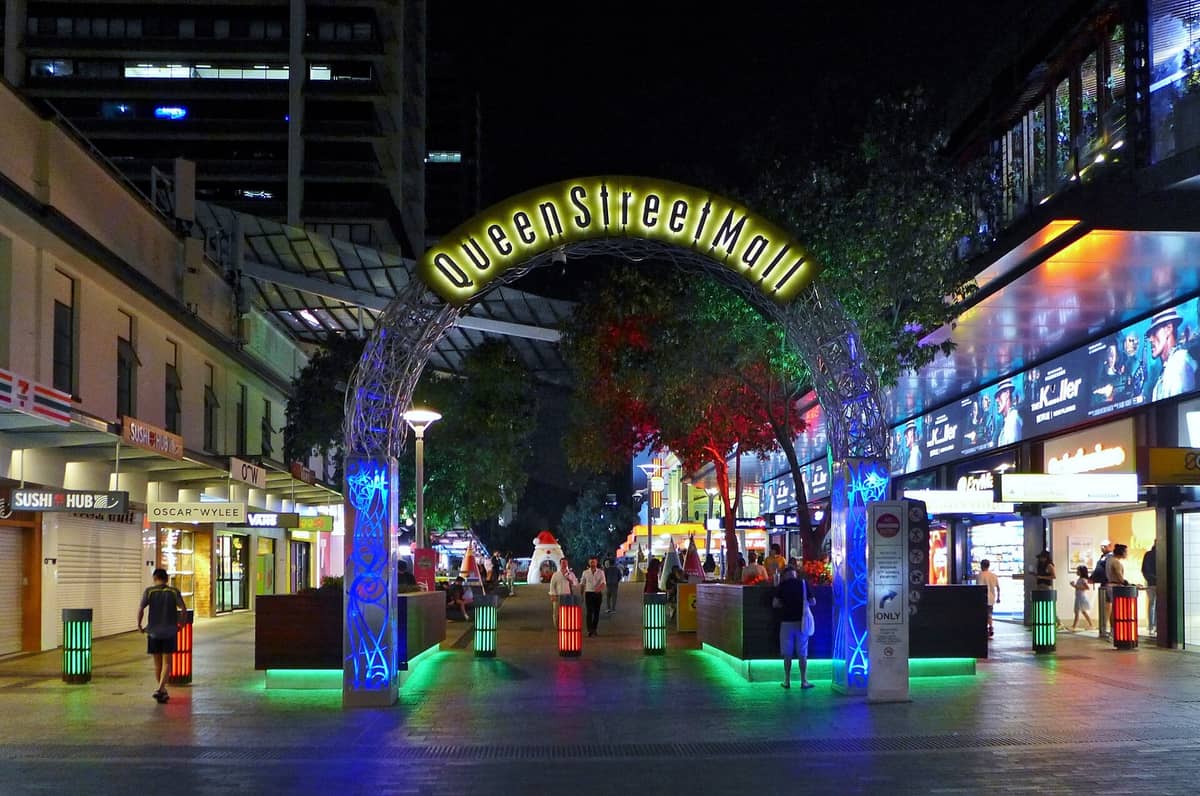
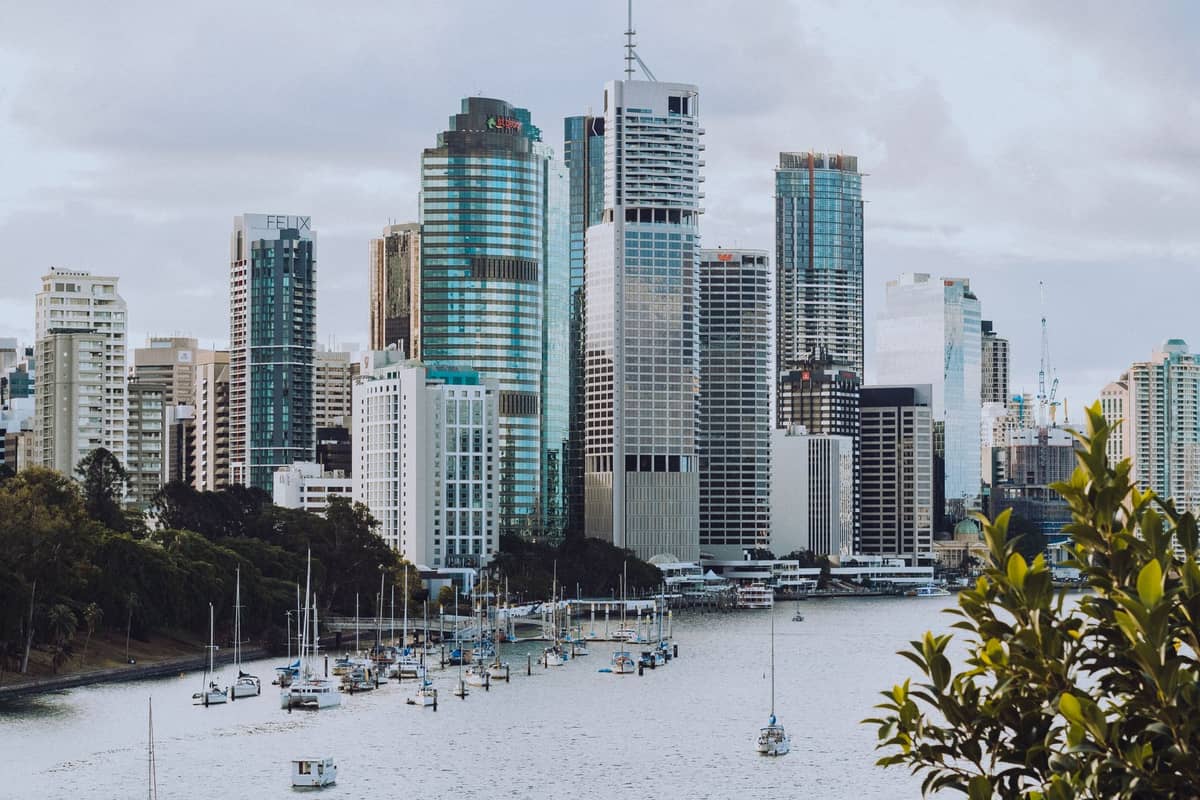
The Brisbane CBD is the obvious choice for first-time visitors who want to be within walking distance of everything. The Story Bridge, Queen Street Mall, City Botanic Gardens, and multiple ferry terminals are all accessible on foot. The trade-off is price: this is where Brisbane's full-service international hotels cluster, and rates reflect that.
Expect to pay anywhere from A$180 to well over A$400 per night for a standard double room at a CBD hotel during peak season (September to November, and around major events like the Brisbane Festival). Mid-range CBD options exist, particularly on the fringes near Roma Street and the cultural precinct, but the central blocks near Queen Street skew expensive. If budget matters, the CBD is rarely the answer.
One genuine advantage of CBD hotels is that they typically include access to rooftop pools and gyms, and many are connected directly to the underground bus network and Central Station. For travellers arriving on the Airtrain from Brisbane Airport, both Central and Roma Street stations are in the CBD, which makes the airport transfer straightforward without needing a taxi.
⚠️ What to skip
The CBD around Queen Street Mall and Adelaide Street can be noisy on Friday and Saturday nights. If you're a light sleeper or travelling with young children, ask for a high floor or a room facing away from the street when booking.
South Bank: Best All-Round Location for Visitors
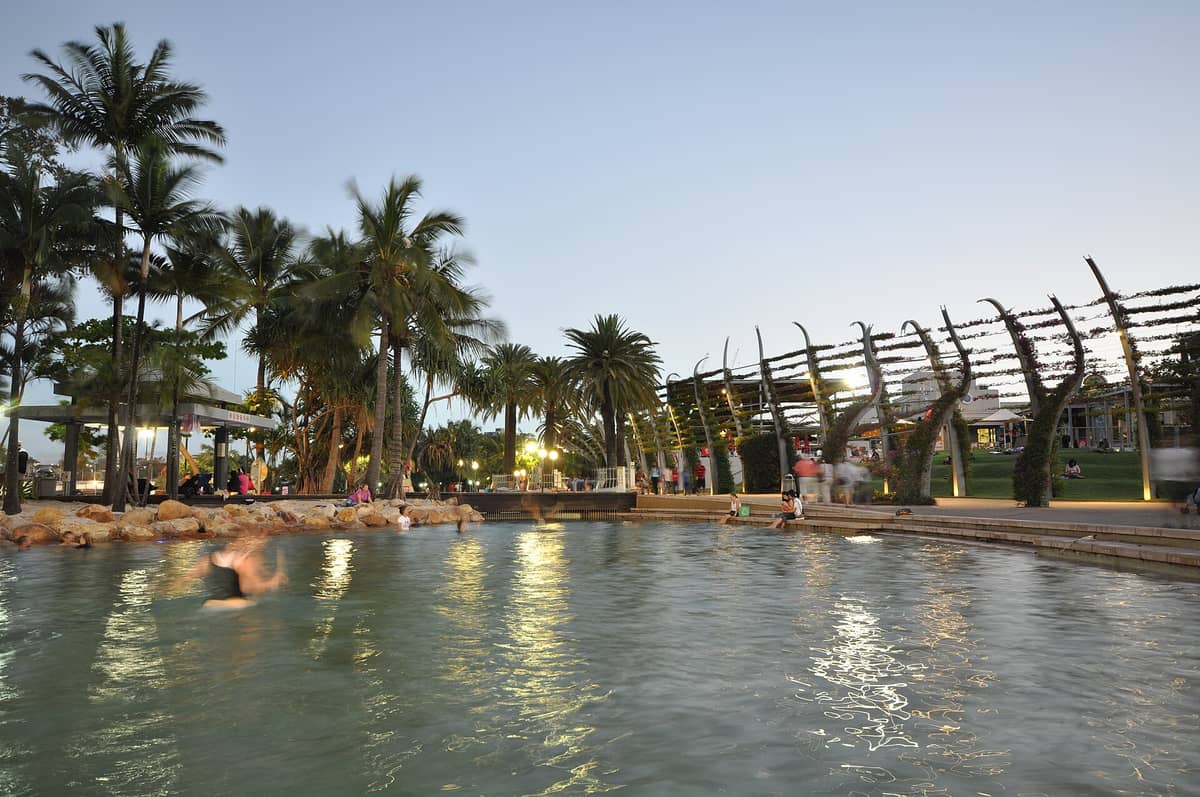
South Bank is arguably the strongest general-purpose base in Brisbane, and it's often overlooked in favour of the CBD purely out of habit. The South Bank Parklands sit directly outside your door, the cultural institutions are all here, and the South Brisbane and South Bank train stations connect you to the rest of the city within minutes. Hotels here tend to be marginally cheaper than equivalent CBD properties, partly because the area is perceived as slightly separate from the 'centre', even though it's connected by multiple bridges and ferries.
Families in particular will appreciate being able to walk to Streets Beach (a free public pool in a lagoon setting), the Queensland Museum, and the Gallery of Modern Art without getting in a car. The weekend dining scene along Stanley Street and Grey Street is strong, and the South Bank markets run Friday evenings and Saturday and Sunday mornings. For a fuller picture of what's near, the Brisbane with kids guide covers the family-friendly options in depth.
Fortitude Valley: For Nightlife, Food, and Creative Energy
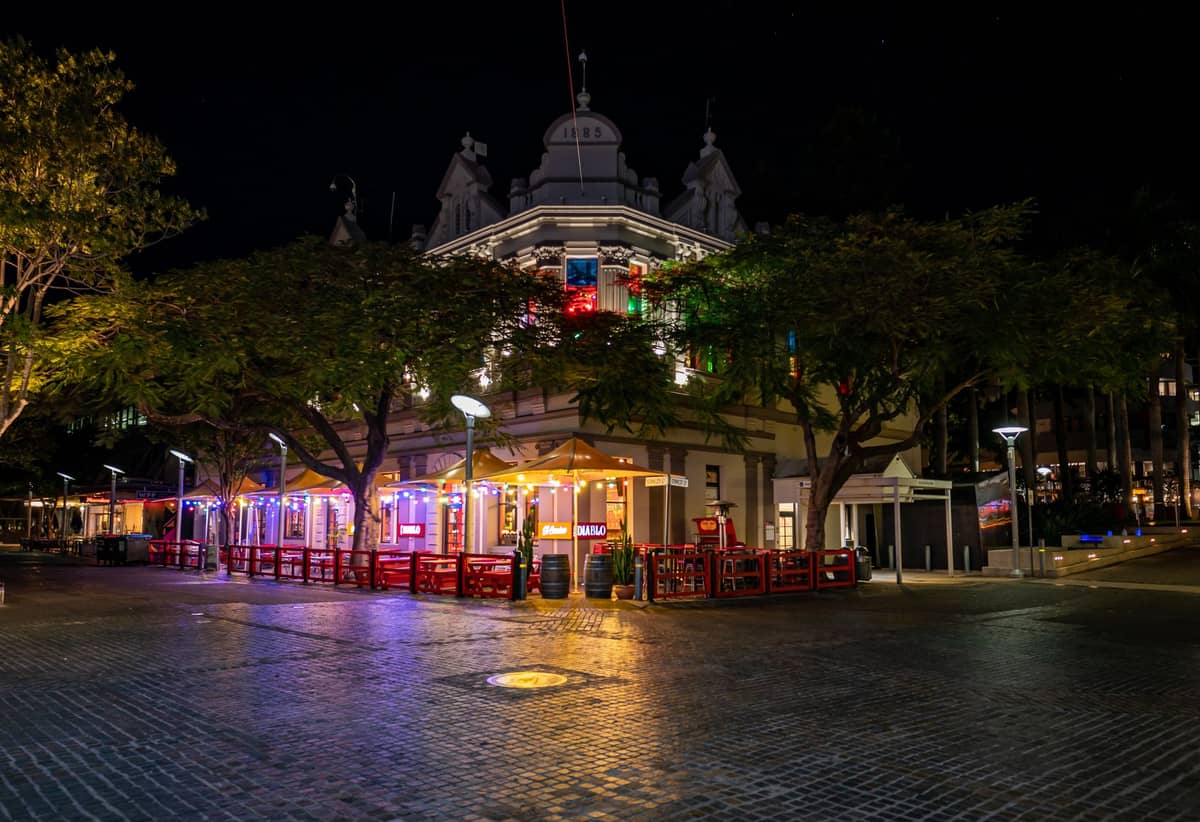
Fortitude Valley is Brisbane's most energetic inner-city neighbourhood, concentrated along Brunswick Street and the blocks around it. It's the centre of Brisbane's live music and bar scene, and the area around the Chinatown mall and James Street has some of the city's most interesting independent retail and restaurant options. Staying here makes sense if you plan to spend evenings out, attend live music, or want walkable access to some of Brisbane's better dining.
Hotel options in the Valley range from budget-friendly hostels to mid-range boutique hotels. It's not a luxury hotel district. The neighbourhood is loud on weekends, particularly in the blocks closest to the clubs on Brunswick and Ann Streets. That's fine if you're part of the crowd; less fine if you want to sleep before midnight on a Saturday. The Valley is a 10-15 minute walk from the CBD, or two stops on the train from Central Station.
✨ Pro tip
If you're staying in Fortitude Valley and want to explore the rest of the city, the Valley train station connects you to South Bank, the CBD, and even the Airtrain line to Brisbane Airport without changing trains. It's underrated as a transport hub.
New Farm, Kangaroo Point, and West End: Character Over Convenience
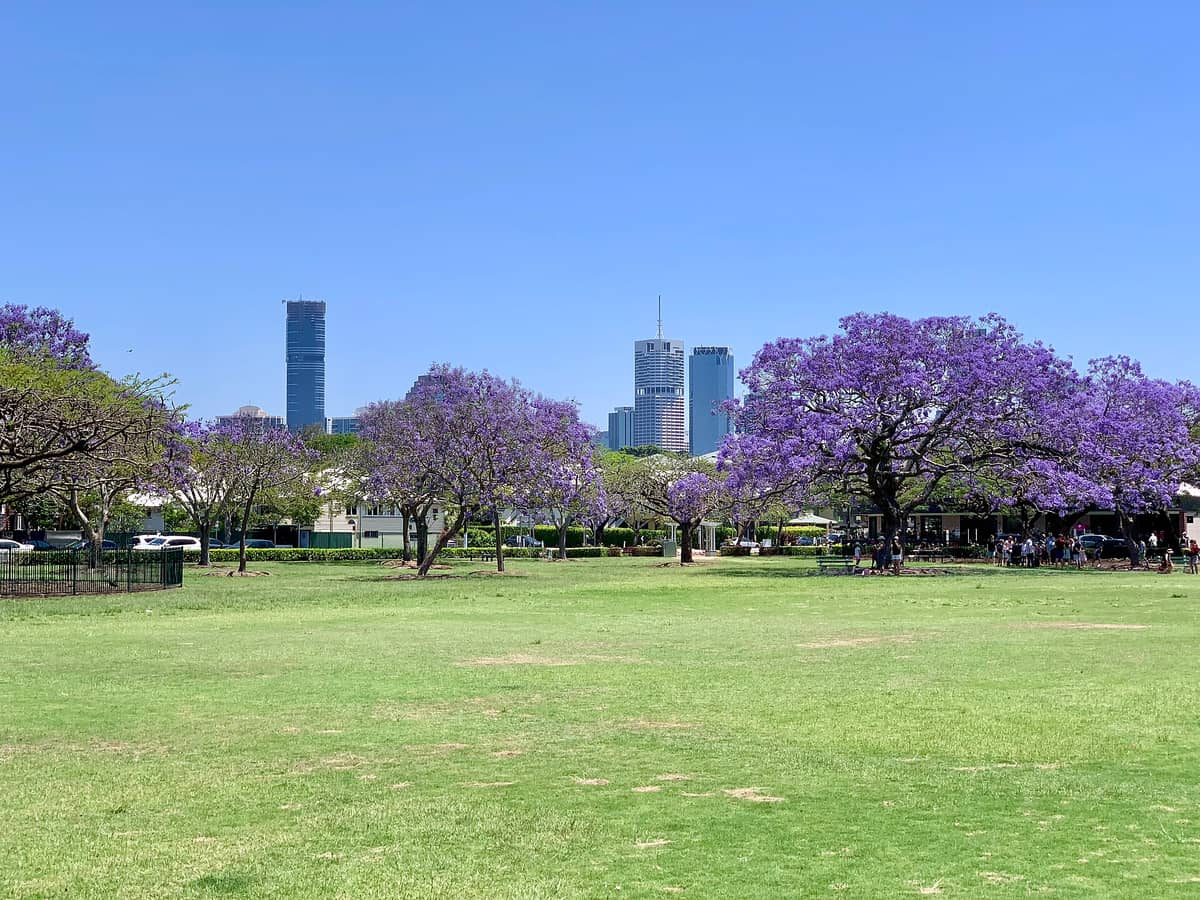
New Farm has the feel of an established inner-city neighbourhood rather than a tourist district, which is exactly its appeal. Brunswick Street in New Farm (distinct from the Valley end) is lined with independent cafés, bookshops, and restaurants. New Farm Park is one of Brisbane's better green spaces, and the Brisbane Powerhouse hosts consistently interesting arts programming. Accommodation options are limited, mostly serviced apartments and smaller boutique hotels, but the neighbourhood works well for longer stays.
Kangaroo Point sits directly across the Brisbane River from the CBD, connected by the Kangaroo Point Bridge (opened December 2024) and regular CityCat and ferry services. The Kangaroo Point Cliffs and the parkland along the river are exceptional for morning walks or evening runs. A small number of hotels sit on the riverfront here, some with direct city views. It's quieter than the CBD and genuinely pleasant, though the restaurant and nightlife options are thin compared to the Valley or South Bank.
West End is the city's most eclectic neighbourhood, with a long-standing reputation for counter-culture, independent food businesses, and community markets. It's a short distance from South Bank and reasonably walkable to the CBD. Accommodation options lean toward budget and mid-range. If you're travelling on a tight budget and want neighbourhood texture rather than hotel-district homogeneity, West End is worth considering. The West End Markets at Davies Park run Saturday mornings and are a legitimate local institution.
Brisbane Airport Hotels: Practical, Not Memorable
Brisbane airport hotels serve a specific purpose: reducing stress around early morning departures or late arrivals when the Airtrain has stopped running. The Airtrain operates roughly from 5:00 a.m. to 10:00 p.m. daily (check the official timetable for your travel dates), which means a flight before 6:00 a.m. or after midnight makes an airport hotel genuinely useful rather than just convenient.
Most airport-adjacent properties are full-service chain hotels with shuttle connections to the terminals. Expect to pay a premium for the location, typically A$200 to A$350 per night for a standard room, with rates spiking around school holiday periods and major events. On the upside, these hotels universally offer free airport transfers and 24-hour reception, which simplifies logistics considerably. They are not the right base for exploring Brisbane itself: the airport is 15 km from the CBD, and the surrounding area has limited walkable appeal.
ℹ️ Good to know
The Airtrain adult fare between Brisbane Airport and city stations is A$23.30 (as of April 2026). A taxi or rideshare to the CBD costs roughly A$67 to A$82 depending on traffic. If you're staying in the CBD or South Bank, the Airtrain is significantly cheaper and almost always faster outside peak hours.
Brisbane Hotel Pricing: What to Budget and When to Book
Brisbane hotel rates vary significantly by season. The city's subtropical climate means the cooler, drier months from June through September attract the most visitors, and hotel prices peak accordingly. September tends to be the most expensive month overall. January, by contrast, is statistically among the cheapest months to book, partly because the heat and humidity put some visitors off. If your schedule is flexible and you can tolerate temperatures around 30°C with high humidity, January can offer genuine value.
- Budget (under A$120/night) Hostels in West End and Fortitude Valley, plus some older motel-style properties in the inner suburbs. Shared facilities are common at this price point.
- Mid-range (A$120–A$220/night) The most competitive bracket in Brisbane. Includes well-positioned hotels in South Bank, Kangaroo Point, and the outer CBD fringes. Strong value during January and February.
- Upper mid-range (A$220–A$350/night) Full-service hotels in the CBD and South Bank with pools, gyms, and restaurant access. This is where the bulk of business travellers and couples tend to land.
- Luxury (A$350+/night) Five-star properties concentrated in the CBD, often with river or city views. Brisbane's luxury hotel scene has grown since the city began preparing for the 2032 Olympics.
For specific events, book well in advance. The Brisbane Festival (September), State of Origin games at The Gabba, and any major international concert tours can clear out mid-range inventory weeks ahead. The Brisbane festivals and events calendar is worth checking before you finalize dates.
- Book at least 6-8 weeks ahead for September and October stays
- January and February often have last-minute availability at reduced rates
- Check whether your hotel charges a resort fee separately — not common in Brisbane but worth confirming
- Serviced apartments offer strong value for stays of four nights or more, particularly in New Farm and Newstead
- Weeknight rates are almost always cheaper than Friday and Saturday nights, even at the same hotel
FAQ
What is the best area to stay in Brisbane for first-time visitors?
South Bank is the strongest general recommendation for first-timers. It combines proximity to cultural institutions, a riverside park with a free public pool, easy train and ferry connections, and a wide range of restaurants. The CBD is the obvious alternative but tends to cost more for equivalent accommodation.
Are there good hotels near Brisbane Airport?
Yes, several full-service chain hotels operate near Brisbane Airport (BNE), around 15 km from the CBD. They offer airport shuttle transfers and 24-hour reception, making them useful for early departures or late arrivals. They are not a practical base for exploring Brisbane, and rates typically run A$200–A$350 per night.
How much do Brisbane hotels cost on average?
Average rates run around A$209 per night for a double room, based on booking platform data. September is the most expensive month; January is typically the cheapest. Prices spike significantly during major events like the Brisbane Festival or State of Origin.
Is it easy to get from Brisbane Airport to the city hotels?
The Airtrain connects the airport to central Brisbane in about 20 minutes, stopping at Fortitude Valley, Central, Roma Street, and South Brisbane stations. The adult fare is A$23.30. A taxi or rideshare costs roughly A$67–A$82 depending on traffic. The Airtrain is separate from the standard TransLink network and requires its own ticket.
Which Brisbane neighbourhood is best for couples?
New Farm and Kangaroo Point both offer a quieter, more intimate atmosphere with good restaurant access and riverside walks. Fortitude Valley suits couples who want to be close to bars and live music. For a romantic hotel with views, Kangaroo Point riverfront properties deliver some of the best CBD skyline perspectives in the city.
Tickets & tours
Live prices and dates from our booking partner. If you book, we may earn a commission at no extra cost to you.
Planning a trip? Discover personalized activities with the Nomado app.