Kangaroo Point Cliffs: Brisbane's Volcanic Rock Face Above the River
Kangaroo Point Cliffs Park sits directly across the Brisbane River from the CBD, offering one of the city's most dramatic free viewpoints. The 20-metre tuff cliffs draw rock climbers, abseilers, joggers, and sunset-chasers in roughly equal measure. No entry fee, open around the clock.
Quick Facts
- Location
- River Terrace & Main Street, Kangaroo Point QLD 4169
- Getting There
- Holman Street ferry terminal (Translink CityFerry); walkable via Kangaroo Point Bridge or Story Bridge
- Time Needed
- 1–2 hours for a casual visit; longer if climbing or abseiling
- Cost
- Free to enter. Paid abseiling and climbing sessions run separately through commercial operators
- Best for
- Sunset views, rock climbing, morning runs, photography of the CBD skyline
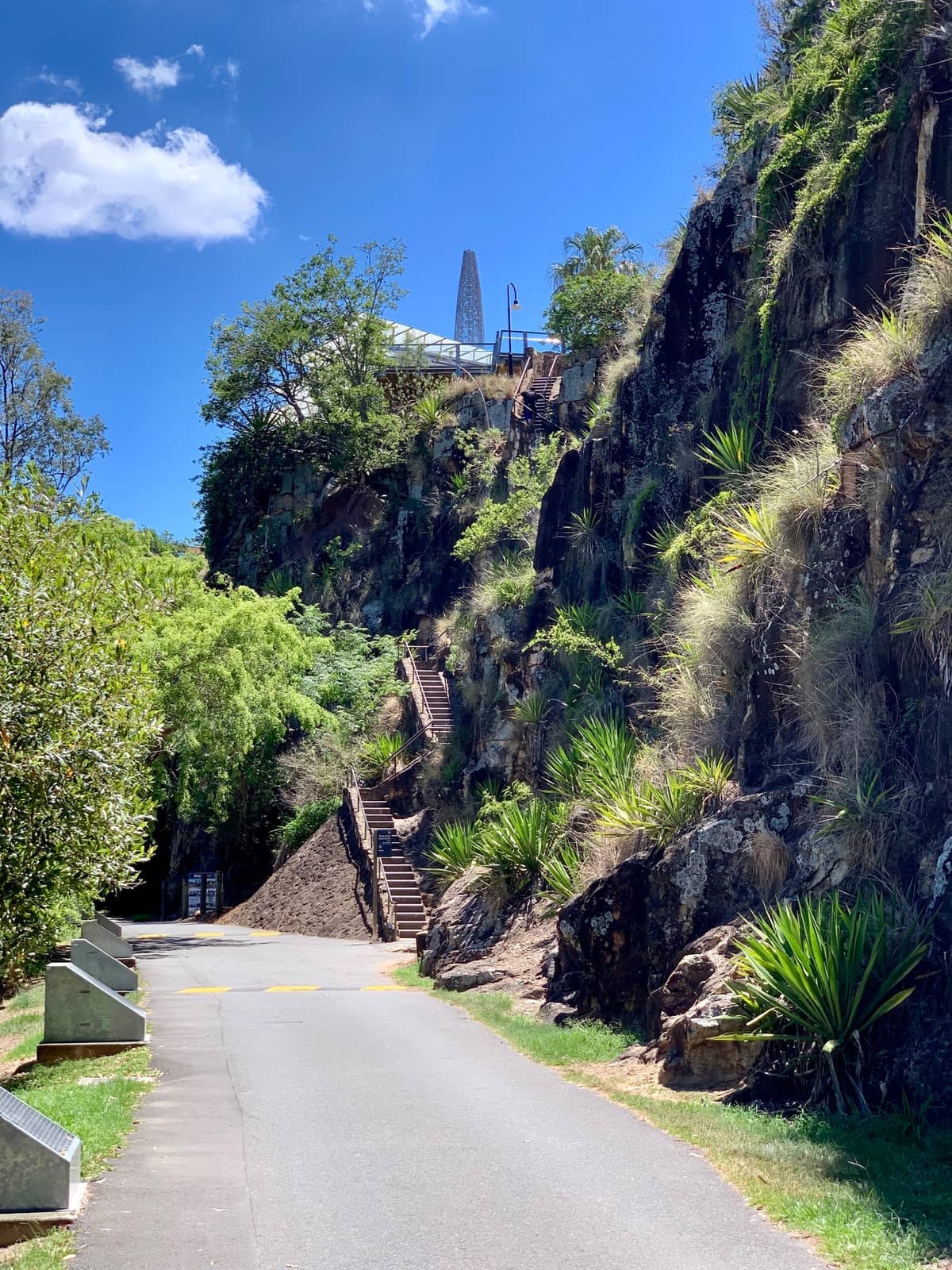
What You're Actually Looking At
Kangaroo Point Cliffs are not a natural geological accident. The exposed face you see today is the result of quarrying that began around 1826 and continued in later phases until the quarry closed in 1976. Workers cut Brisbane tuff, a volcanic rock formed from ancient pyroclastic deposits, directly from this riverbank. When quarrying stopped, the city inherited a sheer cliff running along the river's southern bend, and Brisbane slowly turned it into a park. What looks dramatic was, for much of its history, an industrial extraction site.
That backstory matters because it shapes what you see today. The rock face is unusually vertical and clean, which is why it became one of the most popular free-access climbing walls in Australia rather than simply a scenic overlook. The texture of the tuff is coarse and slightly porous, with good natural handholds at various grades. You'll notice chalk marks on the rock face from regular climbers, and fixed anchor points at the top installed for commercial abseiling sessions.
ℹ️ Good to know
The park has two distinct levels: the upper area along Main Street and the lower River Terrace at the base of the cliffs. Both are managed by Brisbane City Council and are open 24 hours daily. The staircase connecting them has 107 steps and is not step-free, though wheelchair-accessible facilities and toilets are available within the park.
The View and Why It Works
From the upper plateau, the CBD skyline sits almost directly across the river, close enough that you can pick out individual buildings clearly without any optical aid. The Story Bridge frames the view to the north. At river level, CityCats and ferries cut quiet white lines across the water throughout the day. It is a genuinely strong city panorama, and it costs nothing.
The view shifts considerably depending on light. In the morning, the sun rises behind you and illuminates the CBD towers directly, making it a reasonable time for photography. By midday the light flattens. The cliffs earn their best reputation at dusk, when the western sky behind Mount Coot-tha turns amber and the CBD lights begin to come on simultaneously. If you're planning around photography, check the local sunset time and arrive 30 minutes early. For more elevated perspectives over the city, the Mount Coot-tha Lookout offers a wider cityscape, but the intimacy of the river foreground here is something that lookout cannot match.
Tickets & tours
Live prices and dates from our booking partner. If you book, we may earn a commission at no extra cost to you.
Luggage Storage in Brisbane
From 5 €Instant confirmationFree cancellationBrisbane's dark stories true crime tour
From 21 €Instant confirmationFree cancellationFull-day Mount Tamborine winery tour from Brisbane with lunch
From 140 €Instant confirmationFree cancellationNorth Stradbroke Island small groups day tour
From 79 €Instant confirmationFree cancellation
How the Cliffs Feel at Different Times of Day
Arrive early morning and the lower River Terrace path is full of joggers moving in both directions, occasionally stepping around cyclists. The air is cooler here beside the water, and you can hear the river more clearly before traffic noise builds up. Dog walkers cluster near the grassed sections. The cliffs themselves are quiet at this hour, the chalk on the rock still damp from overnight humidity in summer.
By late morning on weekends, climbing ropes start appearing over the cliff edge. Commercial abseiling operators set up at the top and lower groups of participants in short sessions. There's a particular sound to this: instructors speaking clearly over the wind, ropes sliding through descenders, and the occasional burst of nervous laughter from someone looking down for the first time. It's worth pausing to watch, even if you're not participating.
Sunset is the busiest window. Couples, families with picnic blankets, and solo visitors with phone cameras all converge on the upper lookout area in the final 45 minutes before dark. It doesn't feel overcrowded in the way some city viewpoints do, partly because the cliff edge is long enough to spread people out, but you won't have the place to yourself. After dark, the park is genuinely quiet. The lit CBD reflection on the river at night is worth the visit if you're already in the area.
💡 Local tip
Summer evenings (December to February) can remain hot and humid well past sunset. Bring water, and note that the cliff face retains heat through the afternoon. Winter evenings (June to August) drop to around 11–14°C after dark, so a light layer is useful if you're staying for the post-sunset lights.
Rock Climbing and Abseiling
The cliffs are a legitimate climbing destination, not just a backdrop. Routes range from beginner-friendly to more technical grades, and independent climbers with their own gear use the face regularly. If you don't have equipment or experience, several commercial operators run guided abseiling sessions, particularly on weekends. These are booked separately and priced independently. Brisbane City Council's park listing does not endorse specific operators, so check current reviews and verify pricing directly with any company before booking.
First-timers often underestimate the commitment required to look down from the cliff edge before stepping back over it. The 20-metre drop is not extreme by any climbing standard, but it is enough to make the experience feel real rather than merely symbolic. The instructors from commercial operations are generally experienced, and the rock face is well-worn enough that the holds are predictable. Wear closed-toe shoes regardless of what any operator suggests about sandals.
Getting There and Moving Around
The most enjoyable approach is by ferry. The Holman Street terminal sits directly at the base of the cliffs on River Terrace and is served by Translink's CityFerry network. From the CBD side, you board at Eagle Street Pier or other inner-city stops. The crossing takes only a few minutes but gives you the approaching view of the cliffs from the water, which is distinct from any land-based vantage point. For a broader understanding of how Brisbane uses its river for transport and recreation, the Brisbane river guide covers all the main ferry routes and CityCat stops.
On foot, the Kangaroo Point Bridge connects the cliffs area directly to the CBD riverbank near Alice and Edward Streets, and it is a pleasant walk of under 15 minutes from the City Botanic Gardens. The Story Bridge approach from the CBD's Fortitude Valley or Kangaroo Point side also works, though the walk is slightly longer. There is on-street parking in the area for drivers, though weekend afternoons make finding a spot harder.
💡 Local tip
Use a go card (Translink's reloadable transit card) for the ferry rather than paying a cash fare. It's cheaper per trip and works across buses, trains, and ferries throughout the city.
Who This Suits and Who Might Want to Skip It
The cliffs work well as a self-contained destination or as part of a longer riverside walk. They connect naturally to South Bank Parklands via the Kangaroo Point Bridge, making a logical half-day loop possible: South Bank in the morning, cliffs at sunset, then back across the river for dinner. That combination suits most visitor profiles.
Travelers who prioritize indoor cultural experiences or who have mobility limitations that make stairs difficult will find the lower River Terrace path accessible but the cliff-top lookout route less straightforward. The 107-step staircase is the main connection between levels, and there is no lift. The park does have accessible toilets and wheelchair access within the grounds, but the full cliff experience requires navigating some uneven terrain near the rock face.
If you've already spent time at the Howard Smith Wharves just upriver, you'll notice the cliffs offer a quieter, less commercial atmosphere. Howard Smith Wharves has more food and drink options; the cliffs have better actual views and more physical space. They serve different moods.
Practical Details Worth Knowing
The park is open 24 hours daily with no seasonal changes to hours and no admission charge. Facilities include public toilets, picnic areas, and barbecue stations in the parkland sections. The lower River Terrace has drinking water access. There is no café or food vendor within the park itself, though the Kangaroo Point area along Main Street has a handful of cafés within a short walk.
Rain affects the experience in two specific ways. The tuff surface becomes slippery when wet, which makes the cliff-side paths and the staircase more hazardous than they appear. Commercial climbing and abseiling operations typically cancel in wet conditions. The upper lookout remains accessible in light rain if you have coverage, but the cliff path below is best avoided when the rock is wet. Brisbane's wetter months run roughly December through March.
For context on when to visit Brisbane more broadly, including how to balance the summer humidity against the drier winter months, the best time to visit Brisbane guide covers seasonal trade-offs in detail.
Insider Tips
- The sunset crowd peaks in the 30 minutes before dark. If you arrive an hour early, you get the pre-sunset glow on the CBD buildings with space to choose your spot on the cliff edge. By the time the crowd thickens, you're already settled.
- The lower River Terrace path extends beyond the cliffs in both directions along the waterfront. Most visitors stop at the cliff face itself, but walking north along the river toward the Story Bridge gives you a different and less photographed angle on both the cliffs and the bridge.
- If you're curious about abseiling but want to watch before committing, station yourself on the lower River Terrace on a weekend morning and look up. You'll see commercial sessions running from roughly mid-morning onward and can gauge pace, group size, and instructor style before booking.
- The cliffs retain heat from afternoon sun well into the evening in summer. The lower River Terrace near the water is noticeably cooler. If it's a hot evening, spend more time down at river level and come up to the lookout for the view itself rather than lingering on the exposed upper plateau.
- Brisbane is on the traditional lands of the Turrbal and Jagera peoples. The Brisbane River and its banks hold ongoing cultural significance. Brisbane City Council acknowledges this context across its parks, and it is worth reading the acknowledgment panels installed in the park.
Who Is Kangaroo Point Cliffs For?
- Sunset photographers wanting an unobstructed CBD skyline framed by the river
- Active travelers interested in abseiling or rock climbing without leaving the city
- Visitors doing a self-guided riverside walk connecting South Bank, the cliffs, and Howard Smith Wharves
- Budget travelers looking for a free viewpoint that genuinely delivers
- Families with older children who can manage the staircase and want an active outdoor experience
Nearby Attractions
Other things to see while in Kangaroo Point:
- Kangaroo Point Bridge
Opened in December 2026, the Kangaroo Point Bridge is a free pedestrian and cycling bridge connecting Kangaroo Point with Brisbane's CBD. At 460 metres long with a dramatic 183-metre main span, it offers some of the most unobstructed views of the Brisbane River and city skyline of any crossing in the city.
Planning a trip? Discover personalized activities with the Nomado app.